Drains Company
Company
Shop By Category
T&Cs
Shop Online
  • Size, material and fit listed
  • Free tracked delivery across Singapore over $150
  • 14-day returns

Washing Machine Drain Hose 2.5m | Outlet hose 19mm and 21mm | replacement waste water hose

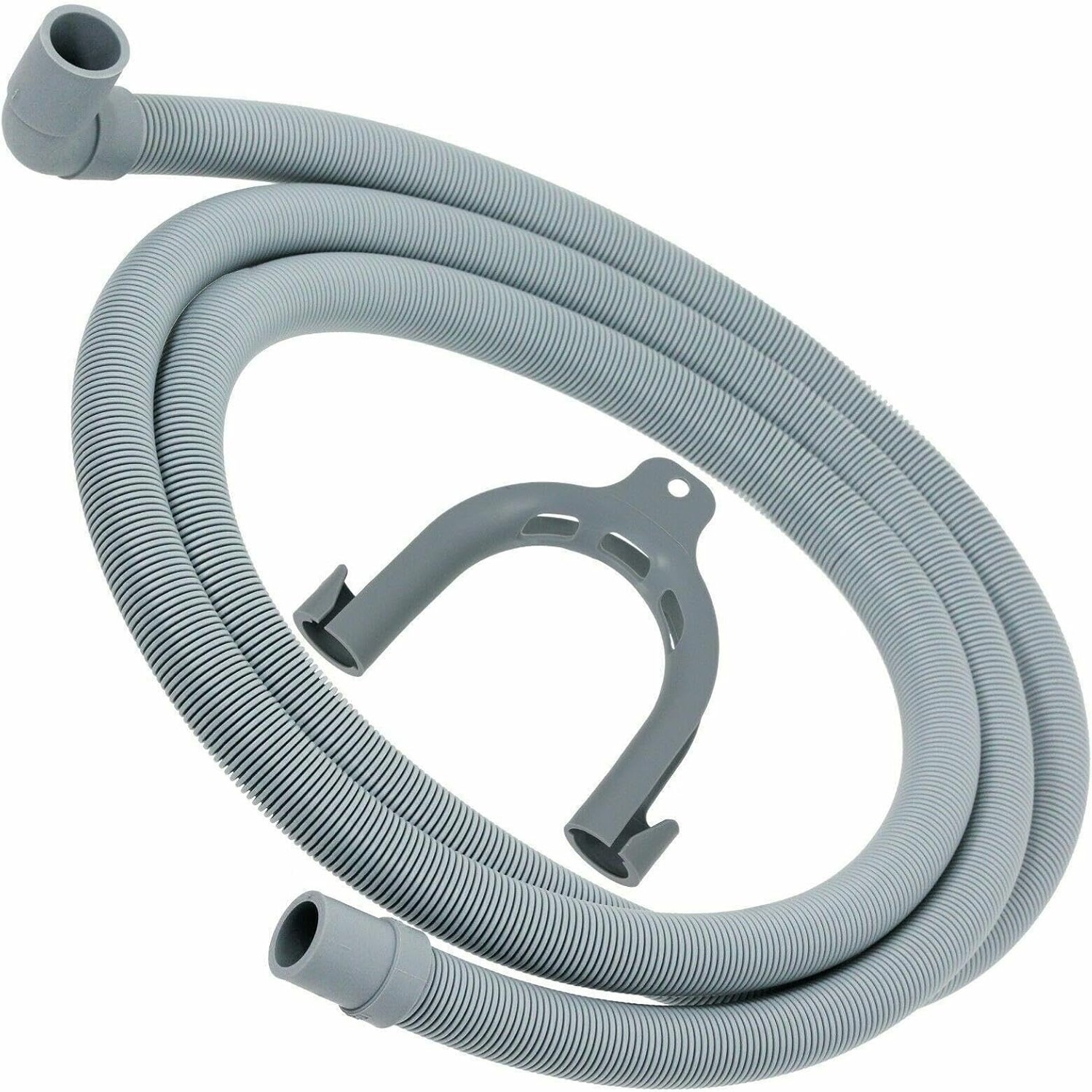
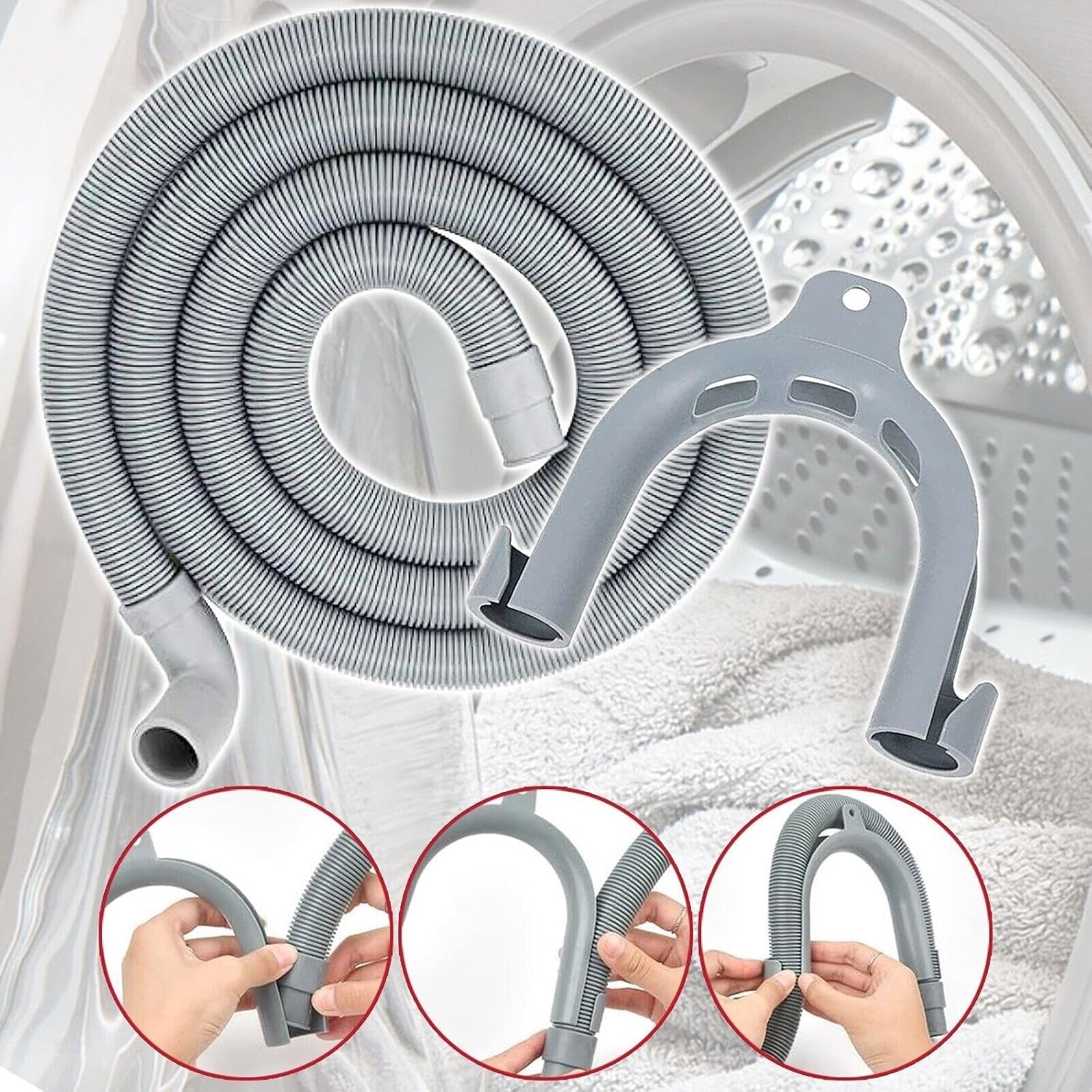
2.5m Universal Washing Machine Drain Hose with Right Angle End

$45.99 $54.99 Save $9
  • Extra Long Reach
  • Two Bore Sizes
  • Right Angle End
  • Rated To 10 Bars

Price: $45.99 $54.99

  • Free tracked delivery across Singapore on orders $150+, otherwise a flat $20
  • Pay by card or PayPal, handled by the payment provider
  • 14 days to change your mind, plus your statutory rights
Product specifications
MaterialRubber
ColourGrey
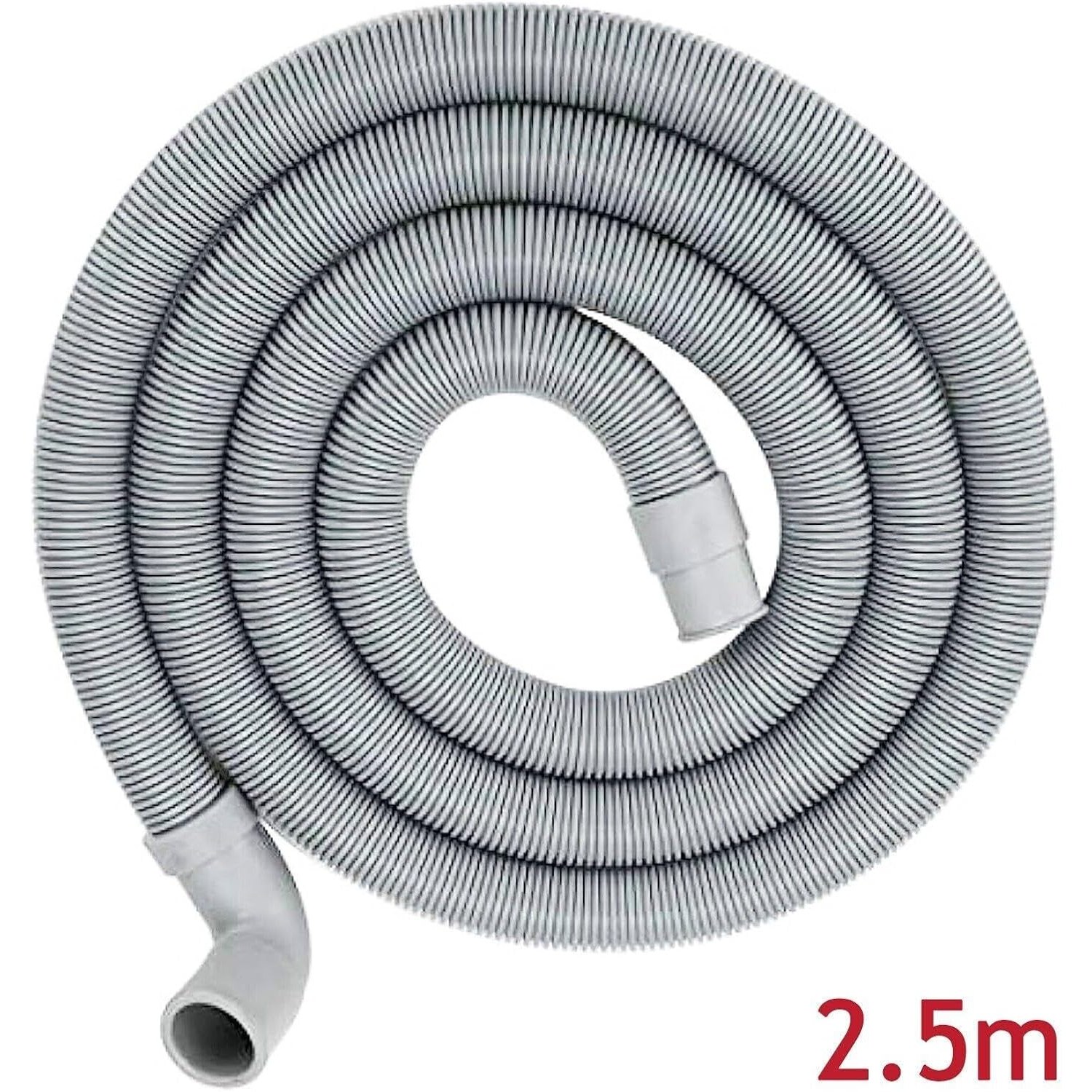
Item Length250 cm (2.5 m)
Internal Bore19 mm and 21 mm
Maximum Pressure10 Bars
Nominal Wall Thickness1
End Fitting1 x 90 degree right angle end
Number Of Packs1
Unit Count1.0 Count
Shipping & returns

Tracked delivery anywhere in Singapore. It is free on orders of $150 or more, and a flat $20 below that.

If it is not right for you, send it back within 14 days of delivery in resaleable condition and we refund the price you paid, including standard delivery. That is a voluntary policy we offer on top of your legal rights. You cover the cost of returning it unless the item is faulty.

If it arrives faulty, damaged or not as described, we put it right at no cost to you, return postage included, and your protection under the Consumer Protection (Fair Trading) Act 2003 is unaffected.

Shipping details · Refunds and returns

Extra Long Reach2.5 metres of hose, enough for most standpipe and under-sink setups.
Two Bore SizesInternal bore of 19mm and 21mm covers the common appliance outlets.
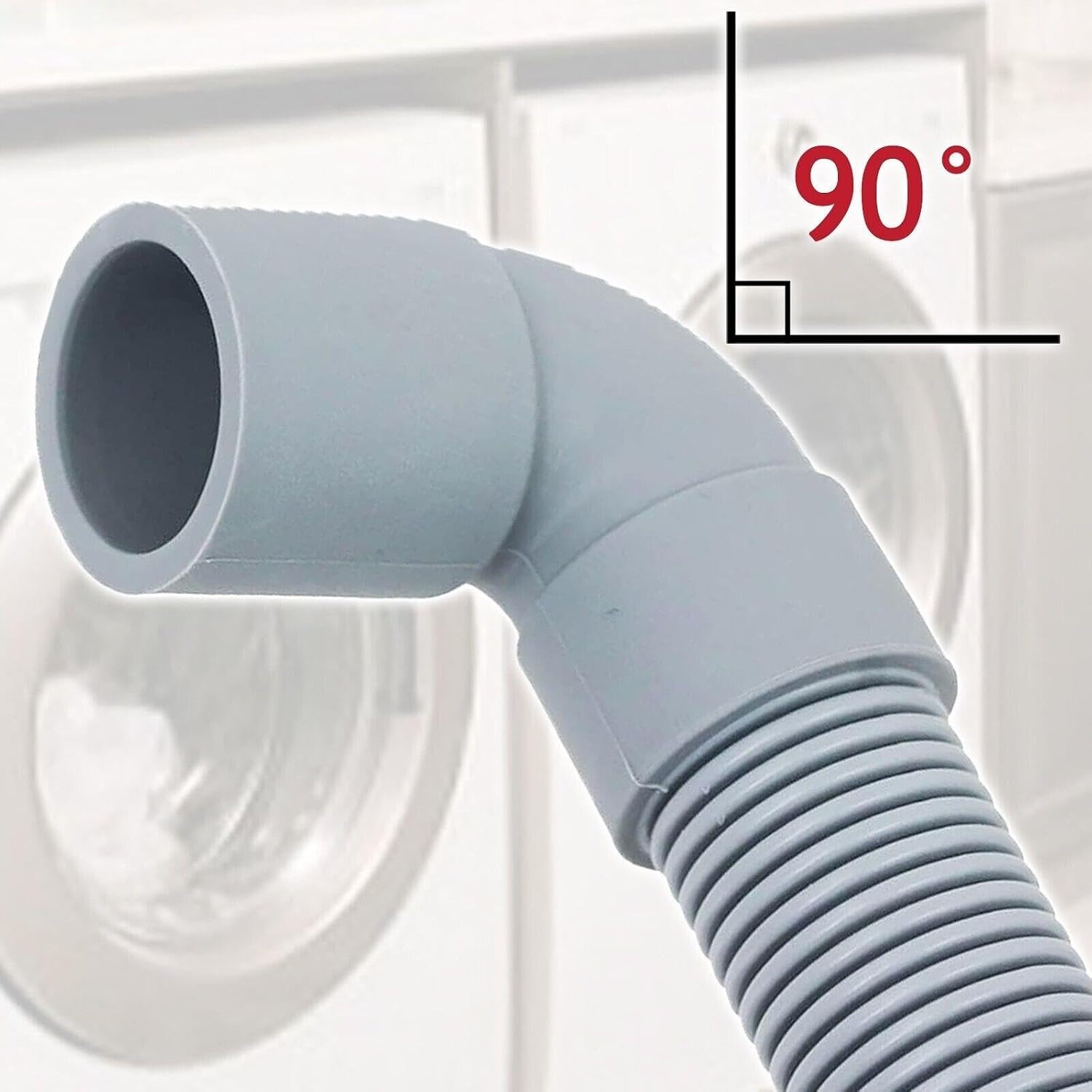
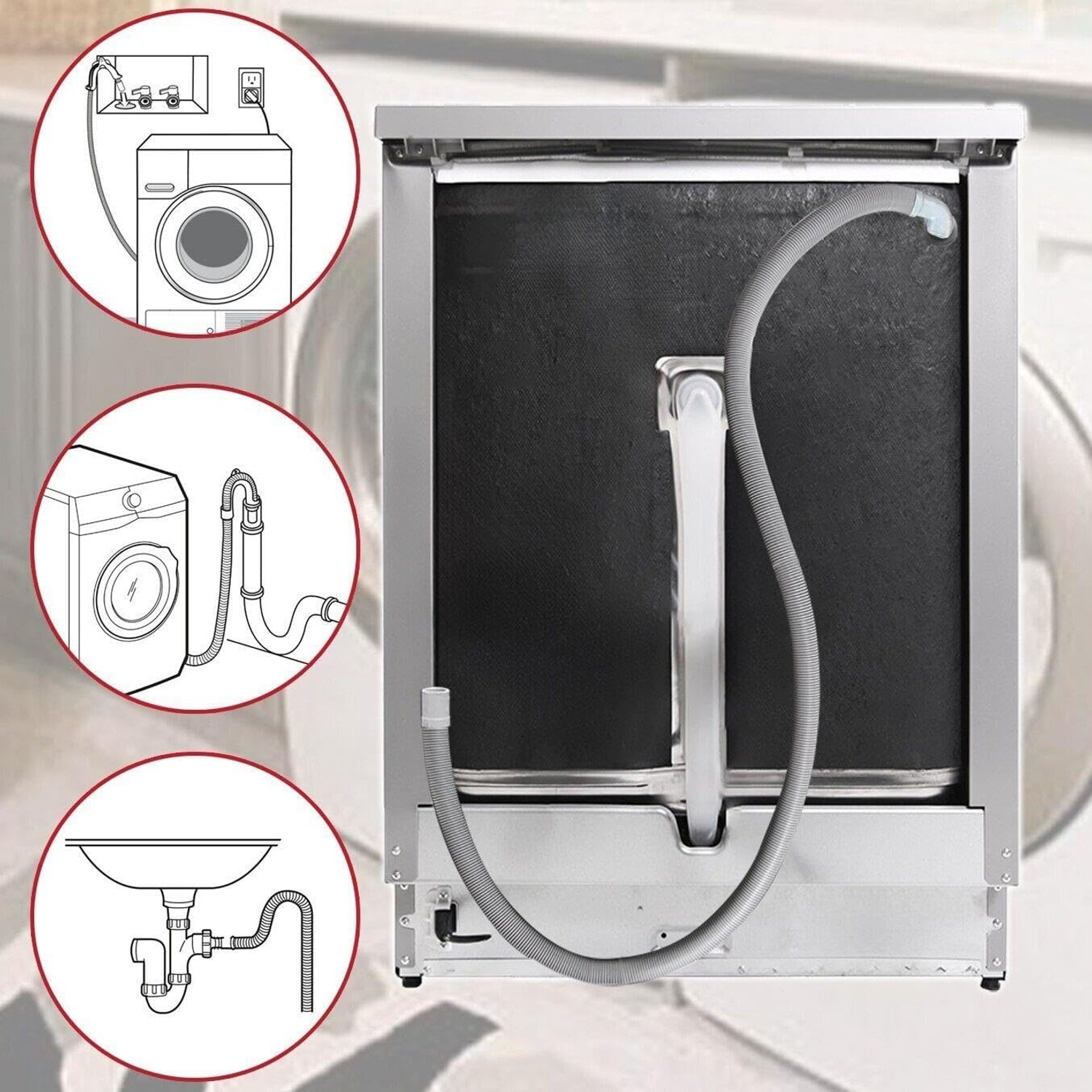
Right Angle EndOne 90 degree end lets the machine sit flush to the back wall.
Rated To 10 BarsRubber construction with a maximum pressure rating of 10 bars.

A 2.5 metre washing machine drain hose that reaches the standpipe without stretching, kinking, or pulling your machine out from the wall.

Rubber construction rated to 10 bars, dual 19mm and 21mm internal bore ends, and one 90 degree elbow so the appliance can sit flush against the back wall.

A 2.5 metre drain hose for washing machines and washer dryers, long enough to reach a standpipe across the room without an awkward extension join.

The internal bore covers both 19mm and 21mm, which fits most common appliance outlet spigots and standpipe sizes.

One end is moulded at 90 degrees, so the hose turns sharply behind the appliance and lets you push the machine back against the wall.

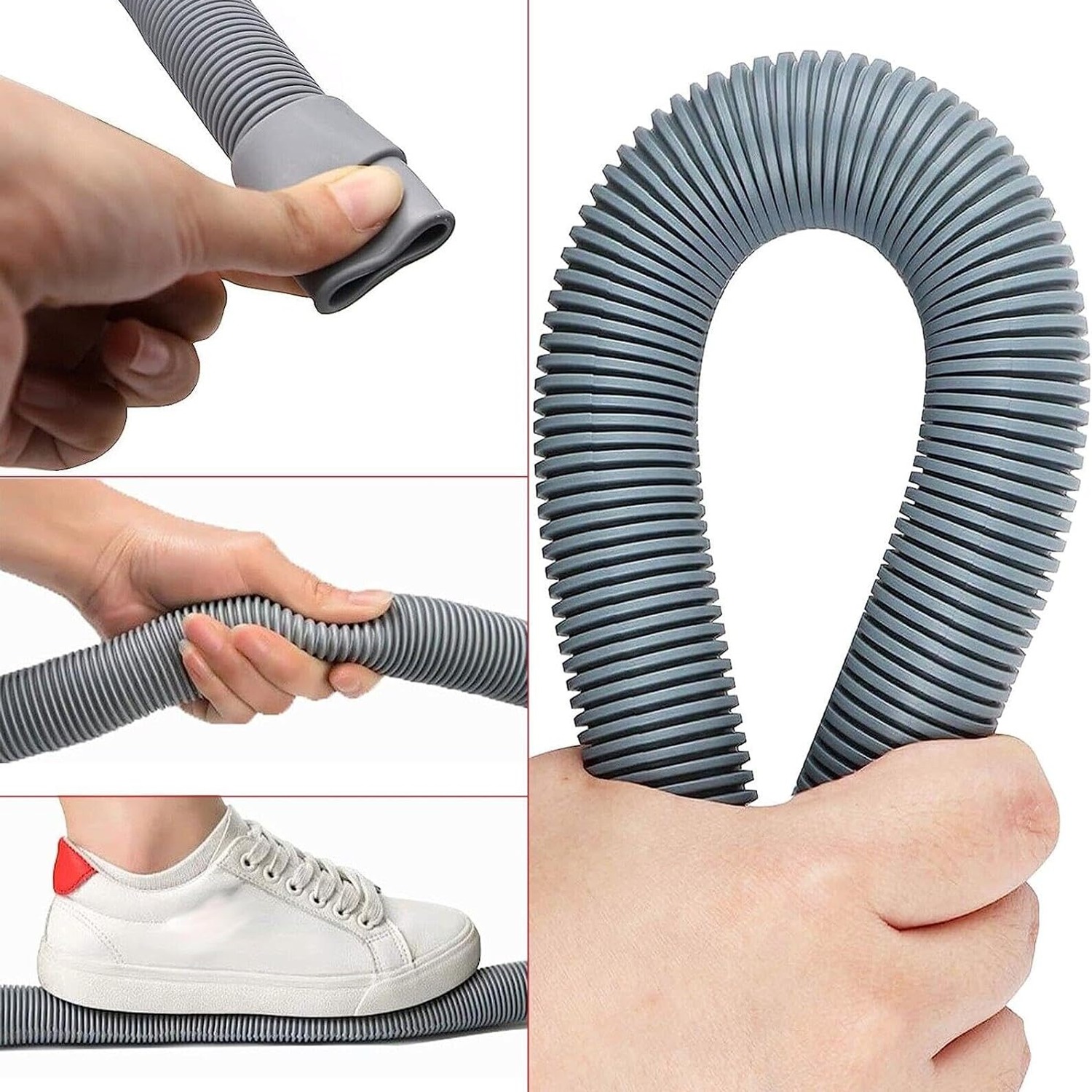
Rubber construction with a maximum pressure rating of 10 bars and a nominal wall thickness of 1.

Supplied as a single hose, ready to fit with your existing clamp or clip.

2.5m Universal Washing Machine Drain Hose with Right Angle End

Most laundry problems that look serious turn out to be the drain hose. It splits at the elbow, it gets crushed when someone shoves the machine back too hard, or it was simply too short from the start and has been under tension for years. This 2.5 metre hose from is the straightforward replacement, long enough that you are not fighting for every centimetre and built from rubber rather than thin corrugated plastic.

2.5m Universal Washing Machine Drain Hose with Right Angle End

Length matters more than people expect. A standard hose supplied with a new machine is often around 1.5 metres, which is fine if the standpipe sits directly behind the appliance. The moment your waste outlet is under a sink, around a corner, or on the far side of a utility room, that stock hose comes up short. At 2.5 metres you have room to route the hose properly, lift it to the correct height, and still leave a little slack so the machine can be pulled out for cleaning.

2.5m Universal Washing Machine Drain Hose with Right Angle End

The fitting is designed to be flexible on sizing. The internal bore covers 19mm and 21mm, the two measurements you will meet on the vast majority of domestic washing machines and washer dryers. That is why it is sold as a universal part rather than a model-specific one. Check your existing hose end against the spigot on the back of your machine and you will usually find one of those two numbers is what you need.

2.5m Universal Washing Machine Drain Hose with Right Angle End

One end is moulded into a 90 degree right angle. This is a small detail that makes a real difference to how the laundry looks and works. A straight hose coming off the back of the machine needs a wide loop before it can turn, which forces the appliance to sit several centimetres away from the wall. The elbow turns it immediately, so the machine goes back flush and you stop losing floor space to a bulge of rubber.

2.5m Universal Washing Machine Drain Hose with Right Angle End

The hose is rated to a maximum pressure of 10 bars with a nominal wall thickness of 1, and it is grey rubber throughout. Fitting is a hand job in most cases, slide the end onto the spigot, secure with the clip or jubilee clamp you already have, hook the other end into the standpipe at the height your manufacturer specifies, then run a short rinse cycle and watch the joints.

Not sure yet? That is fine.

A drain part has to fit the drain you have, and you cannot always judge that from a photograph. If it is not right for you, send it back within 14 days of delivery in resaleable condition and we refund the price you paid, including standard delivery. That is a voluntary policy we offer on top of your legal rights.

If it turns up faulty, damaged or not as described, that is on us. We pay the return postage, with your protection under the Consumer Protection (Fair Trading) Act 2003 unaffected. Read the full detail on our refunds and returns page, or ask us anything before you order.

Frequently Asked Questions

What exactly is this product?

It is a 2.5 metre drain hose for washing machines and washer dryers, made of rubber and supplied by. One end is moulded at 90 degrees so the appliance can sit close to the wall. It carries away the waste water your machine pumps out at the end of each cycle.

How long is the hose?

The item length is 250 centimetres, which is 2.5 metres. That is noticeably longer than the hose supplied with many new machines, which is often around 1.5 metres. The extra length is there to cover awkward plumbing layouts without an extension join.

What internal bore does it have?

The internal bore covers 19mm and 21mm. Those two sizes between them fit most domestic washing machine and washer dryer outlet spigots. Measure your existing hose end if you are unsure which one applies to your appliance.

Will it fit my machine?

It is sold as a universal part and is designed to fit most models of washing machine and washer dryer. The deciding factor is the outlet spigot size on the back of your appliance, which should match the 19mm or 21mm bore. If your machine uses an unusual proprietary connector, check before ordering.

What is the hose made from?

It is rubber, listed as grey in colour. Rubber handles the heat of a hot wash cycle and resists kinking better than thin corrugated plastic. The nominal wall thickness is listed as 1.

What pressure can it handle?

The maximum pressure is rated at 10 bars. A domestic washing machine drain pump works at a small fraction of that, so the rating gives plenty of headroom. It is a drain hose, not a pressurised fill hose, so it is never under mains pressure in normal use.

What does the 90 degree end do?

It turns the hose sharply the moment it leaves the machine. Without it you need a wide sweeping loop, which pushes the appliance out from the wall. With the elbow the machine goes back flush and you keep the floor space.

Which end goes on the machine?

The right angle end normally goes onto the appliance outlet, because that is where the tight turn is needed. The straight end then runs to the standpipe or sink trap. Some installations are the reverse, so work out which way gives you the smoothest run before you clamp anything.

Do I need any tools?

Usually just a screwdriver or nut driver for the clamp, plus a towel and a shallow tray for the water left in the old hose. Many machines use a spring clip you can squeeze by hand with pliers. Nothing specialist is required for a standard swap.

Is a clip or clamp included?

The pack is listed as one hose, one unit. Most people reuse the clamp from the old hose, which is normally in good condition. If yours is corroded or distorted, a cheap jubilee clip from any hardware shop will do the job.

How high should the hose end sit?

Follow the height range in your appliance manual, which is typically somewhere between 60cm and 100cm above floor level. Too low and the machine can siphon water out mid-cycle. Too high and the pump has to work harder than it should.

Can I use it with a washer dryer?

Yes. Washer dryers drain in the same way as a standard washing machine and use the same outlet sizes. This is one of the best washer dryer outlet hose options when the original has split or is simply too short.

Can it connect under a sink?

Yes, most sink traps have a spigot designed to accept a washing machine waste hose. You push the hose on and secure it with a clip, and you must remove the blanking cap from the spigot first. The 2.5 metre length helps when the sink is not directly beside the machine.

Can I cut it shorter?

You can trim a drain hose to length with a sharp knife, cutting square so the end seats properly. Keep enough slack to pull the machine out for cleaning. Remember that cutting removes the moulded end on that side, so only trim the straight end.

Can two of these be joined for more reach?

Hoses can be joined with a proper connector, but every join is a potential leak point. If you need more than 2.5 metres, it is better to look for a single longer hose. Long runs also make the pump work harder.

Will it stop my machine leaking?

If the leak is coming from a split, perished or kinked drain hose, replacing it fixes the problem. If water is appearing from the door seal, the detergent drawer or the base of the machine, the cause is elsewhere. Dry everything, run a cycle, and watch where the water first appears.

Why does my laundry smell even after a new hose?

Smells usually come from residue in the drum, the detergent drawer or the standpipe rather than the hose itself. Run a hot maintenance wash with no laundry in the drum and clean the filter. A fresh hose removes one possible source but is rarely the only one.

How do I clean the hose?

Flush it through with clean water once it is off the machine, and check both ends for lint and hair. A long bottle brush works well for the ends. Let it dry before refitting if you can.

How often should it be replaced?

There is no fixed interval, but it is worth inspecting the hose whenever you pull the machine out. Look for cracking near the elbow, soft spots, and permanent kinks. Replace it as soon as you see a split, because a slow drip can damage flooring quietly for months.

Does the hose need to loop upwards?

Most manufacturers ask for a high loop or a hooked end so the hose rises before it drops into the standpipe. This stops dirty water siphoning back into the drum. Check your manual for the exact arrangement your machine expects.

What if the hose keeps popping out of the standpipe?

Secure it with a hose hook or a cable tie to the standpipe so it cannot jump out when the pump kicks in. Never seal it in airtight, as the standpipe needs an air gap. A loose hose is one of the most common causes of laundry floods.

Is grey the only colour?

The colour is listed as grey. Drain hoses are almost always hidden behind the appliance, so colour rarely matters in practice. Function and length are the things to focus on.

Does it include the machine-end connector nut?

The maker describes the hose with one 90 degree moulded end and the stated 19mm and 21mm bore. It is a push-on and clamp fitting rather than a threaded nut arrangement. Compare it with your current hose end to confirm the style you need.

What weight is it and what are the packed dimensions?

Weight and packed dimensions are not specified by the maker. The hose itself is 250 centimetres long and made of rubber. If you need shipping figures for a particular reason, contact us before ordering.

Where is it manufactured?

Country of origin is not specified by the maker, so we do not want to guess at it. The brand and manufacturer details are shown in the specification table.

Is this an original manufacturer part?

It is a universal replacement rather than a branded original part for one appliance maker. Universal hoses are the standard approach for drain lines because the fittings are common across brands. The best replacement waste water hose for most households is simply the one that reaches comfortably and seals properly.

How is it delivered?

Delivery is by tracked courier to any Singapore address. Allow 7 to 12 working days from the order date, as the goods travel from overseas warehouses. Orders of $150 or more are delivered free, and smaller orders pay a flat $20.

Can I return it if it does not fit?

Yes. You can return it within 14 days of delivery if you change your mind, as long as it is in resaleable condition in its original packaging with everything included. You pay the return postage. Contact us first and we will send the return details.

Does this make a sensible gift?

It is a practical rather than a decorative item, but it is a genuinely useful thing to include in a toolbox or a first-home box for someone setting up a laundry. Pair it with a filter brush and a pack of clips if you want it to feel like more than a spare part. Most people only think about a drain hose when theirs has already failed.

What should I check before ordering?

Measure the distance from your machine's outlet to the standpipe and add at least 30cm of slack. Check the spigot diameter against 19mm and 21mm. Confirm there is a clamp on your current hose you can reuse, or order one.

How to Choose and Fit a Washing Machine Drain Hose

6 min read Drains Company

The puddle nobody sees coming

Drain hoses fail quietly. They do not burst and flood a room the way a fill hose can, because they are not under mains pressure. Instead they split along a fold, or perish where the rubber has been bent at a hard angle for a decade, and then they leak a little water every time the machine pumps out. You find it months later as a dark patch on the floor behind the appliance, or a warped skirting board, or a smell you cannot trace.

The other failure is simpler. The hose was never long enough. Machines ship with a short hose because the manufacturer assumes the waste outlet is directly behind the appliance. Real laundries are not like that. The standpipe is around the corner, or the only drain is under the kitchen sink two metres away, and the hose ends up stretched taut, pulling the machine away from the wall and putting constant strain on the spigot where it attaches.

A 2.5 metre hose solves both problems at once. You get a fresh length of rubber with no history of kinks, and you get enough of it to route the run properly instead of fighting for every centimetre.

How a washing machine drain actually works

The drain pump in your machine is small. It pushes water out at low pressure, which is why the height of the hose end matters so much. Most manufacturers ask for the outlet to sit somewhere between about 60cm and 100cm above the floor. Below that range, gravity can start pulling water out of the drum while the machine is still washing, which means your clothes sit in a bath that keeps draining and refilling. Above it, the pump strains and cycles take longer.

The hose also needs an air gap at the standpipe. You push the end into the pipe, but you never seal it in. If you make the joint airtight, the draining water can create a siphon that empties the drum. An air gap breaks that, which is why a standpipe is a wide open tube rather than a tight fitting.

Then there is the loop. Most installations want the hose to rise before it drops into the drain. That high point acts as a trap and stops dirty water from the waste pipe travelling back along the hose into your machine. Check your manual, because the exact arrangement varies, but the principle is the same across brands.

Why bore size and the right angle matter

Two numbers decide whether a drain hose fits: the internal bore and the length. This hose covers 19mm and 21mm internally, which between them account for the vast majority of domestic washing machine and washer dryer outlets. That is what makes it universal. You are not matching a model number, you are matching a diameter.

To check yours, pull the old hose off and measure the spigot on the back of the machine, or measure the inside of the old hose end. If it lands near either figure, you are fine. If your appliance uses an unusual proprietary push-fit connector rather than a plain spigot, that is the one case where a universal hose will not work, and it is worth confirming before you order.

The 90 degree moulded end is the detail that people appreciate after fitting rather than before. A straight hose has to sweep in a wide arc before it can change direction, and that arc is what forces the machine to sit five or ten centimetres proud of the wall. The elbow turns immediately. The machine pushes back flush, the gap closes, and you stop losing floor space in a room that usually has none to spare.

It also protects the hose. A sweeping loop that gets crushed when the machine is shoved back is exactly where splits form. A moulded elbow is made to hold that shape permanently.

Who this suits

Anyone replacing a failed hose, obviously. But the bigger group is people moving a machine or installing one in a new spot. A kitchen refit that shifts the washing machine two cabinets along, a utility room conversion, a flat where the only waste connection is under the sink: all of these leave the stock hose short. Rather than joining two hoses together and creating a leak point, a single 2.5 metre run is cleaner and more reliable.

It also suits anyone who regularly pulls the machine out. If you clean behind the appliance, or you have a pet that sheds, or the filter needs frequent attention, slack in the hose is not a luxury. A taut hose means that every time you pull the machine forward you are tugging on the pump outlet.

Renters benefit too. A new drain hose is a cheap, reversible fix that does not touch the plumbing itself. You are not drilling anything or altering the property.

Choosing the right one

Start with a tape measure. Run it from the outlet spigot on the back of your machine, along the path the hose will actually take, to the standpipe or sink trap. Then add at least 30cm. That spare is what lets you pull the appliance out without disconnecting anything. If the total lands under 2.5 metres, this hose covers it.

Next, check the spigot diameter against 19mm and 21mm. Next, look at your existing clamp. Most people reuse it, and most clamps outlive the hose easily. If yours is rusted or has lost its tension, add a jubilee clip to your order from a hardware shop. It costs very little and saves a return trip.

Finally, think about the route. A hose that has to climb over a pipe, squeeze behind a cabinet, and then drop steeply is asking for a kink. Rubber resists kinking better than thin corrugated plastic, but no hose likes a hard fold. Plan a smooth path first, then fit.

Fitting it without drama

Turn the machine off at the wall and pull it forward enough to reach behind. Put a shallow tray and an old towel down, because the old hose will hold a surprising amount of water. Release the clamp, ease the old hose off the spigot, and let it drain into the tray.

Slide the new hose on. Push it fully home, not just onto the lip, then fit the clamp over the thickest part of the spigot and tighten until it is firm. You are not trying to crush the rubber, just to hold it. Route the other end to the standpipe at the correct height, create the loop your manual asks for, and secure it with a hose hook or a cable tie so it cannot jump out when the pump starts.

Then test. Run a short rinse or spin cycle with nothing in the drum and watch the joints for the full cycle. Run your finger around the spigot connection afterwards. If it comes away dry, you are done.

Keeping it working

Drain hoses need very little attention, but a small amount goes a long way. When you pull the machine out for any reason, glance at the elbow and the full length for cracks or soft spots. Clear lint from both ends once or twice a year. If drainage slows, disconnect the hose and flush it through with clean water before you assume the pump has failed, because a partial blockage in the hose looks identical to a weak pump from the front.

Never let the hose sit crushed. When you push the machine back, feel behind it or look down the gap to make sure the hose has room. That single habit prevents most premature failures.

The short version

This is a 2.5 metre rubber drain hose with a 19mm and 21mm internal bore, a maximum pressure rating of 10 bars, and one moulded 90 degree end. The length means you can reach an awkward standpipe without joining hoses. The dual bore means it fits most washing machines and washer dryers. The elbow means your machine sits flush against the wall instead of jutting into the room.

Measure the run, check your spigot, reuse your clamp, and test with a short cycle before you push the machine back. That is the whole job.

Browse the shop

Not sure which bore you need?

Measure the outlet spigot on the back of your machine, and if it reads close to 19mm or 21mm this hose will fit.

Ask us a question

Page summary

This is a universal drain hose for washing machines and washer dryers. It measures 250 centimetres (2.5 metres) in length and has an internal bore covering 19mm and 21mm, which suits most domestic appliance outlets and standpipes. The hose is made of rubber, is grey in colour, has a nominal wall thickness of 1, and carries a maximum pressure rating of 10 bars. One end is moulded at a 90 degree right angle so the appliance can be pushed back flush against the wall. It is supplied as a single hose, one unit per pack. Weight, country of origin, packaged dimensions, GTIN and MPN are not specified by the maker.