
The complete guide
How to Choose and Use a Flexible Pipe Cleaning Brush
The slow drain nobody notices until it smells
Blocked drains rarely happen overnight. What usually happens is far duller. Every time you rinse a plate, a thin layer of fat, soap and food particles sticks to the inside of the pipe. Hair and toothpaste do the same in the bathroom. Over months that layer thickens, the opening gets narrower, and water starts pooling for a second or two before it clears. Then one day there is a smell coming up from the plughole, and that is the first time most people think about it.
The reason this is so easy to ignore is that you cannot see it. The inside of a drain pipe is a blind spot. You can scrub the sink itself until it shines and still have a pipe lined with grime a few centimetres below.
A flexible pipe cleaning brush exists for exactly this problem. It is a long, bendable wire with bristles on one end that goes where your hand, a cloth and a cotton bud all fail. Instead of pouring something caustic down and waiting, you physically scrape the wall of the pipe. It is low tech and it works.
How the brush is built, and why that matters
There are three parts worth understanding.
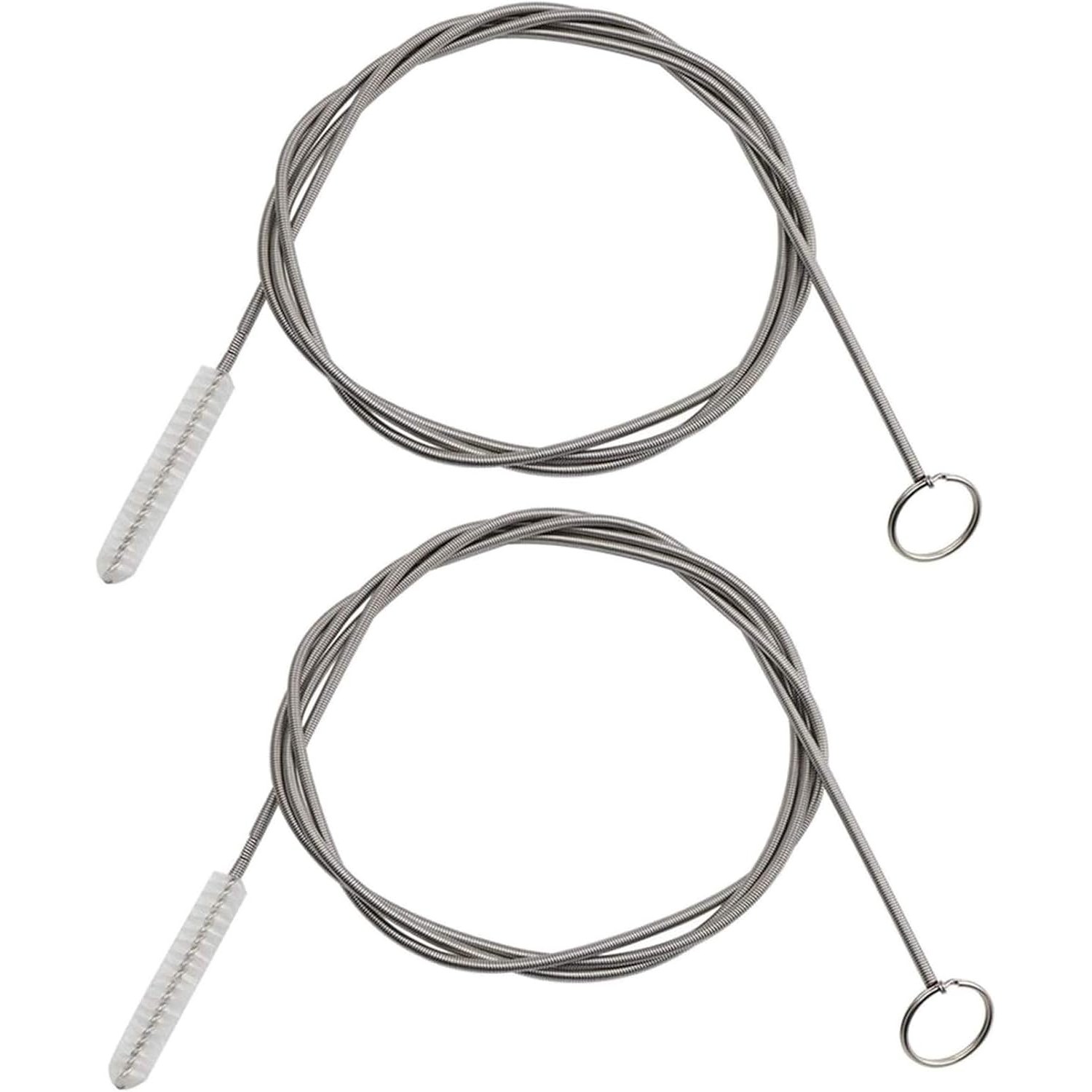
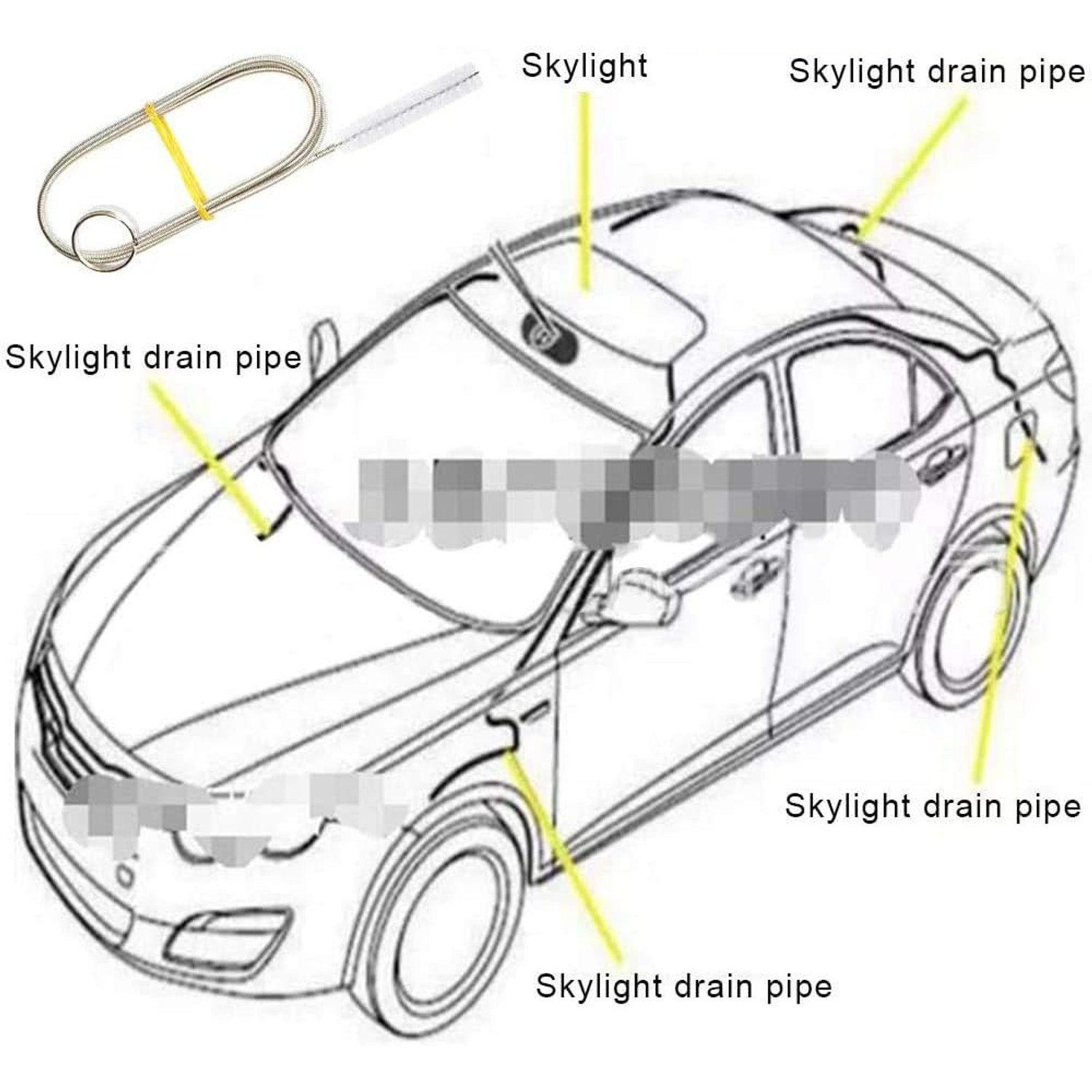
The wire body is stainless steel. It needs to be two contradictory things at once, stiff enough to push forward without folding in on itself, and springy enough to bend when it meets a curve. Get that balance wrong and you either have a rod that stops at the first elbow or a limp wire that goes nowhere. The flexible wire body on this brush is built to follow bends, including corners angled under ninety degrees, which is what lets it reach into fridge drain lines and sunroof drains rather than only straight sink wastes.
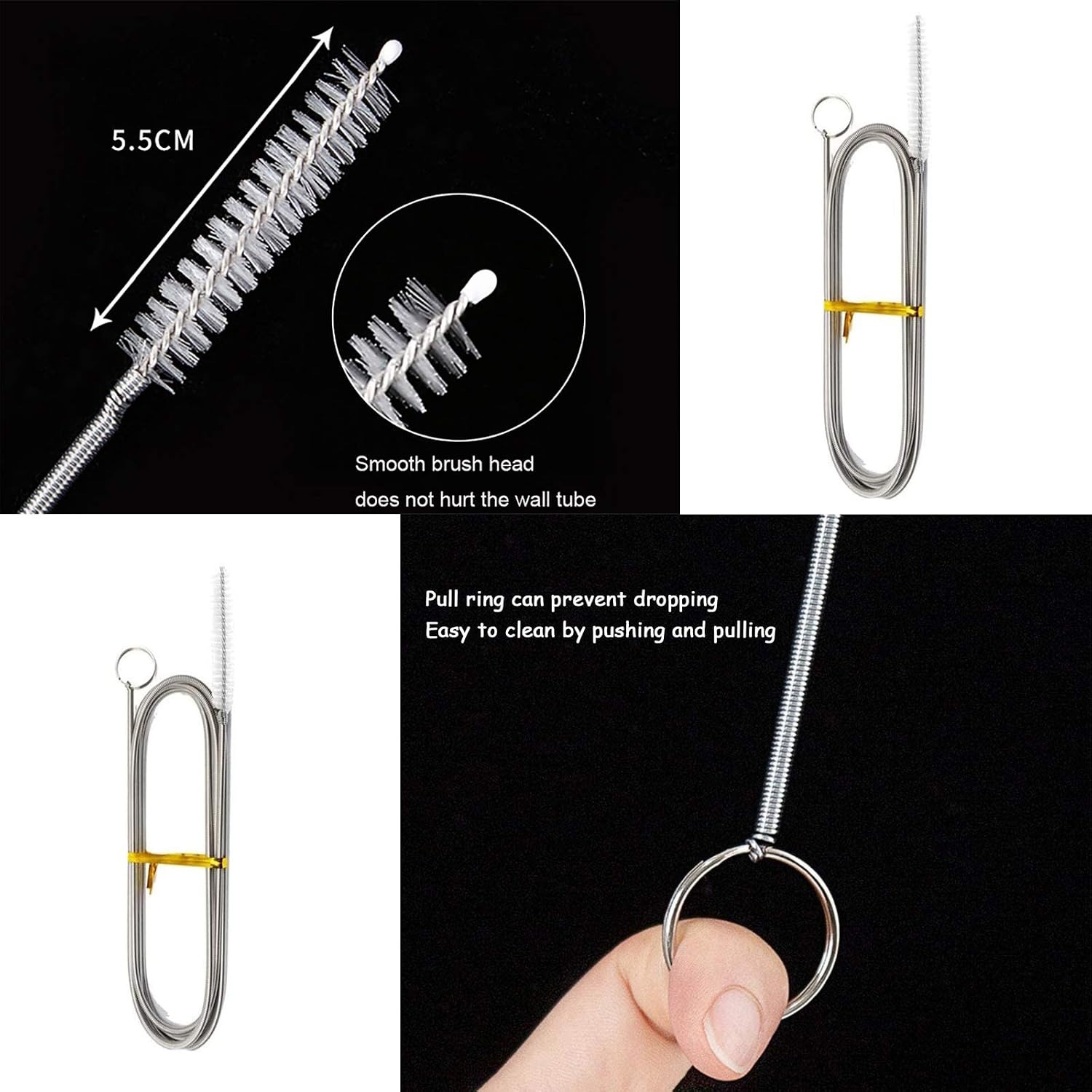
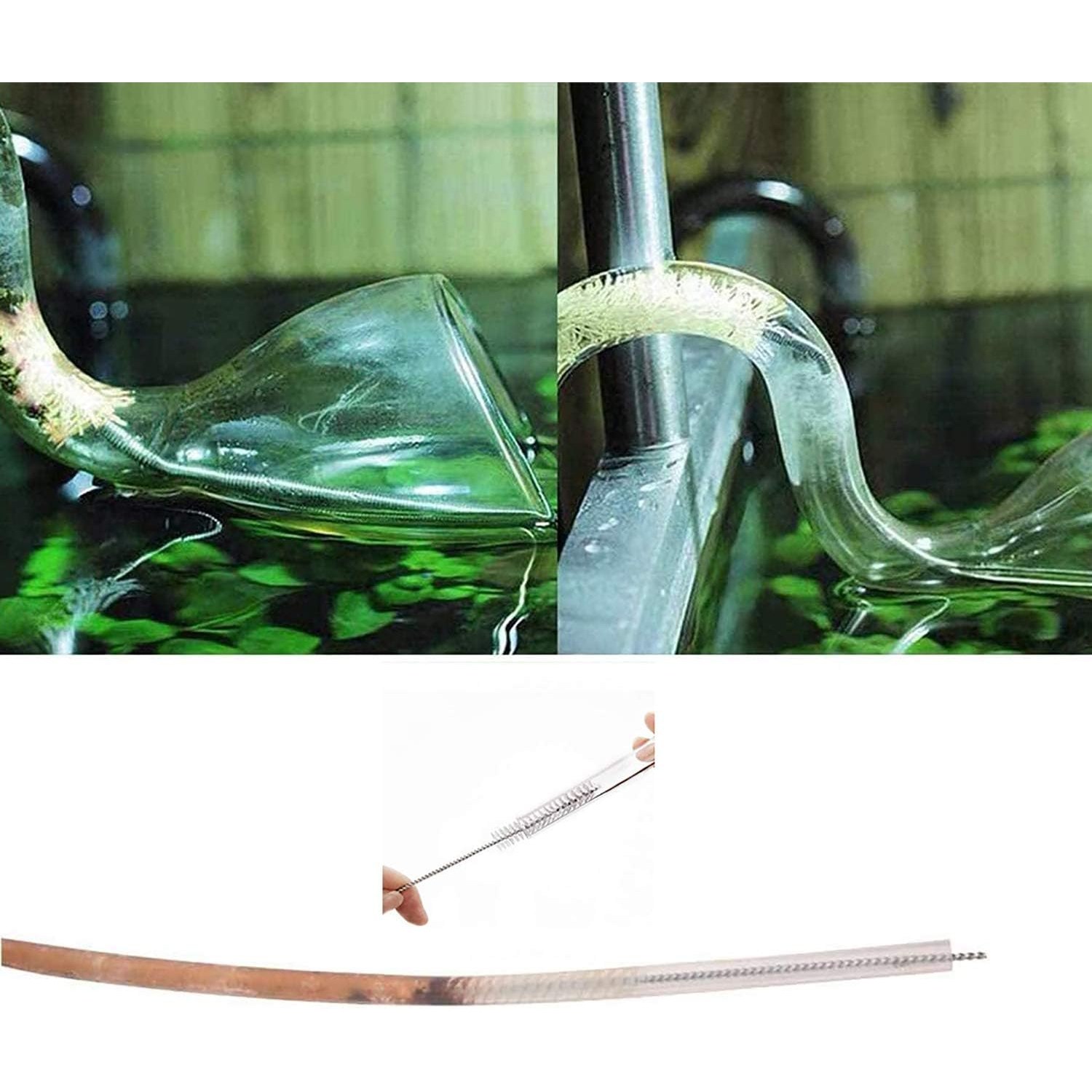
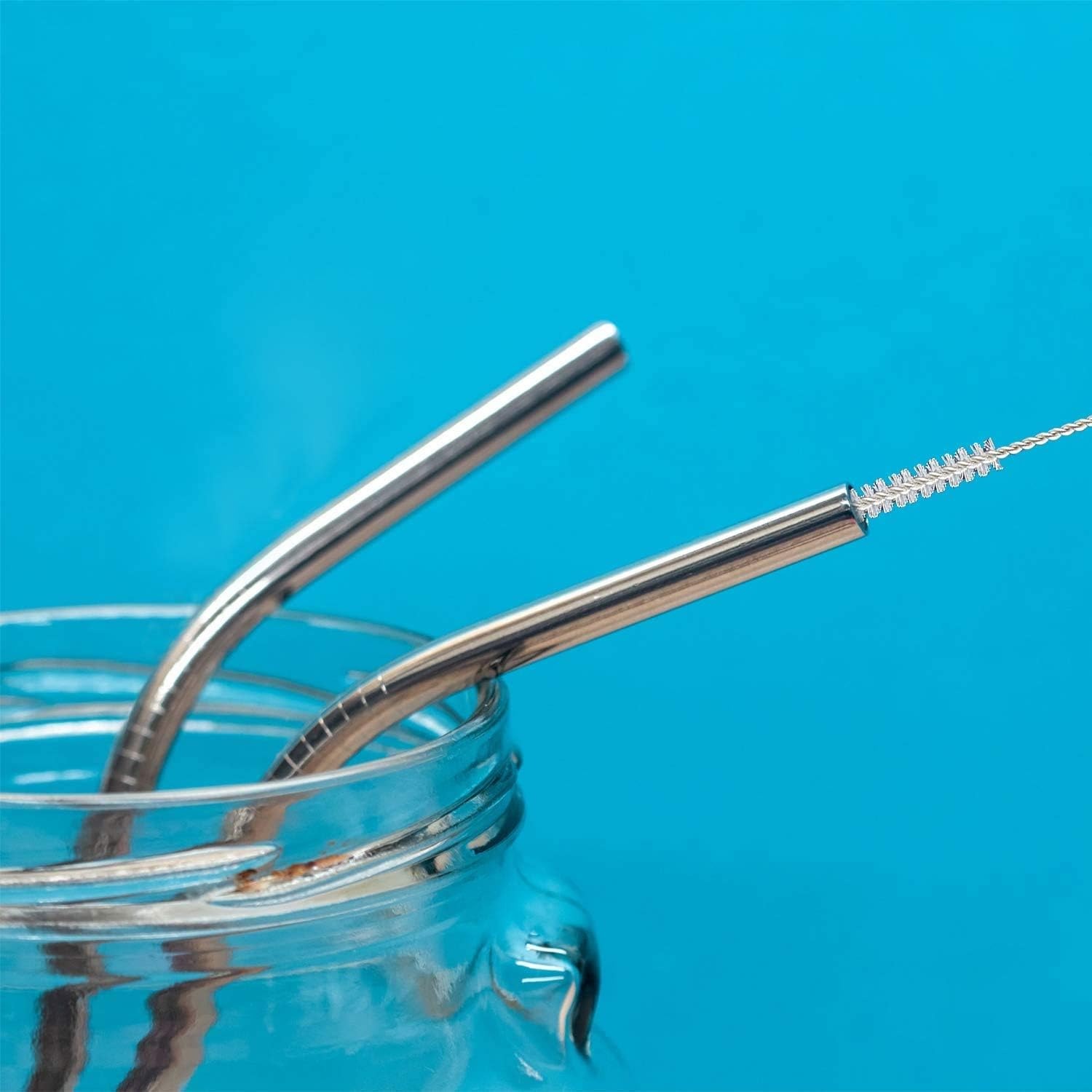
The bristle head is nylon. Nylon is the sensible choice for mixed use. It is firm enough to dislodge grease, slime and biofilm, and soft enough that it will not score PVC pipe, acrylic aquarium fittings or the inside of a glass tube. A wire brush head would cut through buildup faster but would also leave scratches, and scratches give new grime somewhere to grip.
The loop at the opposite end is the detail people appreciate most after the first use. You hook a finger through it and keep control of the brush the whole time it is inside the pipe. That means steady pressure when you push, and a sure grip when you pull back. It also removes the one genuine worry with any long thin tool, which is losing it down the drain.
Who this suits
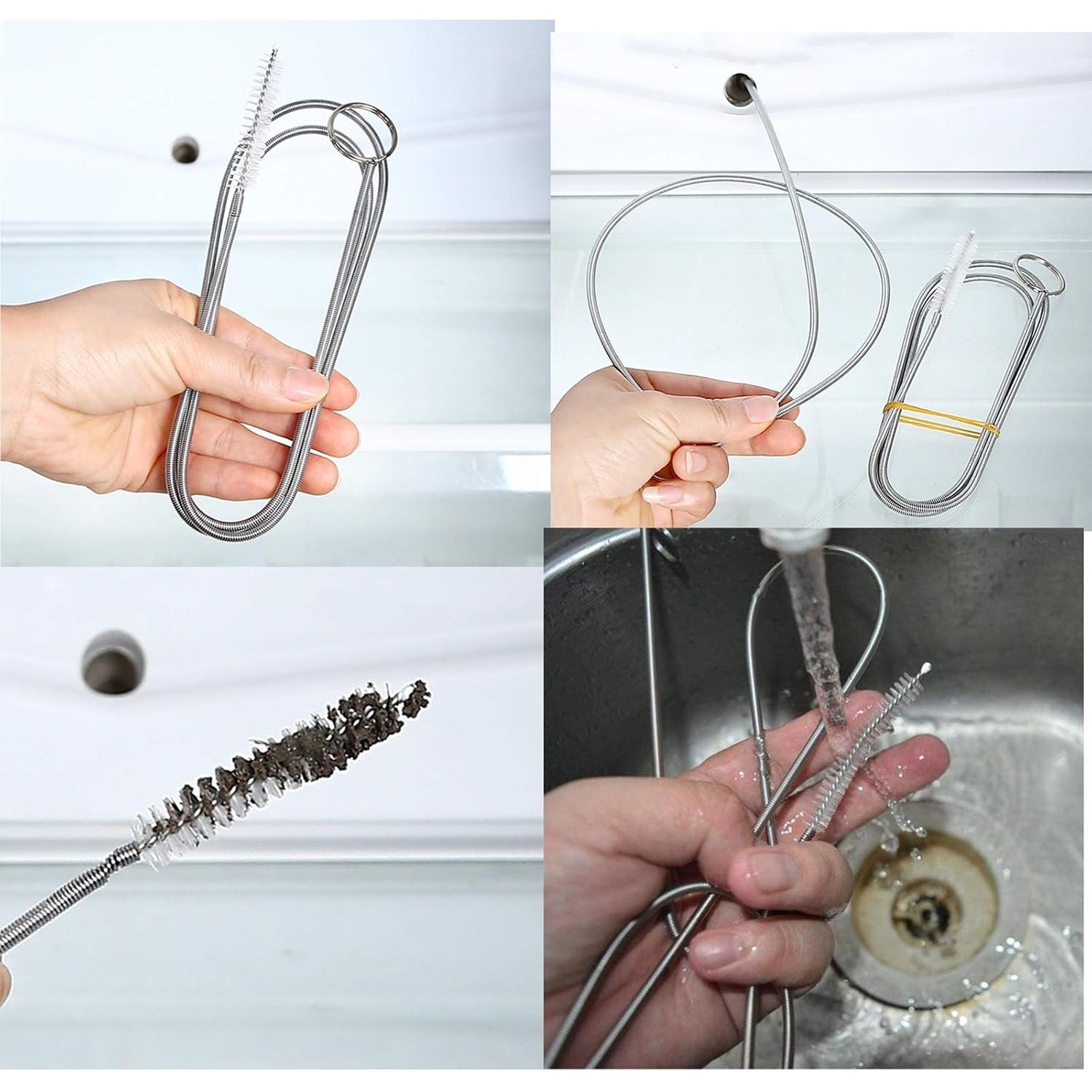
If you have a kitchen sink that drains slowly, this is a sensible first thing to try before you reach for anything stronger. The same goes for a bathroom basin where hair is the usual offender.
Fish keepers tend to be the most enthusiastic users of this kind of brush. Filter hoses, intake pipes and air line build up algae and film quickly, and flow drops off well before the tubing looks obviously dirty. A best aquarium hose brush is one of the few tools that gets right through the length of a hose.
Anyone who uses reusable bottles and straws has the same problem on a smaller scale. A narrow spout or a metal straw cannot be cleaned properly with a sponge. A best straw cleaning brush is really just a smaller version of the same idea, and the second brush in this pack is handy to reserve for drink items.
Then there is the appliance category. Fridge drain lines block with slime and then leak water into the salad drawer. Dehumidifiers, air conditioning condensate lines and water pump fittings have the same narrow tubing. A best fridge drain line cleaner does not need to be complicated, it needs to be long, thin and flexible.
One group this will not suit is anyone facing a genuine hard blockage in a main waste pipe. That is a job for a plunger, a proper auger or a plumber.
Using it without making a mess
Start by clearing the area. Put a bowl under the trap if you are working on a sink, and have a cloth ready, because whatever comes out will not be pretty.
Feed the bristle end in first and push in short, controlled movements. Do not try to drive it the full length in one go. When you feel the brush meet a bend, ease off and let the wire find its way rather than forcing it. Forcing is how wires kink.
Once the brush is in as far as it will comfortably go, work it back and forth over a short distance. That back and forth action is what actually does the scrubbing. Then withdraw it slowly, still turning slightly, so the bristles sweep debris out rather than packing it tighter.
Finish by running hot tap water through the pipe for thirty seconds to flush what you have loosened. On plastic pipework keep it to hot tap temperature rather than boiling.
For a bottle or straw, the method is simpler. Wet the brush, add a drop of dish soap, push it through and pull it back a few times, then rinse everything thoroughly.
Looking after the brush
This is the part most people skip and then wonder why a brush only lasts a season.
Rinse it immediately after use under warm running water and work some dish soap through the bristles. Grease left sitting in nylon bristles goes rancid and holds a smell. Rinse again until the water runs clean.
Dry it properly. Hang it by the loop handle so both the wire and the bristles can air out. Stainless steel resists rust, but nothing survives being stored permanently damp in a dark cupboard.
Store it coiled loosely. A wire that is folded hard in the same place over and over will eventually fatigue and snap there. A relaxed coil on a hook costs nothing and roughly doubles the useful life.
Keep the two brushes separate by job. One for drains, one for anything that touches food or drink. Mark the handle with a dab of nail polish if you are likely to forget which is which.
Choosing between options
If you are comparing a few of these, four things actually matter.
Length. A longer brush reaches further but is harder to control in a short run. Most household jobs are covered by a brush of a metre or more.
Flexibility. A brush that cannot turn a corner is only useful on straight pipe, which rules out most fridge lines and sunroof drains.
Bristle material. Nylon for mixed and delicate use, stiffer materials only if you are certain you are working on metal pipe and do not care about scratches.
An end loop. It sounds minor until the first time you nearly lose a brush. A best narrow pipe brush without any way to grip the far end is a design that will annoy you eventually.
Quantity also matters more than it looks. Two brushes is the difference between hygienic separation of jobs and reluctantly using the drain brush on your water bottle.
The short version
A flexible pipe cleaning brush is a cheap, reusable tool that solves a problem most households have and nobody thinks about. It bends around corners, scrubs the inside of pipes that no cloth can reach, and pulls back out cleanly thanks to the loop handle. Nylon bristles keep it safe on plastic, glass and aquarium tubing.
Use it once a month on a kitchen sink, every few weeks on a hair prone bathroom drain, and whenever flow drops on a filter hose. Rinse it, hang it to dry, store it loosely coiled. Do that and you will spend far less time dealing with slow drains and far less money on chemicals that only treat the symptom.