
The complete guide
How To Choose A Mesh Sink Strainer That Actually Stops Blockages
The problem nobody notices until it is too late
Nobody plans for a blocked sink. It creeps up. You rinse a pan with a bit of rice stuck to it, you tip the last of the cafetiere down the plughole, you scrape a plate while the tap is running. Each of those on its own is harmless. Together, over weeks, they build a soft plug of food, grease and fibre that sits in the trap under your sink and slowly narrows the pipe.
The first sign is usually a gurgle. Then the water starts hanging around for a few seconds after you pull the plug. By the time it is genuinely blocked, you are either pouring chemicals down the drain or taking the trap apart over a bucket.
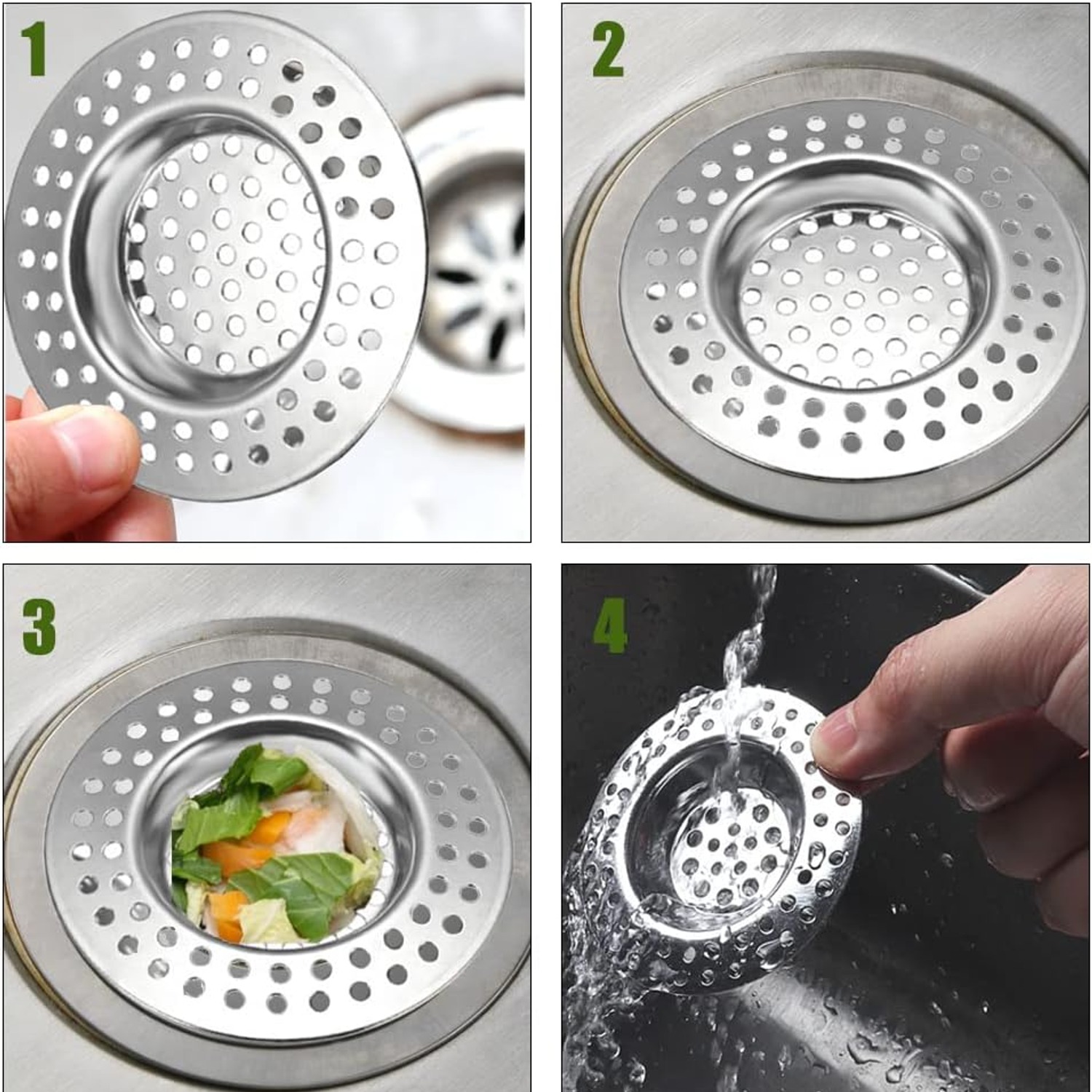
A mesh sink strainer solves the problem before it starts. It is a flat, cheap piece of kit that sits in the plughole and refuses to let solid matter past. That is the whole idea. No electronics, no maintenance schedule, no plumber.
How a mesh strainer works
Think of it as a filter with a job description. Water is allowed through. Anything with structure is not.
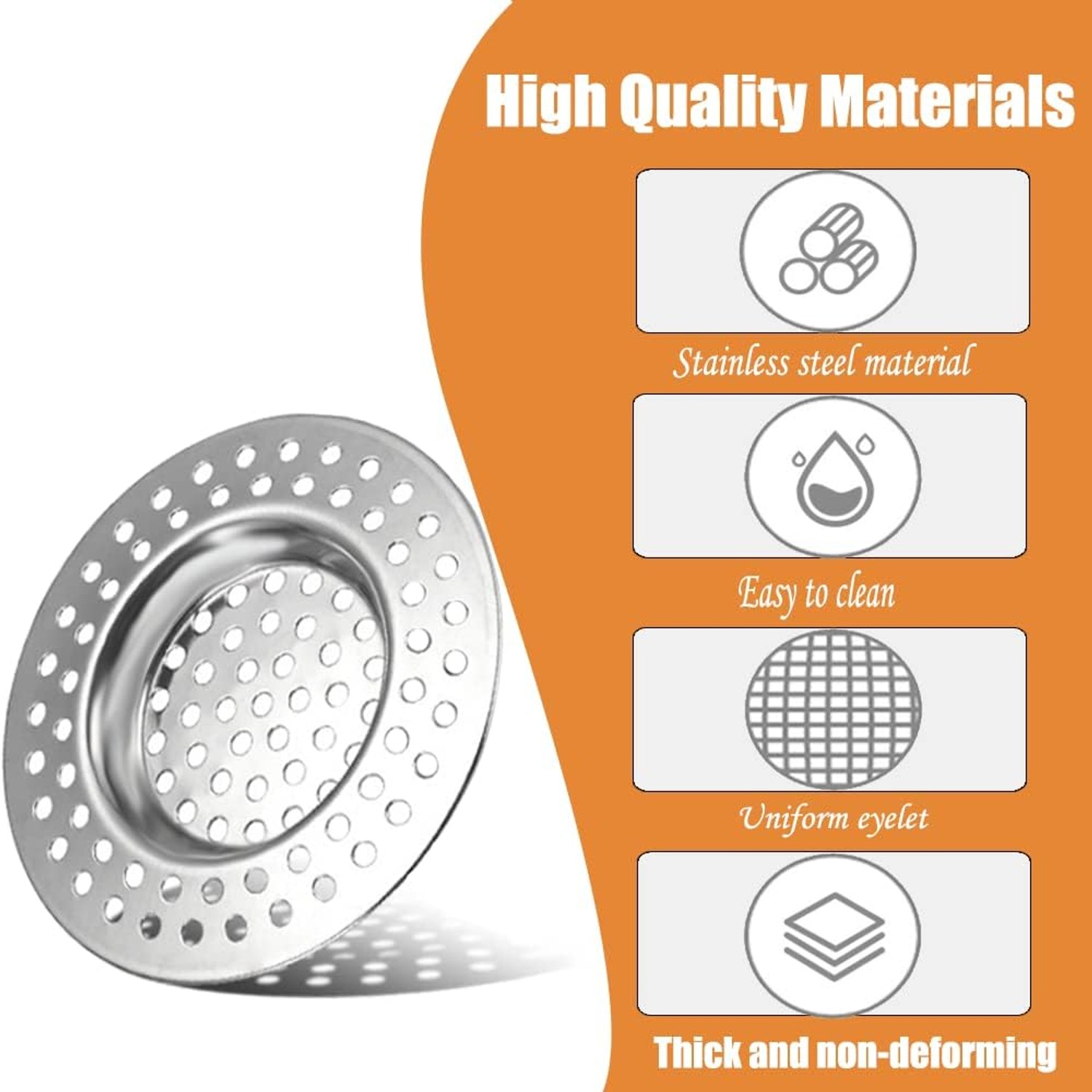
The design that does this best uses a dome covered in many small holes rather than a flat plate with a handful of large ones. There are two reasons. First, small holes block smaller particles, which is where cheap strainers fail. A screen with 5 mm holes will catch a chip but wave rice, tea leaves and coffee grounds straight through. Second, the dome shape keeps part of the surface above the pile of debris, so water keeps finding a way out even once scraps start collecting.
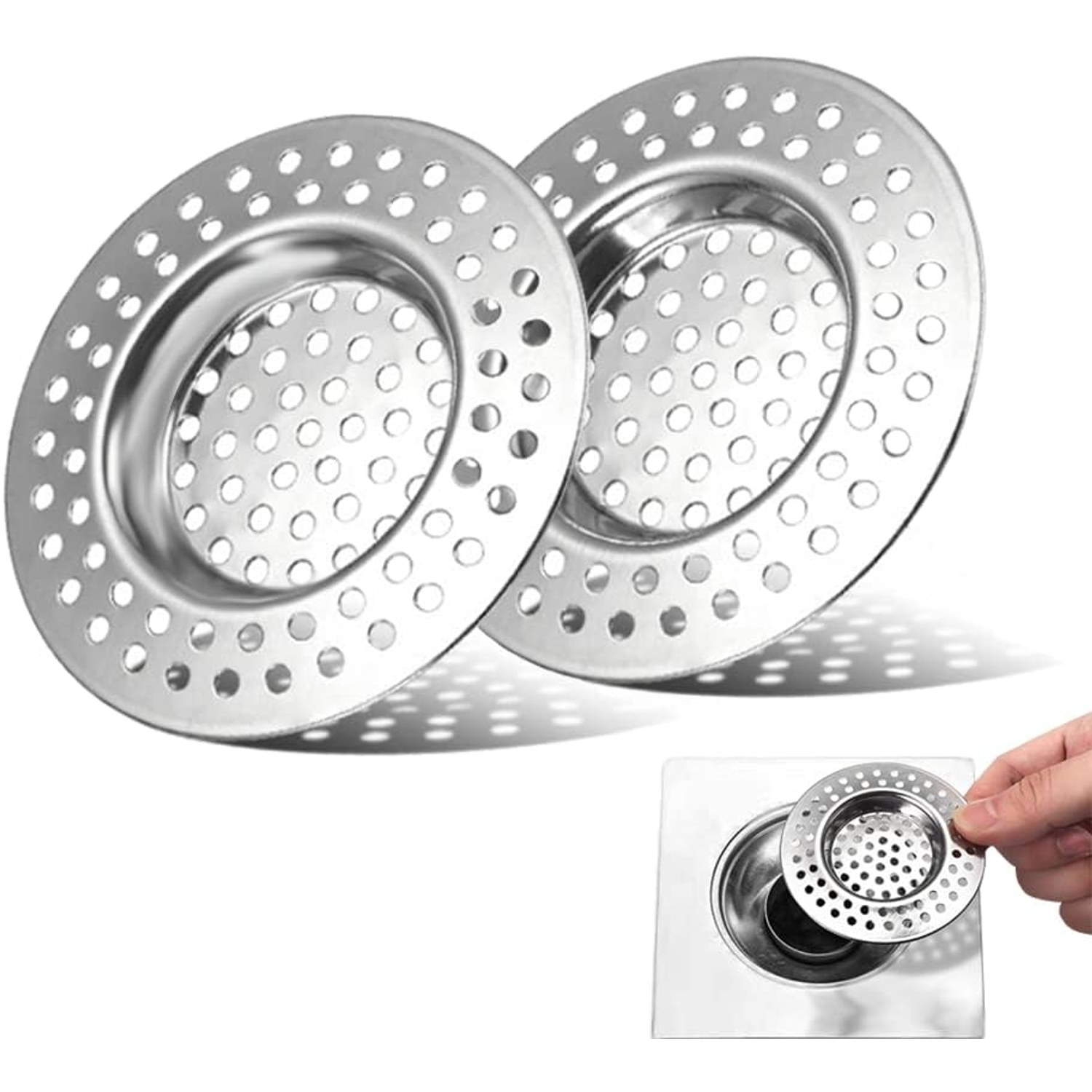
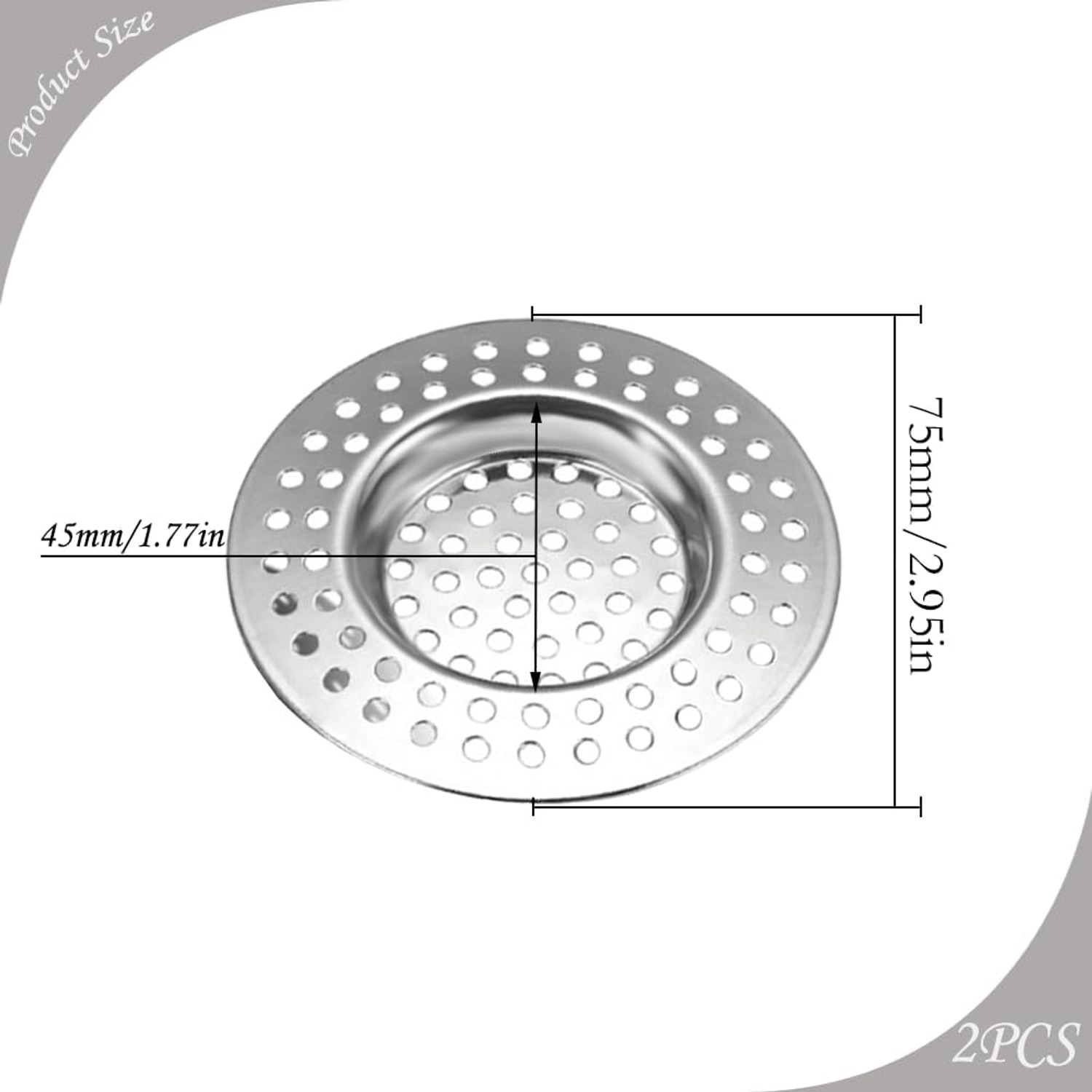
The strainers in this pack use that approach. Each one is 75mm across the outer rim with a 45mm inner diameter and an item depth of 2 mm, formed from stainless steel in a plain silver finish. The rim rests on the sink around the waste hole while the smaller inner section drops into it, which is what stops it sliding about.
Stainless steel matters more than it sounds. Plastic strainers warp in hot water and stain with tea and turmeric. Steel takes boiling water from a pasta pan without flinching and wipes back to clean. It also handles being dropped, stood on and jammed into a dishwasher rack, which is more than you can say for most kitchen accessories.
Who this suits
If you wash up by hand, this is for you. Hand washing is where most scraps enter the drain, usually from rinsing plates and pans before they go in the bowl.
It also suits people in rented homes. Drain blockages are a classic source of arguments with landlords, and the cost of a plumber call-out is many times the price of a strainer. Putting one in each waste hole on moving day is a small insurance policy.
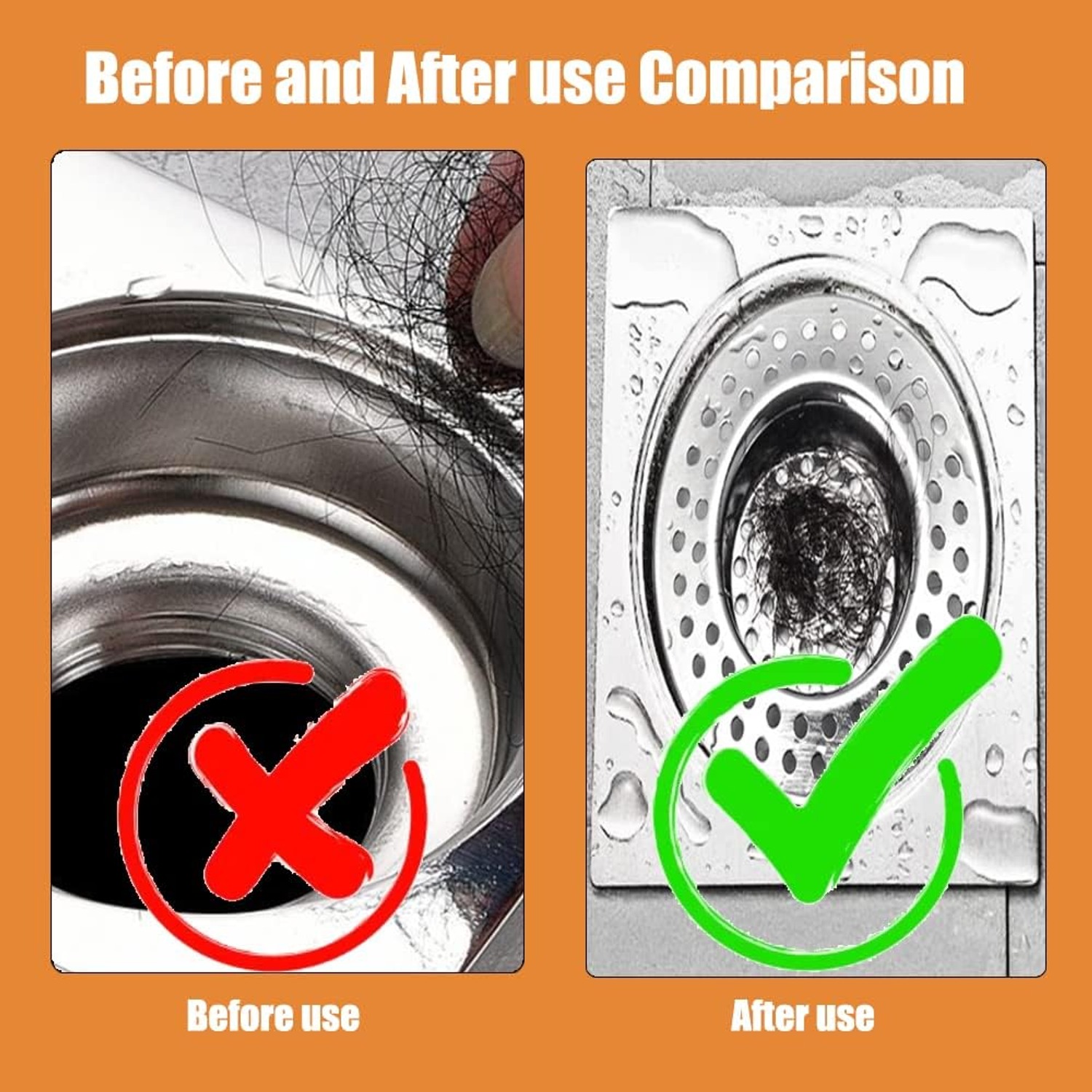
Households with long hair should pay attention to the second strainer in the pack. The manufacturer lists bathtubs and bathroom drains as suitable uses, and in practice a bathtub hair catcher often does more visible work than the kitchen one. Hair is the single worst thing you can send down a drain because it tangles with soap residue and forms a mat that nothing dissolves easily.
Anyone without a waste disposal unit gets the most benefit, since there is no grinder standing between the sink and the pipe. If you do have a disposal, you can still use a strainer while washing up, then lift it out before running the unit. Never run a disposal with metal sitting in the opening.
Getting the size right
This is the one place people go wrong, so it is worth two minutes with a tape measure.
Turn the tap off and look at your plughole. You want the diameter of the opening itself, not the shiny flange around it. Lay a ruler across the hole and read the widest point. That number needs to be close to 45mm for these strainers to seat correctly, because the 45mm inner section is the part that sits in the hole.
Then check there is 75mm of flat surface around the opening for the rim to rest on. In most sinks there is plenty. In a very small bathroom basin with a sloped bowl, there may not be, and the strainer will rock instead of sitting flat.
If your measurement is a few millimetres out either way, think about which direction. Slightly too small and the strainer will tip into the hole and be useless. Slightly too large and it will perch on top without seating, so scraps wash around the edges. Neither is worth the gamble, and a quick measure avoids a return.
Sinks are not standardised across countries or decades, so do not assume that because a strainer fitted your old kitchen it will fit this one.
Living with it day to day
The habit is simple. Empty after you wash up.
Lift the strainer by the rim, tip the contents into the bin or compost caddy, give it a rinse and drop it back in. Ten seconds. If you leave it, two things happen. The mesh clogs with grease and water starts pooling, and the trapped food starts to smell within a day or so in warm weather.
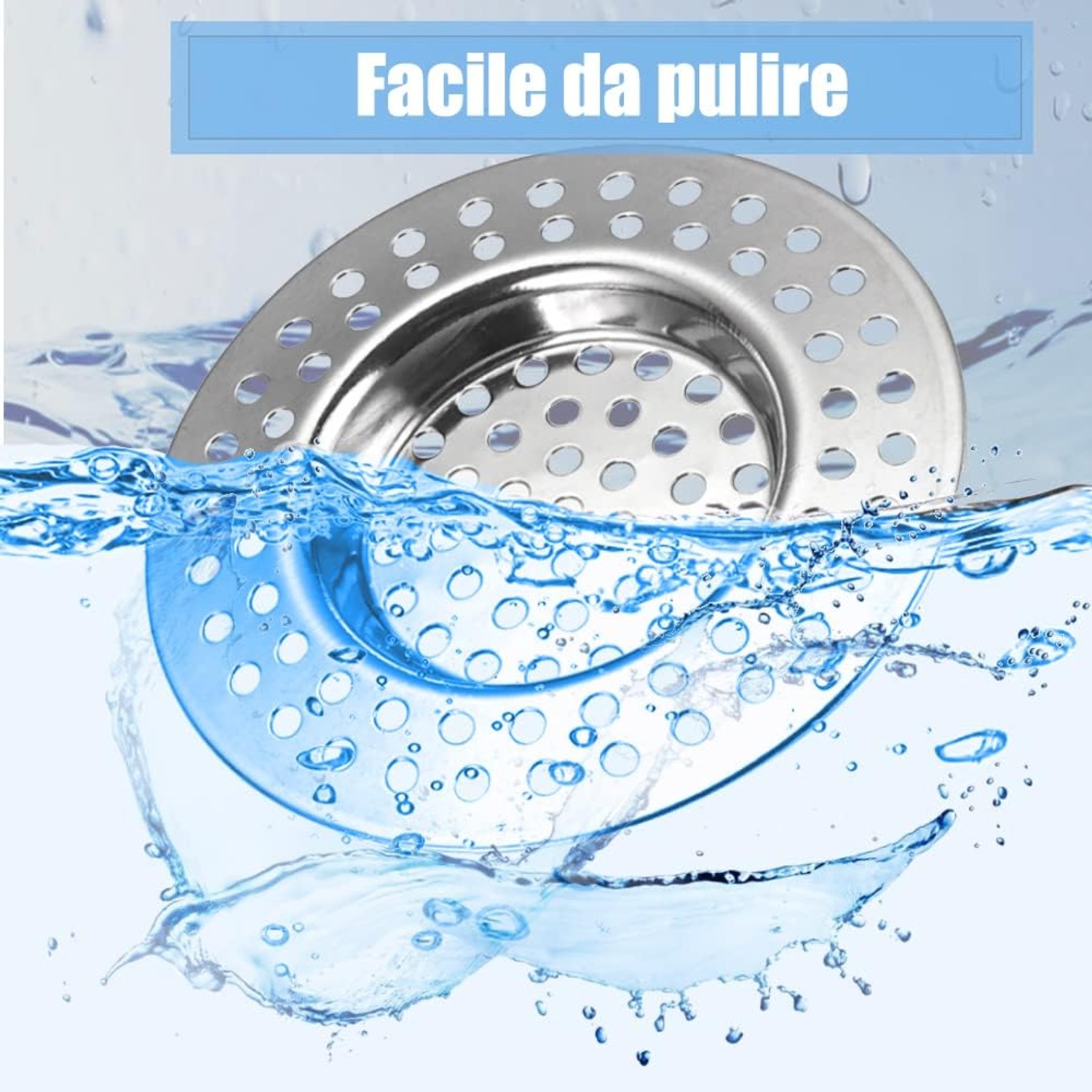
Once a week or so, do a proper clean. Warm water, washing-up liquid and a soft brush will shift the film of fat that builds in the perforations. A used toothbrush is ideal for this. Avoid steel wool, scouring powder and bleach-based cleaners, which can scratch or dull the finish over time.
Dry it if you are putting it away rather than leaving it in the sink. Stainless steel resists rust well, but standing water leaves mineral spots on any metal surface.
One more small habit makes a bigger difference than the strainer itself. Scrape plates into the bin before they reach the sink. The strainer is there to catch what you miss, not to replace the bin.
What to look for in any strainer
If you are comparing options, here is what actually separates a good one from a bad one.
Hole size is the first thing. Fine perforations beat wide holes every time for everyday kitchen use. Look at photographs closely, since some listings photograph strainers from an angle that hides how big the gaps really are.
Material is next. Stainless steel outlasts plastic and silicone by a wide margin in a kitchen sink, where it meets hot fat and boiling water regularly.
Edge finish is worth checking too. A pressed metal disc with a raw cut edge is unpleasant to handle when it is wet and loaded with scraps. Rounded edges, as on these, make the daily emptying routine less annoying.
Finally, count what you get. A two pack covers more than one drain, which matters because the bathroom usually needs protection just as much as the kitchen.
The short version
A mesh sink strainer is one of those small purchases that quietly saves money. It stops the slow build-up that turns into a blocked trap, and it costs a fraction of a single plumber visit.
This two pack gives you a pair of stainless steel strainers, 75mm across with a 45mm inner diameter, with fine perforations and rounded edges. One for the kitchen, one for the bathroom or bath, or keep the second as a spare.
Measure your plughole first. Empty it after every wash-up. That is genuinely all there is to it.