
The complete guide
How to Choose and Use a Flexible Drain Brush
The problem with short brushes
Nearly every household has a small bottle brush in a drawer. It is fine for a flask and useless for a drain. The moment you try to clean a pipe with it, you discover two things. First, the gunk is not at the opening, it is further in. Second, the pipe bends, and a rigid brush stops at the first corner.
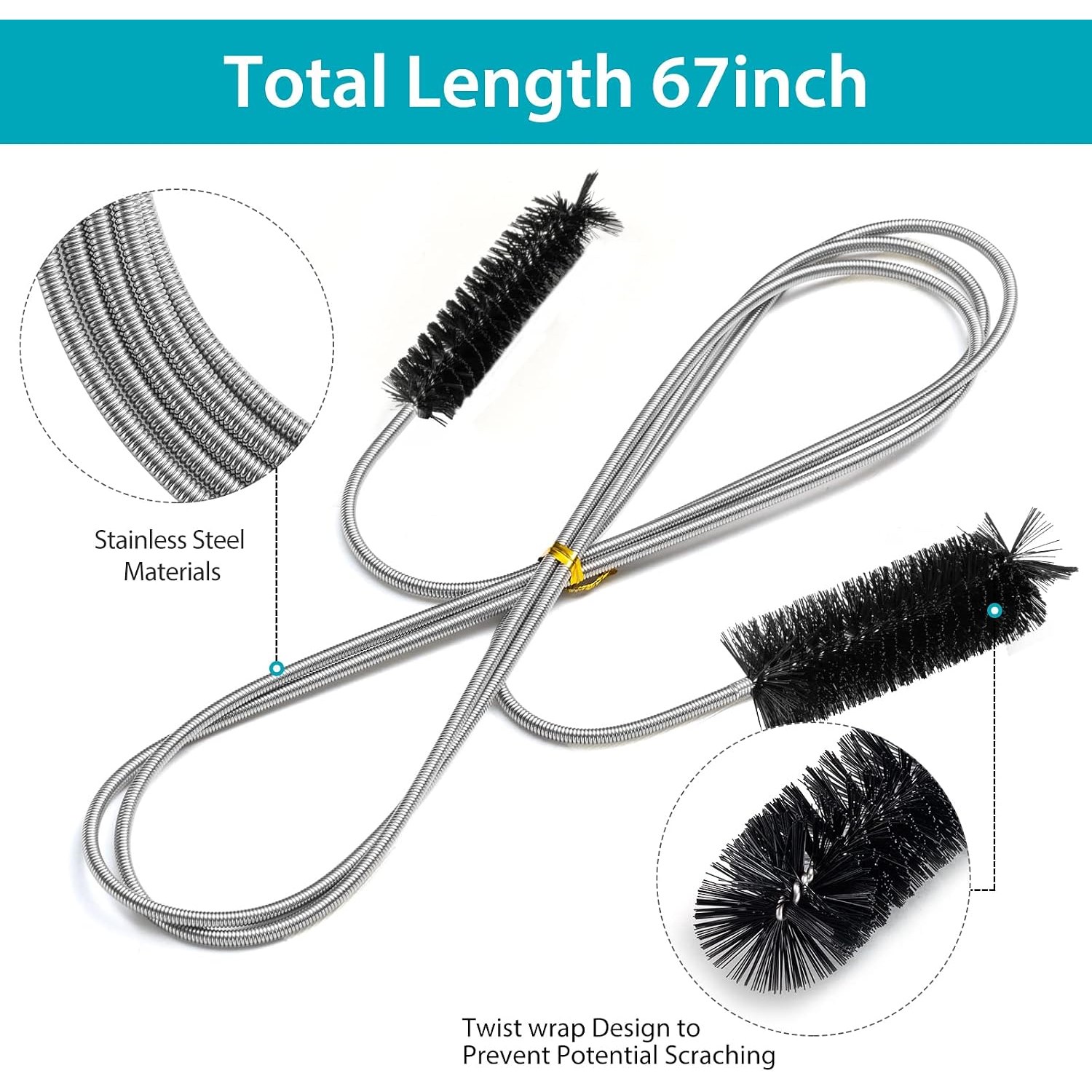
That gap is where a 170cm flexible brush earns its place. It is long enough to pass through the whole run rather than poking at one end, and the shaft bends with the pipe instead of fighting it. The difference in result is not subtle. You go from scrubbing the first few centimetres to actually cleaning the surface where the smell and the slow draining come from.
What causes build-up inside pipes
Most pipe grime is a slow accumulation of a few predictable things. In a kitchen it is fat and food, which cool on the pipe wall and go sticky, then catch everything else that passes. In a bathroom it is hair, soap and skin cells, which knit into a mat that water has to squeeze past. In hoses and water lines it is biofilm, a slimy layer of bacteria that forms anywhere water sits still for long enough.
None of these arrive overnight. They build up over months, which is why a drain that was fine in spring is sluggish by autumn. Chemicals can dissolve some of it, but they do not remove the layer that stays stuck to the wall, and they are harsh on older pipework. Physically brushing the surface is the only method that actually takes the deposit off.
How a spring-shaft brush works
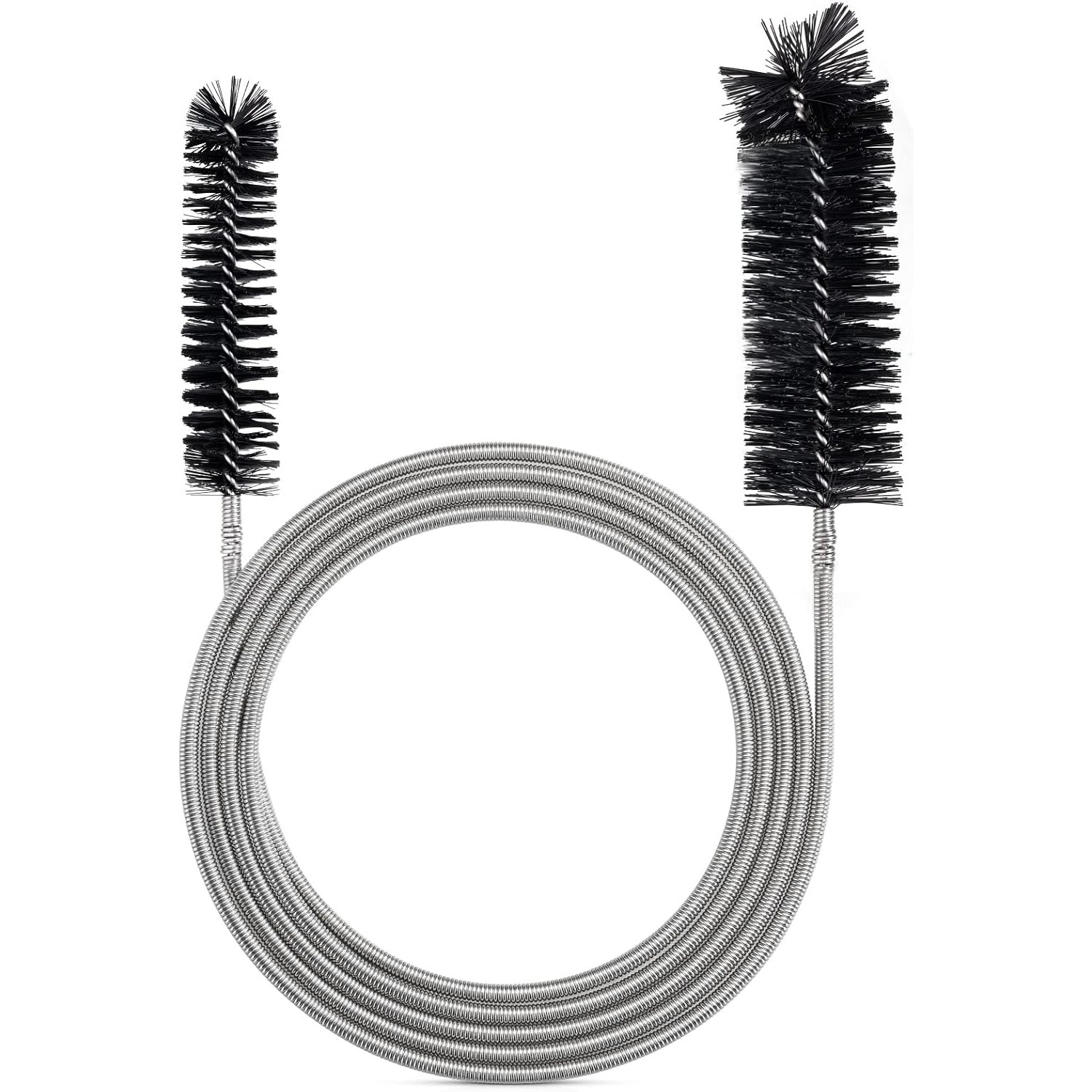
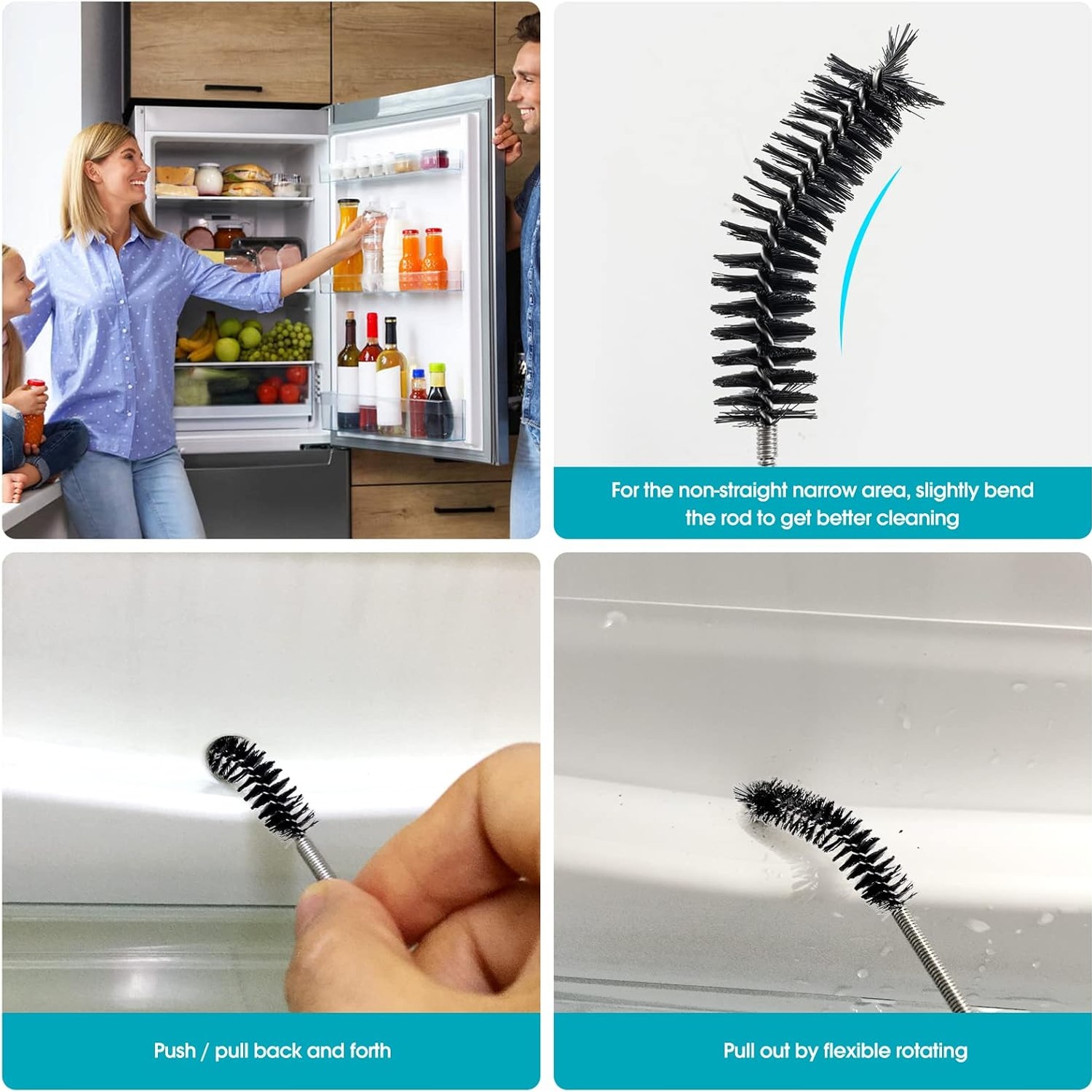
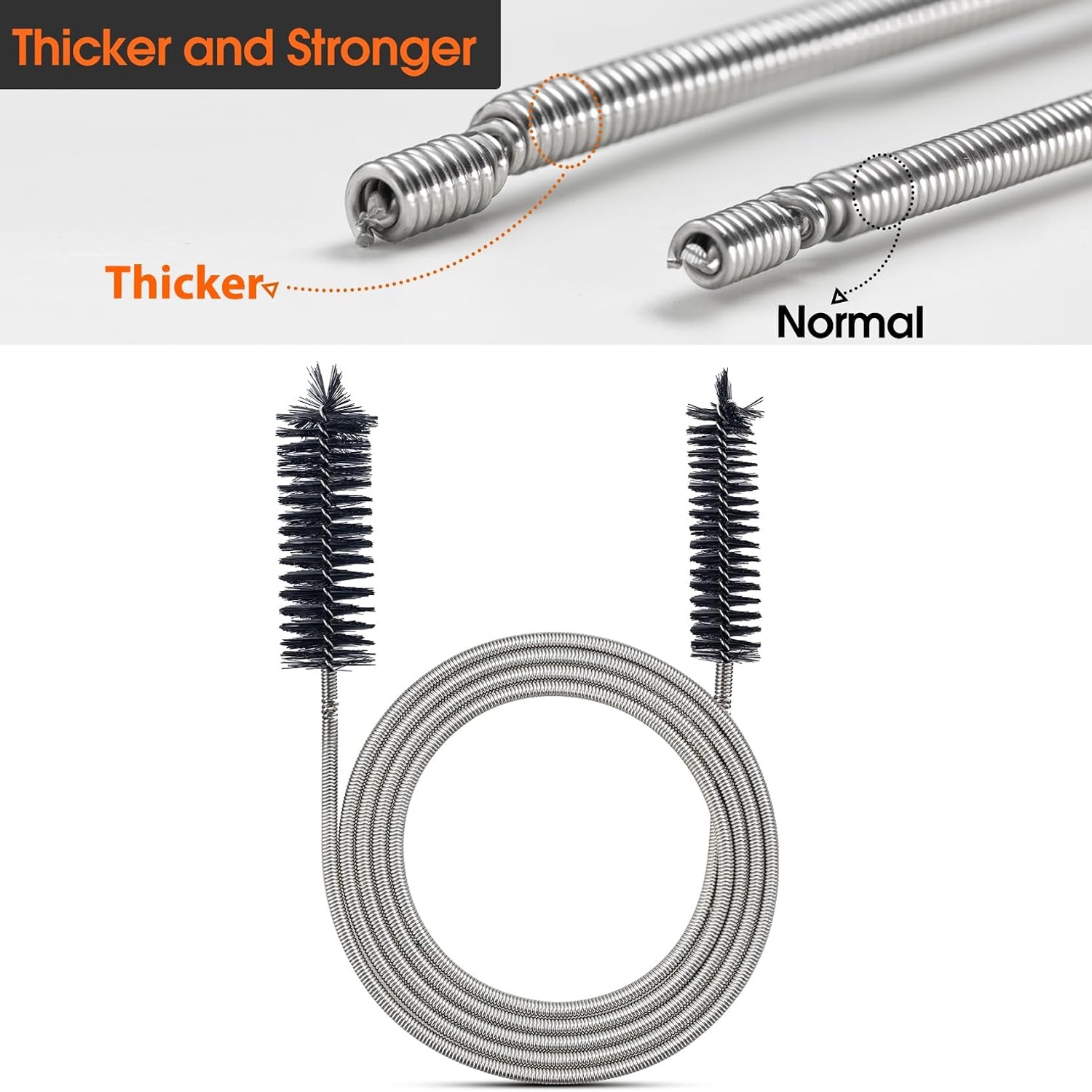
The shaft on this brush is a tight metal spring rather than a solid rod. That is the design choice that makes it work. A spring will twist and flex along its length, so when you push and rotate it, the brush head tracks around the curve of the pipe. The force you apply at the handle end travels along the coil rather than getting lost at the bend.
The maker describes this version as having a thicker, reinforced spring compared with the standard type, which is aimed at giving it more pushing strength without collapsing. It is rated by the manufacturer for curved pipes and bends angled at less than 90 degrees. A true sharp right angle, like the back of some traps, is still a hard ask for any flexible brush.
Both ends carry a nylon bristle head. In practice that is more useful than it sounds. You can start from whichever end of the pipe is easier to get at, and when the leading head fills with debris you flip the tool and come back with a clean one. For longer runs, working from both directions catches material that a one-way pass would simply push along ahead of it.
Why nylon rather than wire
There is a reason the bristles are nylon and not steel. Modern plumbing is full of plastic, and a lot of hoses have an inner liner you do not want scored. A wire brush will clean aggressively and leave scratches, and those scratches then give future grime something to hold onto. It is a short-term win that makes the next clean worse.
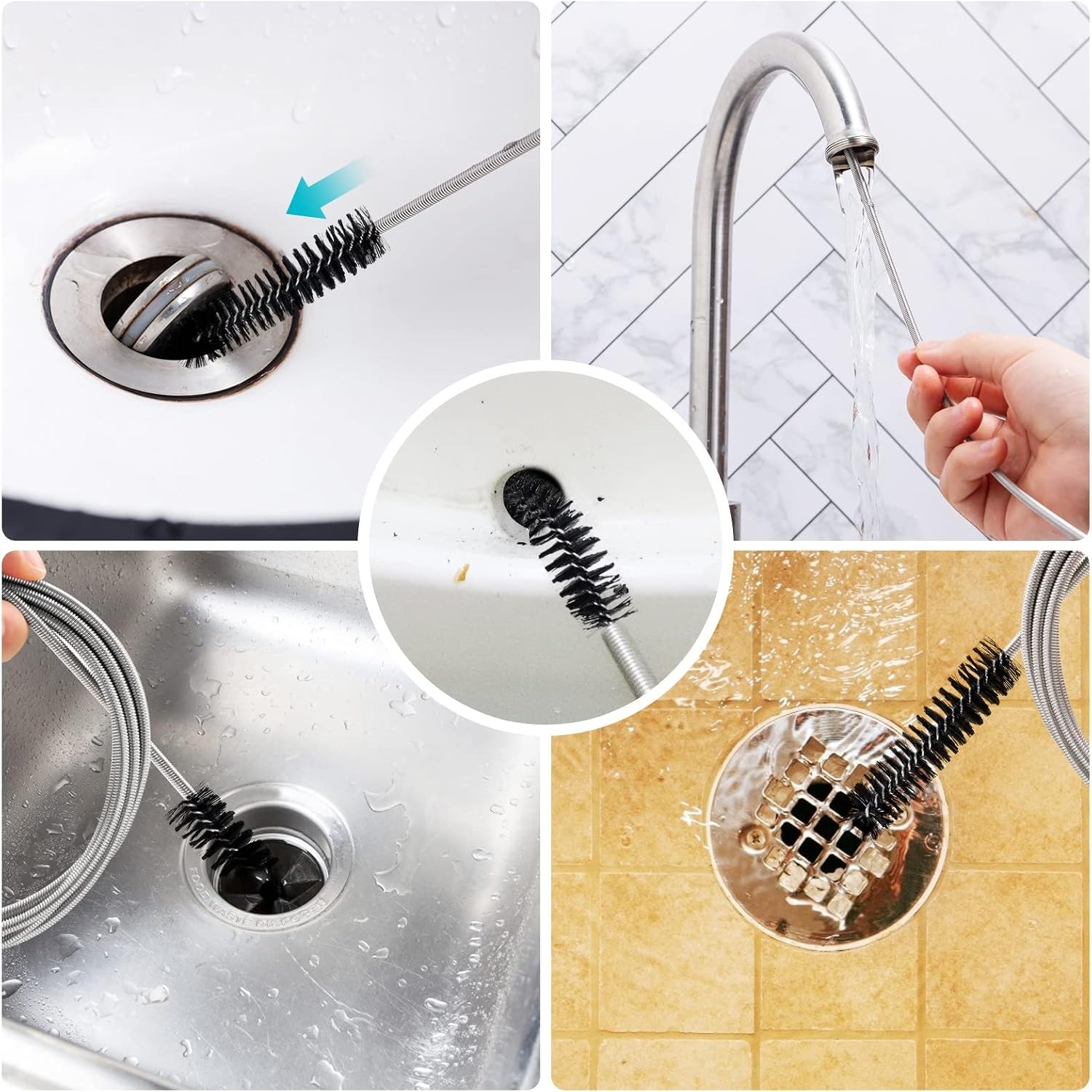
Nylon is firm enough to break up biofilm and shift greasy film, and it flexes to keep contact with a curved wall. It is also kinder to anything you would rather not mark, which is why people use brushes like this on aquarium tubing, drinking water lines and shisha hoses as well as drains. The maker's details specifically notes compatibility with a range of surface materials.
Who this suits
Anyone with an older house and slow drains will get use out of it almost immediately. So will anyone with appliances, because washing machine and dishwasher drain hoses are notorious for collecting sludge that then smells.
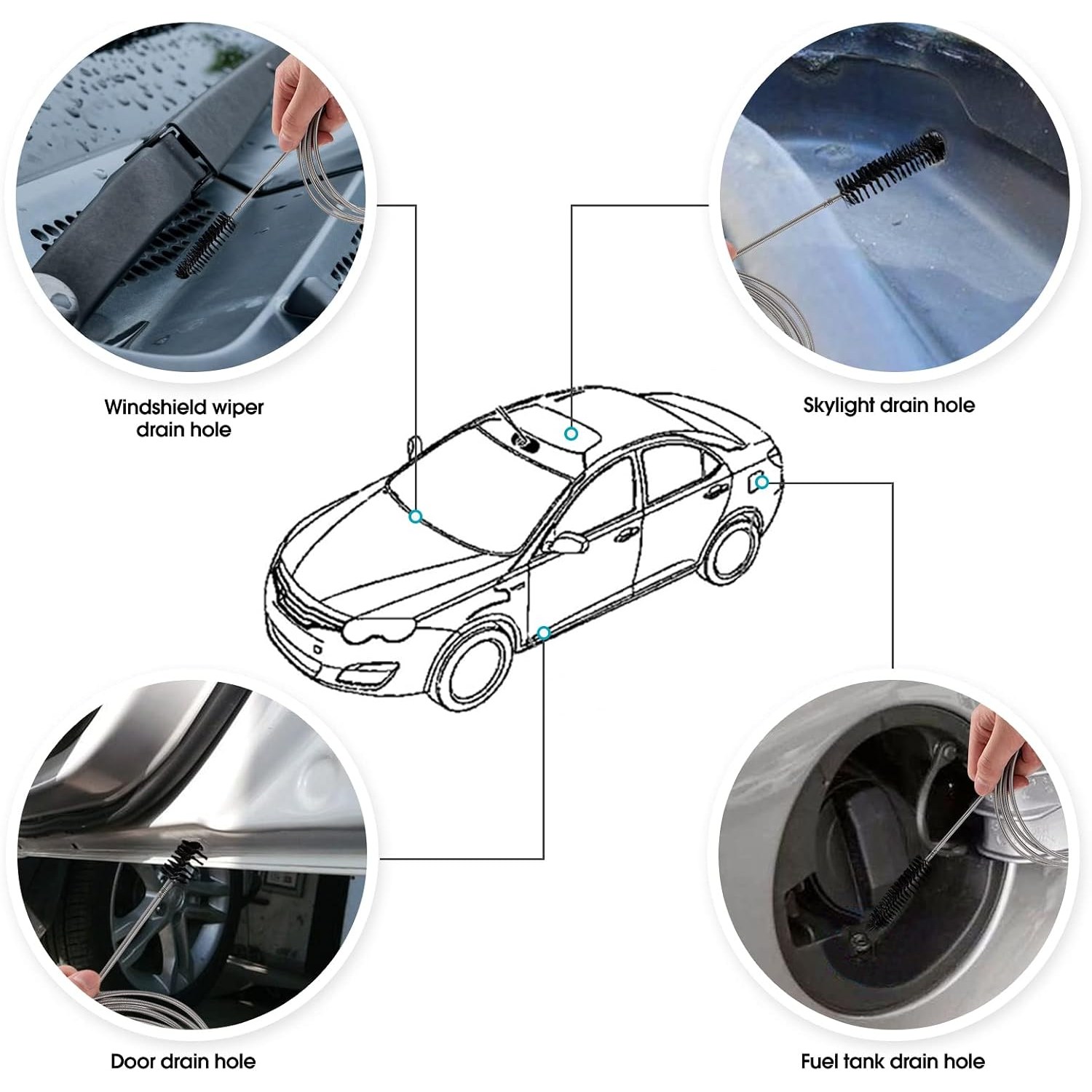
Beyond plumbing, it suits aquarium keepers cleaning tubing, brewers cleaning transfer lines, and anyone who owns tall bottles, decanters or vases that no normal brush reaches into. Workshops and small commercial kitchens find a long flexible brush useful for machine lines and condensate drains.
It is less suited to one thing in particular: a fully blocked, solid stoppage deep in a soil stack. That is a job for a drain auger or a professional. This brush is a maintenance and partial-clearance tool, and it is very good at preventing the blockage you would otherwise have called someone out for.
How to choose the right one
Three things actually matter when you pick a flexible pipe cleaning brush.
Length comes first. Measure the longest pipe or hose you realistically need to clean and allow extra so you have something to hold. A washing machine drain hose is often 1.5 metres or more, which is exactly why a 170cm tool is a sensible size.
Bore fit comes second. The bristles should brush the pipe wall firmly without the head jamming. Too small and it spins uselessly in the middle. Too large and you cannot feed it past the first joint. The head diameter is not stated by the maker, so measure your pipe bore and get in touch if you are unsure.
Shaft flexibility comes third, and it is the one people overlook. A stiff shaft pushes harder but will not corner. A spring shaft corners well and is the right choice for domestic plumbing, where almost nothing runs dead straight.
Using it properly
Work with water, not against it. Run the tap or flush the line first so the debris is wet and loose. Feed the brush in slowly and rotate the shaft as you push rather than ramming it. If it stops, back off a few centimetres, twist, and try again at a slightly different angle. That small adjustment clears most hang-ups.
When the head comes out the far side, pull it right through if you can, rather than dragging everything back the way you came. Then flush the pipe with hot water to wash out what you have loosened. On a really dirty line, two passes with a rinse in between beats one long scrub.
For appliance hoses, disconnect them and work on them away from the machine. It is easier, and you can see what is coming out. Switch off at the wall first.
Looking after it
The care routine is short. Rinse the bristles under running water after every job to clear trapped debris. Add a little mild dish soap if you have been in something greasy. Shake it out and let it dry completely before you put it away, because a metal spring that is stored wet will not thank you.
Store it coiled loosely. The one habit that shortens the life of a spring shaft is bending it sharply in the same spot over and over, so avoid folding it tight around a hook or cramming it into a small box. Hanging it is the easiest option, and at 0.09 kg it will hang off almost anything.
The short version
A short brush cannot clean a long pipe, and a stiff brush cannot clean a bent one. This tool solves both problems with a 170cm spring shaft and a nylon head at each end. It is light, it coils away small, and it handles drains, appliance hoses, water lines, tubing and bottles with the same basic technique.
Measure your pipe bore before you order if it is unusually narrow or wide, feed it in slowly with a twist, and rinse it when you are done. Do that and it will quietly save you a lot of unpleasant jobs.