
The complete guide
How To Choose And Use A Drain Snake For Hair Clogs
The problem nobody talks about until it happens
A shower drain does not block overnight. It slows down over months. You notice the water pooling around your feet a bit longer than it used to, then halfway up your ankles, then you are standing in a puddle for the whole shower and finally admitting something has to be done.
What is down there is almost always the same thing. Hair, bound up with soap residue, conditioner and skin oils into a soft, dense mat. It catches on the inside of the pipe, usually within the first half metre, and it grows. Every strand that goes down adds to it. Bathroom basins do the same with shaving stubble and toothpaste film. Kitchen sinks do their own version with grease and food fibres.
The frustrating part is how simple the fix is once you have the right tool. You do not need to take apart the trap. You do not need a caustic liquid. You need something long enough, thin enough and hooked enough to get in there and pull the mat out.
What a 76cm metal drain snake actually does
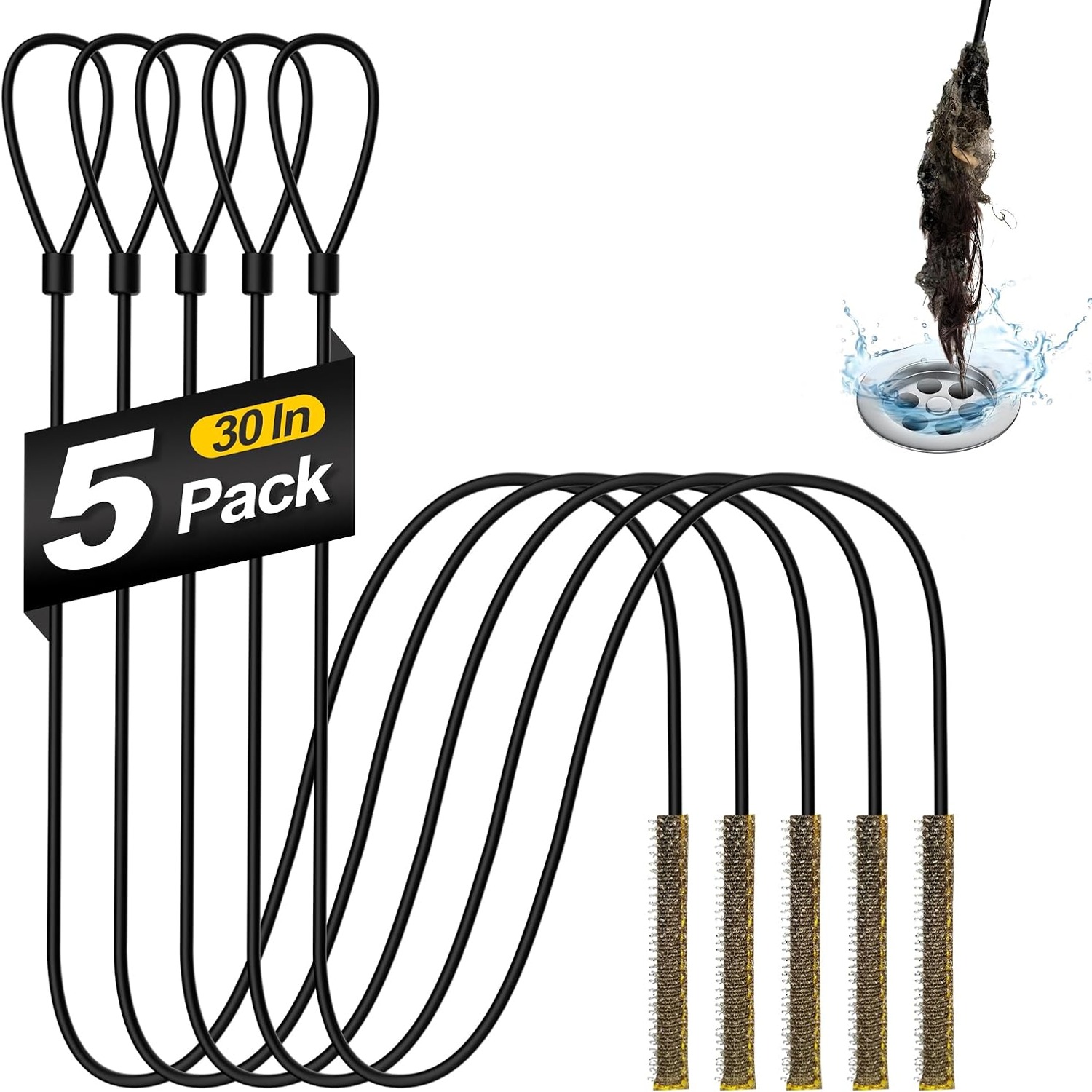
This tool is a cable with a hooked tip. The cable is 76cm long, which is 30 inches (76 cm), and that length is chosen deliberately. It is long enough to pass the strainer, go down the vertical section of pipe, and reach into or past the first bend where blockages usually sit. Shorter plastic strips often stop just above the clog, which is why people assume their drain is empty when it is not.
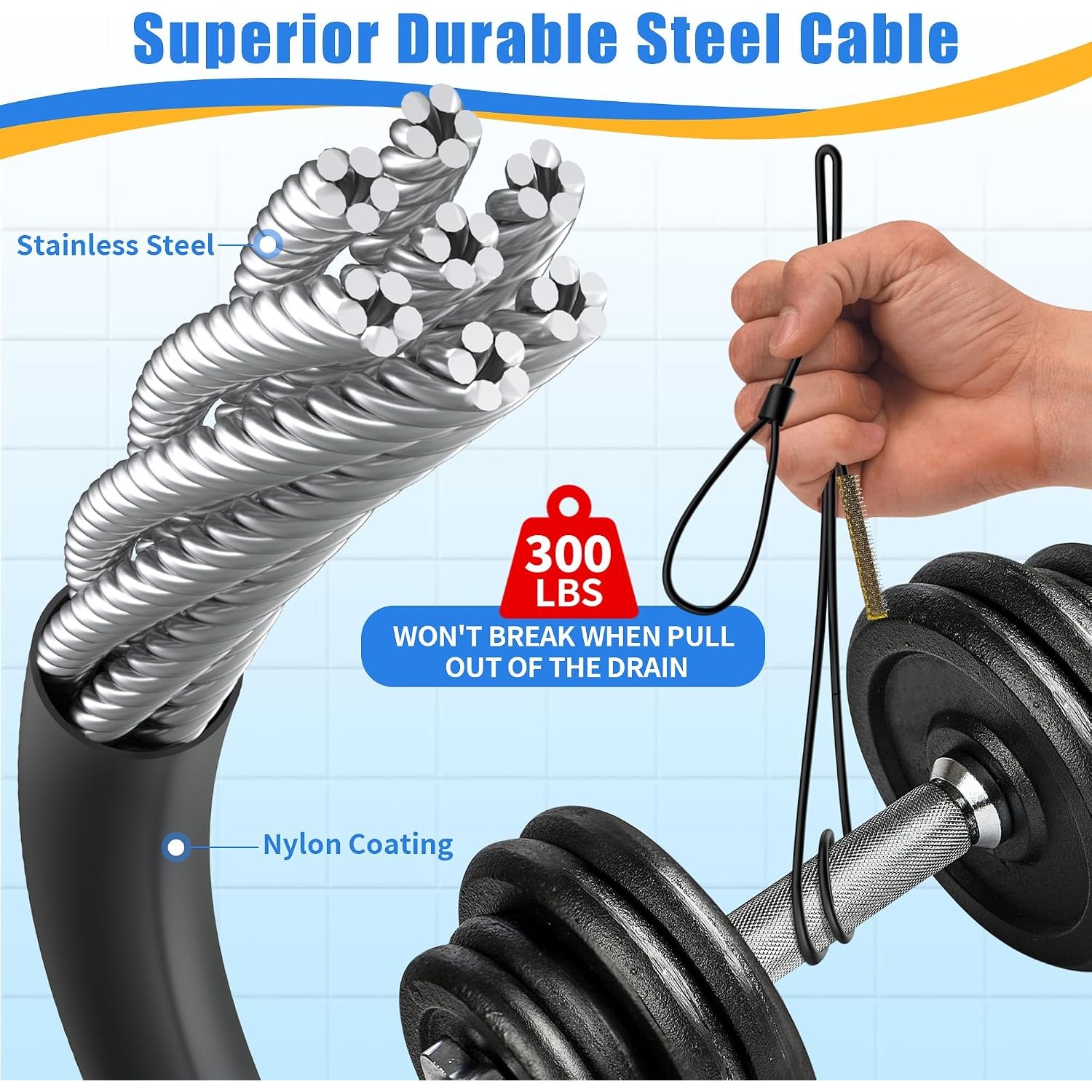
The core of the cable is stainless steel. That gives it the strength to take a hard pull, rated at 300 lbs (about 136 kg) of pulling force before breakage becomes a risk. You will never pull that hard on a hair clog, but the headroom matters, because the single worst outcome when clearing a drain is leaving part of your tool behind.
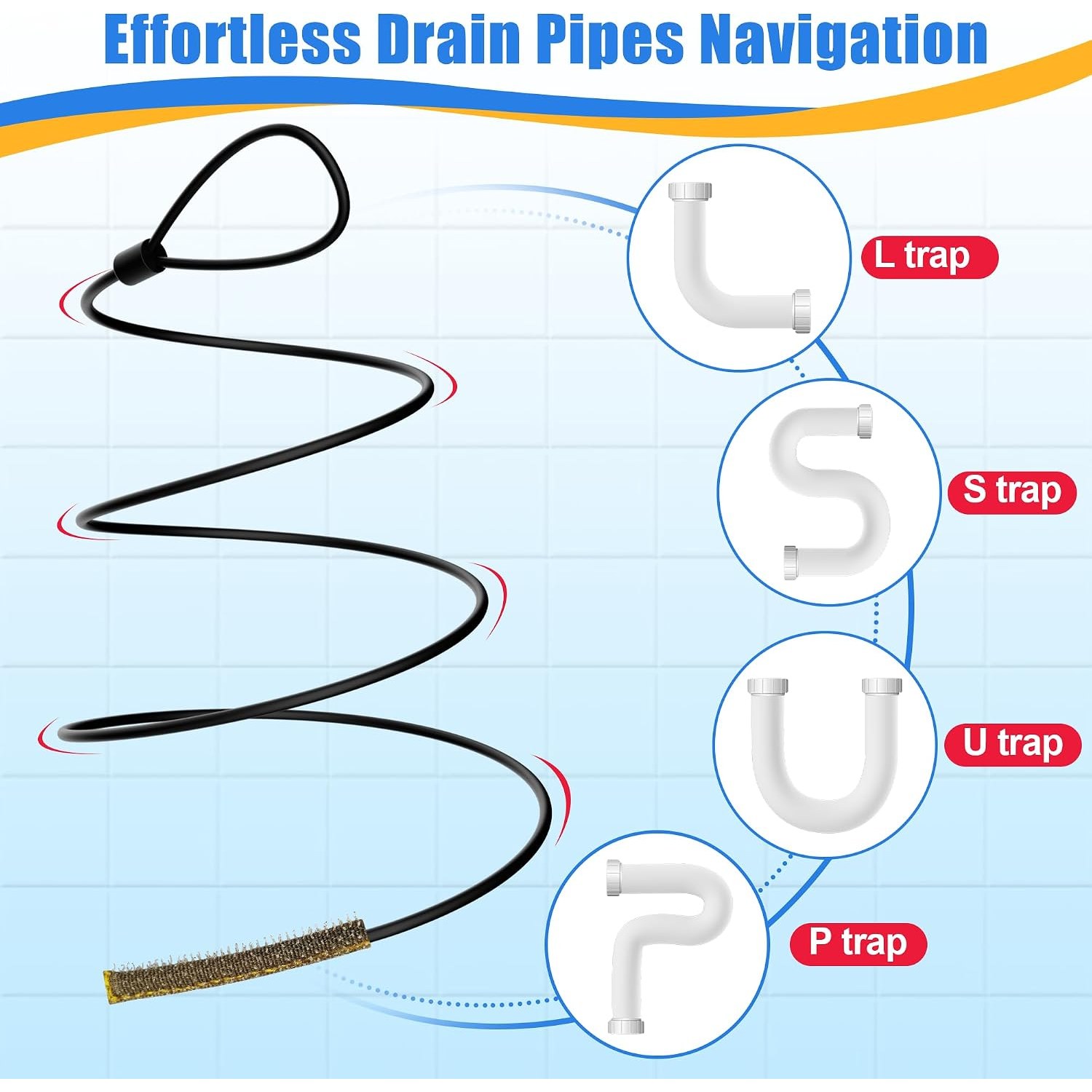
Over the steel is a nylon coating. This is what makes the cable usable in a real bathroom rather than just a straight test pipe. Waste plumbing is full of bends, the L, P, U and S shapes that stop smells coming back up. A bare steel cable fights those turns. A nylon coated one bends and tracks around them. The coating also stops the steel scraping along the pipe wall on the way in and out.
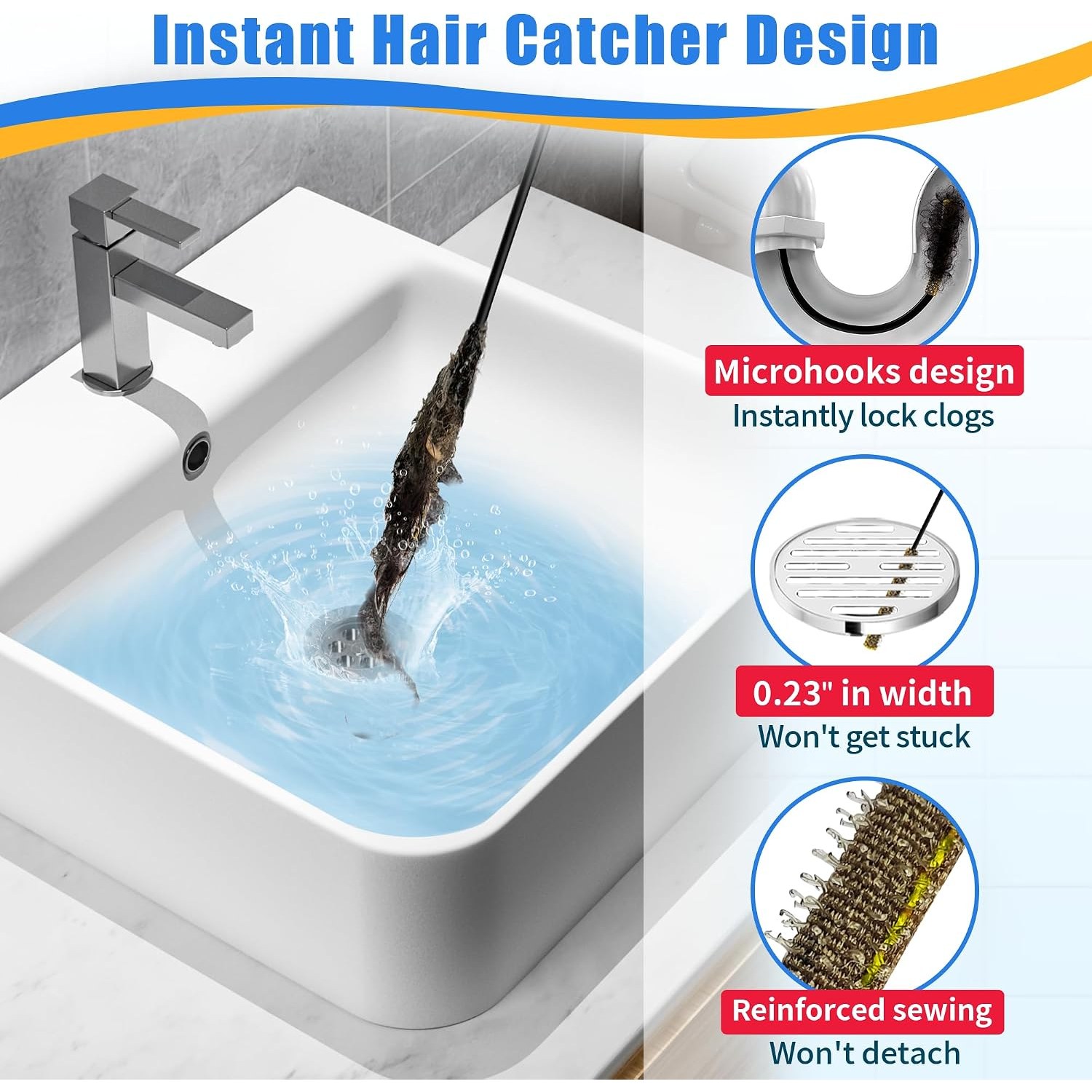
At the end are micro-hooks. Not moulded plastic barbs, which is the key difference from the disposable strips at the supermarket. Those barbs are the weak point, they snag on the way out and sometimes snap off inside the pipe. These hooks are stitched and glued onto the cable, so when you have a good grip on a heavy clog and start pulling, the tip comes back up with everything attached to it.
The head measures 0.23 inches (0.6 cm) across. That is narrow enough to feed through most shower grates and basin pop-ups without unscrewing anything, which removes the main excuse for putting the job off.
Who this suits
Anyone with long hair in the house will get use out of it, and so will anyone sharing a bathroom. Hair clogs are mostly a volume problem, so the more people using one shower, the faster the mat forms.
Renters find it particularly handy. There is nothing to install and no plumbing to dismantle, so you are not touching anything that belongs to the landlord. It also goes in a box with you when you move.
Pet owners are another group. If you wash a dog in the bath, the drain gets a season's worth of shedding in one go. A quick pass with a bathtub drain cleaner tool afterwards stops that becoming next month's problem.
And then there are people who simply do not want chemical drain cleaner in the house. Caustic products are hard on older pipework, unpleasant to store near kids and pets, and often disappointing on a solid hair mat because the liquid just flows around it. Pulling the blockage out physically is more direct and you get to see what came out.
How to choose between drain tools
There are four common options and each has a job.
A plunger moves water, not debris. It can shift a soft blockage by pressure, and it is worth trying first because it takes ten seconds. It does nothing for a hair mat that is wrapped around a pipe wall.
A plastic drain strip is cheap and disposable. It works on a shallow clog sitting right under the grate. It is usually too short and too fragile for anything else.
A nylon coated drain auger like this one is the middle ground, and it covers the majority of household bathroom blockages. Enough reach for the trap area, enough strength to pull hard, flexible enough to follow bends.
A full plumber's drum auger, with a crank handle and several metres of cable, is for blockages deep in the line. It is bigger, heavier, more expensive and overkill for a slow shower.
If you are choosing one tool to keep under the sink, the middle option is the sensible pick. The best drain snake for hair is the one that reaches the hair and survives being pulled back out.
Using it properly
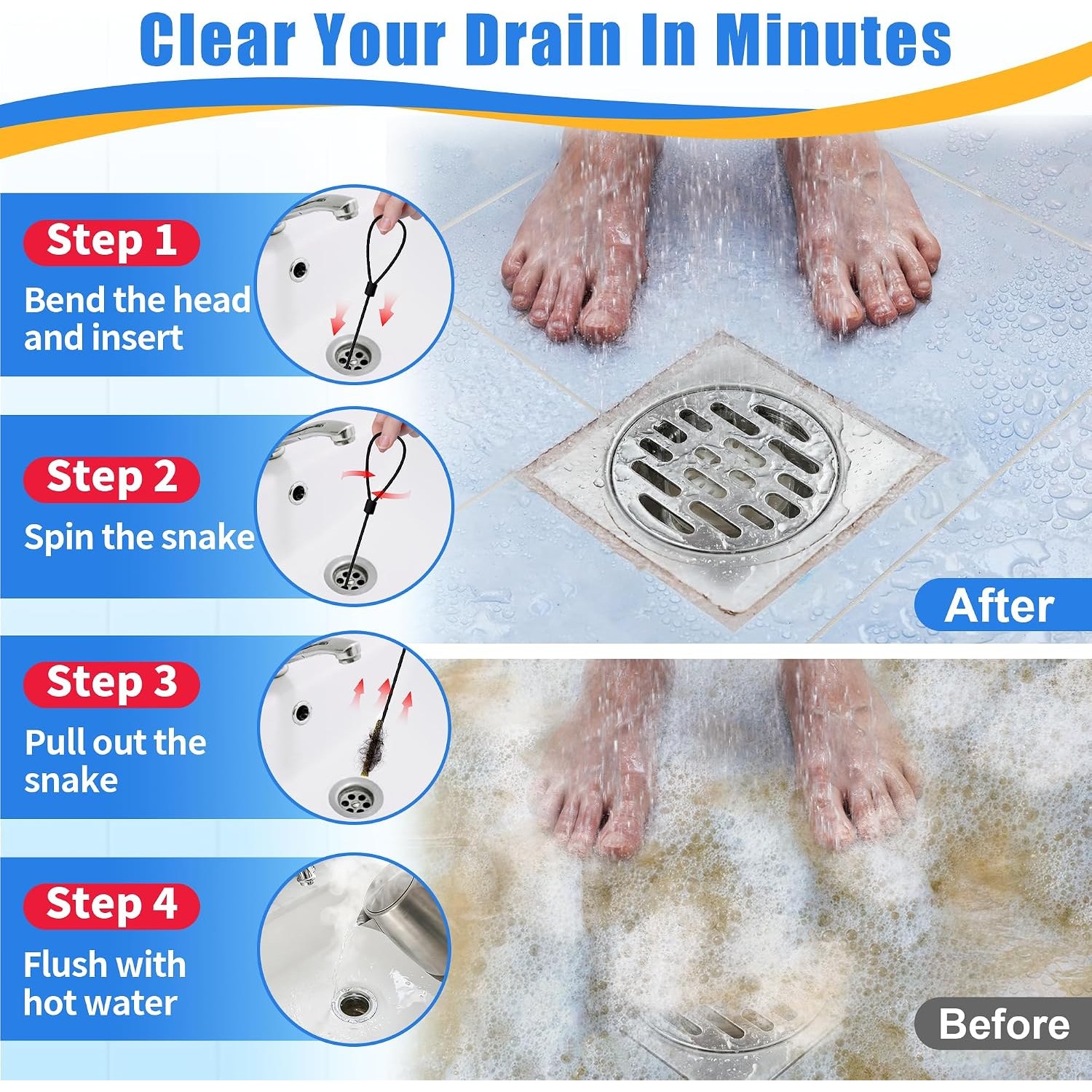
Start by putting a slight bend in the hooked tip with your fingers. A dead straight cable tends to slide down the middle of the pipe and miss everything clinging to the sides. The bend makes the hooks brush the pipe wall.
Feed it in until you feel resistance. That resistance is either the clog or a bend in the pipe, and you can usually tell the difference by how it feels, soft and spongy versus firm and fixed. If it is a bend, rotate the cable slowly and ease it forward until it finds the turn.
When you reach the clog, spin the cable several times in one direction. This is the step people skip, and it is the one that matters. Spinning winds the hair onto the hooks the way spaghetti winds onto a fork. Pulling without spinning just pushes the mat further along.
Then draw it back out slowly and steadily. Have a bin bag or a sheet of newspaper ready, because what comes up is not pretty. Pull the material off the hooks into the bag rather than washing it back down.
Change the insert angle and go again. Repeat until the snake comes back clean, then run hot water for a minute to flush the loose remnants through. Two or three passes clears most slow drains.
A note on safety: wear gloves. Not for the tool, for what is on the end of it.
Looking after it
The whole value of a reusable drain cleaning tool is that it lasts, and that depends on a two-minute clean after each use.
Rinse the cable under hot running water, with a little dish soap if it is greasy from a kitchen sink. Wipe it dry with a cloth or paper towel. Let it air out properly before putting it away, because storing it damp in a closed cupboard is how things start to smell.
For storage, coil it loosely or hang it from the handle. Avoid folding it into a sharp crease, which puts all the stress on one point of the nylon coating. Keep it away from solvents and from strong chemical drain products.
Used this way it should stay serviceable for years, which is the main argument against buying a pack of plastic strips every few months.
When to stop and call someone
A drain snake solves a specific type of problem. If you run it through several times and nothing comes up, and the drain is still slow, the blockage is probably beyond its reach or is not hair at all.
Other signs worth paying attention to: more than one fixture backing up at the same time, gurgling from a nearby drain when you empty the sink, or water appearing where it should not. Those point to something in the main line rather than a local hair mat, and that is a plumber's job. Knowing when the DIY fix does not apply saves you time and sometimes saves you damage.
The short version
Bathroom drains block with hair, and hair sits just out of finger reach. A 76cm nylon coated steel snake with stitched micro-hooks gets to it, grips it and pulls it out, with no chemicals and no plumbing to take apart. Bend the tip, feed it in, spin it, pull it out, repeat until clean. Rinse it, dry it, hang it up, and do it again in a couple of months before the next one builds. For most households that is the whole maintenance plan.