

The complete guide
How to Choose a Toilet Plunger with Holder That Actually Works
The problem with the plunger in the back of the cupboard
Most homes own a plunger. Far fewer own one that works. The usual story goes like this: the toilet backs up, you dig out a dusty red cup on a wooden stick, push it around for ten minutes, achieve nothing except a wet floor, and end up calling someone. Then the plunger goes back in the cupboard, still damp, where it slowly turns into something you do not want to touch.
Two things cause that. The first is the seal. A single flat rubber cup was designed decades ago for sinks, where the outlet is a flat hole in a flat basin. A modern toilet has a curved, narrow outlet at the bottom of a bowl. A flat cup cannot grip that shape, so when you push, most of the air and water squirts out around the sides instead of going down the pipe. You are doing work, but almost none of it reaches the blockage.
The second is storage. A plunger that lives on the floor leaves a damp ring. A plunger shoved in a bucket stays wet and starts to smell. So people hide it somewhere awkward, forget where, and buy a new one next time.
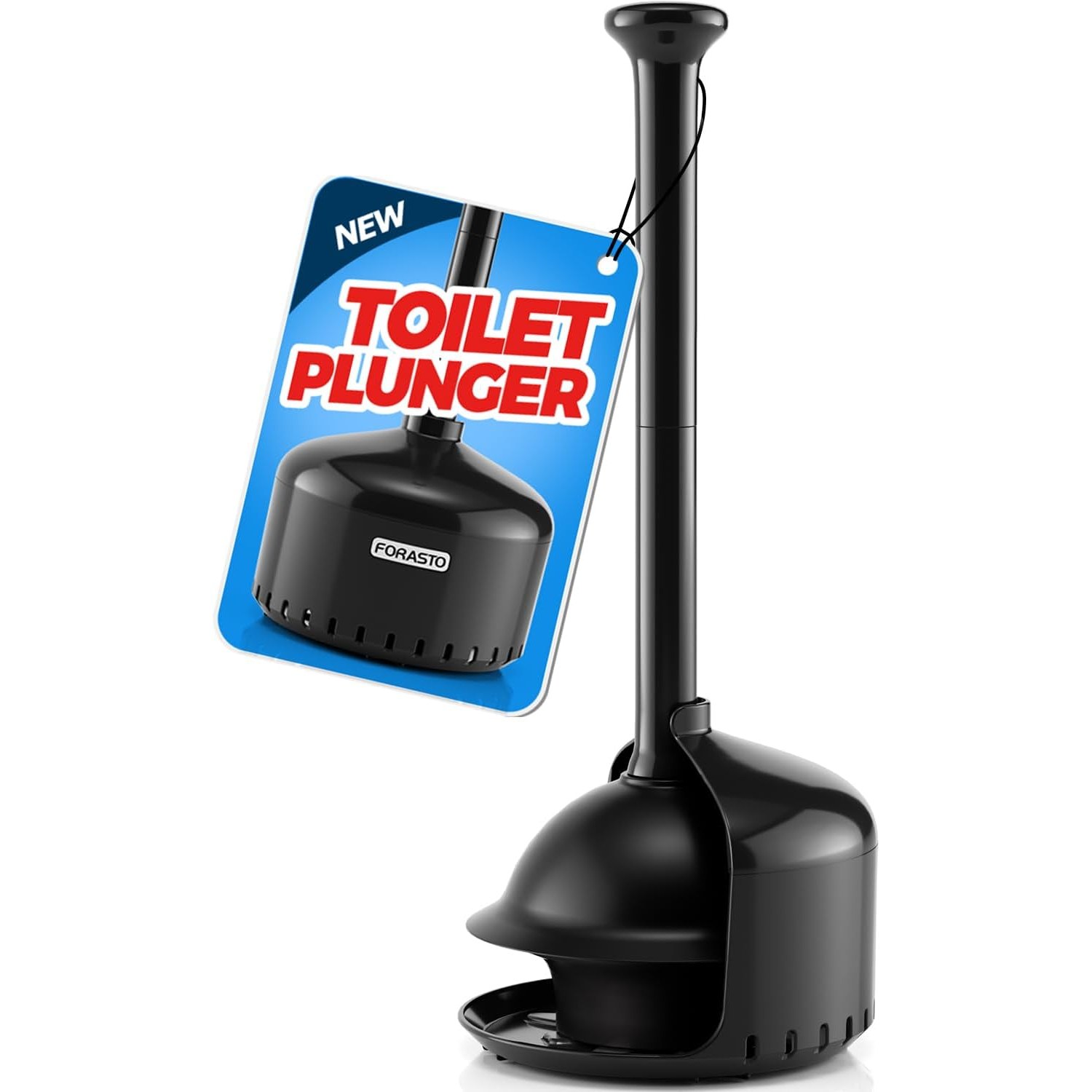
A toilet plunger with holder solves both at once. The head is shaped to seal inside a toilet outlet, and the caddy gives it somewhere to live that is neither your floor nor the back of a cupboard.
How the double-layer head works
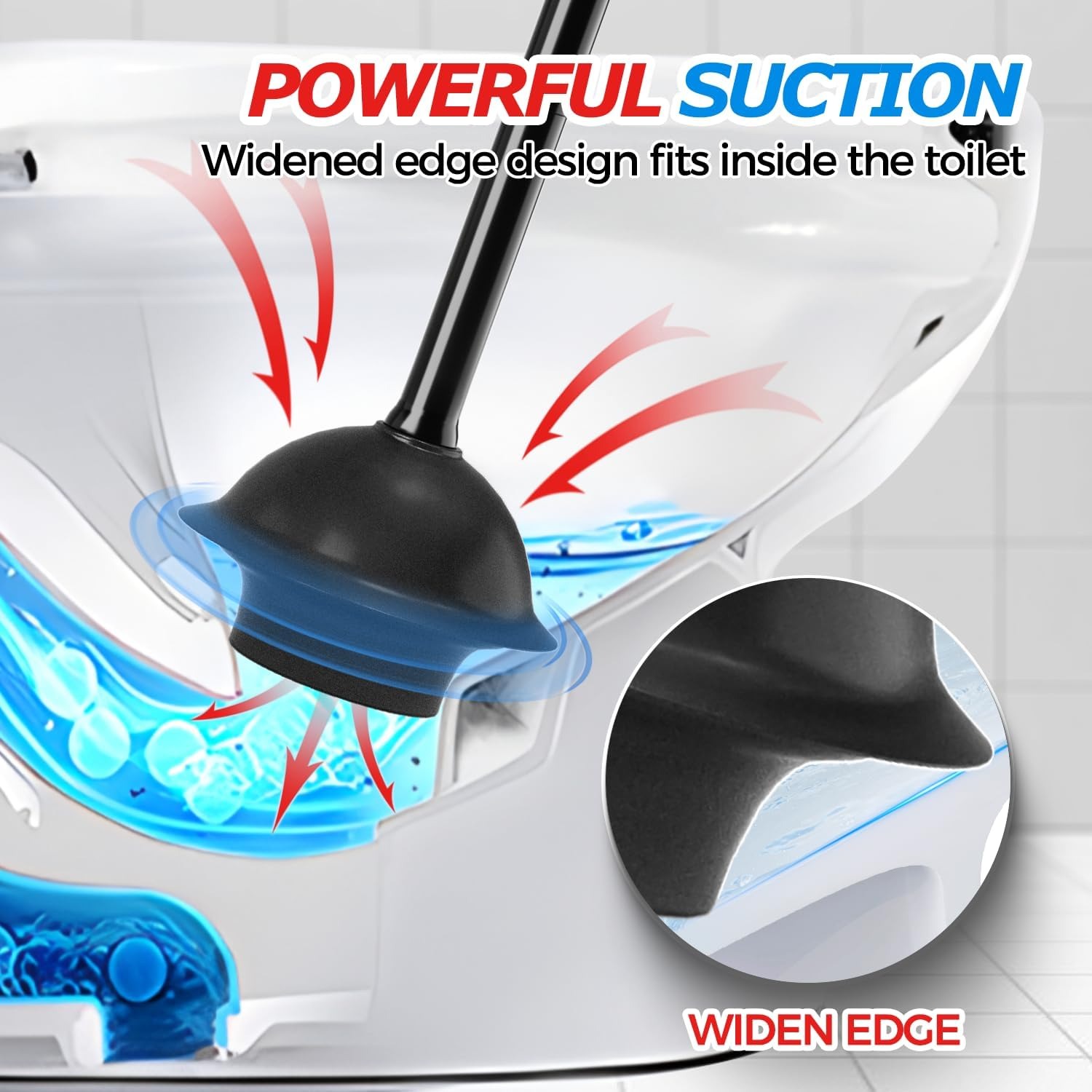
The head on this plunger has two working surfaces instead of one. The outer skirt is wide and flexible, and it presses against the inside of the bowl. The inner section is narrower and sits down inside the outlet. When you push, the outer skirt holds the seal while the inner section drives water into the pipe.
That matters because plunging is not about force, it is about pressure. Water does not compress. If your seal holds, every centimetre you push the handle down moves an equal amount of water into the drain, and that surge is what shifts a blockage. If the seal leaks, you are mostly just splashing.
There is a technique to it too. Lower the head into the water at a slight angle so air escapes from under it rather than being trapped. Trapped air turns the first push into a fountain. Once the head is seated over the outlet, push down firmly and pull back up without breaking the seal. The upstroke is doing just as much work as the downstroke, because it pulls at the clog from the other direction.
The handle is not a minor detail
Handle length changes how a plunger feels to use. A short handle forces you to bend over the bowl, which puts your face close to the water and gives you a cramped, arms-only push. A longer handle lets you stand more upright and use your shoulders and body weight.
The handle on this set is plastic and extended compared with a standard plunger. In practice that means two things. You stay further from the splash zone, and you can keep a steady rhythm for longer before your arms give out. On a blockage that needs twenty or thirty pushes, that is the difference between clearing it and giving up halfway.
Plastic also has a quiet advantage over wood. Wooden handles soak up water at the end, swell, and eventually loosen where they meet the head. Plastic does not.
One tool, two kinds of drain
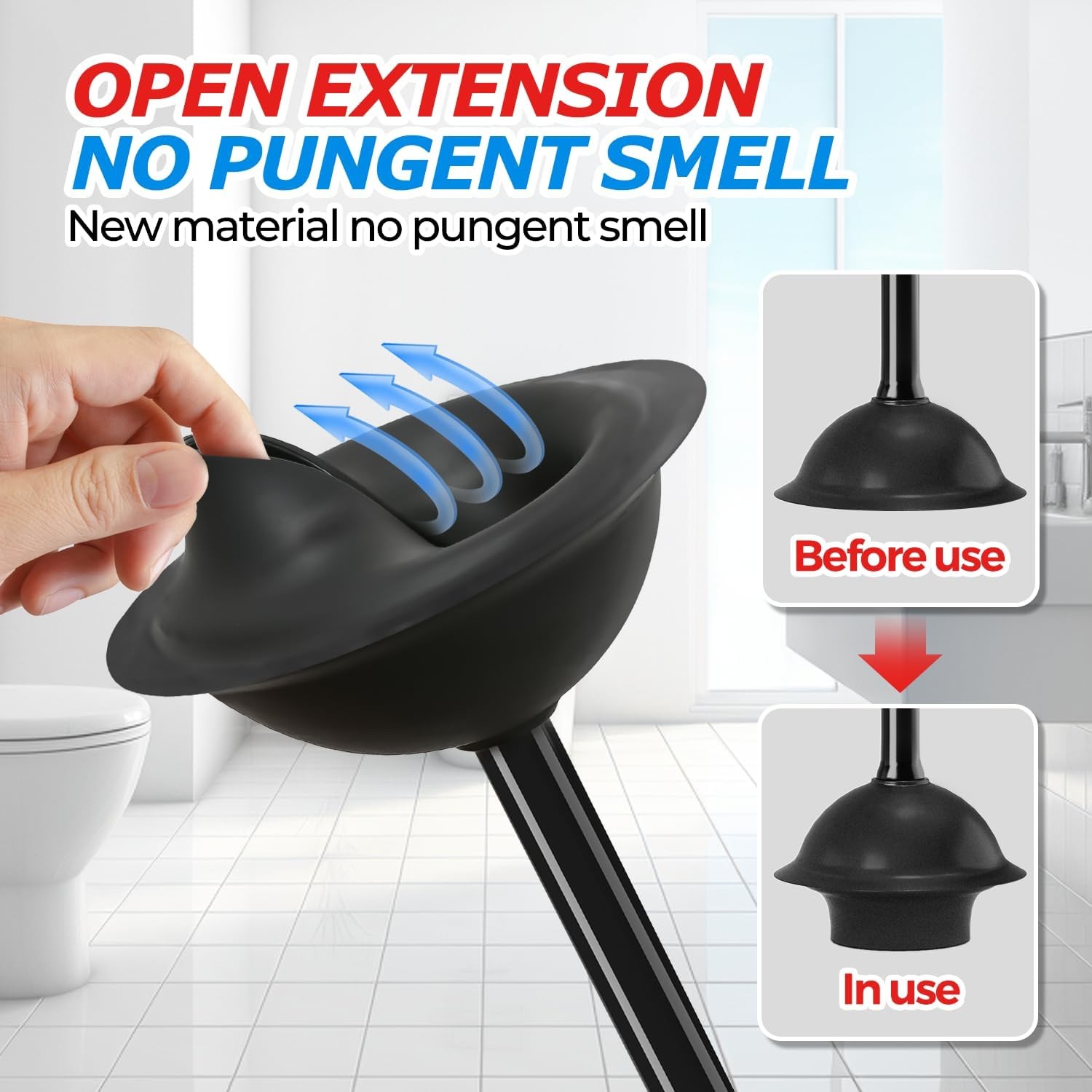
The extension section on this plunger folds. Open it out and the head takes the shape that suits a toilet bowl. Fold it flat and you get an even, wide surface that presses down on a flat drain.
That second mode is genuinely useful. Shower outlets, laundry gullies, and balcony drains all sit flush with the floor, and a toilet-shaped plunger simply rocks around on top of them without ever sealing. Folding the skirt flat gives you full contact with the tile around the drain.
For anyone hunting for the best plunger for floor drains as well as toilets, this is the feature to look for. It means one tool and one storage spot instead of two of each.
Why the caddy earns its place
The holder is not packaging. It is half the product.
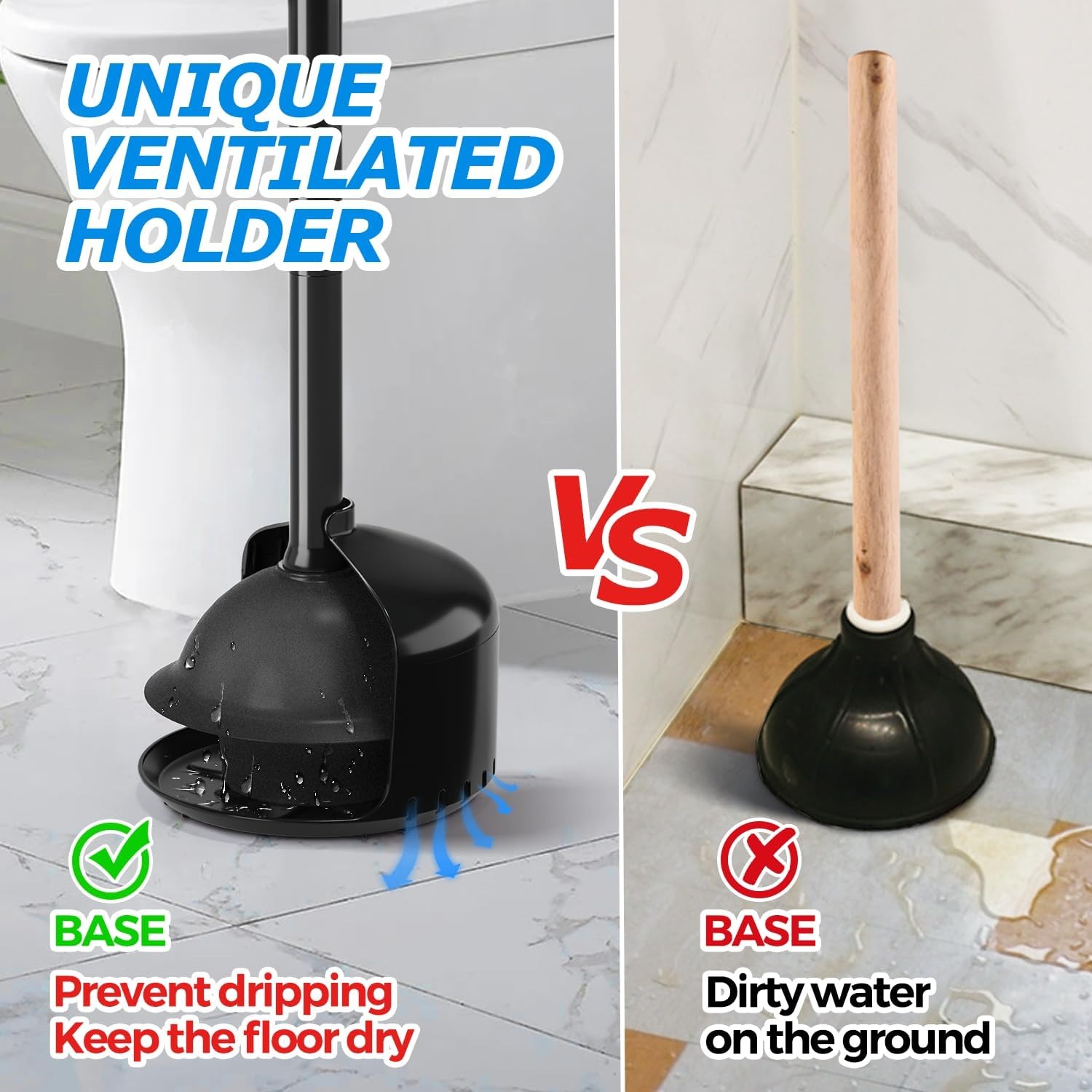
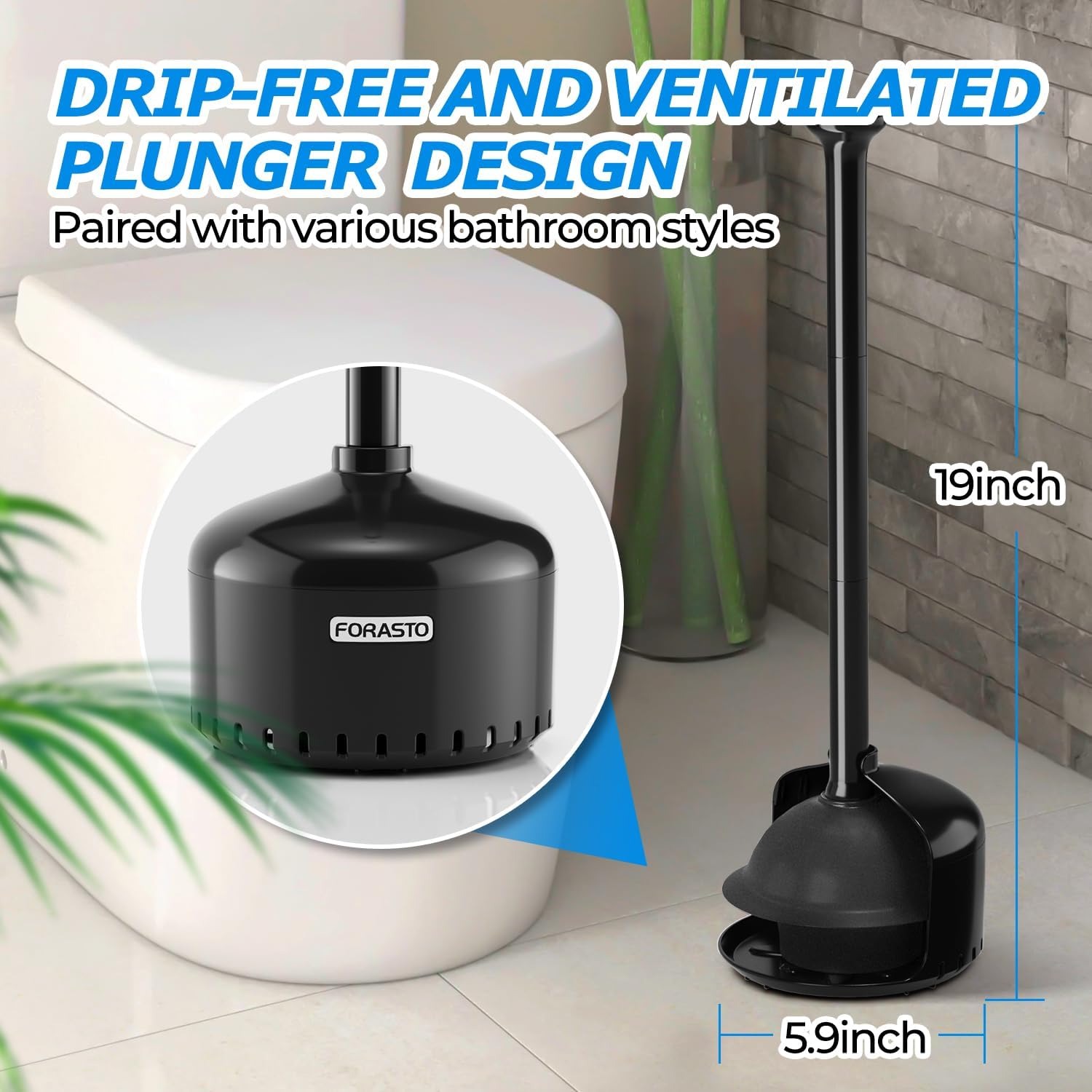
When you lift a plunger out of a bowl, it is carrying water. Some of it runs off in the first few seconds, and the rest drips for a minute or two afterwards. Without a caddy, that water goes on your floor, down your wall, or into the cupboard you just put it in.
This caddy catches the run-off and holds the plunger upright. The ventilation is the part that stops it smelling. Air moving around the head lets it dry, and a dry plunger stays clean. A plunger sealed in a tube of its own dirty water does not.
The base can also be flipped over to sit higher, which partly conceals the head. If your plunger lives in a guest bathroom or a small ensuite where everything is on show, that half-hidden look is worth having. It is the main reason people search for the best hidden toilet plunger rather than just buying the cheapest one on the shelf.
Who this suits
Renters and apartment dwellers get the most out of it. Storage is tight, you cannot drill the walls, and you want one tool that handles the bathroom and the laundry. The caddy is free-standing, so there is nothing to install.
Families get value from the longer handle and the stronger seal, simply because toilets in busy homes block more often. Anyone with a tiled or timber bathroom floor will appreciate a plunger that is not dripping on it.
It also makes a sensible housewarming gift. Nobody buys a plunger until the night they need one, and a tidy black set in a caddy does not look like a gag present.
What to check before you buy
Look at the drain shape you need to clear most often. If it is a standard porcelain toilet, this head is built for that surface. If your main problem is a kitchen sink full of grease, hot water and a dedicated sink plunger will serve you better.
Think about where it will stand. The caddy needs a small patch of floor beside the toilet or in a cupboard. Measure that gap if space is tight, and get in touch if you need a precise figure, because the maker's details for this item does not list usable overall dimensions and we would rather not guess.
Consider whether one is enough. In a two-storey house, a second set upstairs saves a lot of carrying.
Looking after it
Rinse the head after every use, either under a tap or by dipping it in clean flush water. Shake off the excess, wipe the handle with bathroom cleaner, and stand it in the caddy. Rinse the caddy itself every week or so and tip out anything that has collected in the base.
Keep it away from heaters and direct sun, which make flexible plastic go stiff over time. Store it out of reach of small children. That is the whole routine, and it takes about thirty seconds.
The short version
A plunger only works if it seals, and a seal depends on the shape of the head and the force you can apply. This set gives you a double-layer head built for porcelain bowls, an extended plastic handle for reach and distance, and a folding extension so the same tool covers flat floor drains. The ventilated caddy catches drips, lets the head dry, and keeps the whole thing looking neat enough to leave out.
The set weighs 0.41 kg and comes in black. Head material, overall dimensions, and country of origin are not stated by the maker, so you will not find invented numbers above. What is listed is accurate, and if you need something we have not covered, ask us before you order.