
The complete guide
How To Clear A Slow Drain With A Sink Unblocker Brush
The problem nobody deals with until it is too late
Drains almost never fail suddenly. They get slower. One week the basin empties while you brush your teeth, a month later there is a puddle sitting there afterwards, and then one morning the water does not move at all. Between those stages there is a long window where the fix takes five minutes. Most of us miss it because the drain still works, just not very well.
What is forming in that window is a soft plug. In a bathroom it is mostly hair bound together with soap scum and toothpaste. In a kitchen it is fat and oil that cooled on the way down and set against the pipe wall, catching food particles as they pass. Both kinds build up in the same places, right under the plughole and in the bend of the trap below the sink.
The usual responses do not remove that plug. Chemical cleaner can dissolve part of it and leave the rest. A plunger pushes it along, which sometimes helps and sometimes just moves the problem further down the pipe where it is harder to reach. What actually solves it is going in and pulling the stuff out. That is what a drain brush does.
How a 60cm drain brush works
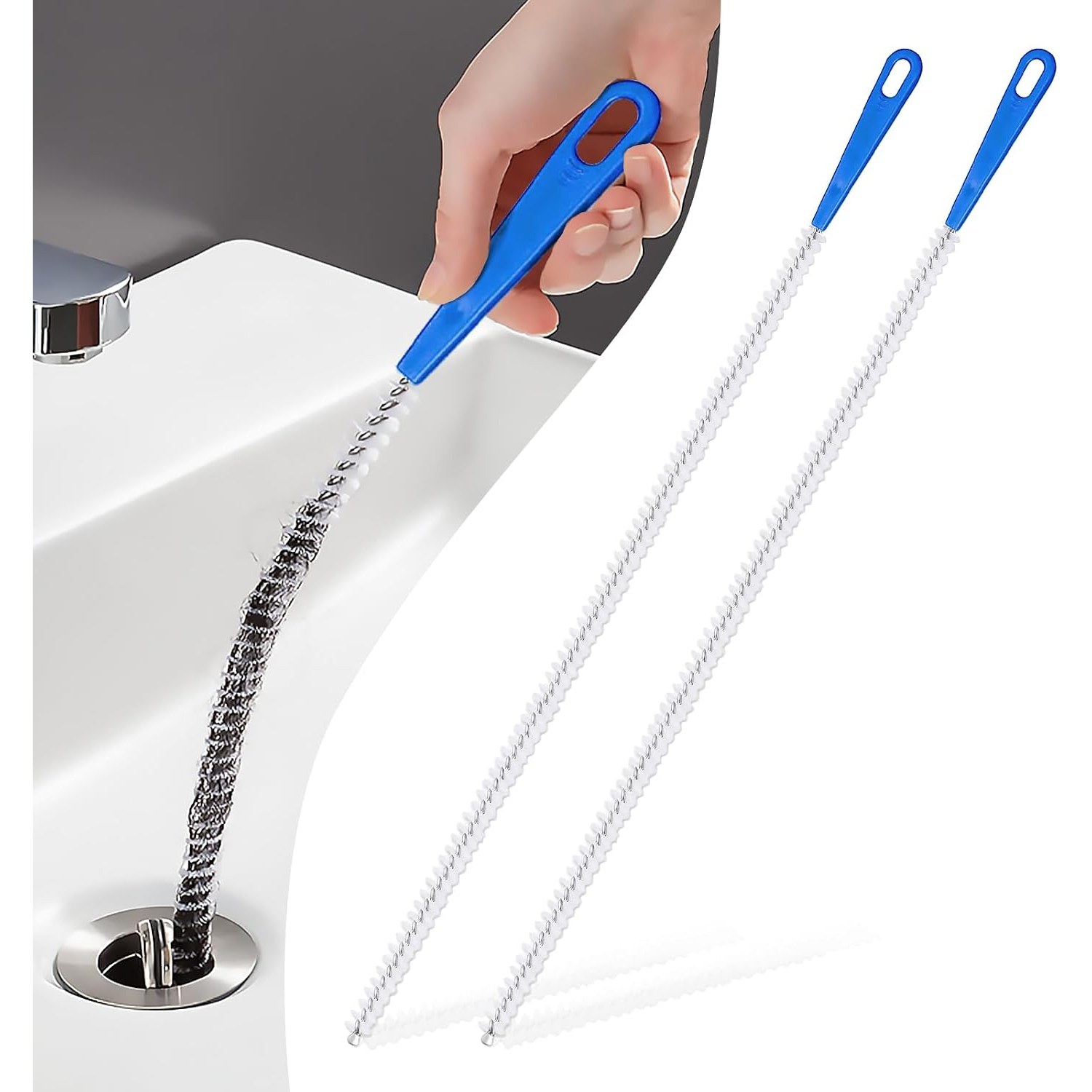
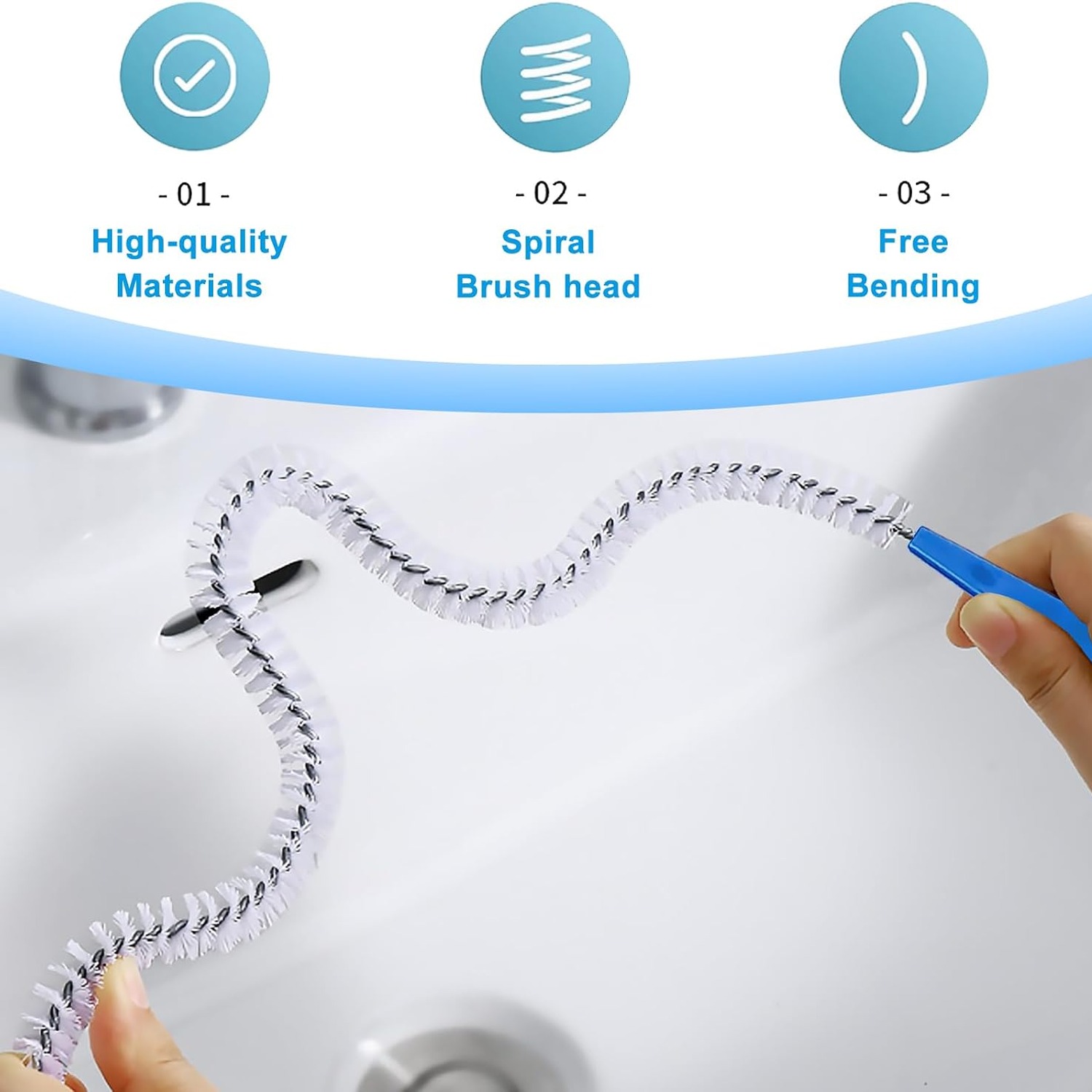
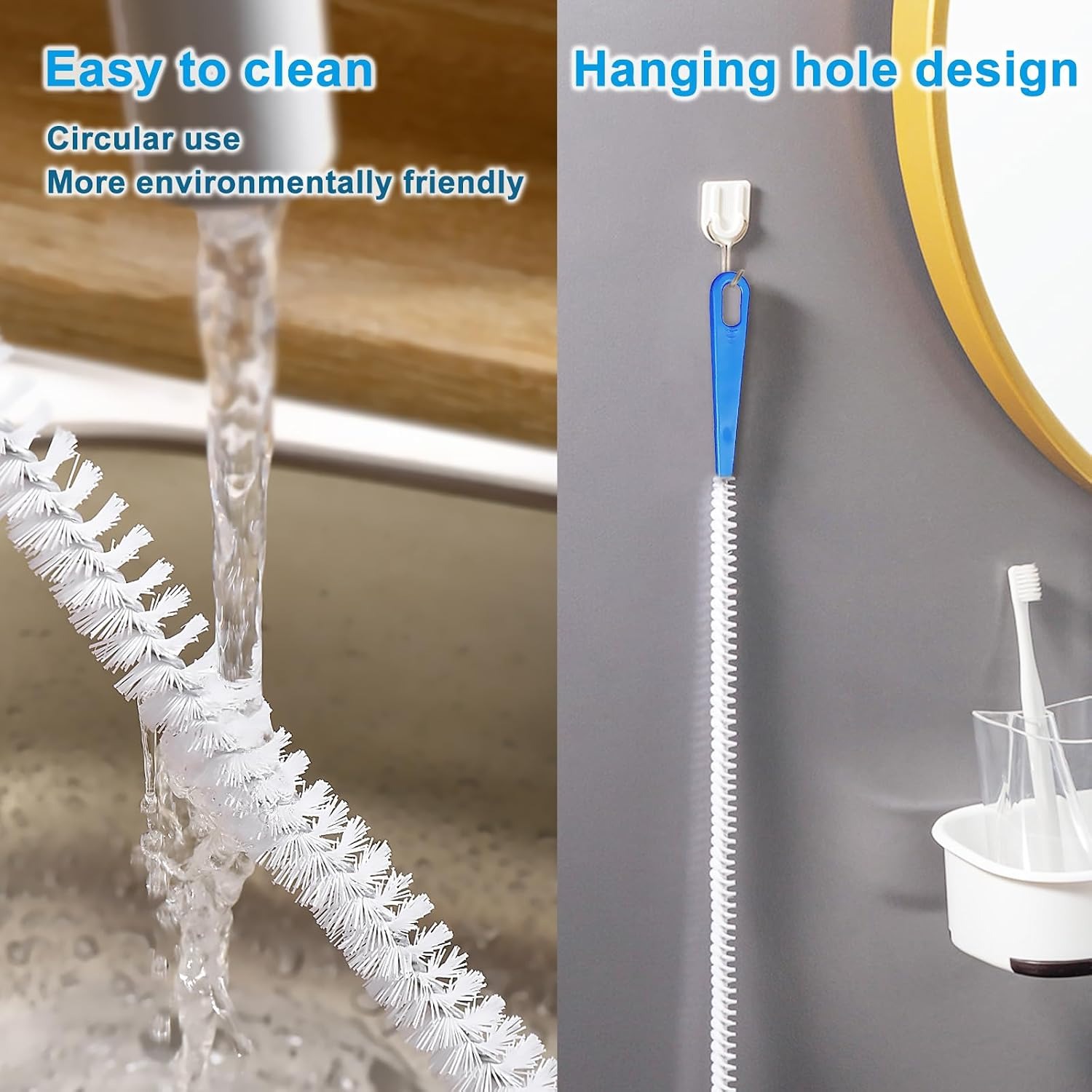
The design is about as simple as it gets. A long stainless steel rod carries nylon bristles along its length, with a handle on the end you hold. The steel is flexible, so the rod bends as it meets the curve of the waste pipe instead of stopping dead. The bristles do the gripping.
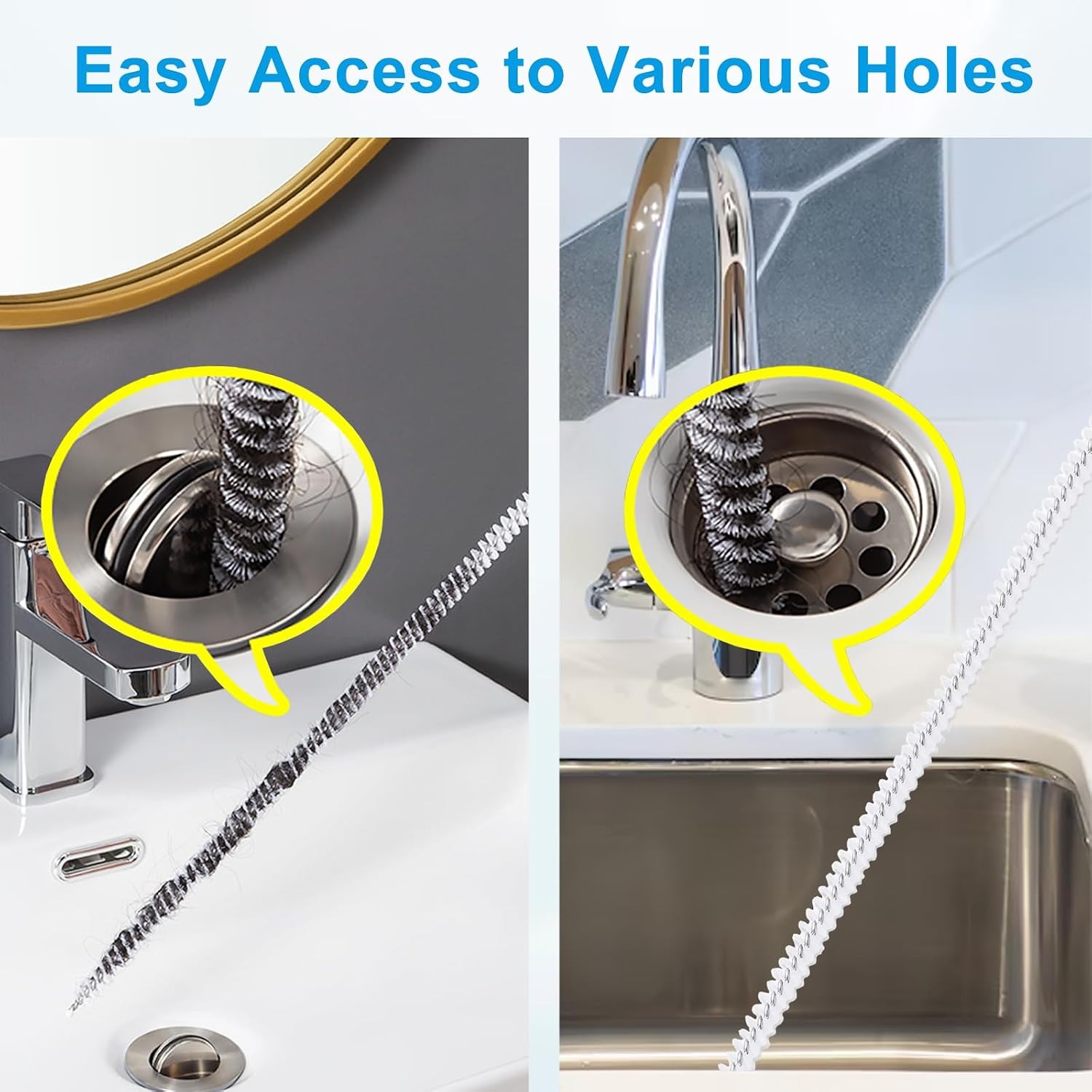
You feed the bristled end into the plughole and turn the handle slowly as you push. That turning motion matters more than pushing hard. A spinning brush screws itself into a hair clog and tangles the mess around the bristles. A brush shoved straight in just compacts the clog into a tighter lump.
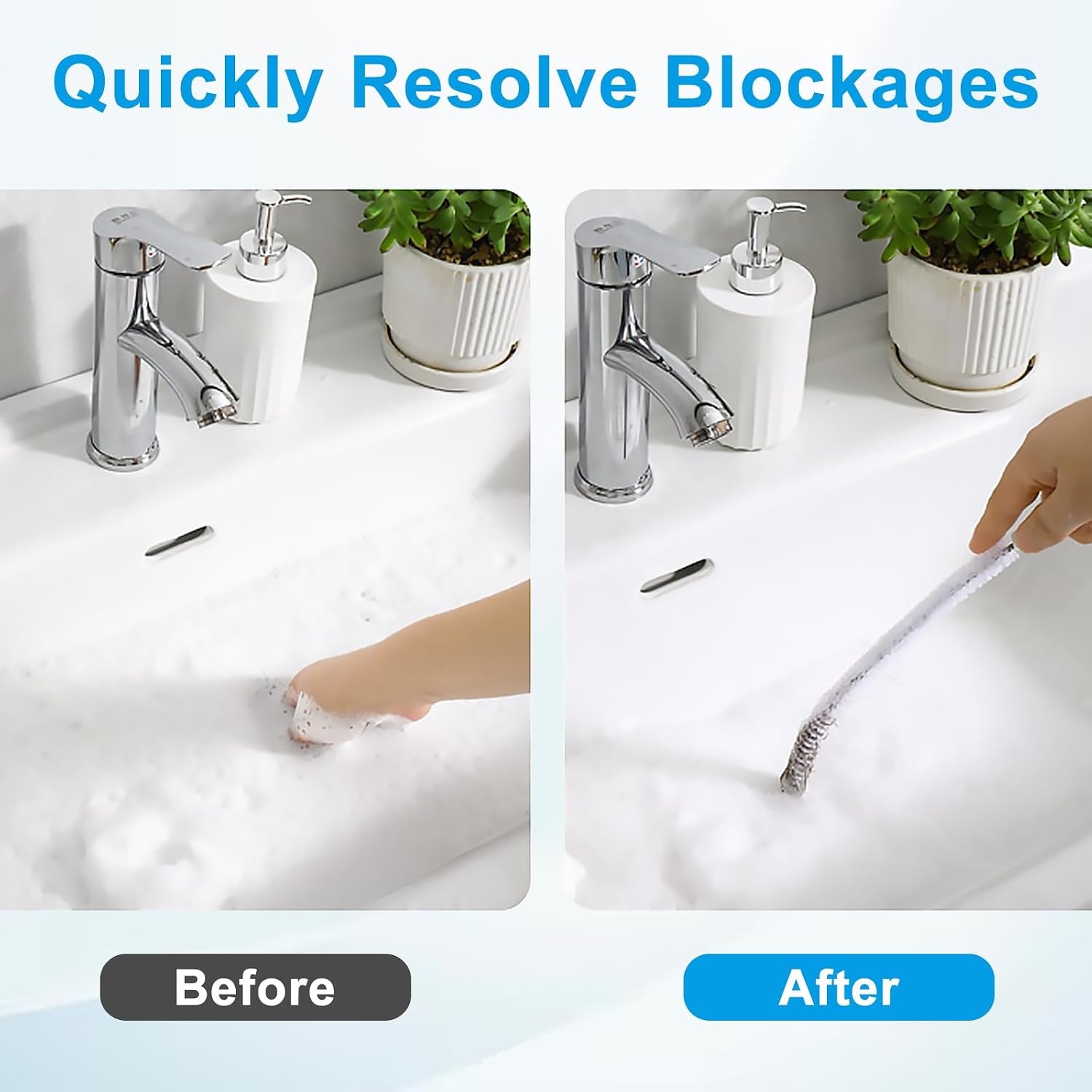
When you feel the rod meet resistance, keep turning gently and start drawing it back. The clog comes out with it. It is not a pretty sight, so have a bin bag or a sheet of newspaper ready before you start. Rinse the bristles, go back in, and the second pass usually clears whatever the first one loosened.
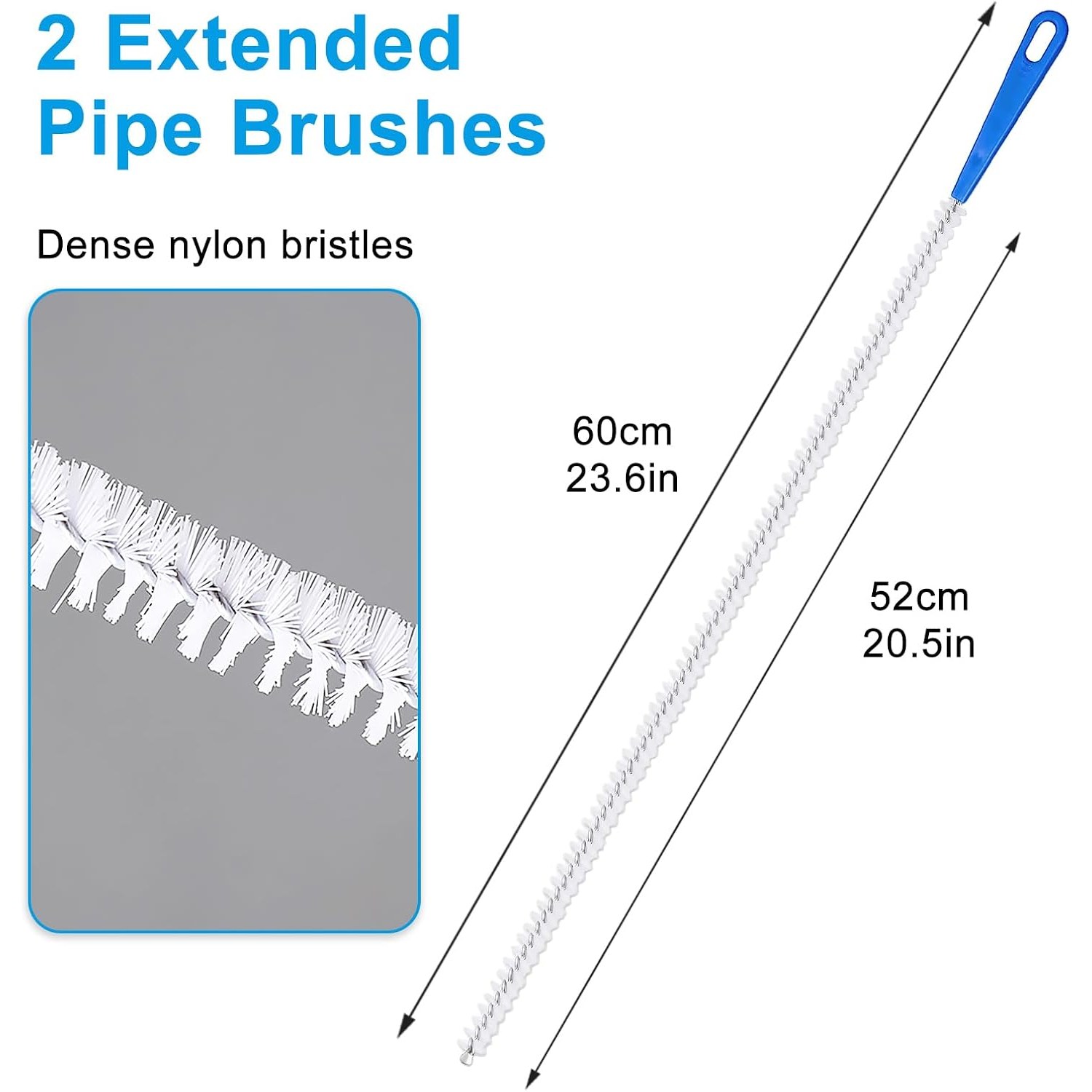
At 60 cm the reach covers the plughole, the vertical drop and most household U-bends. That is where the vast majority of domestic slow drains live. The pack contains two brushes, which is genuinely useful, because nobody wants to carry the bathroom tool through the kitchen.
Who it suits
Anyone with long hair in the house will get the most out of this. Hair clogs are the single most common cause of a slow basin or shower, and they are exactly what bristles handle well. Shared bathrooms and family homes hit this problem faster than anyone else.
Keen cooks are the other obvious group. Kitchen sinks build grease even when you are careful about what goes down them, and a brush scrapes the pipe wall in a way that hot water alone does not.
It also suits renters and anyone who would rather not call out a plumber for a job this small. A tool that lives in the cupboard and takes five minutes to use is a lot cheaper than a call-out fee, and it means you are not waiting around for an appointment while the sink sits full.
If you are maintaining a holiday let or a shared house, keeping a set of drain brushes on site is a sensible bit of kit. Guests and housemates will not tell you a drain is slow until it has stopped.
Choosing the right drain tool
There are a few different tools that all get called drain cleaners, and they are not interchangeable. Knowing which does what saves money.
Plastic hook strips are the cheapest option. They are thin, barbed and disposable, and they do grab hair right under the plughole. They are also easy to snap off inside a pipe, which turns a small problem into a bigger one, and they do not reach the trap.
Rigid metal augers are the heavy end. They are built for deeper blockages in longer pipe runs and often need a crank handle. They are more tool than most bathroom jobs require, and they can mark a plastic pipe if used carelessly.
A flexible bristled brush sits neatly in the middle. The steel rod gives it reach and the ability to follow a bend, while the nylon bristles clean the pipe wall as they go. For the household drains most people deal with, basins, baths, showers and kitchen sinks, this is the format that does the job without overcomplicating it.
Length is worth checking before you buy anything. A short tool that stops at the strainer will not reach the place where clogs actually form. Sixty centimetres clears the plughole and the bend below, which covers standard domestic plumbing.
Material matters too. The recommended surfaces for this brush are steel, porcelain, plastic and tile, which covers nearly every sink, bath and shower tray in a normal home. Nylon is firm enough to scrub but far kinder to a glossy basin than bare wire.
Getting the best results
Start by removing the strainer or pop-up plug if yours comes out. Many lift straight up or unscrew by hand. Clean it while it is out, because a surprising amount of debris sits on the plug itself and never makes it into the pipe at all.
Run hot water for a minute before you begin. Warm pipes release grease and softened soap more easily, which means less effort with the brush. Then go in slowly, turning as you push.
Resist the urge to force it. If the rod will not go further, you have either reached the clog or hit a tight bend. In both cases turning gently and easing forward works better than shoving. Forcing a flexible rod just makes it buckle inside the pipe.
Pull back at a steady speed rather than yanking. A slow withdrawal keeps the debris wrapped around the bristles. A fast one tends to shake it loose halfway up, and you end up doing the same job twice.
Finish with another flush of hot water. That carries away whatever the brush loosened but did not collect, and it tells you straight away whether the drain is running properly again.
Keeping it in good shape
Cleaning the brush takes less time than cleaning the sink afterwards. Pull the trapped hair off the bristles with gloved hands and bin it. Then run hot water over the bristles while turning the rod, add a drop of dish soap and rinse it through.
Let it dry properly before you put it away. Stainless steel resists rust well, but no metal tool enjoys sitting wet in a dark cupboard for a month. Hang it or stand it upright for a while and it will be dry by the time you need it next.
When you store it, coil it loosely. Sharp repeated folds weaken any flexible rod over time. It weighs almost nothing and takes up barely any room, so finding a spot for it is easy.
The habit worth building is the monthly pass. Run the brush through each drain once a month and you will mostly stop blockages forming at all. Households with long hair might want to do it every couple of weeks. Either way it is a two minute job that saves you a bad morning later.
Where a brush is not the answer
Be honest about the limits. If several fixtures back up at the same time, if you hear gurgling from a different drain when you empty the sink, or if water rises in the shower when the washing machine runs, the problem is further down the system. A 60 cm brush cannot reach that, and no amount of effort will change it. Call a plumber.
Toilets are also off the list. The trap is much wider and shaped differently, and it needs a closet auger or a proper plunger instead.
The short version
A slow sink is usually hair, soap and grease sitting just past the plughole and in the bend below. Chemicals soften it, plungers move it, and a bristled brush actually pulls it out.
This set gives you two 60 cm brushes with flexible stainless steel rods and nylon bristles, suitable for drain holes in bathrooms, kitchens, bathtubs and sinks. They are reusable, light, and small enough to store anywhere. Use one once a month per drain and you will rarely meet a blockage in the first place.