
The complete guide
How To Choose A Drain Hair Catcher That Actually Works
The problem nobody thinks about until it is too late
Blocked bathroom drains almost never happen overnight. They build. A few strands of hair go down with the water, snag on a rough patch inside the pipe, and then catch the next few strands. Add soap, shampoo residue and skin cells, and within a couple of months you have a soft grey clump sitting in the trap doing a very good job of blocking water.
The first sign is usually a shallow puddle around your feet in the shower. You ignore it. A week later the puddle is up to your ankles and the water is still draining ten minutes after you got out. That is when people reach for a bottle of caustic cleaner, or a plumber's phone number, or a coat hanger and a strong stomach.
A hair catcher sits in front of all of that. It is a small object with one job, and if you pick the right one, you stop thinking about your drains entirely.
How a dome catcher works
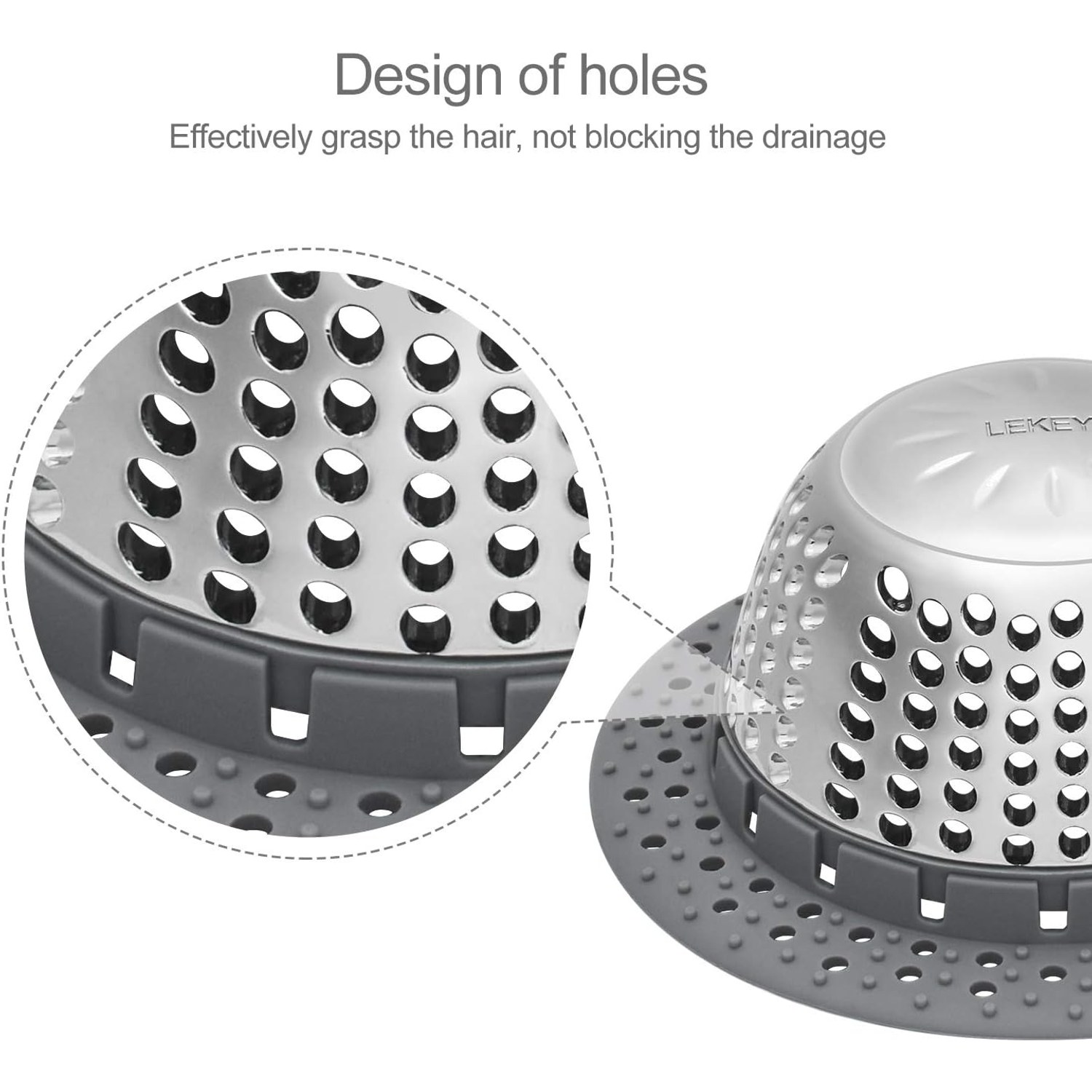
Most people's first hair catcher is a flat mesh disc. They are cheap, they are everywhere, and they share one flaw. Hair lies flat. Within a few showers the hair has spread across the mesh like a mat, every hole is sealed, and the water pools on top. You end up cleaning it mid shower with wet hands, which is nobody's idea of a good time.
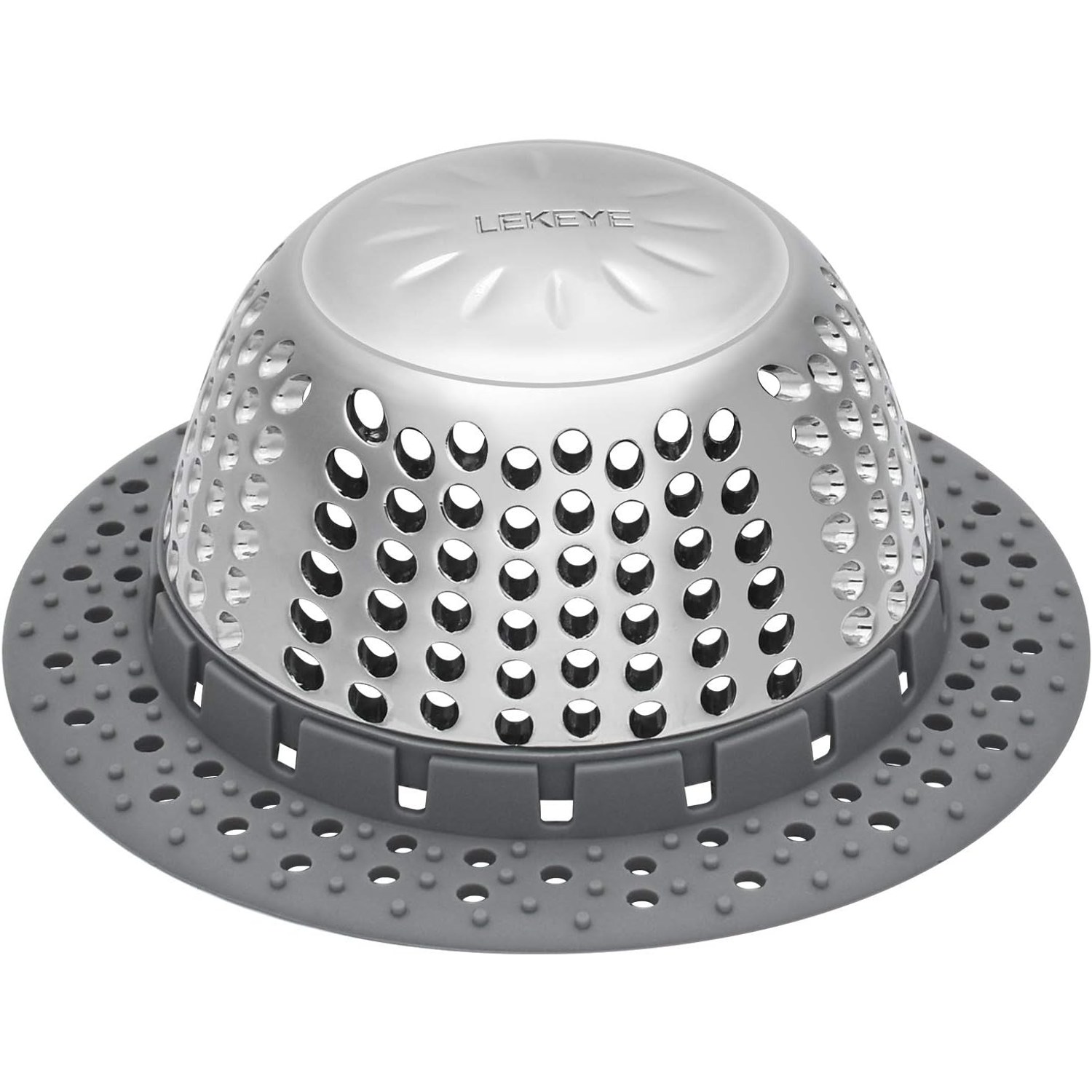
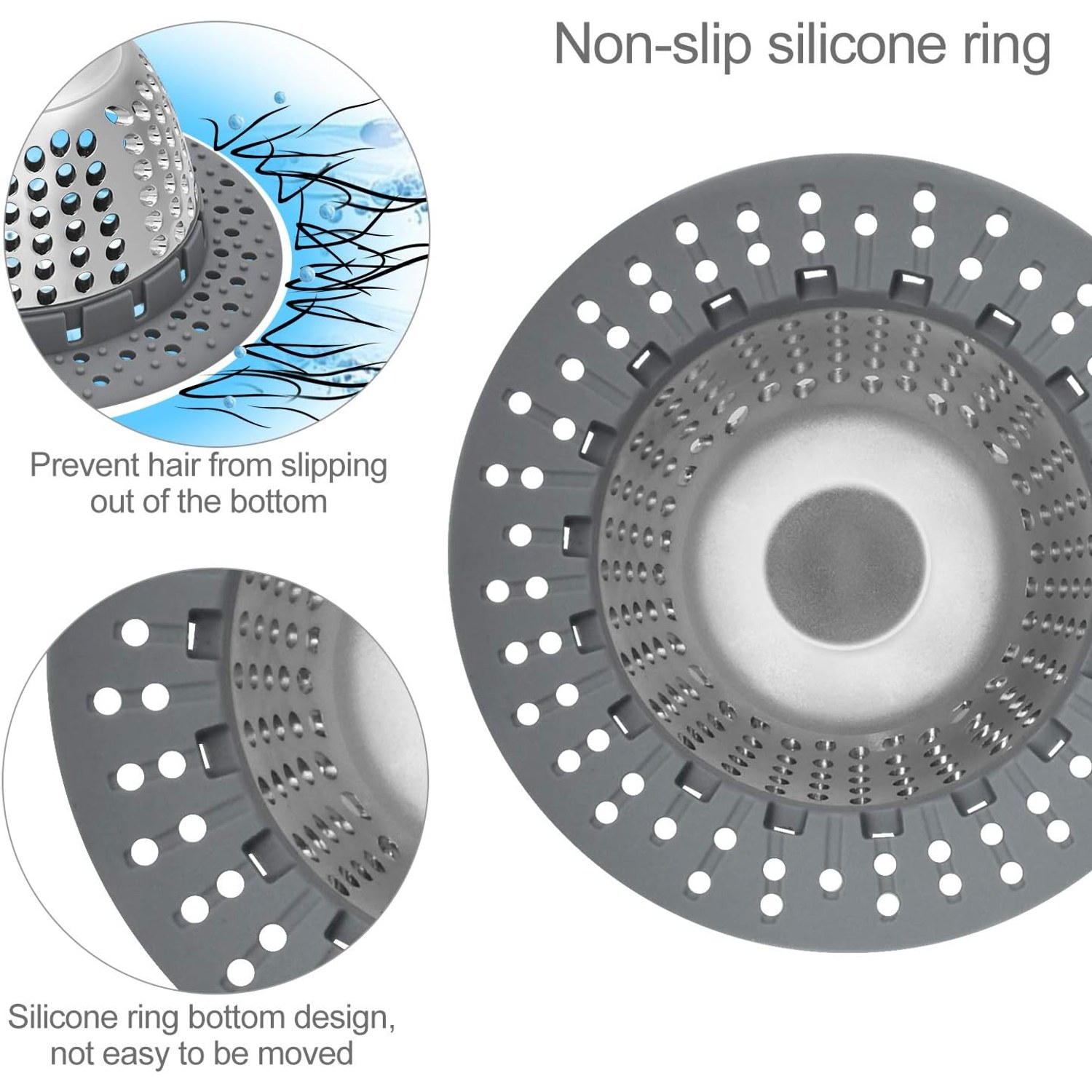
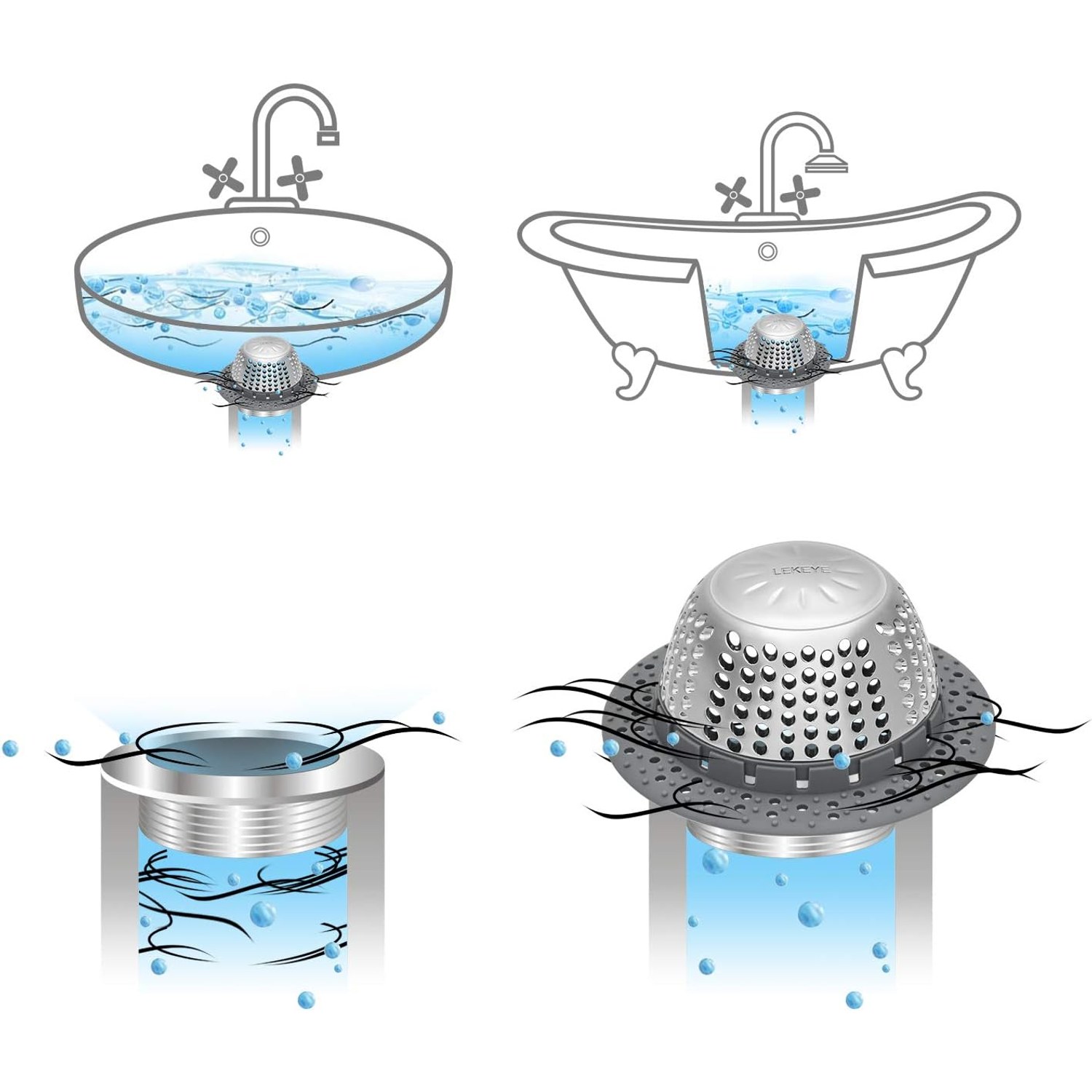
A tall dome changes the shape of the problem. Hair collects over the crown of the dome and hangs down the sides, but the lower part of the dome and the gap between the dome and the drain stay open. Water runs around the collected hair and keeps draining. You get a much longer stretch between cleans, and when the drain does slow, it is a gentle warning rather than an instant flood.
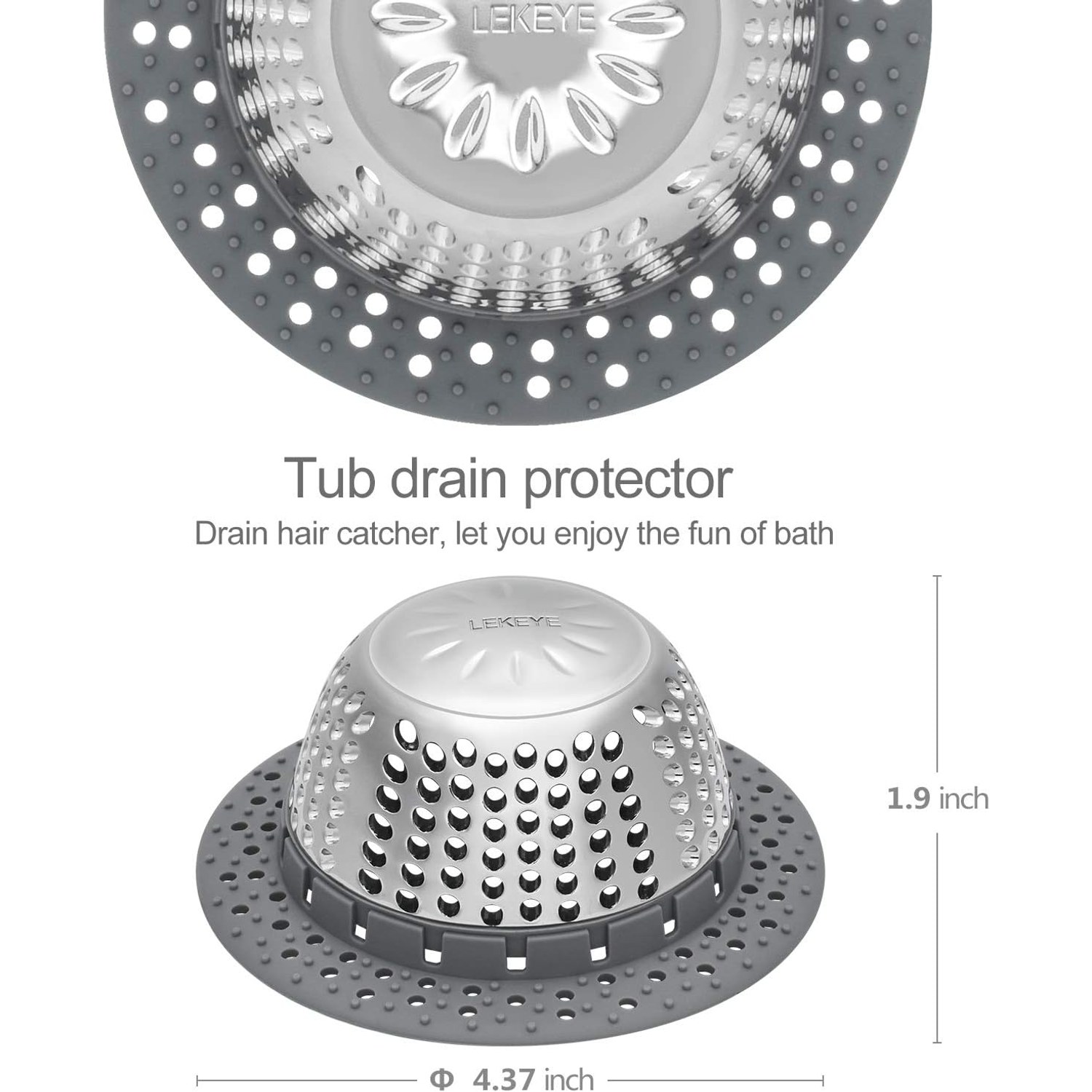
The height here is 4.8 cm with a footprint of 11.1 cm across. That is tall enough to hold a decent amount of hair and wide enough to cover a standard bathroom drain opening with room for the rim to sit flat.
Flat drains, pop up plugs, and why fit is tricky
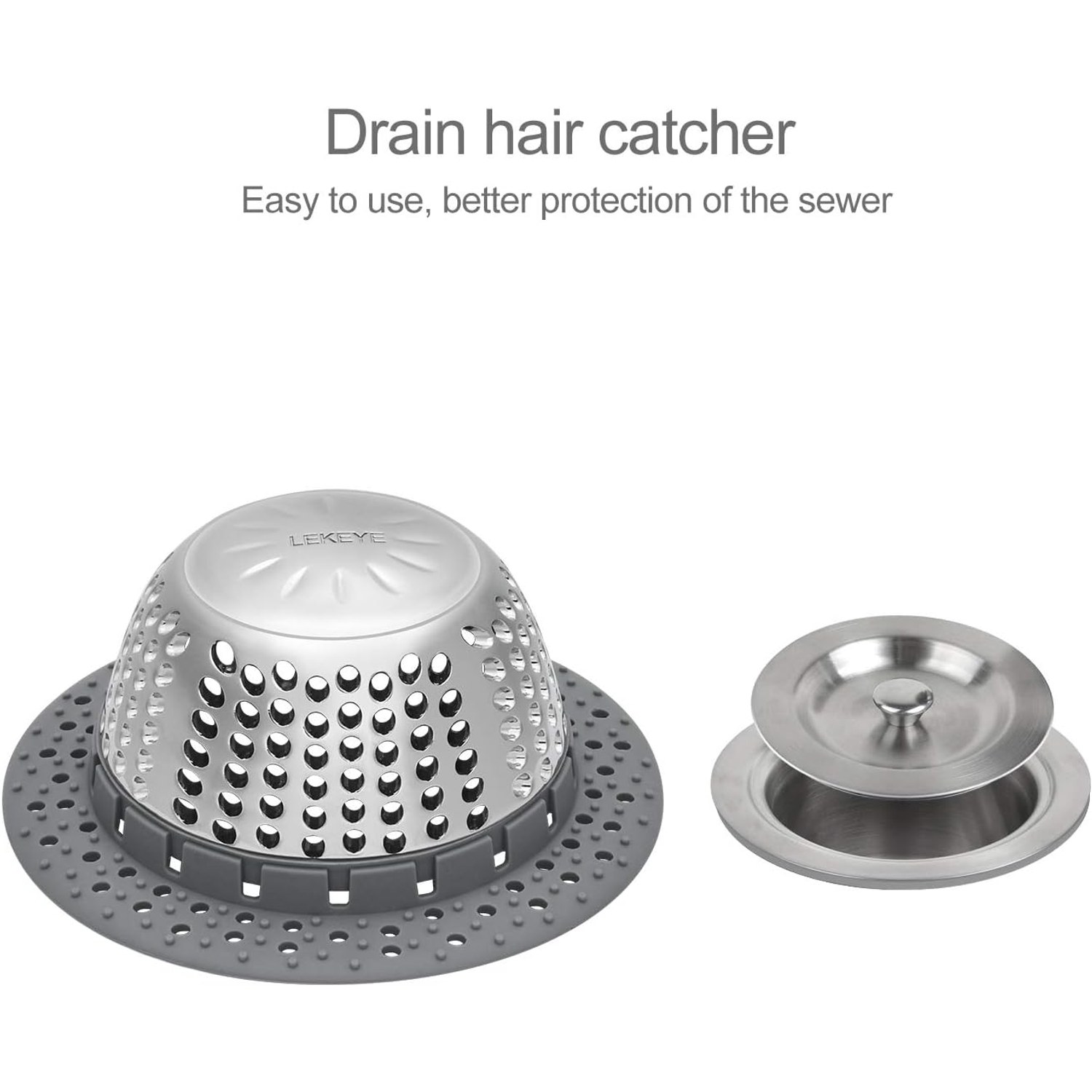
Bathroom drains are not standardised. Some are flat grates set into a tiled floor. Some are shower trays with a round moulded recess. Baths often use a pop up plug, where a little metal disc sits on a shaft in the middle of the drain and lifts when you turn the overflow knob.
Push-in strainers are the usual answer, and they are the reason people give up on hair catchers. You buy one, get it home, and it either rattles loose in the hole or will not go in at all. A pop up plug makes it worse because the shaft is in the way.
A dome that rests on the surface sidesteps the whole issue. It is not trying to fit inside anything. It covers the drain from above, so it works as a bath drain cover for pop up plugs and as a drain protector for regular drains with flat grates. The plug underneath still works normally. You close it to fill the bath, open it to drain, and the catcher stays where it is doing its job either way.
The one thing to check is the area around your drain. You need a reasonably flat, clear patch at least 11.1 cm across for the rim to sit evenly. If your drain sits at the bottom of a steep slope or tucked into a corner moulding, measure before you buy.
Materials matter more here than you would expect
A bathroom drain is one of the wettest spots in a house. Whatever you put there sits in water, soap and warm steam for years. Plated steel and painted metal both lose that fight. The coating chips, moisture gets underneath, and you end up with rust marks on your shower tray that are harder to remove than the original hair.
Stainless steel does not have that problem. It is the same reason sinks and taps use it. It stays looking the same, it will not stain the surface underneath, and it has enough weight to stay put when water is running over it.
The silicone rim is the other half of the design. Silicone grips wet surfaces well, which keeps the catcher centred instead of skating off to one side. It also closes the gap at the edge, so grit, lint and small bits of debris cannot slide under the rim and into the drain. And because silicone is soft, it does not scratch an acrylic shower tray or an enamel bath.
Who this suits
Anyone with long hair in the house will notice the difference fastest. So will households with several people sharing one shower, where the hair load adds up quickly. Pet owners who wash dogs in the bath find it useful too, since pet hair is short, plentiful and brilliant at blocking pipes.
Older homes benefit most of all. Original pipework is often narrower, rougher inside, and quicker to catch debris, so prevention is worth far more there than in a new build.
It is also a sensible thing to buy for a rental. There is no installation, nothing is modified, and when you move out it goes in a box with the rest of your kitchen things.
Choosing between the options
If you are comparing a few different catchers, a short checklist helps.
Shape comes first. A dome outlasts a flat screen between cleans, every time. Material comes second, and stainless steel with silicone is the combination that survives bathroom conditions. Then look at how it fits. Anything that needs to wedge into the drain hole is a gamble unless you have measured carefully, while a surface-sitting design is much more forgiving.
Finally, think about cleaning. This is the bit that decides whether you keep using it. If hair has to be picked out of a mesh basket with your fingers, you will skip it. If it peels off the outside of a dome in one go, you will not.
Keeping it in good shape
Cleaning is simple. Lift the dome, wipe the hair off with tissue, rinse under the tap, put it back. Doing this every few showers keeps it effortless.
Every week or two, give it a proper wash with dish soap and a soft cloth or an old toothbrush to shift soap scum, paying attention to the underside of the silicone rim where film builds up. Soap film is what makes a catcher start sliding around, so cleaning the rim also fixes grip.
Skip steel wool and scouring powders. They scratch the steel finish and wear the silicone. Bleach soaks are not needed either, since the point of the catcher is that nothing sits long enough to go rotten.
The short version
Drain blockages are predictable, and predictable problems are the easy kind to prevent. A dome-shaped stainless steel catcher sits over the drain, holds hair above the water line, and lets everything else run away as normal. It fits flat drains and pop up plugs because it never goes into the hole. It cleans in seconds, so you keep using it.
For the price of one visit from a plumber you could fit every drain in the house. That is a straightforward trade.