
The complete guide
How to Choose and Fit a Square Shower Drain Cover
The small fitting that quietly ruins a bathroom
You can scrub a bathroom until the tiles squeak and still have it look neglected, and nine times out of ten the culprit is down near your feet. A rusted drain grate. Chrome plating peeling off in flakes. A plastic cover that has gone yellow and warped at one corner. It is a small thing, maybe ten centimetres square, but your eye goes straight to it because water and light both point that way.
The other half of the problem is not cosmetic. An old or badly fitting cover stops doing its job. The slots widen, hair slips through, and the drain starts running slow. Then you are standing ankle deep halfway through a shower, wondering whether it is time to call someone.
A replacement grate fixes both complaints at once, and it is one of the few bathroom jobs that does not involve the plumbing. You are swapping the plate on top, not touching the waste trap below it.
What a drain cover actually does
Three jobs, and they pull slightly against each other.
The first is to let water away fast. A shower head can push out a surprising amount of water per minute, and the grate needs enough open area to take it without backing up. That is why you see wide slots rather than fine mesh on floor traps.
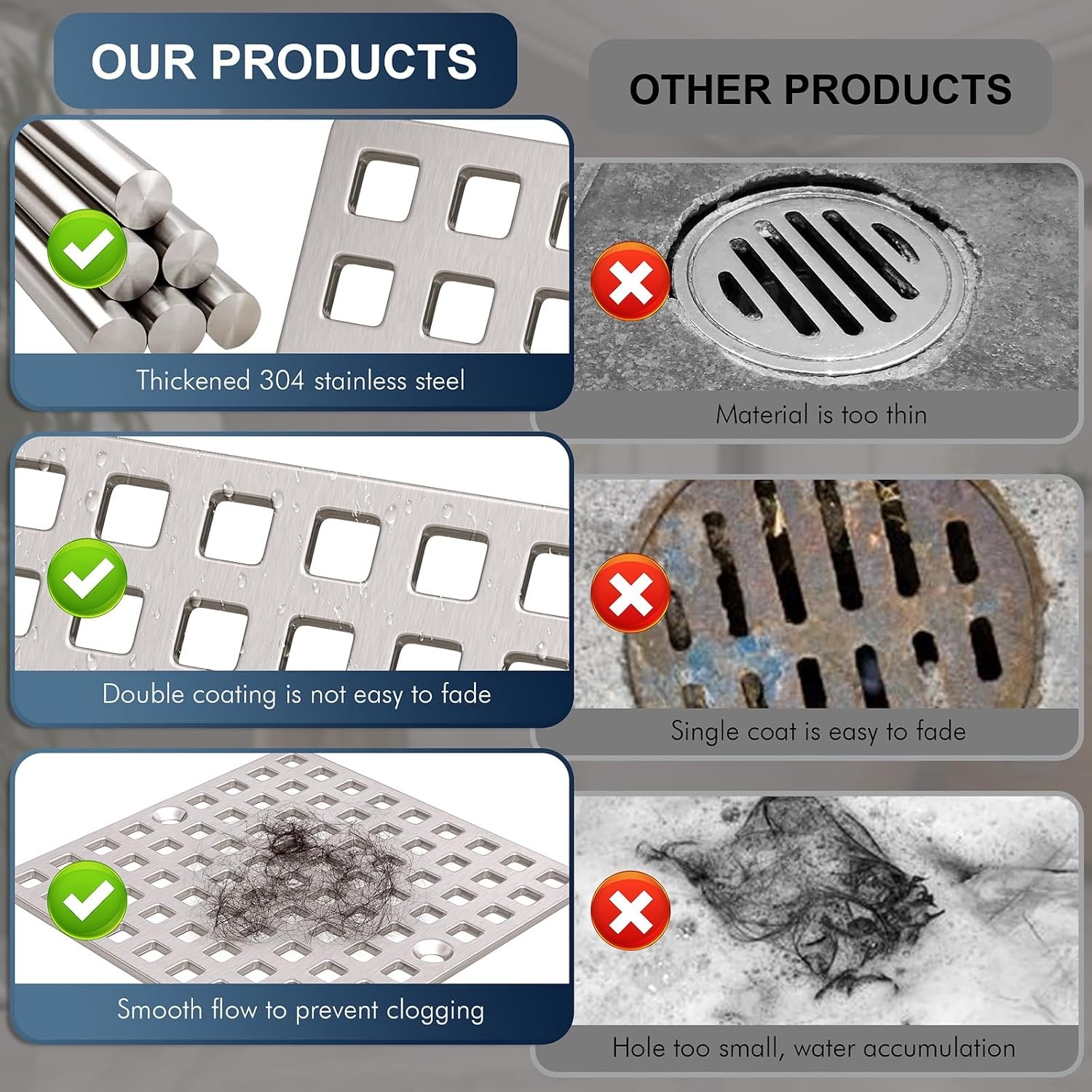
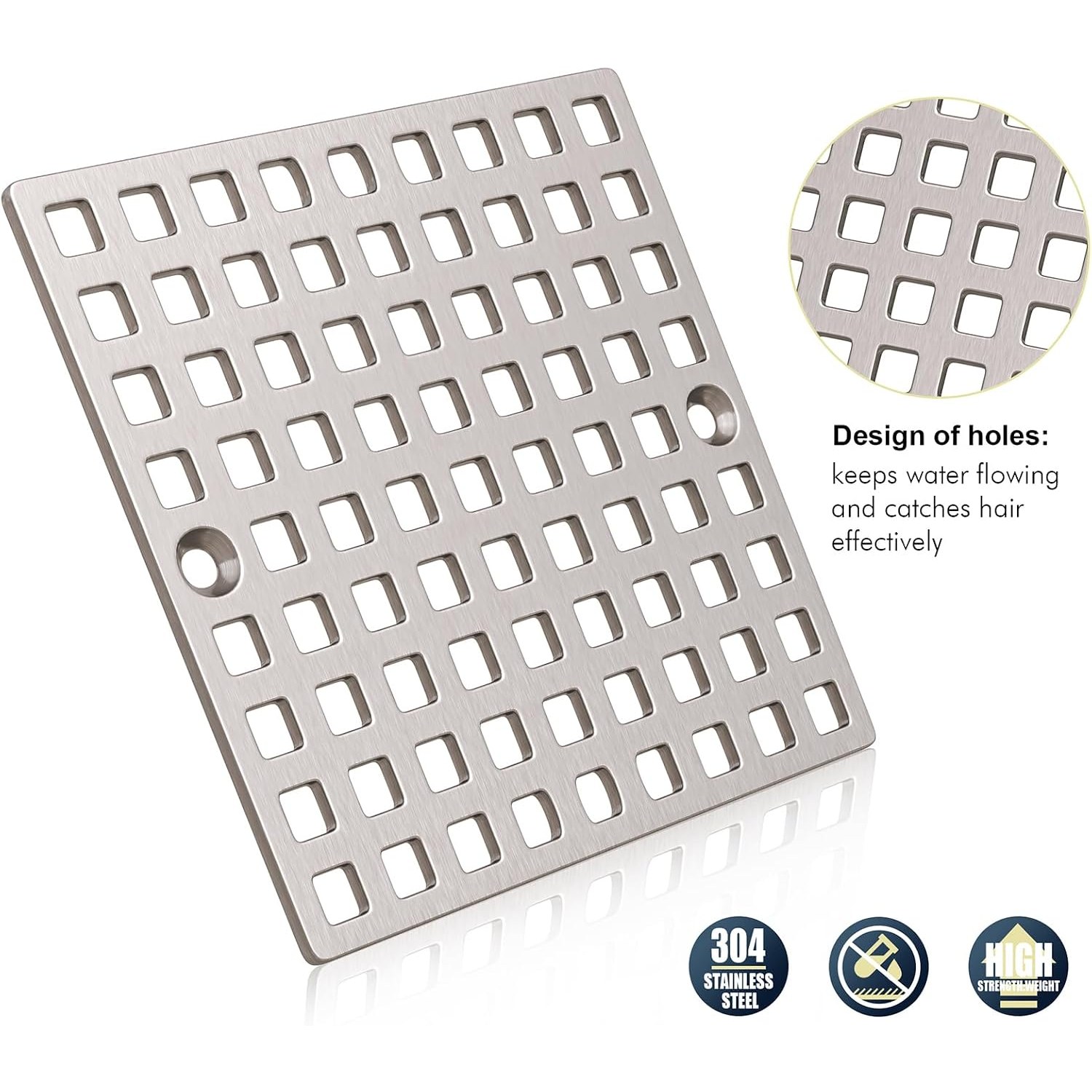
The second job is to stop things going down that should not. Mostly that means hair. Hair is the start of nearly every slow shower drain, because strands knot together, then grab soap residue and skin oils until the whole lot forms a plug in the trap. Catching hair at the surface, where you can see it and bin it, is far easier than dealing with it once it is thirty centimetres down a pipe.
The third job is to be safe to walk on. A cover that rocks, lifts or sits proud of the tile is a stubbed toe waiting to happen, and in a wet room with bare feet that matters.
A good grate balances all three. Slots big enough to flow, tight enough to filter, fixed firmly enough to stand on.
Why stainless steel, and why brushed
Drain covers come in plastic, plated steel and stainless steel. Plastic is cheap and it shows. It warps with hot water over time, goes brittle, and discolours in a way no amount of cleaning will fix. Plated steel looks fine for a year or two, then moisture gets under the plating at an edge and it starts to lift and flake.
Stainless steel is the one that holds up. It does not swell, it does not flake, and it keeps its shape under weight. In a space that is wet and warm most days of the week, that matters more than almost anything else.
The brushed nickel finish on this cover is a practical choice rather than a purely visual one. A mirror polish looks sharp in a showroom and then shows every single water spot and fingerprint the moment it is installed. A brushed surface scatters light, so hard water marks and daily smudges simply do not register the same way. You clean it less often and it still looks presentable.
Brushed also sits comfortably alongside the tapware most people are installing now. If your mixer and shower rail are brushed nickel, brushed chrome or brushed stainless, a brushed grate blends in rather than drawing attention.
Screw-in versus snap-in, and why it matters
This is the detail people most often get wrong when ordering online.
A snap-in cover sits in the drain by friction. It lifts straight out with a fingernail, which is convenient for cleaning, but it can also pop loose when a hard stream of water hits the edge, or when you drag a mop across it.
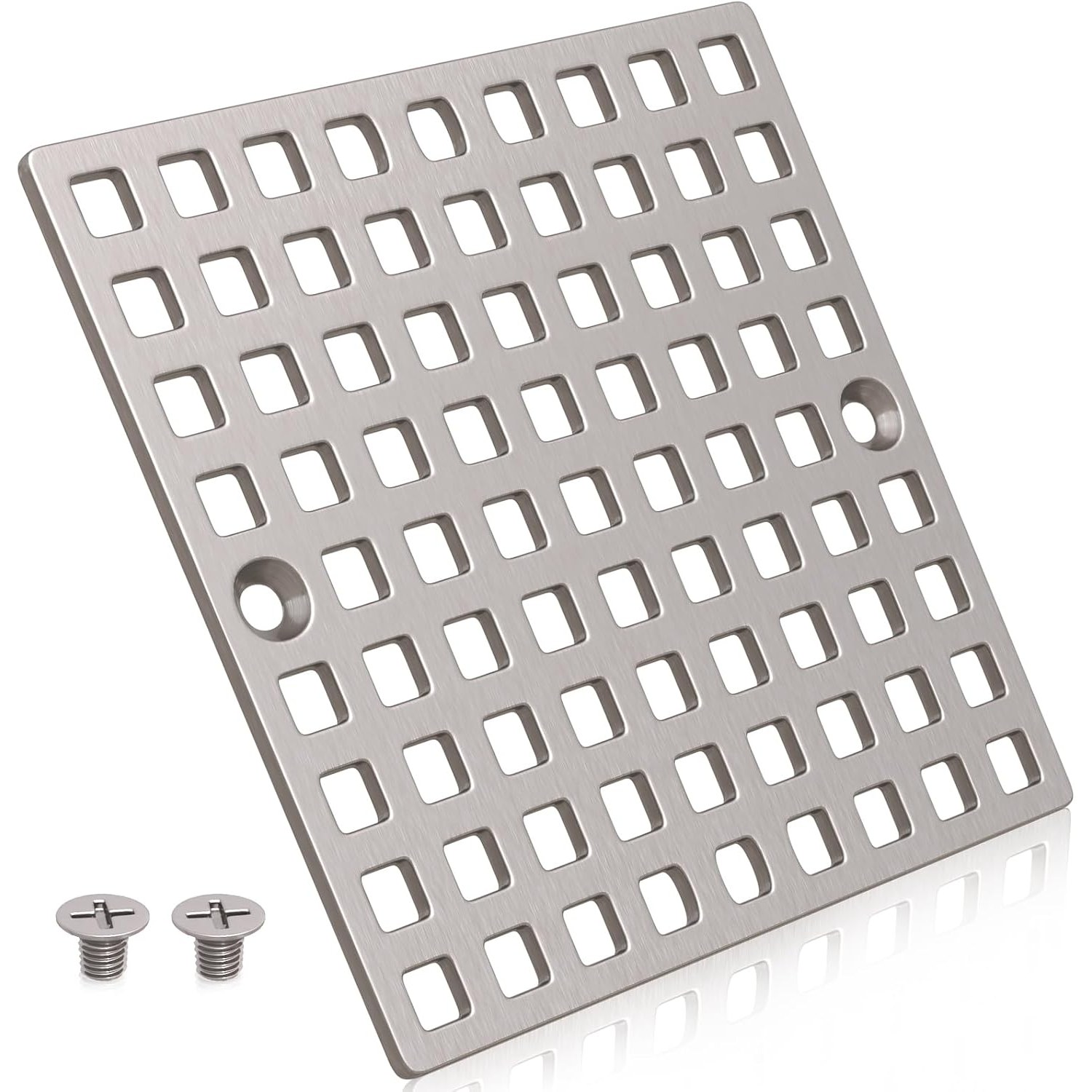
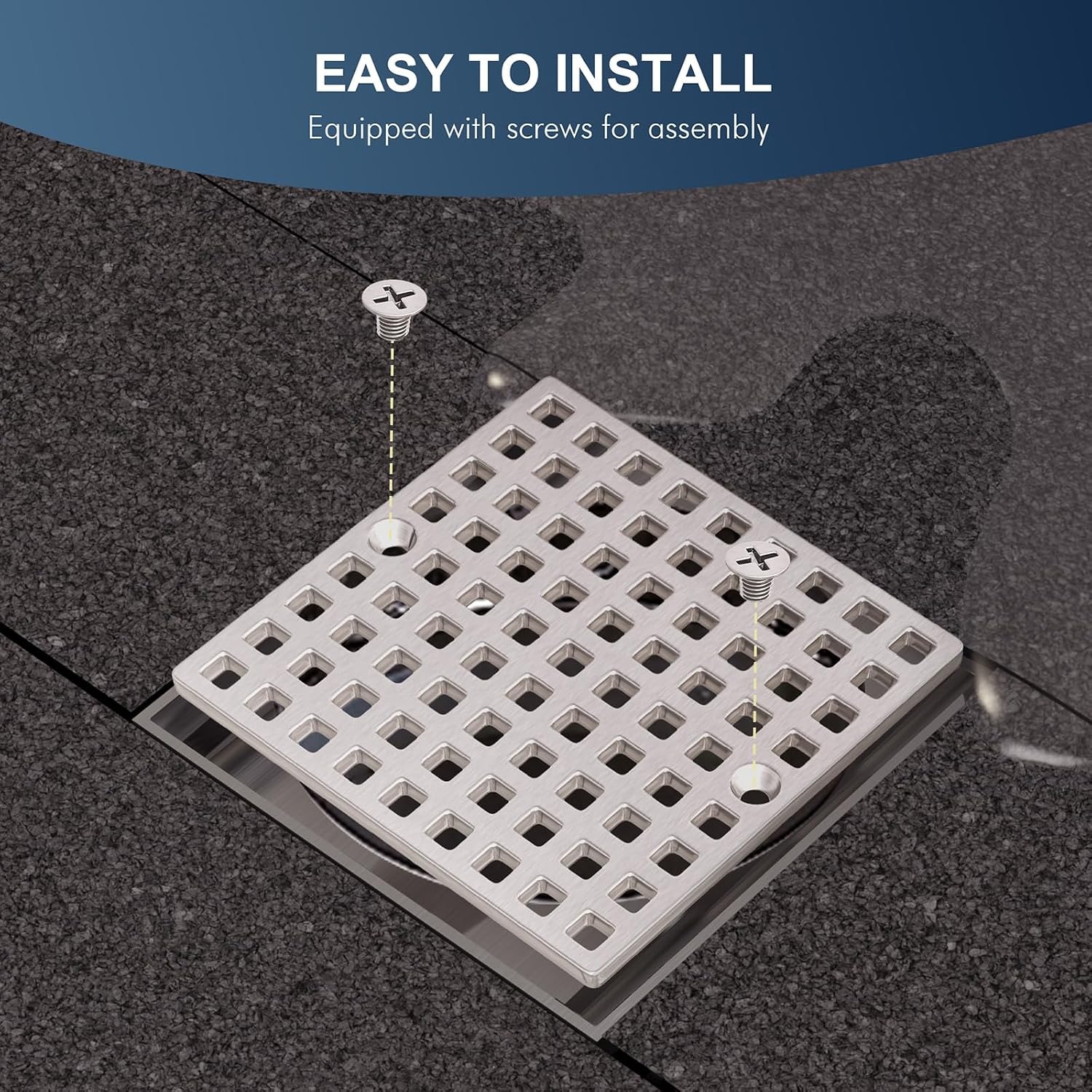
A screw-in cover, like this one, fastens down through screw holes into the drain body. It stays flush, it stays level, and it will not shift under a foot. The trade-off is that cleaning takes a screwdriver rather than a fingernail, though in practice you can usually clear hair off the face without removing it at all.
Because it screws in, the fit has to be right in two ways. The cover has to suit the opening, and the screw holes have to line up with the fixing points already in your drain. A cover that is the correct outside size but has the wrong hole spacing will not fasten down, and that is the single most common reason a replacement gets sent back.
Measuring before you order
Take five minutes with a tape measure and you will avoid the whole problem.
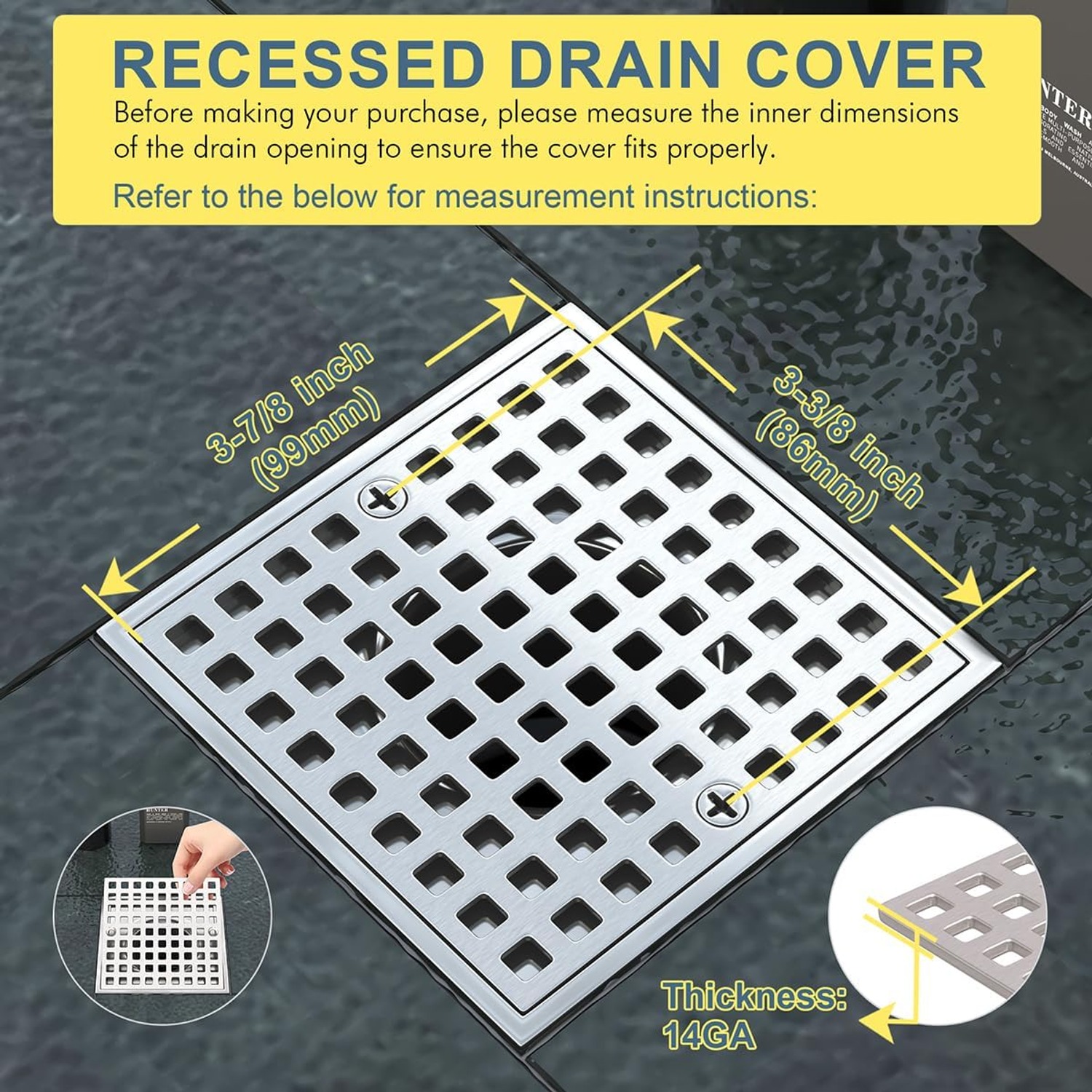
Start with the outside edge of your current cover, corner to corner across the flat. Then measure the drain opening itself, which is usually a little smaller. Finally, and this is the one people skip, measure from the centre of one screw hole to the centre of the other.
Write all three numbers down and compare them with the 10.2 cm square size listed for this cover. If your existing grate is close to a square floor trap cover 98mm opening, you are in the right territory, but the screw spacing still needs to agree.
If the old grate is so corroded you cannot read it properly, measure the recess in the tile instead. The new cover needs to sit down into that recess, not perch on top of it.
Where else it works
A square floor trap is not only a shower thing. The same grate suits a laundry floor drain, a toilet floor trap, a service yard outlet. Those spaces tend to see grit, lint and dirt rather than hair, but the principle is the same: catch the debris at the surface, keep the pipe clear.
There is a quiet benefit to matching them, too. If the laundry, the main bathroom and the ensuite all have the same brushed square grate, the house reads as considered rather than patched together over the years. It costs very little to do and it is the sort of detail people notice without knowing why.
Fitting it
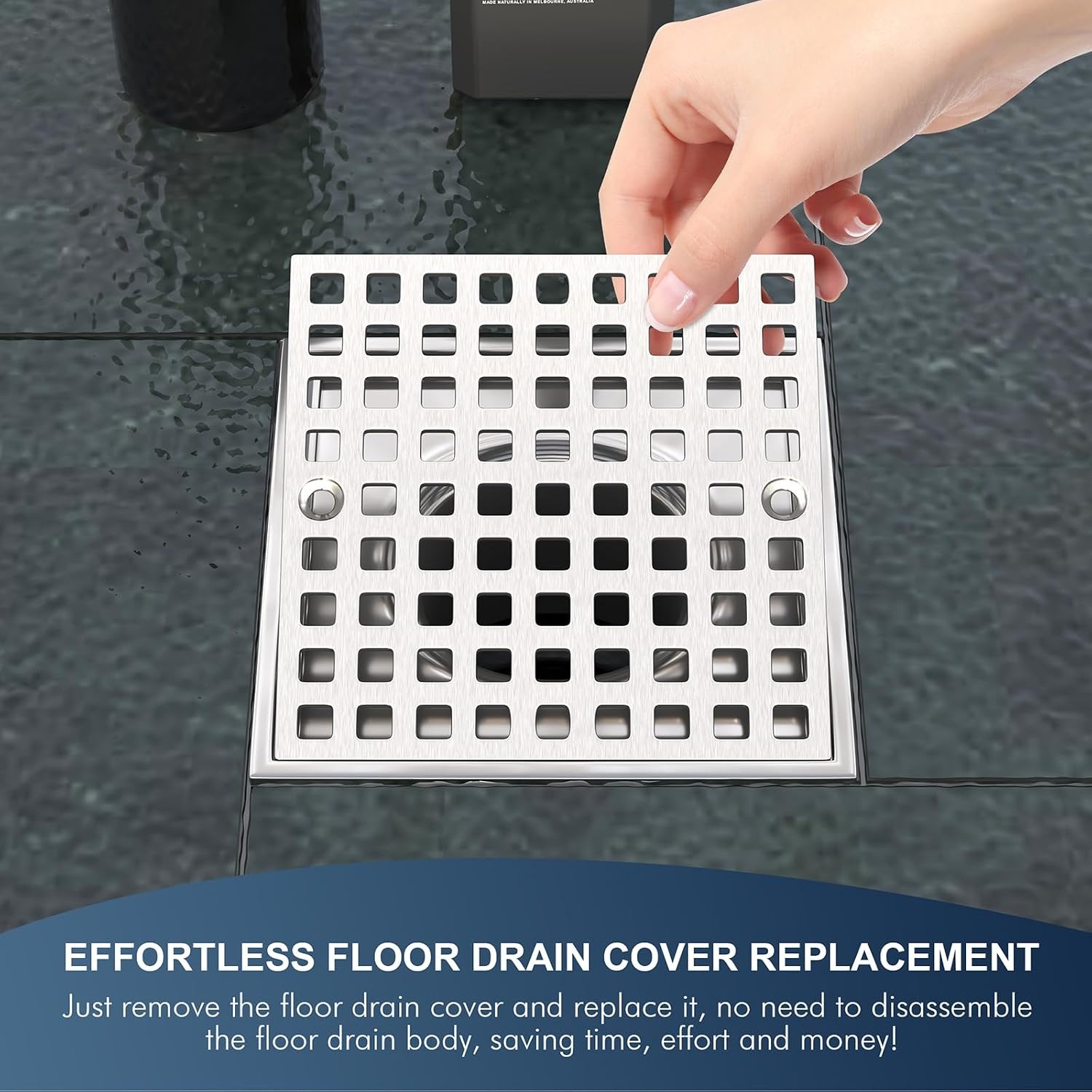
The job itself is short. Undo the screws on the old cover and lift it out. If it has not moved in years, soak the edges with warm soapy water, give it a few minutes, then work a thin flathead screwdriver gently around the rim to break the grime seal. Go slowly near the tile.
Clear the recess properly while it is open. There is almost always a ring of soap scum and hair sitting just below the lip, and this is your one easy chance to get at it. A nylon brush and warm water will do.
Set the new cover in, line up the holes and start both screws by hand before tightening either one. Snug is enough. Overtightening a screw into a plastic drain body can strip the thread, and then you have a real problem.
Run the shower for a minute and watch it drain. If water sits around the edge of the grate, the cover is not seated fully and something is probably still in the recess.
Keeping it clean
Once a week or once a fortnight, depending on how many people use the shower and how long their hair is, pull the hair off the face of the grate and bin it. That alone prevents most slow drains.
Every month or so, take it off, rinse it, wipe the face with warm soapy water and a soft cloth, then dry it. Drying is the step that keeps water spots from building up on the brushed surface.
Skip the steel wool and the heavy scourers, which scratch against the grain of the brushing and leave marks you cannot buff out. Also keep caustic drain cleaners off the metal where you can. If you use one, lift the cover first or rinse it well afterwards.
The short version
An old drain grate is cheap to replace and fixes two problems at once, the look of the floor and the speed of the drain. Stainless steel outlasts plastic and plated finishes in a wet room, and a brushed face hides water marks that a polished one puts on display. This cover is a screw-in square measuring 10.2 cm by 10.2 cm, so measure your opening and your screw hole spacing before ordering. Fit it in ten minutes with a screwdriver, clear the hair off it regularly, and it will keep doing its job quietly for years.