
The complete guide
The Honest Guide to Clearing a Blocked Drain Yourself
The problem with a slow drain
Nobody calls a plumber about a slow drain. They call about a stopped one. The slow phase is the warning, and it usually lasts weeks. Water pools in the shower tray a little longer each morning. The kitchen sink burps when you pull the plug. Then one evening the water simply sits there with a film of grease on top, and now it is an emergency.
What is happening down there is simple. Soap scum, hair, fat and food particles stick to the pipe wall. The pipe does not block all at once, it narrows. Every month the opening gets a bit smaller until something ordinary, a clump of hair or a spoonful of rice, bridges the gap and everything stops.
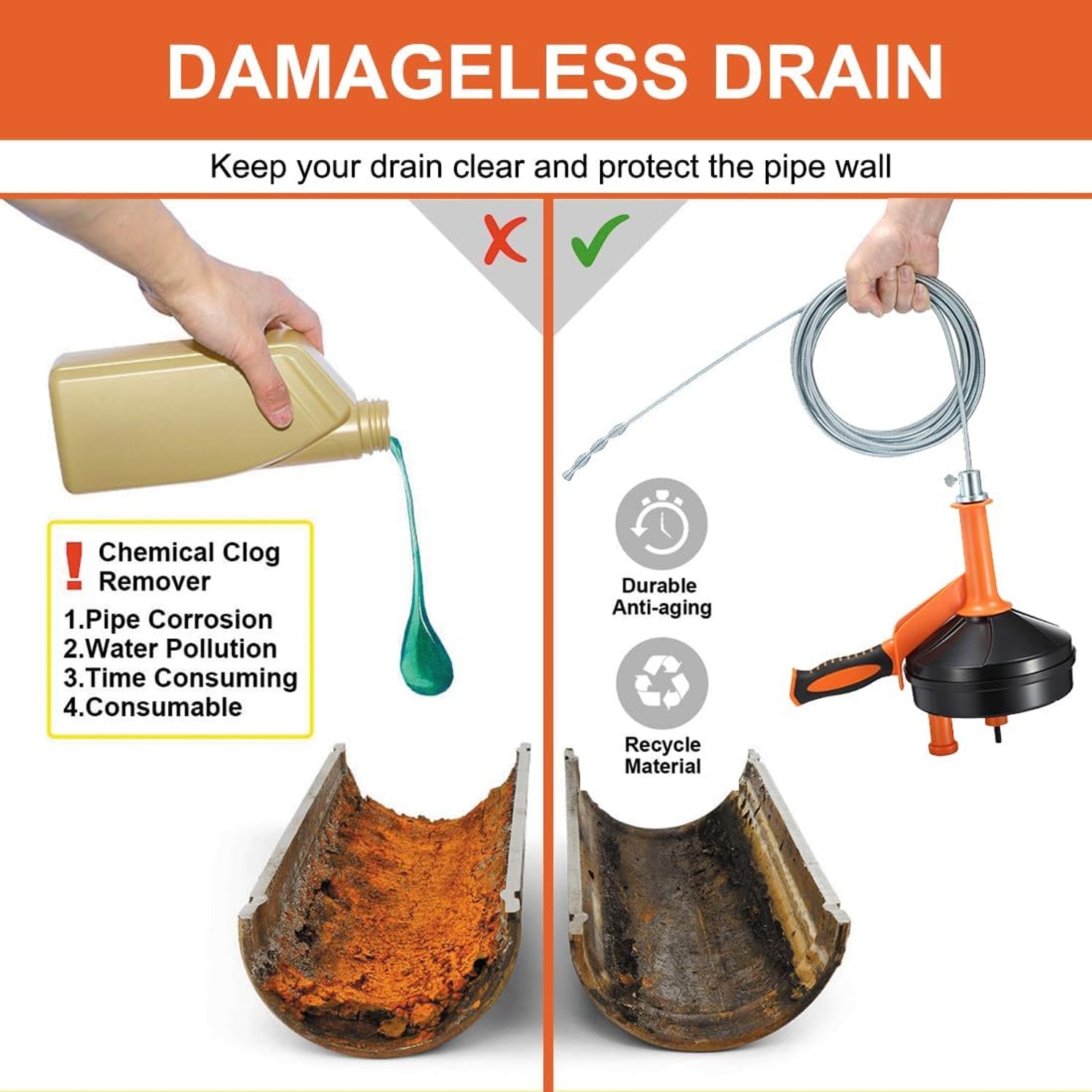
Chemical drain cleaner is the usual first response, and it is the weakest one. The liquid pours down, meets the top of the blockage, and sits there. It softens the surface and some water trickles through, which feels like success. A week later you are back where you started, because the mass of the clog is still in the pipe. Meanwhile the chemical has been sitting against your seals and pipe joints the whole time.
A drain auger takes a different route. It goes to where the blockage actually is and removes it.
How a drain auger actually works
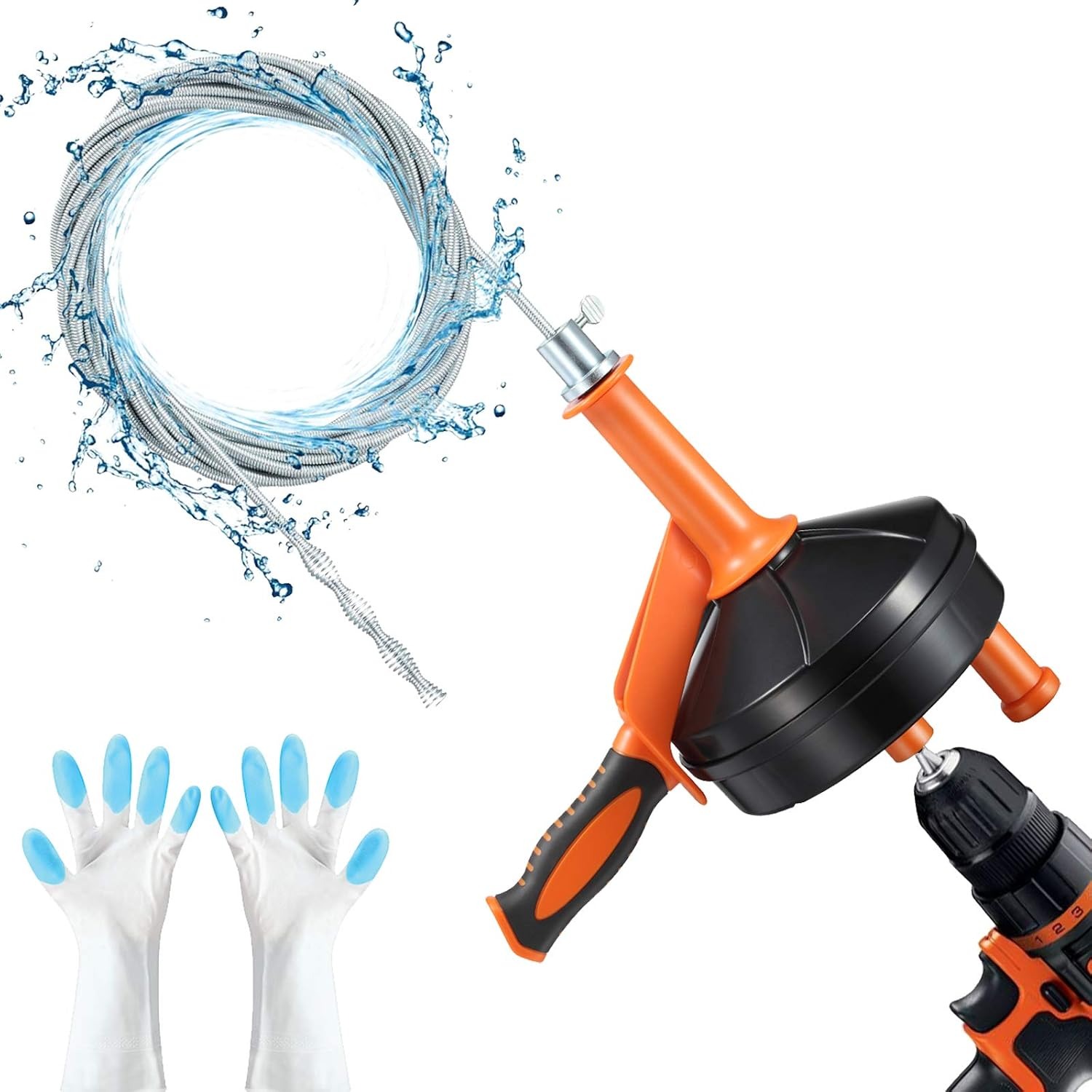
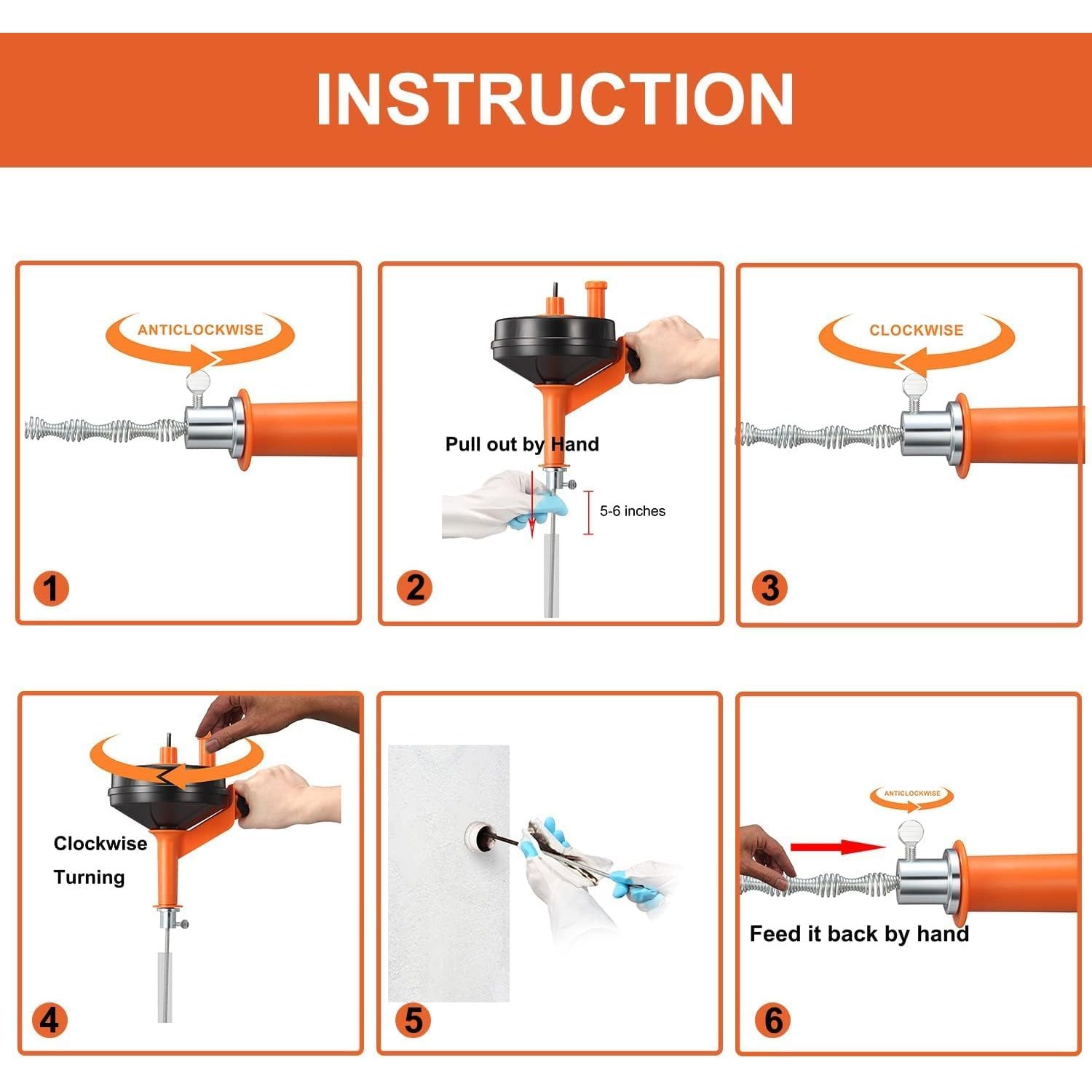
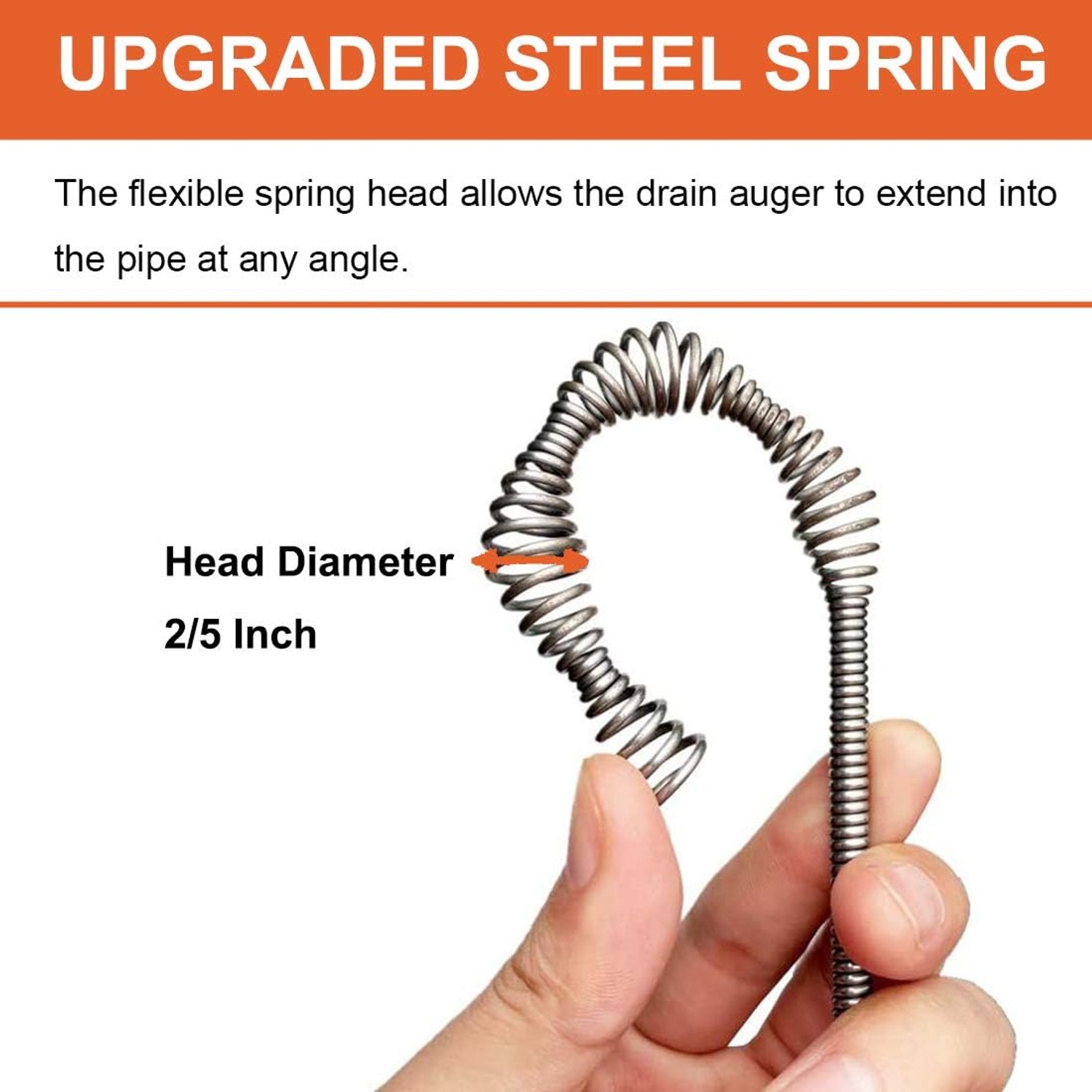
The tool is a long steel spring wound into a drum. You feed the spring into the drain by hand until it stops moving forward. That stop is either a bend or the clog, and part of learning the tool is telling those apart. A bend feels like a soft deflection, and a gentle twist usually gets you past it. A clog feels like a wall.
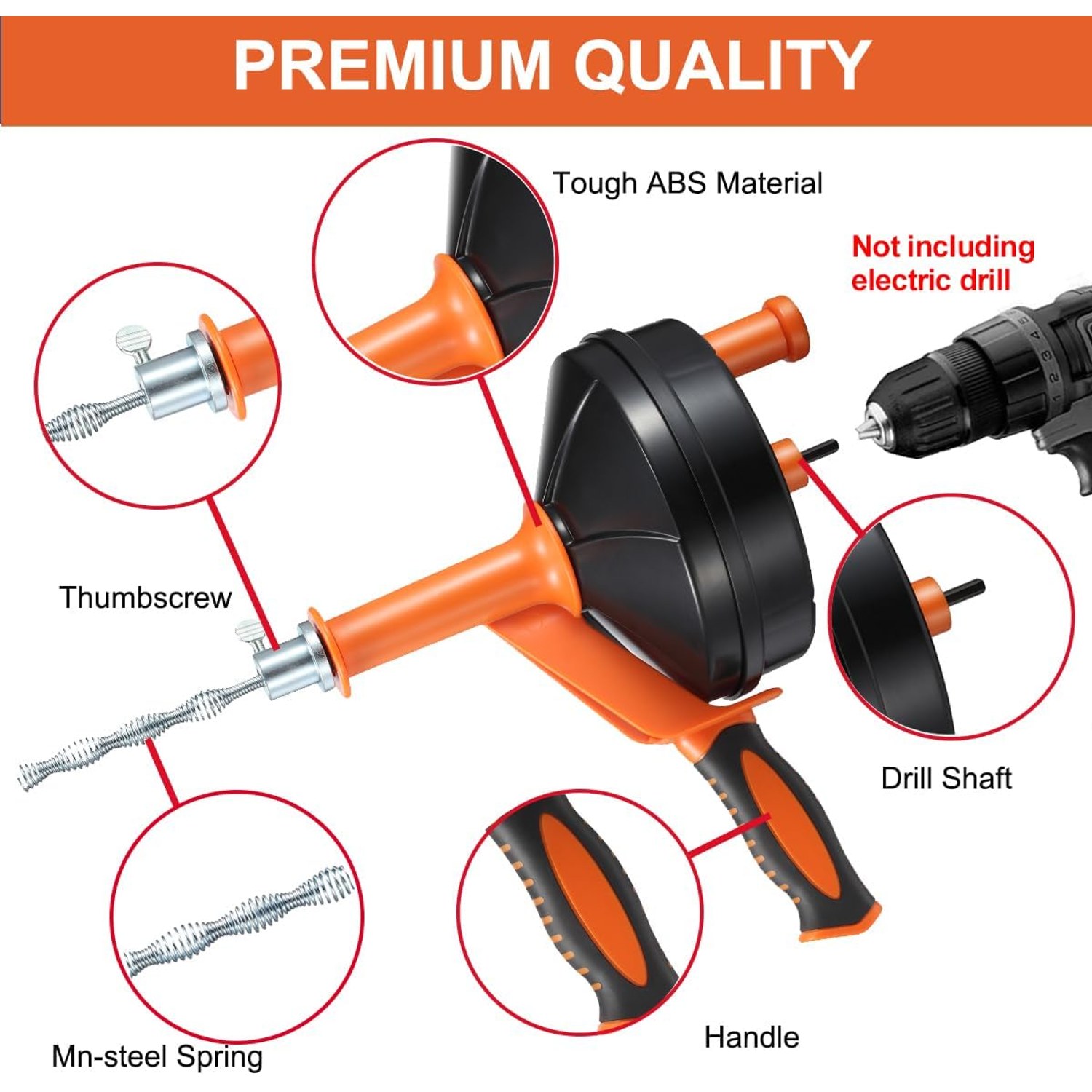
Once you have reached the obstruction, you tighten the thumb screw. This clamps the cable to the drum so that turning the handle turns the cable. Then you crank. The spring tip rotates against the blockage and does one of two things. If the clog is soft, like hair or grease, the tip tangles into it and you pull the whole mass back out. If it is firmer, the tip bores through and opens a channel that water pressure finishes off.
This model gives you 7.5 metres of cable, about 25 feet (7.6 m). For context, the distance from a bathroom basin to the main stack in a typical house is a couple of metres. From a kitchen sink it may be three or four. That length is comfortably more than most households will ever need, which matters because you do not want to run out of cable just as you start making progress.
The drill adapter is the part people underestimate. Hand cranking works, and it gives you the best feel for what is happening at the far end. But a packed grease blockage in a kitchen line can take a lot of turns. Fitting a cordless drill lets the motor handle the repetition while you concentrate on feeding the cable forward. Run it slow. A drill on full speed whips the cable and can kink it in a bend, which is the one way to genuinely damage this kind of tool. The drill is not supplied, so use whatever you already have.
Who this tool suits
If you own your home and you have more than one fixture that occasionally backs up, you will use this. Houses with long-haired occupants and a single shower are the classic case. So are kitchens that cook with a lot of oil.
Landlords and anyone managing a rental property get particular value from it. A single call-out for a blocked basin often costs more than the tool. Being able to drive over, clear it in twenty minutes and leave is worth having in the car.
Apartment dwellers can use it too, though check your building rules on what you may work on. Anything past your own fixture trap is usually shared infrastructure and is the building's responsibility.
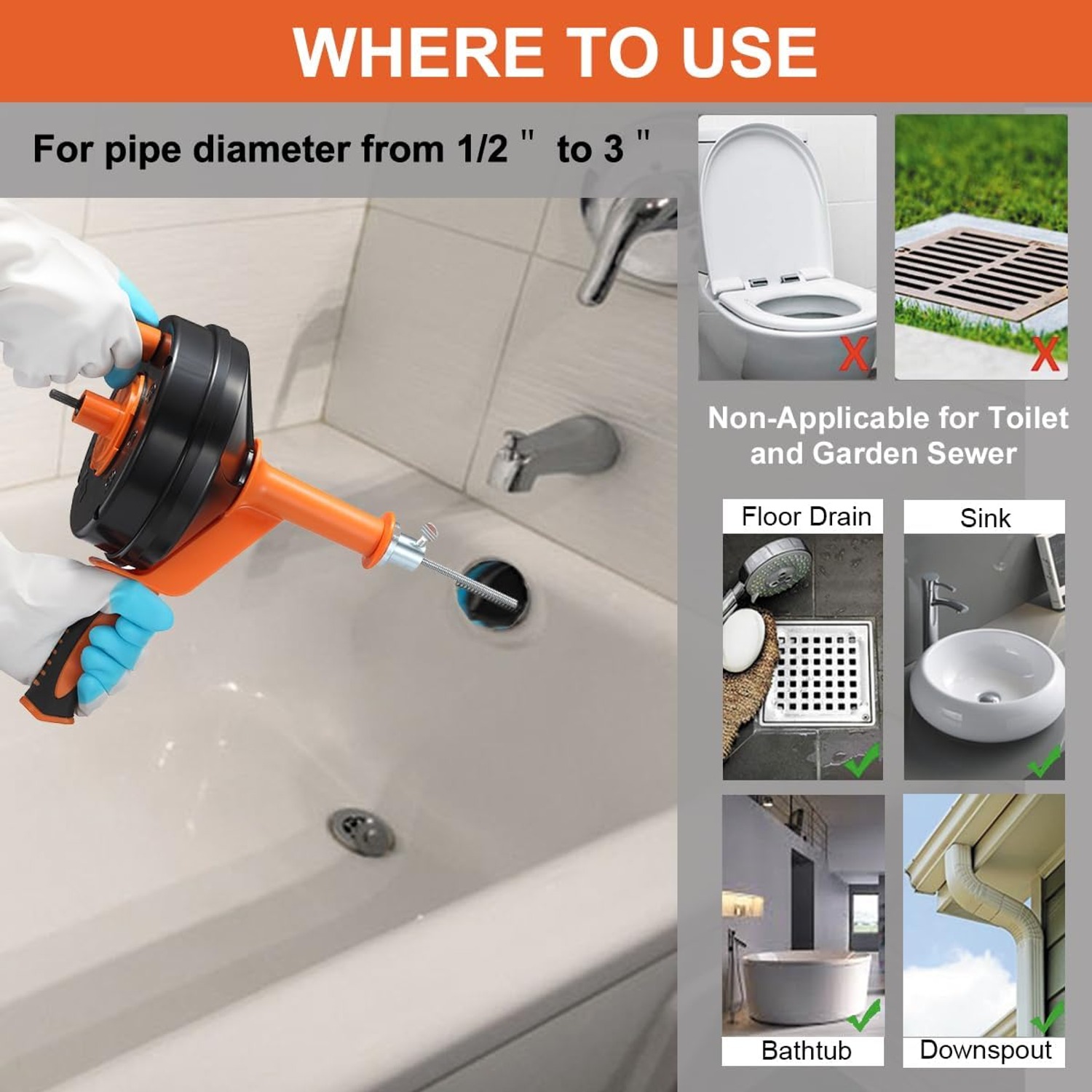
Who should not buy it: anyone whose only problem is the toilet. This auger is not for toilets, and using it on one risks scratching the bowl. Toilets need a closet auger with a sleeved shaft. That is a different tool and an inexpensive one.
Choosing the right drain snake
The two things that separate drain snakes are cable length and cable thickness, and they trade against each other.
A thin cable bends easily and gets through tight basin traps, but it has less torque and can bend up on a stubborn clog. A thick cable powers through but will not make the tight turns in small bathroom pipework. This auger sits in the household middle ground, suited to pipes from 1/2 inch through to 3 inch (7.6 cm), which is where nearly all residential fixture drains live.
Length is the other call. Short 3 metre hand snakes are fine for a basin and nothing else. Long commercial drums of 15 metres plus are heavy, awkward and overkill unless you are working on main lines. The 7.5 metre figure here covers fixture-to-stack distances in normal housing with margin to spare.
Then there is the drum. A loose coiled snake without a housing is cheaper and genuinely unpleasant to store, because you end up with a dirty spring hanging in the storeroom. An ABS drum keeps the cable contained and gives you a handle to crank against. The metal mouth at the drum opening on this one reduces the wear where the cable rubs on its way in and out, which is the spot that fails first on cheaper tools.
If you are comparing options and you want the best drain snake with drill attachment, the question to ask is whether the drill fitting is integrated into the drum or is a loose adapter that may wander off. Integrated is better.
Using it without making a mess
A few practical points learned the hard way.
Clear the cabinet under the sink before you start. Put a bucket and an old towel down. There will be water, and it will not be clean water.
Remove the strainer or drain plug if you can. Many basins have a pop-up waste that will not let the cable pass, and on some sinks you need to loosen the P-trap to get a straight shot into the line. This feels like extra work and saves you ten minutes of pushing against nothing.
Wear the gloves. They are in the box for a reason. When a cable comes back out of a kitchen waste pipe carrying two years of accumulated fat, you want a barrier between that and your hands.
Feed the cable in gradually. Do not pull out all 7.5 metres and try to push it in as one length. Work in increments, tightening the thumb screw each time you are ready to turn, loosening it each time you want to advance.
When you think you are through, run hot water for several minutes before you declare victory. If it drains fast and keeps draining, you are done. If it slows again after a minute, go back in. You have made a channel but not cleared the mass.
Looking after it
Maintenance is brief. Strip the debris off the tip, rinse the cable under warm water, and dry it as you wind it back into the drum. Steel that goes into storage wet eventually rusts and a rusty spring loses flexibility. Keep the tool somewhere dry.
Check the thumb screw occasionally and keep grit off the thread. That is the only moving part that gets neglected.
The most useful habit is preventive. Run the auger through your problem drain every two or three months rather than waiting for a failure. A maintenance pass on a working drain takes ten minutes and pulls out the hair mat before it becomes a plug. Anyone searching for the best reusable drain cleaner is really looking for a tool they can keep using, and this one rewards that.
The short version
A drain auger reaches the clog instead of pouring chemicals on top of it. This one gives you 7.5 metres of alloy steel spring in an ABS drum, with a crank handle for feel and a drill adapter for when a blockage will not shift. It covers pipes from 1/2 inch to 3 inch (7.6 cm), which is almost every sink, bath, shower and floor drain in a house. It is not for toilets.
Gloves come in the box. The cable stores inside the drum. Clean it, dry it, and it will keep working for years, which is the whole argument for owning one instead of calling someone out every time water stops going down.