

The complete guide
How To Choose A Drain Strainer That Actually Stays On The Drain
The problem nobody warns you about
Blocked showers rarely happen overnight. They creep up. First the water pools around your ankles for a few seconds longer than it used to. A month later you are standing in two inches of grey water finishing a rinse. By then there is a solid plug of hair, soap scum, and shampoo residue wedged somewhere in the pipe, and your options are a chemical cleaner, a drain snake, or a plumber.
The annoying part is that this is entirely preventable. Hair is the skeleton of almost every bathroom blockage. It tangles, it grabs soap and skin cells, and it builds a mat that water cannot push through. Catch the hair at the surface and the whole chain never starts.
So people buy a drain strainer. Then they discover the second problem.
Why cheap strainers float away
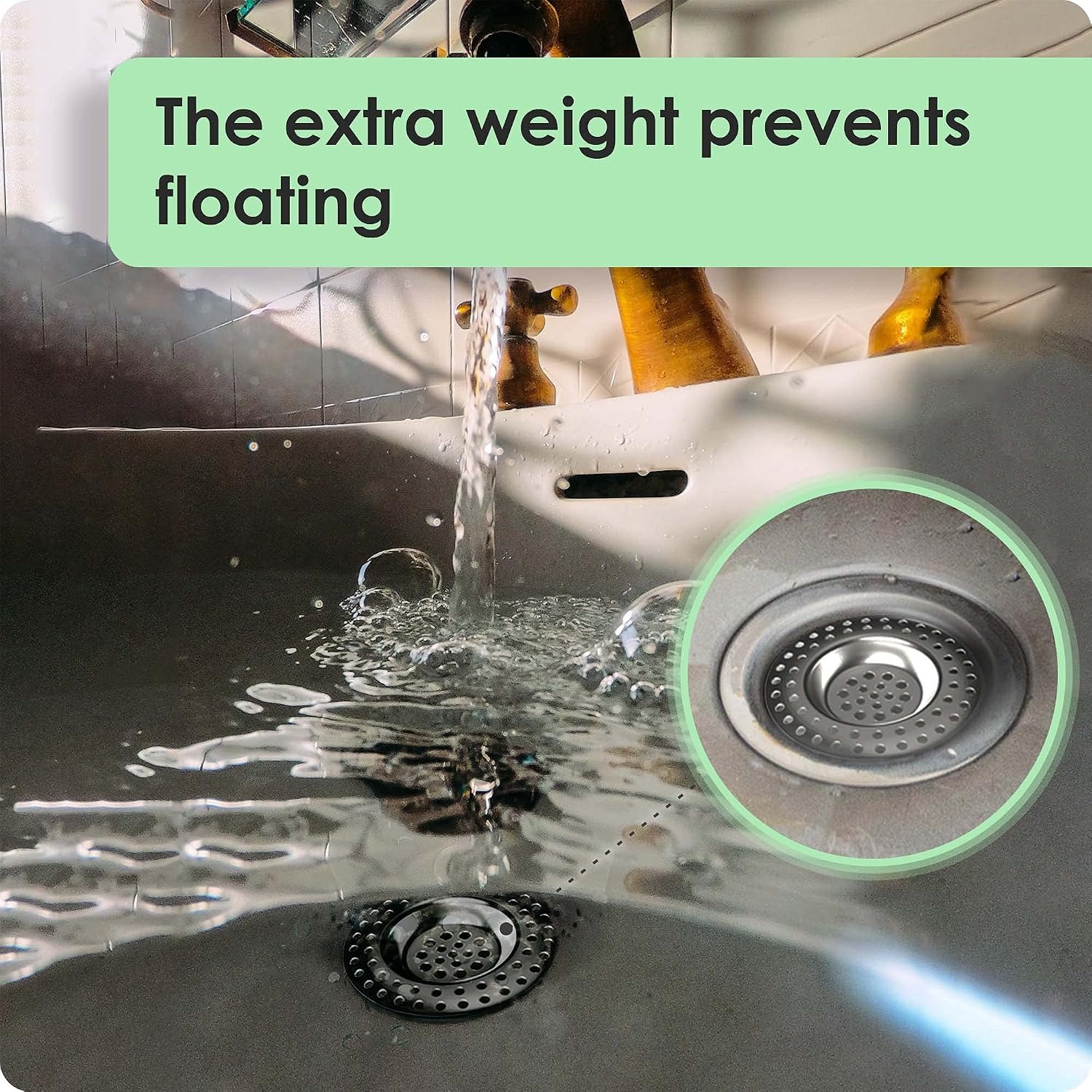
Most of the drain covers sold in supermarkets are moulded plastic or thin pressed metal weighing a gram or two. Put one over a plughole, turn the shower on, and the water flowing across the top creates enough lift to tip the edge. The strainer slides off, usually to the low corner of the tray, and sits there uselessly while every strand of hair heads straight down the pipe.
You notice it when you get out, push it back into place, and watch the same thing happen the next morning. After a few weeks most people give up and leave it in the cupboard.
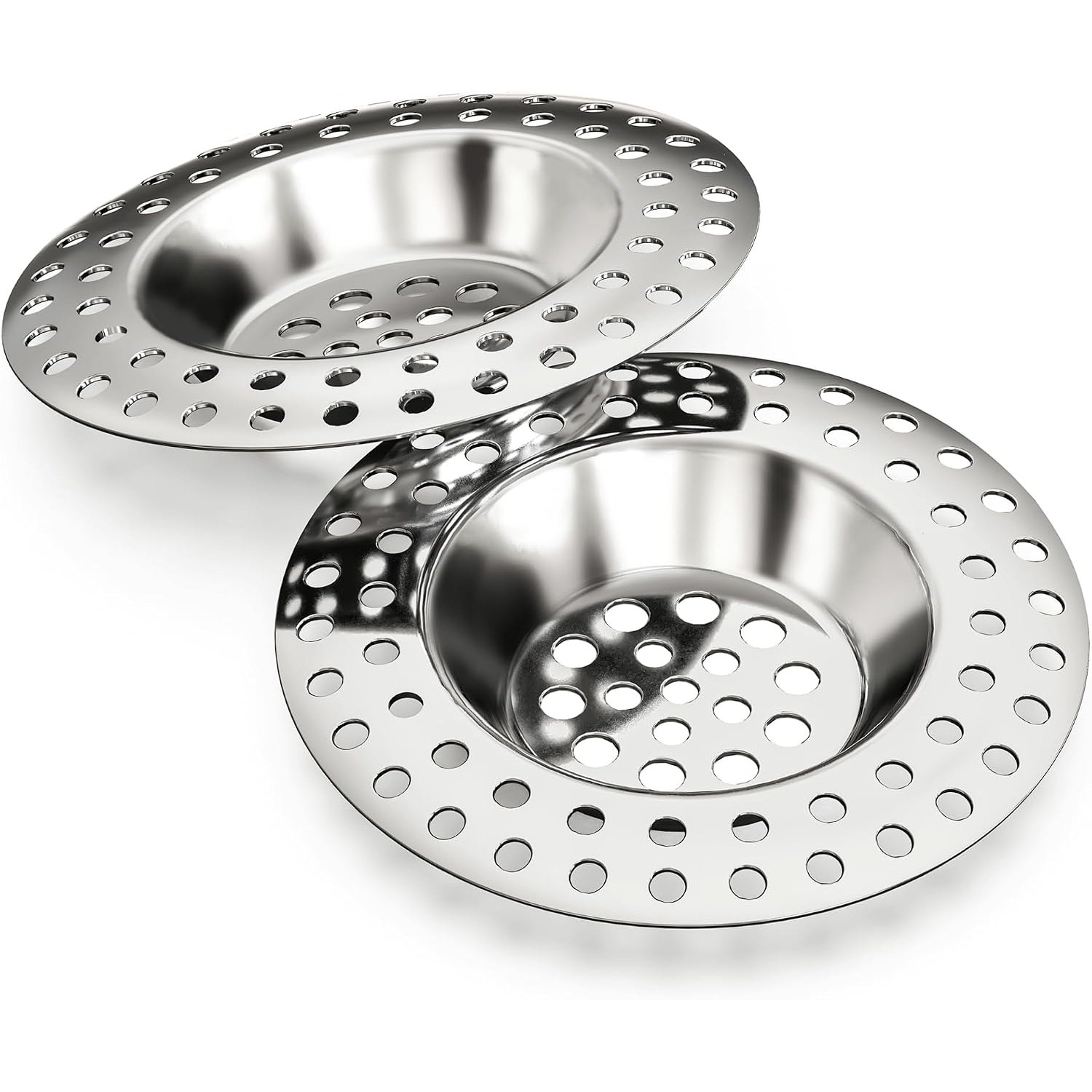
This is where the weight of a heavy drain strainer earns its keep. At 14 g per piece, there is enough mass that flowing water pushes down on the disc rather than under it. It is a small, unglamorous engineering detail and it is the single thing that separates a strainer you use from one you abandon.
How the hole pattern does the filtering
Think about what you are asking a drain sieve to do. It has to stop hair, which is extremely fine, while passing water fast enough that you are not standing in a puddle. Those two goals pull against each other.
A strainer with a handful of large holes drains beautifully and catches almost nothing. Hair threads straight through. A strainer with an ultra-fine mesh catches everything, including soap film, and clogs within days, which means you are cleaning it constantly and the water still backs up.
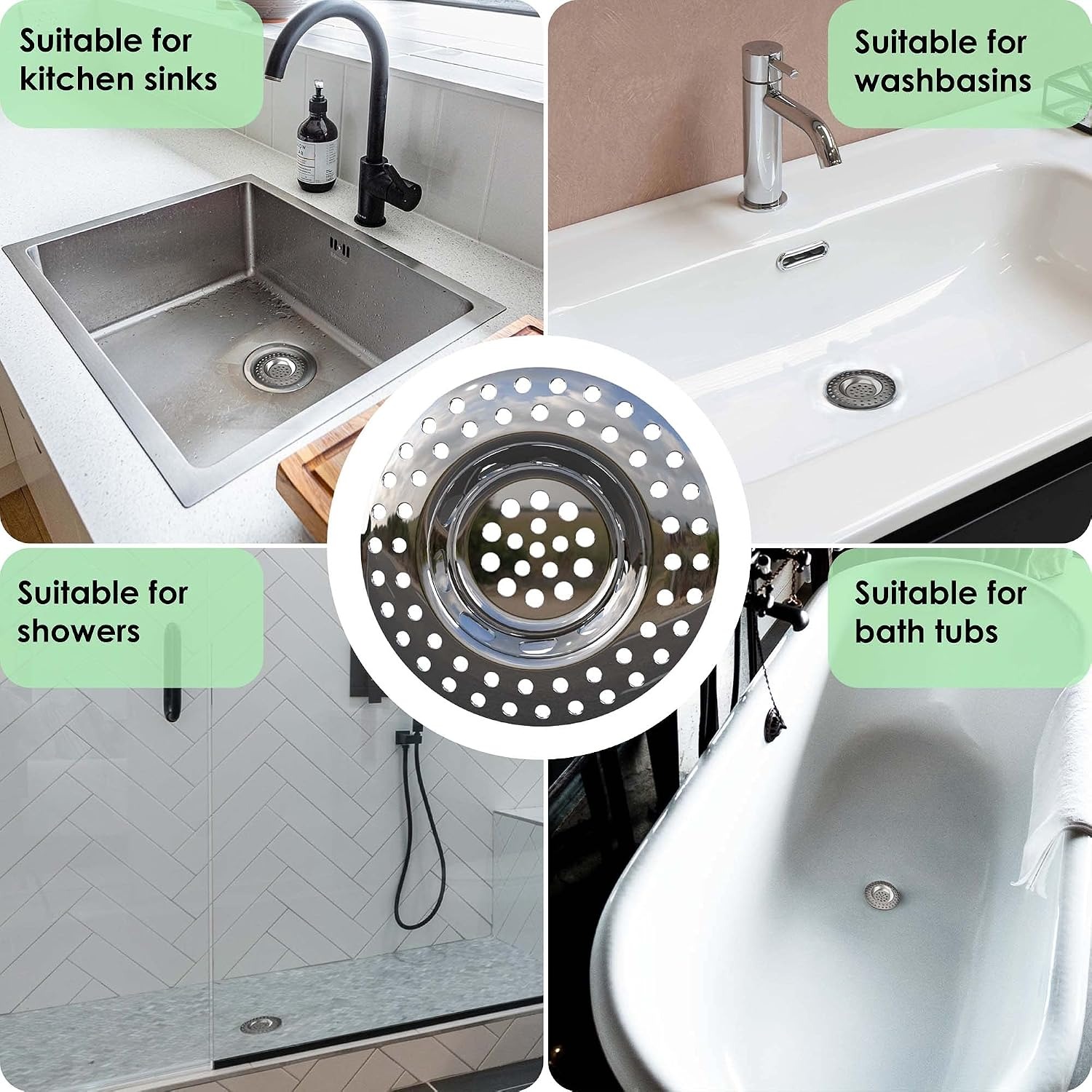
The useful middle ground is a lot of small, closely spaced holes across the whole face. The total open area stays high, so water keeps moving, but each individual gap is too narrow for a strand of hair to slip through cleanly. Hair lays across the surface instead and lifts off in one mat when you clean it. That is the approach used here, and it is why the same product works as a fine mesh drain filter in a kitchen sink as well as in a shower.
Material matters more in a bathroom than anywhere else
A bathroom is the harshest environment in the house for small metal objects. Constant wet, constant drying, hot water, shampoo, soap, and sometimes bleach. Plated or painted metal fails fast in that cycle. The coating lifts at an edge, water gets underneath, and before long there is an orange ring permanently marking the shower tray where the strainer sat.
Stainless steel does not do that. It can be scrubbed, soaked, and rinsed in very hot water without the finish degrading. Over a few years that is the difference between a strainer that still looks presentable and one you quietly throw out.
It also means you can clean it aggressively when you need to. Grease from a kitchen sink does not come off with a rinse. A soak in hot soapy water and a scrub with a brush will shift it, and the steel does not care.
Who this suits
Anyone with long hair in the house will feel the benefit within a week. So will households with several people sharing one bathroom, where the volume of hair adds up faster than anyone realises.
Renters are another obvious group. You cannot rip out a drain or install a permanent fitting in a place you do not own, but you can drop in a strainer that sits on top and take it with you when you leave. Same for student flats and shared houses, where a blocked drain quickly turns into an argument about whose hair it is.
In the kitchen it is a different job but the same principle. A kitchen sink drain strainer catches rice, coffee grounds, tea leaves, and the small bits that slip past when you scrape a plate. Those fine particles are what builds up in the U-bend and starts the slow drain in a kitchen.
And there is the laundry. If you hand wash anything, fibres and lint come off in surprising quantity. A laundry sink drain strainer stops that from accumulating in the trap.
How to choose the right one
Start with a tape measure. The single most common mistake is buying a strainer wider or narrower than the opening it needs to cover. This disc is 7.2 cm across with a 1 cm profile, so it needs a drain opening smaller than 7.2 cm to rest on top. Measure the hole, not the decorative chrome ring around it.
Next, look at the shape. Round openings are the straightforward case. If your drain is square or rectangular, a round disc will cover the centre but leave the corners open, and some hair will find its way past. Grated channel drains need a different style entirely.
Then think about the profile. A low 1 cm height means you can stand on it without it digging in, and it will not catch a toe. Taller basket-style strainers hold more debris but stick up in a way that is awkward in a shower tray.
Finally, consider how many you need. Getting two in a pack is practical rather than a gimmick. Most homes have at least two drains worth protecting, and having a spare means you can deep clean one without leaving a drain exposed.
Keeping it working
A drain strainer only works if it is empty. That sounds obvious, but a strainer caked in two weeks of hair is just a lid, and water will pool over it.
The habit worth building is lifting it out after each shower, tipping the hair into the bin, and dropping it back. Five seconds. Do that and you will almost never deal with a slow drain again.
Once a week or so, give it a proper rinse with a brush and some dish soap to clear the soap film that builds up between the holes. In a kitchen, do this more often, because grease is stickier than shampoo.
If you ever notice a smell, the strainer is not usually the culprit. Odour comes from organic material decomposing in the trap below. Clearing the strainer regularly stops new material getting down there, and a flush of hot water with a little dish soap will help with what is already in the pipe.
One last note. If you use a chemical drain cleaner for any reason, take the strainer out first. There is no point exposing it to strong chemicals when lifting it clear takes a second.
The short version
Hair causes most shower blockages. A strainer stops the hair. The only reason strainers fail is that they are too light to stay on the drain when water is running, which is precisely what the weighted design addresses.
Check that your drain opening is narrower than 7.2 cm, pick the spots in the house where blockages actually start, and build the habit of emptying it daily. That is the whole system. It costs you a few seconds a day and saves you the plumber's call-out fee and a very unpleasant afternoon.