
The complete guide
How to Choose a Silicone Sink Plug That Actually Seals (and Catches Hair)
The small annoyance that never gets fixed
Nobody plans a weekend around sink plugs. They are the sort of thing you notice for ten seconds a day, get mildly irritated by, and then forget until the next time. The water drains out while you are washing up. The chain snapped years ago. The hair trap you bought sits on top of the plug hole and makes the sink look like a building site. Or worse, there is no filter at all, and once every few months the basin backs up and you are poking a wire down the waste.
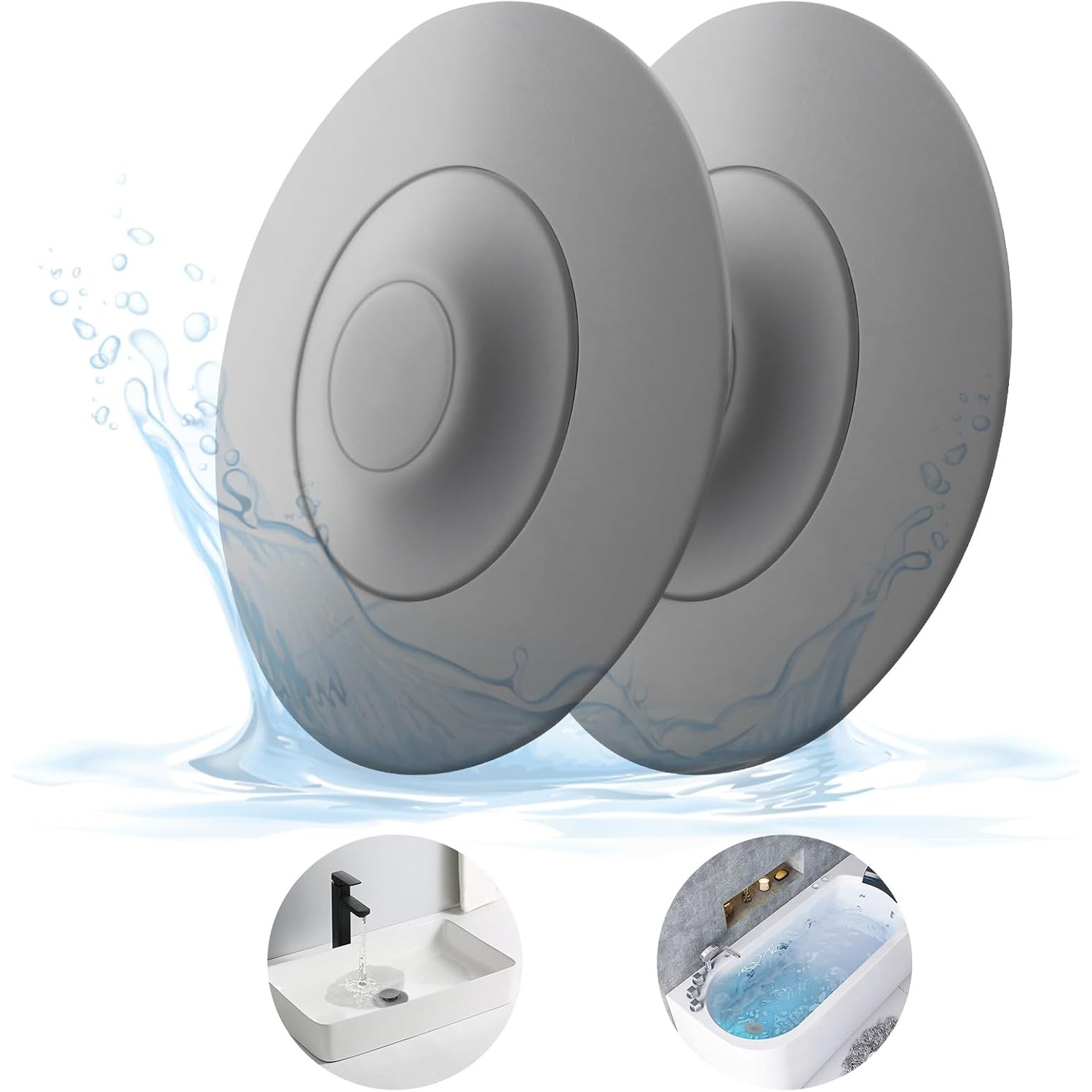
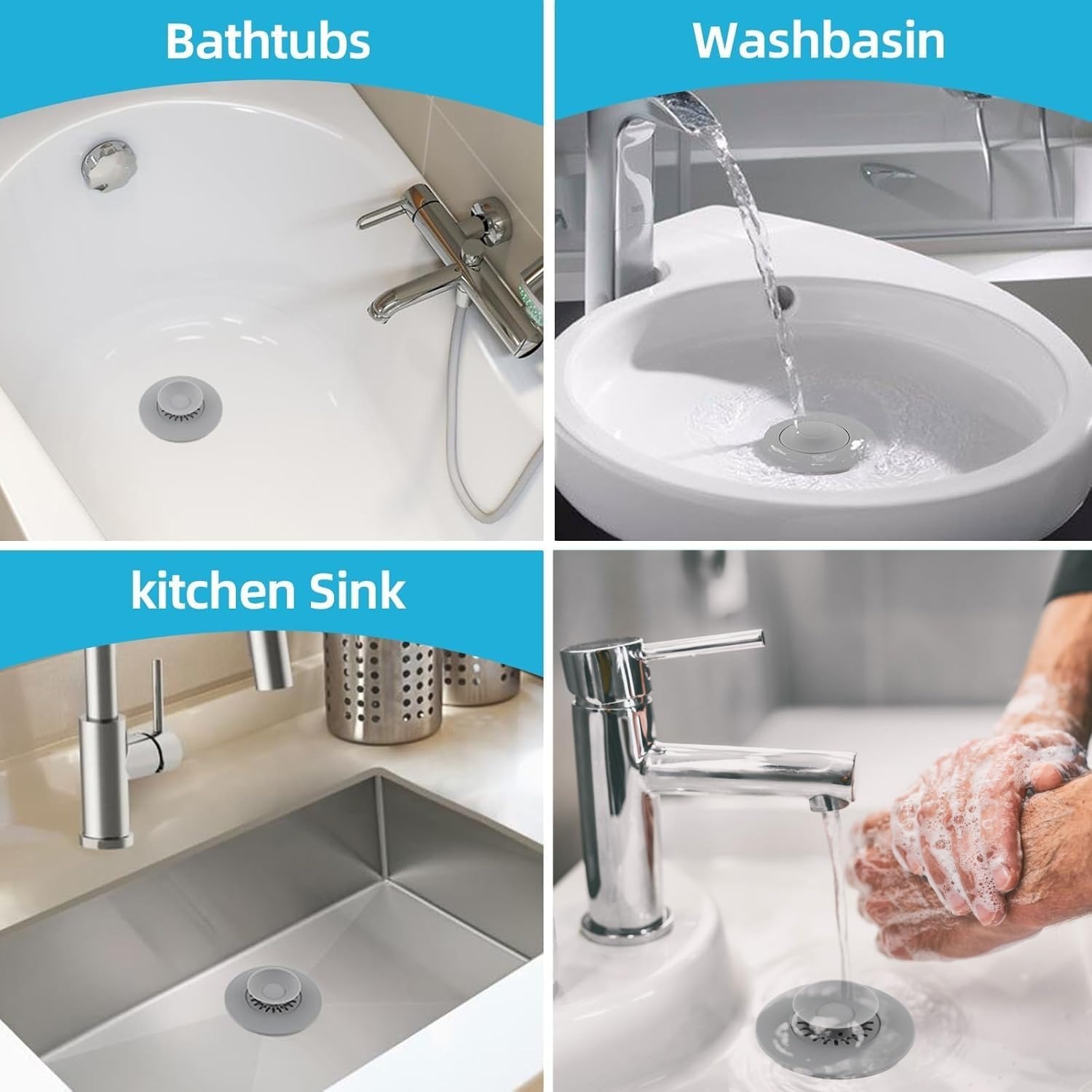
A silicone press drain plug 2 pack solves the whole cluster of problems with one object. It seals the water in when you want it in, and when you press the middle it opens up and filters everything on the way out. Two in a pack means you cover two rooms at once, which is usually all a home needs.
How the press design works
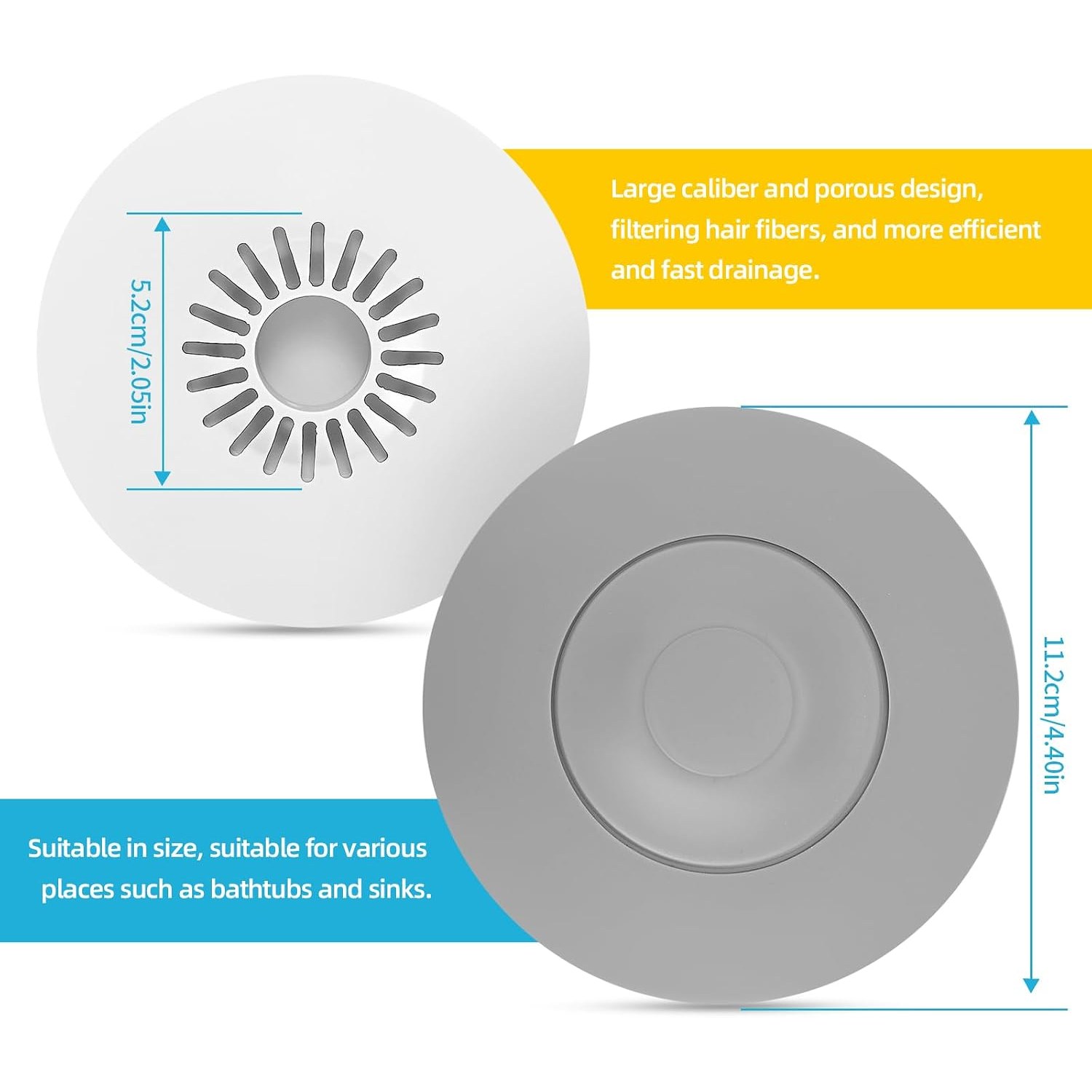
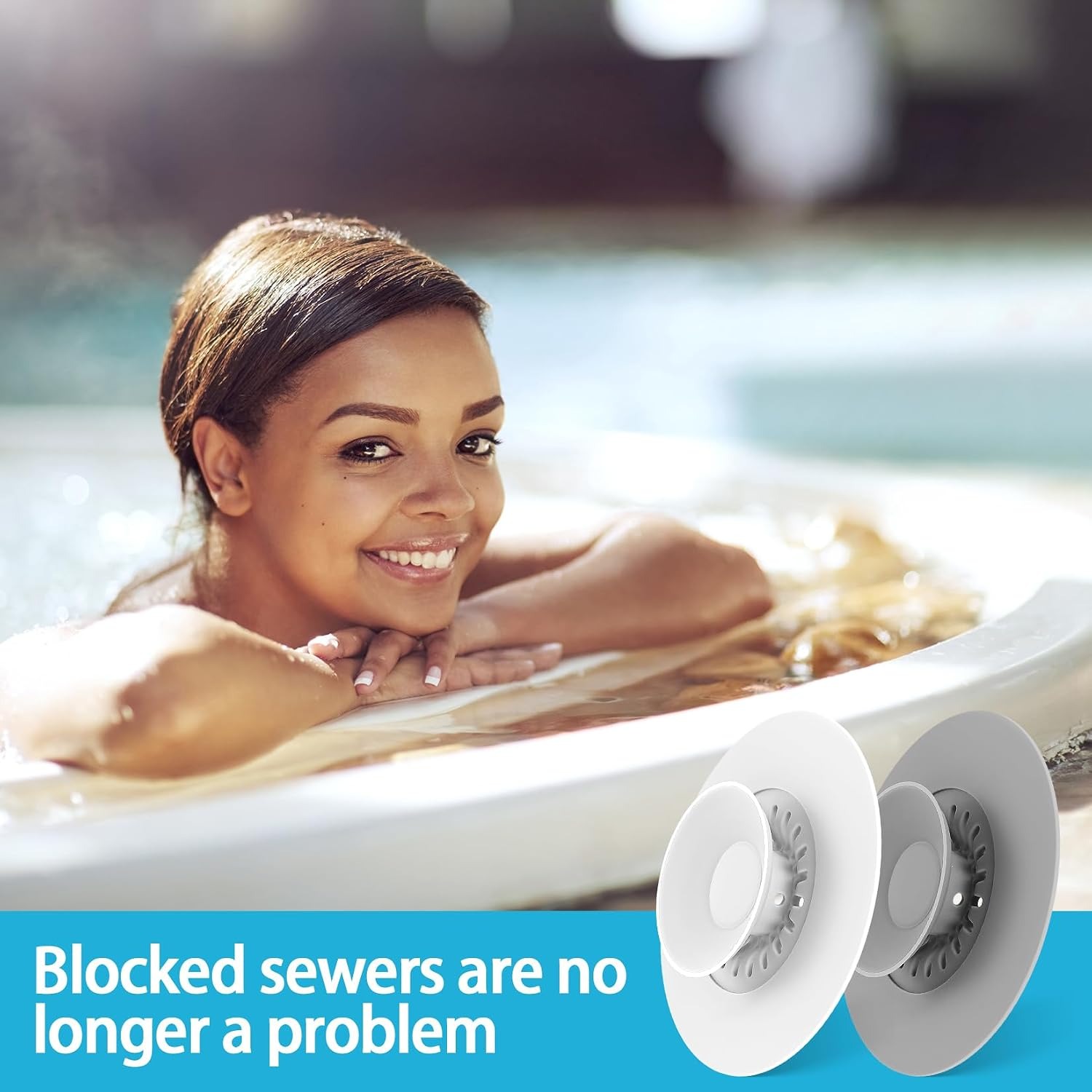
The plug is a soft silicone disc, roughly 11.2 cm across and 1.8 cm high. Underneath is a flat suction base. You place it over the drain, push down, and the base grips the smooth surface around the opening. Air is pushed out, and what is left is a seal that holds water.
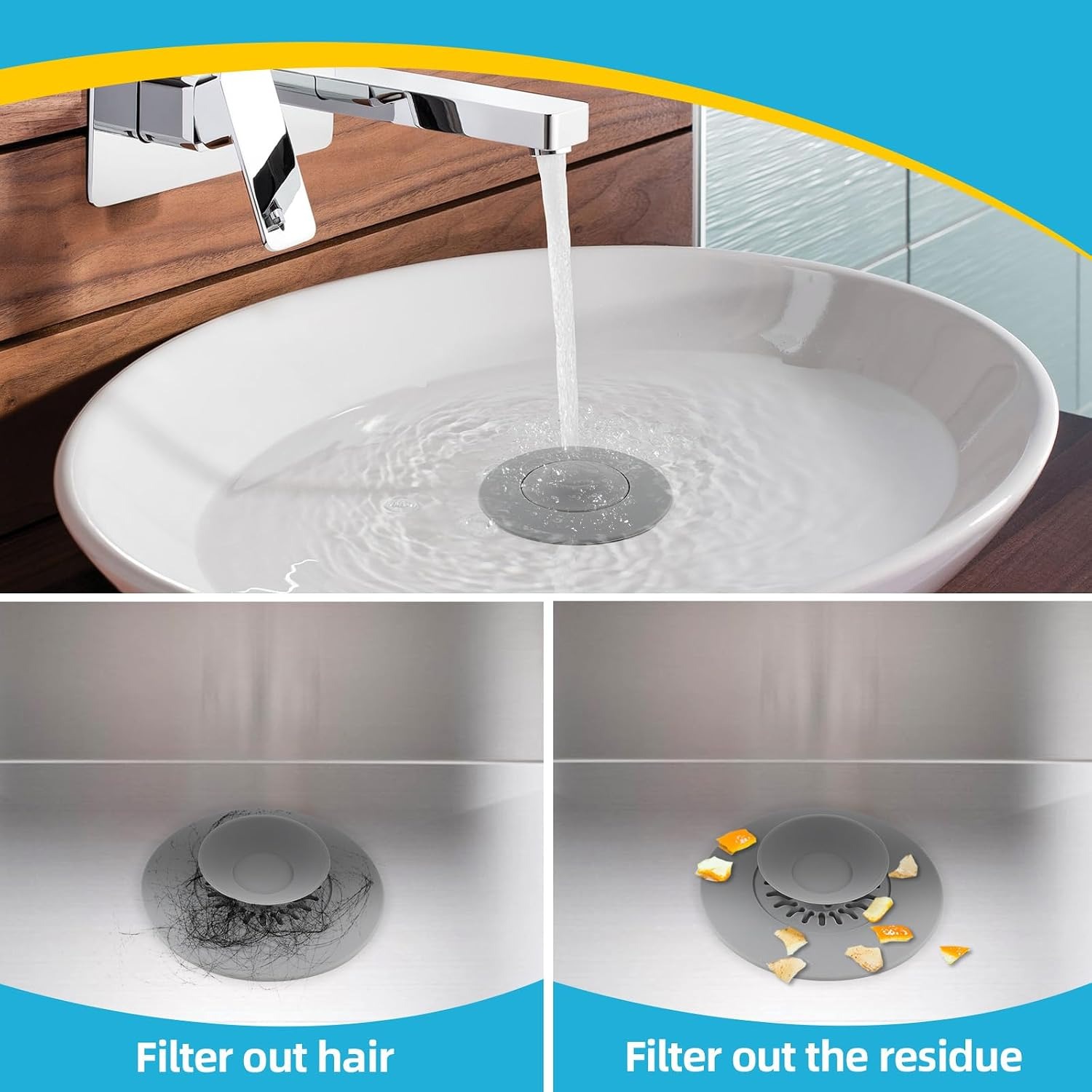
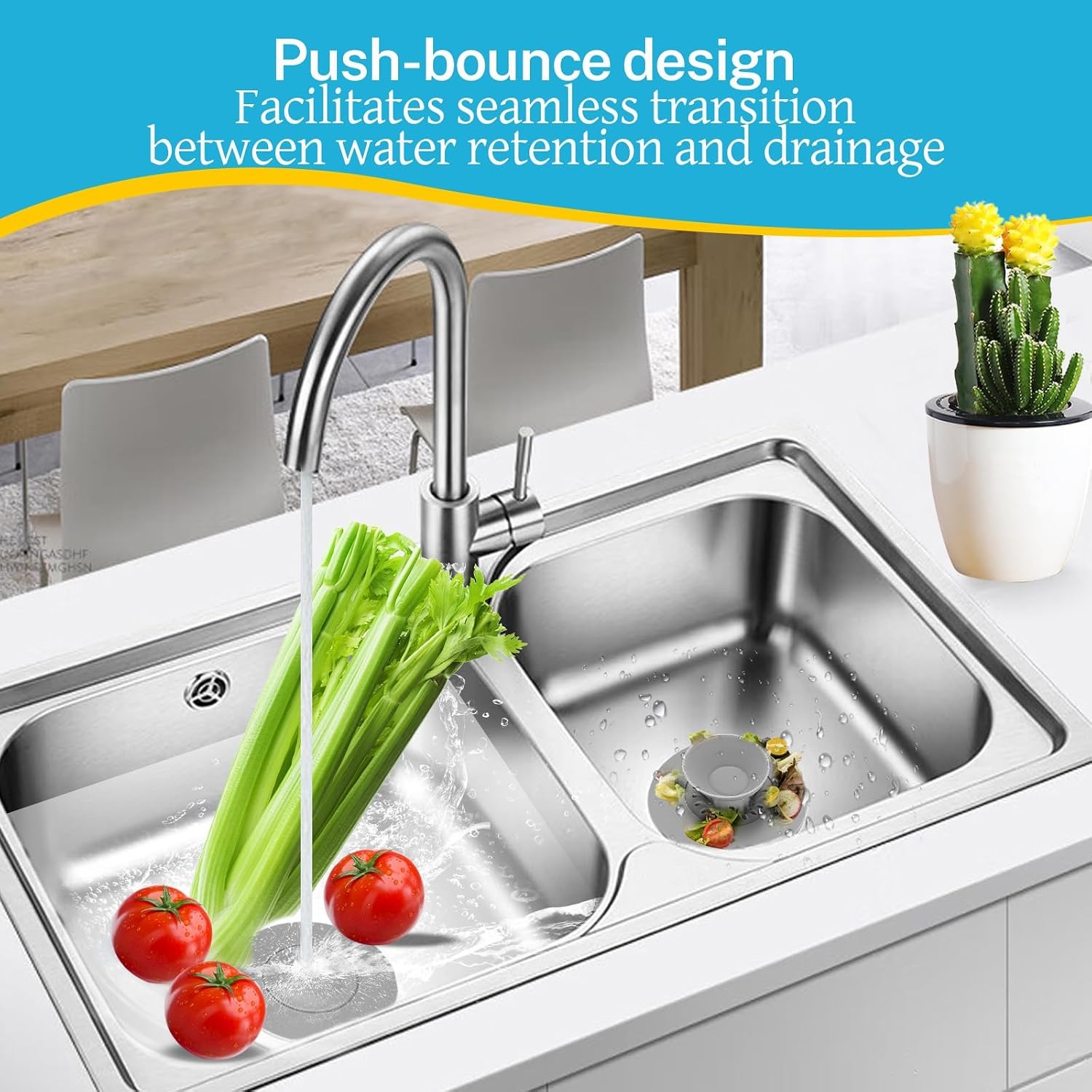
The clever part is the centre. Press it and the strainer section rises, revealing a filter grid. Water passes through the grid and down the drain. Hair, food scraps, bits of vegetable peel and anything else larger than the holes stays on top where you can see it. When the sink has emptied, you lift the plug, tip the debris into the bin, and rinse.
That is the whole mechanism. No springs, no screw threads, no pop-up linkage hidden under the basin. The things that break on mechanical plugs are simply not there.
Who gets the most out of it
Anyone in a household with long hair will feel the difference fastest. Hair is the single biggest cause of slow bathroom drains, and a basin plug with hair strainer stops it at the surface rather than letting it wrap around the waste fitting. One minute of clearing the strainer beats twenty minutes with a drain snake.
Renters are another obvious group. You cannot change the fittings in someone else's bathroom, but you can drop a plug on top of them. When you move out, it goes in a bag with your other bits.
Kitchens benefit too. Rice, coffee grounds and tea leaves all end up in the sink eventually. A filter that sits in place all the time catches them without you thinking about it, which is easier than remembering to fit a separate strainer before every wash.
Then there are the places where a standard plug is missing entirely. A universal bath and sink plug sized to cover most standard drains fills that gap neatly.
Checking it will fit before you buy
This is worth two minutes with a tape measure. There are only two things to check.
First, the drain opening. It needs to be narrower than 11.2 cm so the plug covers it with some overlap. Most household drains are a long way under that, so this is rarely a problem.
Second, and more important, the surface around the drain. The suction base needs flat and smooth to grip. A ceramic basin with a plain surround is ideal. A stainless steel sink with a slight dish towards the drain is usually fine. Where you can run into trouble is a textured bath base, a tiled shower recess, or a drain surrounded by a raised ridge or a grated frame. In those cases the base cannot make continuous contact and the seal will be patchy.
If you are between options, test your current plug. If a flat disc-style stopper already seals on that drain, this one will too.
Getting a good seal every time
Technique matters more than people expect. Wipe the drain surround and the plug base so there is no grit or hair between them. A couple of drops of water on the base helps. Set the plug down centred over the opening and press from the middle outwards, which pushes the air to the edges instead of trapping it in the middle.
Fill the sink and watch for a minute. If the level holds, you are done. If it creeps down slowly, lift the plug, clean again and repeat. In nine cases out of ten a slow leak is debris under the base, not a faulty plug.
One habit worth building: press the plug down before you turn the tap on, not after. A seal set against still air is better than one set against running water.
Keeping it clean
Silicone is easy. Rinse it under warm water after use. Once or twice a week, wash it with dish soap to shift the greasy film that builds up in a kitchen sink. In the bathroom, the job is mostly hair, so lift the strainer and clear it before it dries into a mat.
Wipe the suction base as part of this. That surface is what does the sealing work, and a film of soap scum makes it slippery rather than grippy. Dry the plug before you put it away.
In a hard water area you might see a chalky white film. Diluted white vinegar, a short soak and a rinse will shift it. Skip bleach soaks and scouring pads. Neither is needed and both shorten the life of the silicone.
Because it folds, storage is simple. Flat in a drawer, folded in a travel bag, or just left sitting in the sink. There is no chain to tangle and no rigid shell to crack if something heavy lands on it.
Where this sits against other options
A plain rubber stopper is cheaper but only does half the job. You still need a separate hair trap, which means two items to clean and one more thing to lose.
A metal mesh strainer basket filters well but does not seal, so you cannot fill the sink. Some of them also rust at the rim over time.
A pop-up waste built into the basin looks tidy and works beautifully until the linkage seizes or the seal perishes, at which point you are replacing a plumbing part rather than a plug.
The silicone press plug sits in the middle. It does both jobs adequately, it costs very little, and when it eventually wears out you throw it away and fit the spare from the pack.
The short version
If your sink does not hold water, or your bathroom drain keeps clogging with hair, this is a cheap and direct fix. Two silicone plugs, 11.2 cm across, with a flat suction base that seals and a press action that turns the plug into a filter. Measure the flat area around your drain, wipe both surfaces before fitting, rinse the strainer when it looks full, and it will quietly do its job for a long time.