
The complete guide
How to Choose and Use a Drain Cleaning Brush Set
The problem with a slow drain
A drain rarely stops all at once. It gets a little slower each month, you stop noticing, and then one morning the shower tray is holding water around your ankles. By that point the inside of the pipe has been collecting hair, soap, toothpaste and skin oils for a long time, and the opening is a fraction of what it should be.
Most people reach for one of two things. The first is a bottle of chemical cleaner, which you pour in and hope. The second is a plunger, which pushes water back and forth. Neither of them does the one thing that actually fixes the problem, which is removing the material stuck to the pipe wall and taking it out of the system.
That is the gap a drain brush set fills. It is a simple, slightly unglamorous tool, and it works because it goes where the problem is and brings the problem back out with it.
How a drain brush works
The idea is old and straightforward. A thin, flexible shaft carries bristles or barbs down into the drain. You turn it as it goes. Hair wraps around the bristles the way thread wraps around a spindle, and when you pull the tool back up, the mass comes with it.
That is the key difference from a chemical. Chemicals try to break the clog down into something that will wash away, and they often leave a softened layer still clinging to the pipe. A brush scrapes the wall and removes the material entirely. You see exactly what was in there, which is unpleasant but also oddly satisfying.
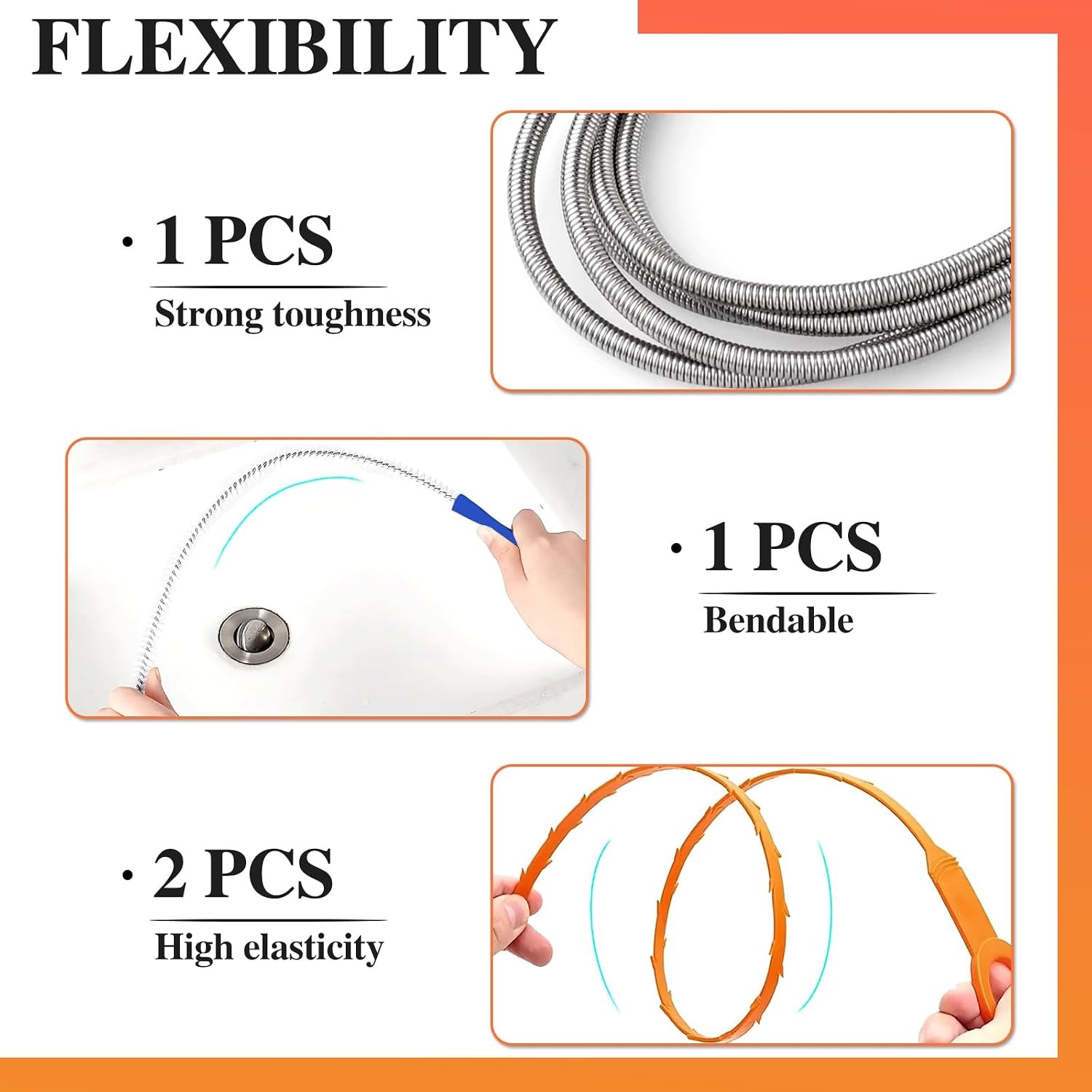
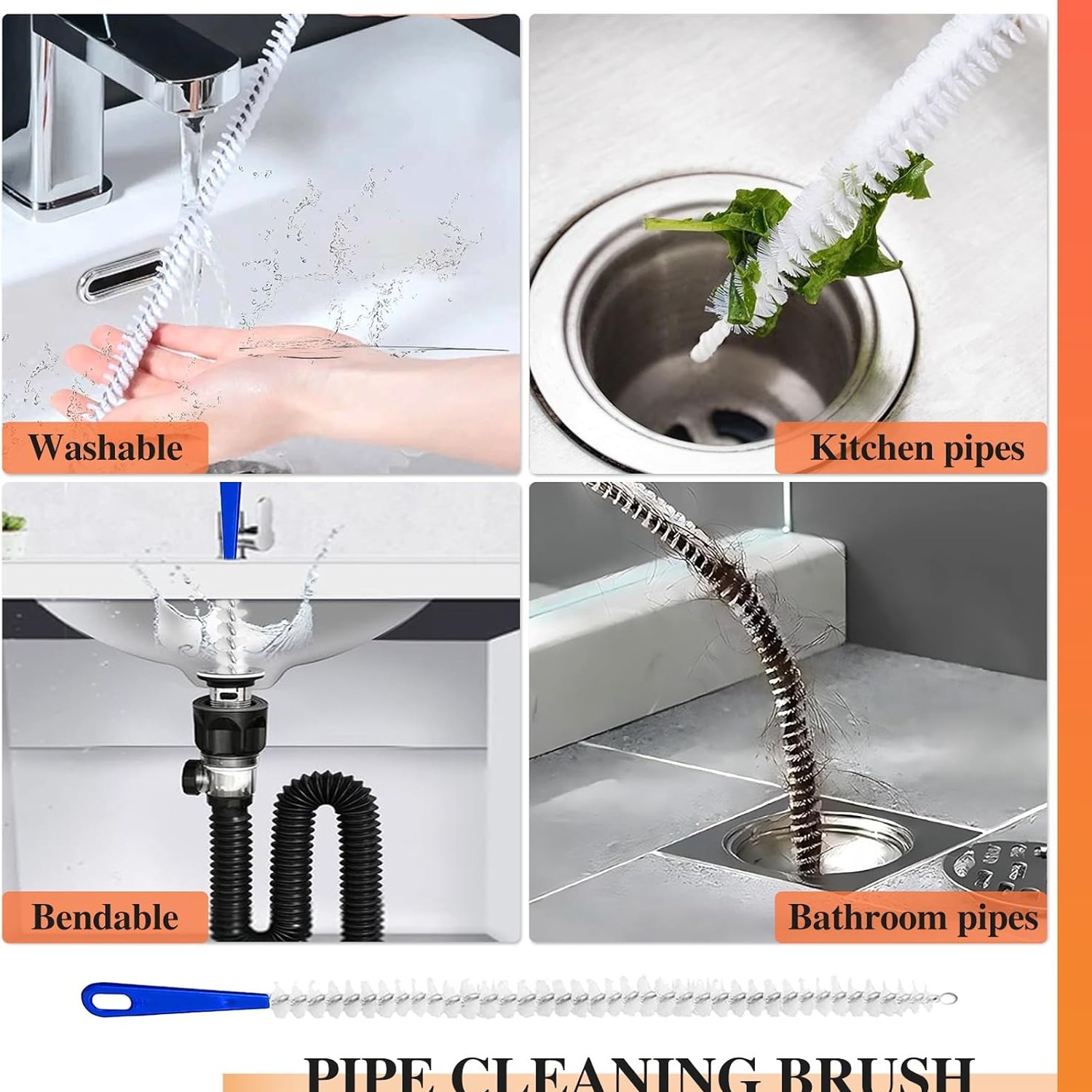
The flexible shaft matters more than people expect. Under every basin and shower there is a trap, a U shaped bend that holds water to stop sewer smells coming up. Rigid tools stop dead at that bend. A flexible shaft follows the curve and keeps going, which is why the best flexible pipe brush designs are thin and springy rather than stiff.
What the four pieces do
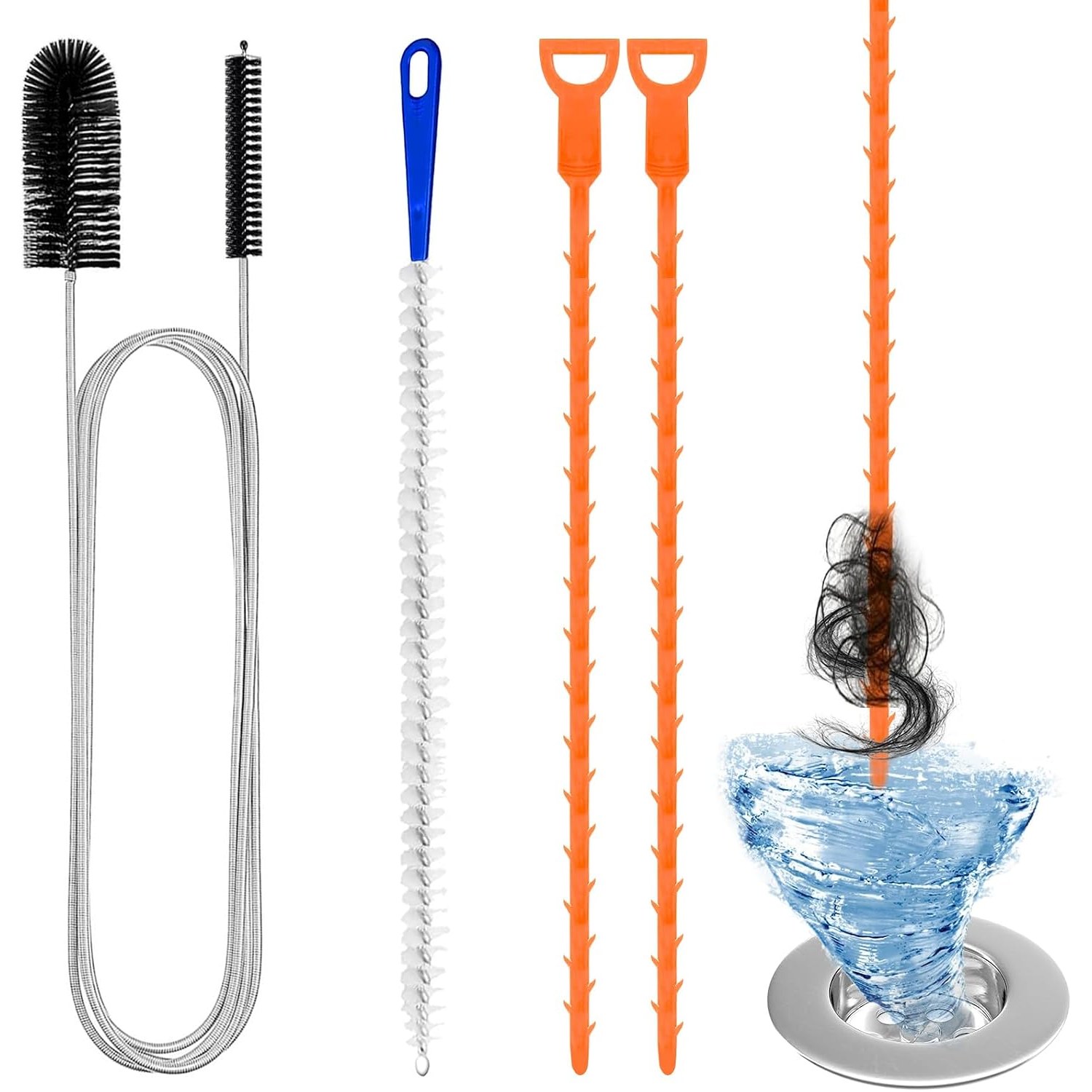
This set gives you four tools because household drains are not all the same shape or depth.
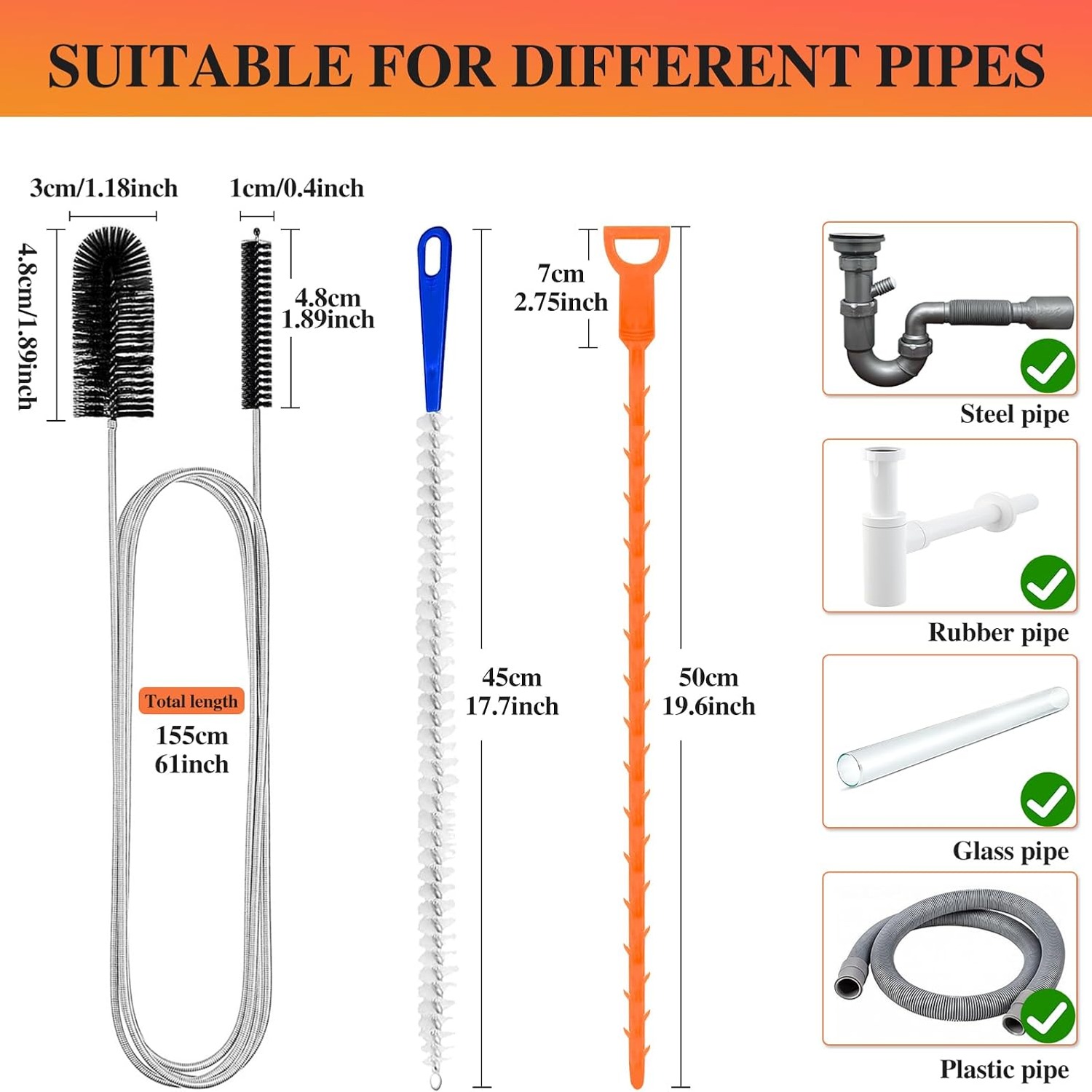
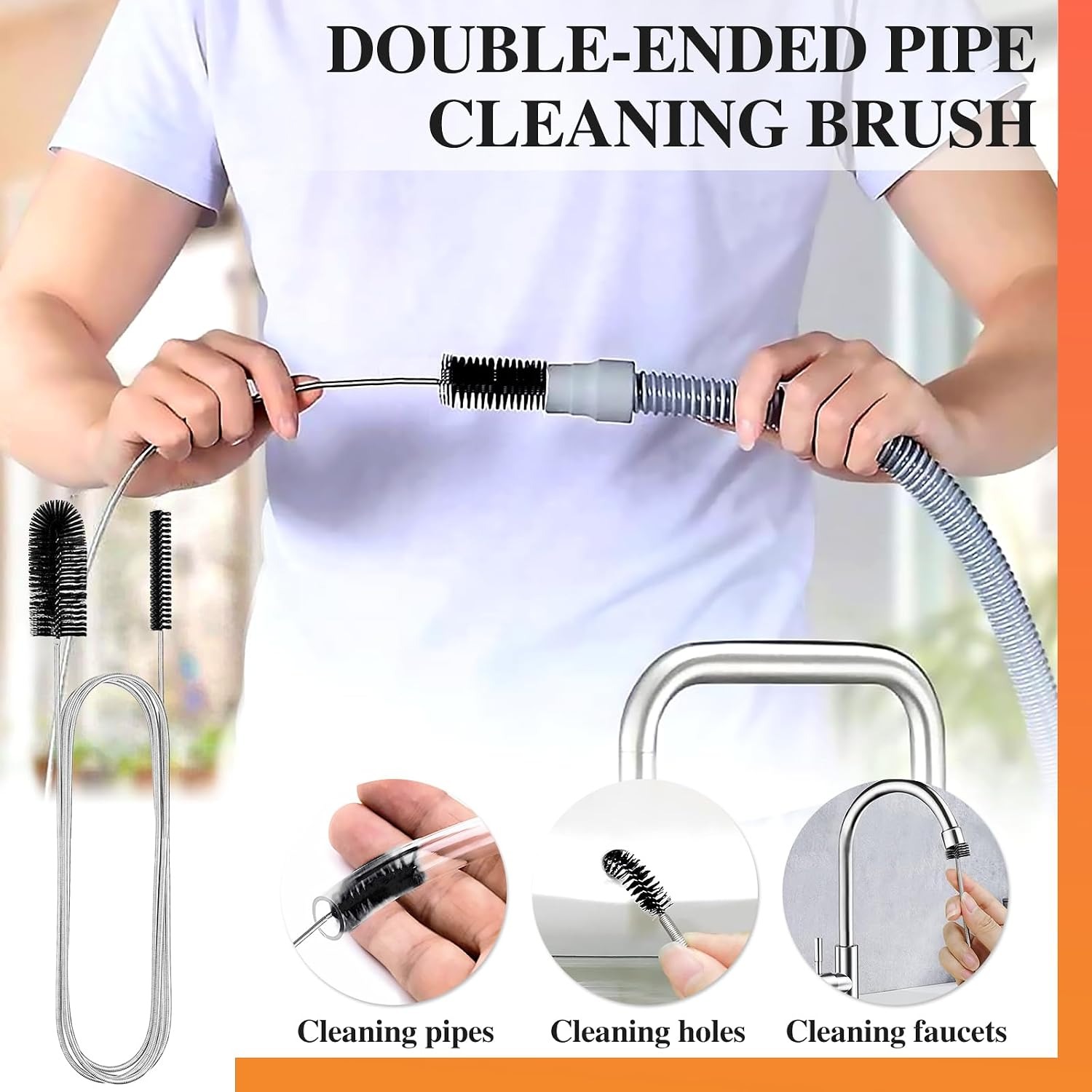
The 155 cm stainless steel drain cleaner is the long reach option. It passes through the trap and continues into the pipe run beyond, which is where kitchen sink build up tends to sit. The spring handle lets you turn it with control from above while the working end does its job out of sight.
The 45 cm plastic drain cleaning brush handles basin plugholes and other shallow drains. Most bathroom basins clog within the first 20 or 30 cm of pipe, so you rarely need the full length. A shorter tool is easier to control for that work.
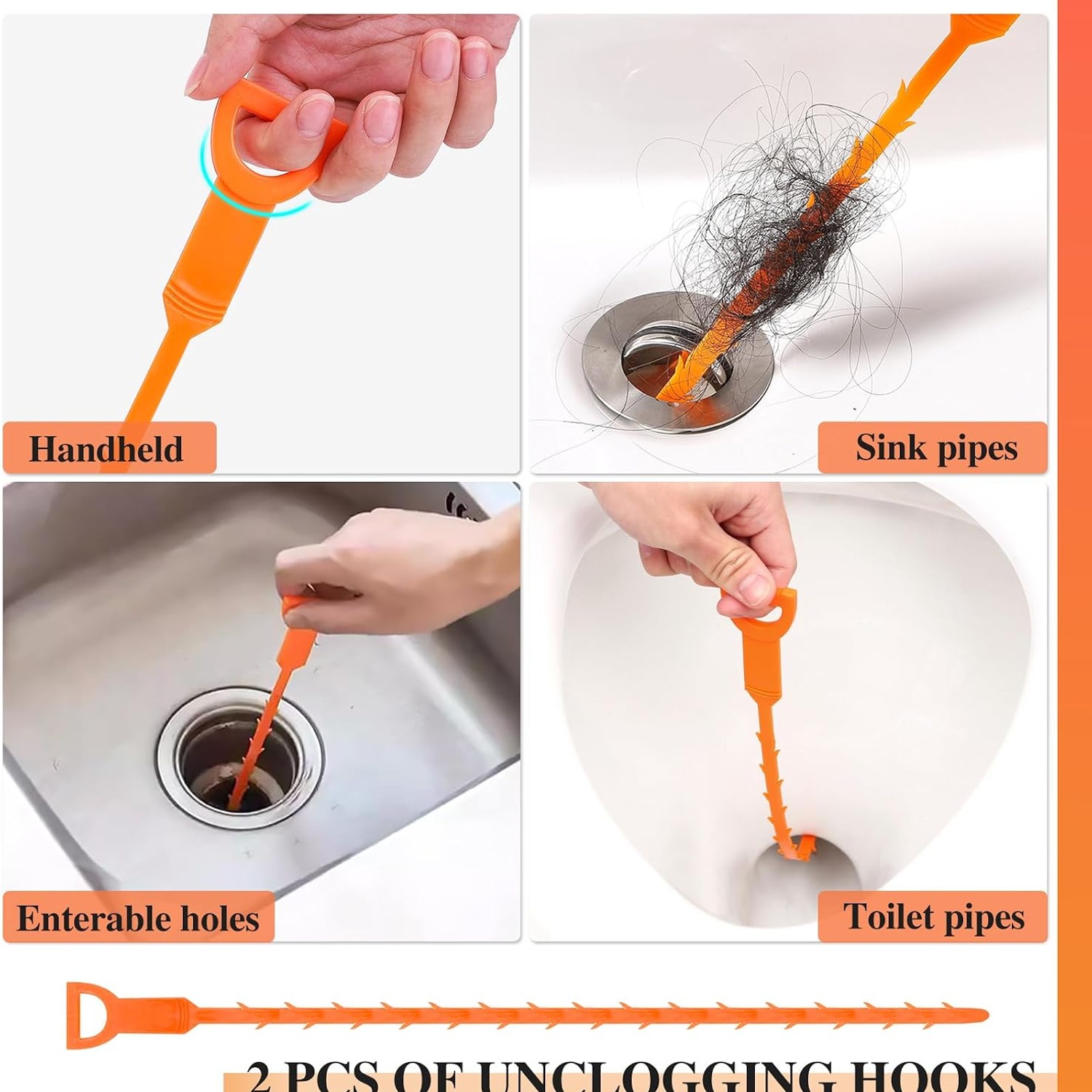
The two 50 cm plastic drain sticks are the hair specialists. They have gripping edges along the shaft that hook into hair directly. For a shower drain that has slowed down over a season of use, one of these often clears it in under a minute. Having two means you can keep one in each bathroom instead of carrying tools around.
Who this suits
Households with long hair get the most out of it. Hair is the single most common cause of bathroom drain trouble, and it binds with soap residue into a mat that nothing dissolves properly. A reusable hair removal tool pays for itself the first time it saves a call out.
Renters get good value too. If you are in a place where fixing a slow drain is your problem but you cannot start taking pipework apart, a set of brushes is the right level of intervention. You clear the drain without touching anything structural.
People with pets will also find uses. Washing a dog in the bath leaves a lot of fur behind, and the best drain snake for hair style tools handle that quickly.
If you have a complete blockage affecting several fixtures at once, that is different. Water backing up in two rooms usually means the main line, not the fixture waste, and that needs a plumber with a motorised machine. Know where the line is.
How to use it well
Start by lifting out anything removable. Pop up stoppers, hair catchers and screwed grates come out with a twist or a screwdriver, and clearing them first often solves half the problem.
Feed the tool in slowly. Do not shove. When you meet resistance, turn the handle steadily, two or three full rotations, then ease back a little and push forward again. You are trying to wind material onto the bristles, not punch through it.
Pull back slowly as well. This is where people go wrong. A fast yank breaks the clog and leaves half of it in the pipe. A slow steady pull brings the whole mat up to the opening where you can grab it.
Have a bin bag and a wad of paper towel ready. Pull the debris off, bin it immediately, and repeat. Two or three passes usually clear a drain completely. Finish by running hot water for a minute to flush the loosened residue through.
Wear gloves. Lay an old towel down. These two small steps make the clean up far less of a chore.
Looking after the set
Rinse each tool under running water as soon as you finish. Then wash it properly with warm water and a little dish soap, working the suds through the bristles. Rinse again, shake off the excess, and hang it to dry.
Drying matters. A brush stored damp in a dark cupboard will develop a smell, and nobody wants to pull that out next time. Hanging it on a hook in a utility room or inside a cupboard door solves it.
Store the long stainless steel cleaner in a loose coil. Folding it into a tight crease repeatedly will weaken the shaft over time. A loose loop secured with a rubber band keeps it tidy without stressing the metal.
Before each use, give the bristles a quick look. If the brush head is intact and the shaft bends without kinking, you are good to go.
A habit worth building
The real value in owning a set like this is not the rescue job. It is the maintenance. Running a brush through your shower and basin every couple of months stops clogs forming in the first place, and a maintenance pass takes a minute rather than an evening.
Pick a rhythm that you will actually keep. Some people do it at the change of each season. Others do it when they clean the bathroom properly. Either works, as long as it happens. The best reusable drain cleaner is the one that stays within arm's reach of where you clean.
The short version
A drain brush set removes clogs instead of softening them. This one gives you four tools: a 155 cm stainless steel cleaner for deep pipe work, a 45 cm brush for basins, and two 50 cm sticks for hooking hair out of showers and baths.
It is light, flexible enough to follow a trap, washable, and built to be used again. Work slowly, pull back gently, wash everything afterwards and hang it to dry. Do that two or three times a year and you may never need to think about a slow drain again.