
The complete guide
Drain Hose Extensions Explained, How to Pick and Fit the Right One
The half metre problem
Almost every laundry has the same awkward moment. The new washing machine arrives, you slide it into the gap, and the drain hose stops short of the standpipe. Sometimes it is 30cm short. Sometimes you want to move the machine to the other side of the room entirely, and the hose is nowhere near long enough.
The hose a manufacturer ships is sized for a plain, close, factory-perfect installation. Real rooms are not like that. There is a cupboard in the way, the waste pipe is on the wrong wall, or you have stacked a dryer and now the hose has to travel further. This is what a drain hose extension is for. You keep the original hose on the appliance and add length to it.
It is one of the cheapest fixes in a home. It is also one of the easiest to do badly, which is why it is worth five minutes of reading before you fit one.
What this kit actually does
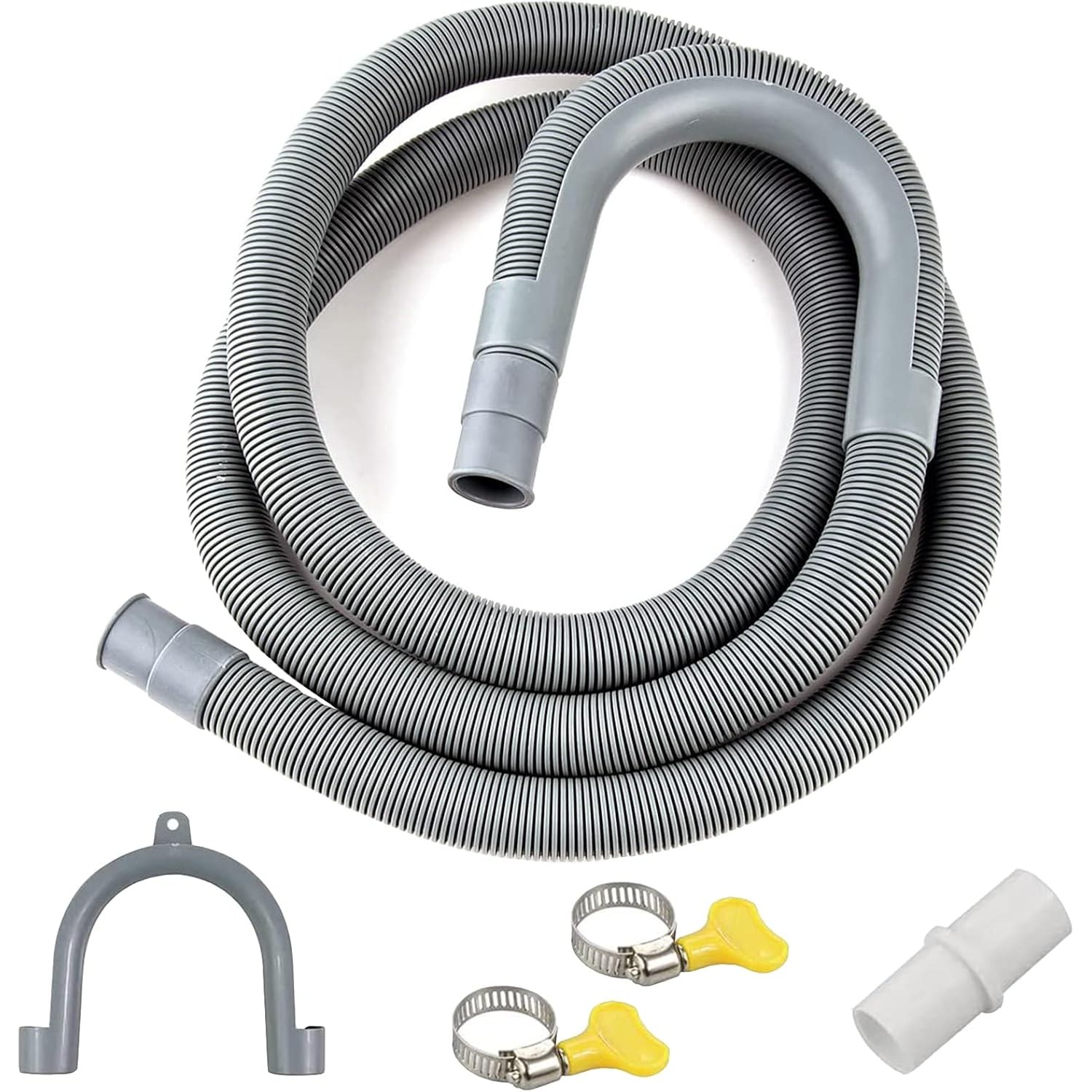
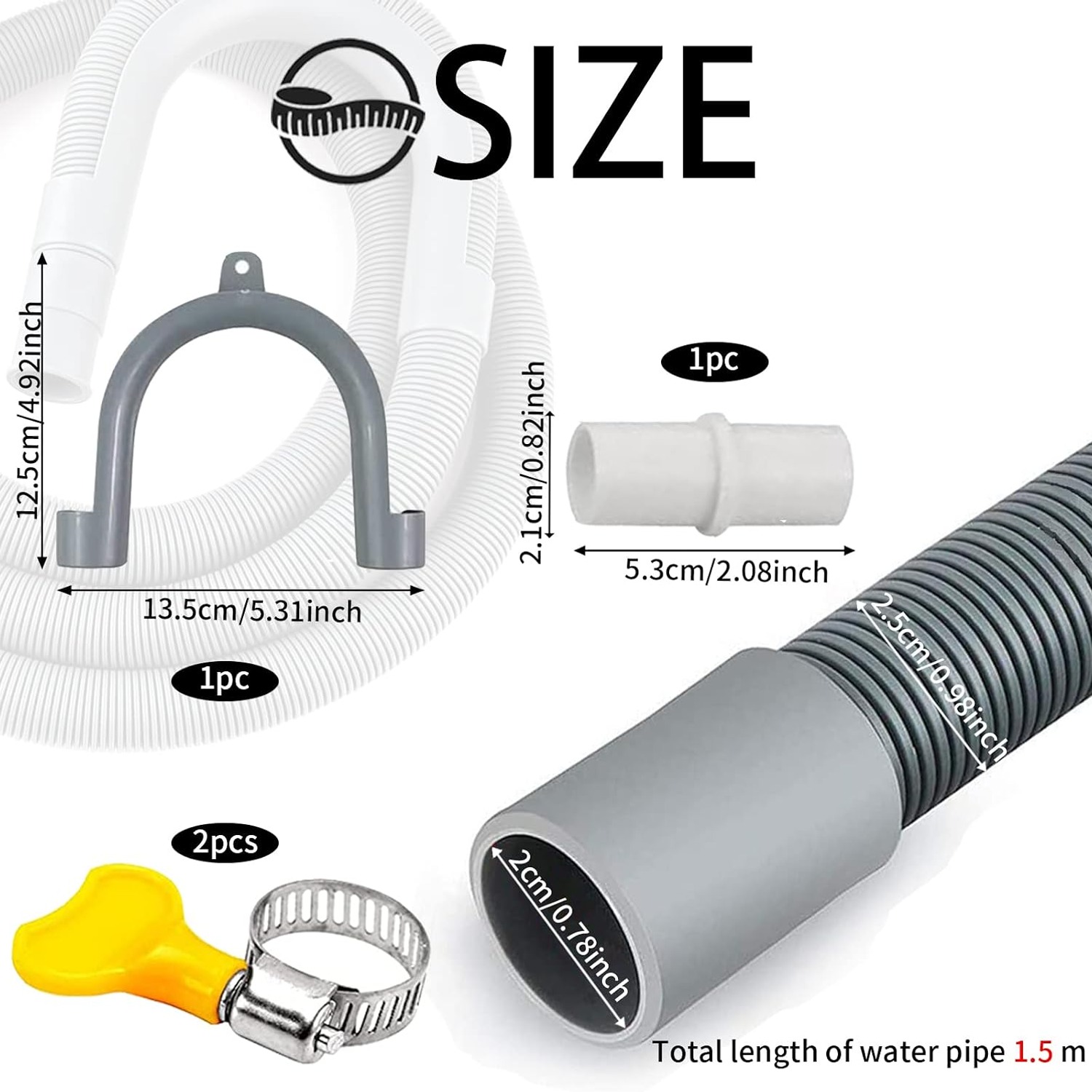
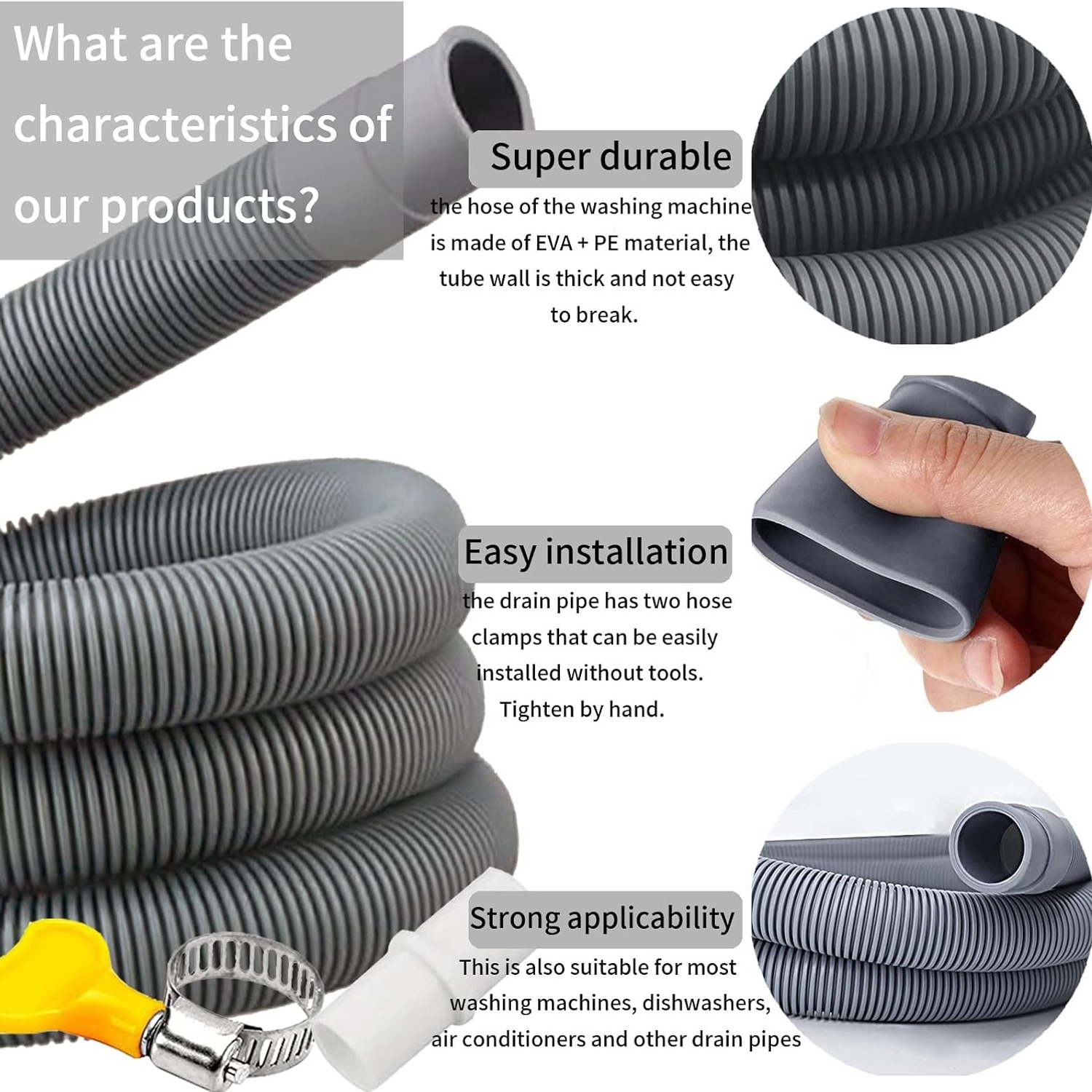
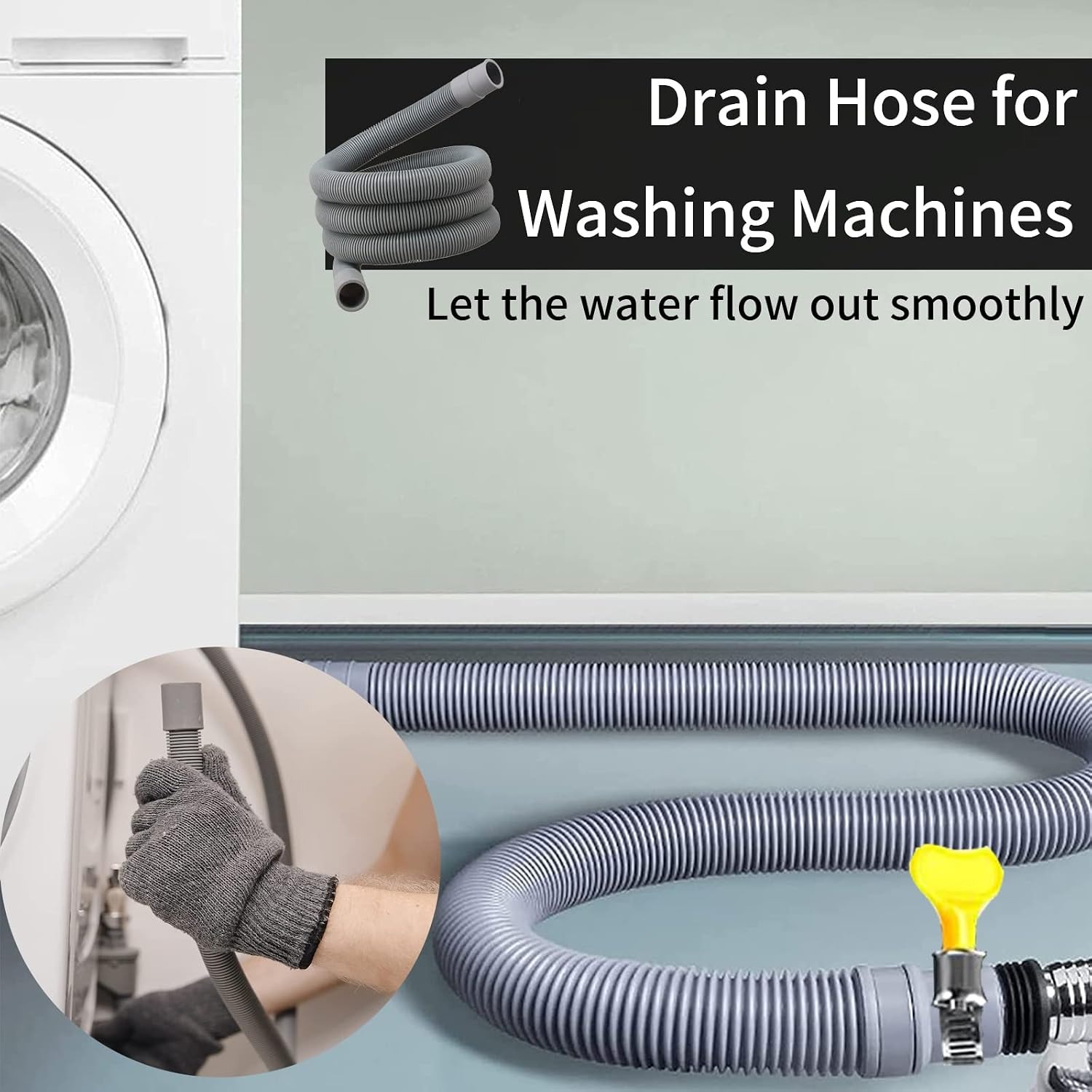
The hose is 1.5 metres of corrugated polypropylene with a 25mm outside diameter and a 4mm nominal wall. That is the standard size band for domestic appliance waste. The corrugations are not decoration. A smooth-walled plastic tube flattens the moment you bend it past a certain angle, and a flattened tube drains slowly, catches lint and splits at the crease. Ribbed hose holds a curve.
Four accessories come with it. The white extension adapter is a short plastic sleeve that sits inside two hose ends and joins them. The two stainless steel clamps go over each joint to hold it. The U-bend holder is the plastic hook that keeps the open end of the hose at the right height over a standpipe or bath.
That last piece gets ignored and it should not be. Appliance manuals specify a drain height for a reason. Too low, and the water siphons straight back out of the drum while the machine is filling, which makes a cycle run forever and never get clean. Too high, and the pump struggles. The U-bend is what keeps the end where it is supposed to be.
Fitting it without tools
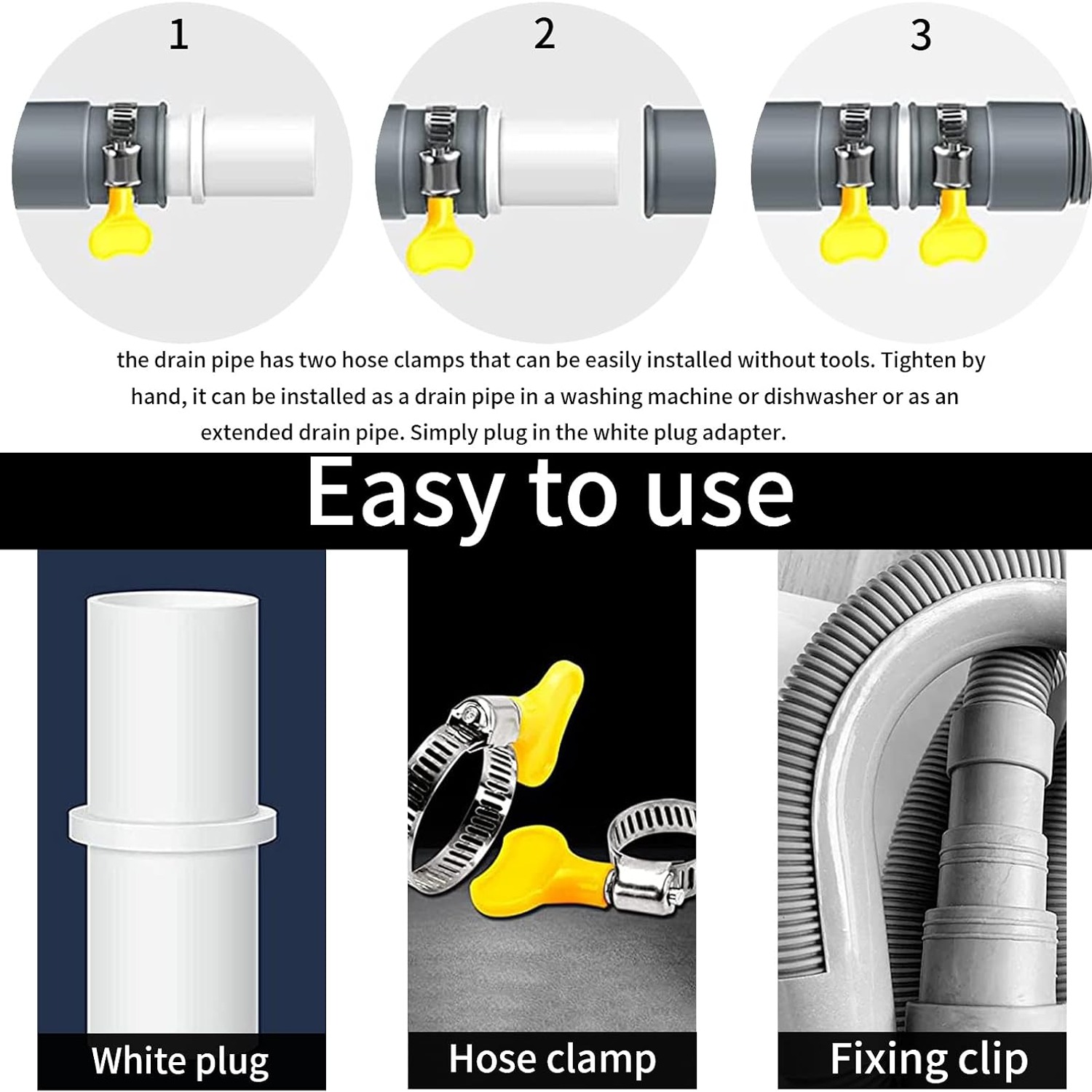
The clamps on this set have a wide plastic lever rather than a screw. You press the lever closed with your thumb and it grips. No screwdriver, no hose clip spinner, no cursing in a dark gap behind a machine.
The order of work is simple. Pull the appliance out far enough to reach behind it. Take the free end of the existing drain hose and push the adapter halfway into it. Push the new hose onto the other half of the adapter until it bottoms out. Slide a clamp over each joint so it sits on the hose above the adapter sleeve, then close both clamps.
Now hook the far end into the U-bend holder and put it over the standpipe or bath. Run a short cycle, or just a rinse and spin, and watch the joints. Hold a dry tissue against each one. If the tissue stays dry after the machine has pumped out, you are done.
Then push the appliance back carefully. This is where most leaks are born. If you shove the machine against a hose and crush it into a sharp fold, no clamp or wall thickness will save it.
Choosing the right size
Diameter matters more than brand. Most domestic machines in most countries use a waste hose in the 20mm to 22mm inside diameter range, which is what a 25mm outside diameter hose gives you. It is near enough to universal that the odds are strongly in your favour.
Still, measure first. Take the hose off the back of the appliance, or just measure across the outlet spigot it pushes onto. Write the number down. If it is close to 20mm inside, this will fit. If your machine uses something unusual, you will find out in two minutes instead of after a parcel arrives.
Length is the other decision. 1.5 metres suits the common jobs: shifting a machine to the far side of an alcove, routing around a cabinet, or reaching a bath on the opposite wall. If you need much more than that, think about total hose length rather than just the extension. Every drain pump has a maximum run and a maximum lift it can manage, and those numbers are in the appliance manual. Going well past them leaves water sitting in the hose and smelling after a few weeks.
Who this suits
Renters get the most out of it. Nothing is cut, glued or plumbed in. The clamps release, the adapter pulls out, and the whole thing comes with you to the next place.
It also suits anyone rearranging a laundry. People stack a dryer over a washer, move a machine from a kitchen to a utility room, or finally close in that gap beside the sink. All of those shift the distance between appliance and drain.
A third group is the repair crowd. Drain hoses fail. They get perished, cracked at the bend, or nicked by the machine's own foot. If your original hose has gone, this works as a straight replacement rather than an extension: just connect it directly to the appliance outlet and clamp it.
And it makes a reasonable spare to keep on a shelf. A split hose on a Saturday morning is a flooded floor, and the best drain hose extension kit is the one already in the cupboard.
Looking after it
There is not much to do, but there are a few habits worth keeping.
Check the joints after the first few cycles. Clamps settle, and a quick squeeze on each one after a week is cheap insurance. If an appliance sits unused for a while, a holiday house or a spare machine, run some clean water through before you trust it. Standing water in a hose goes stale.
Keep the run clear. Do not let the machine rest on the hose, and do not coil the spare length into a tight loop behind it. A loose sweeping curve is fine. A hairpin is not.
If you ever pull the hose off to clean it, rinse it with plain water or a mild detergent. Skip solvents and skip boiling water poured straight in. Polypropylene handles appliance discharge temperatures without complaint, but it does not need to be tested beyond that.
Finally, keep an eye on the end at the standpipe. Lint builds up at the outlet over months. A quick wipe stops a slow blockage becoming a backed up drain.
The short version
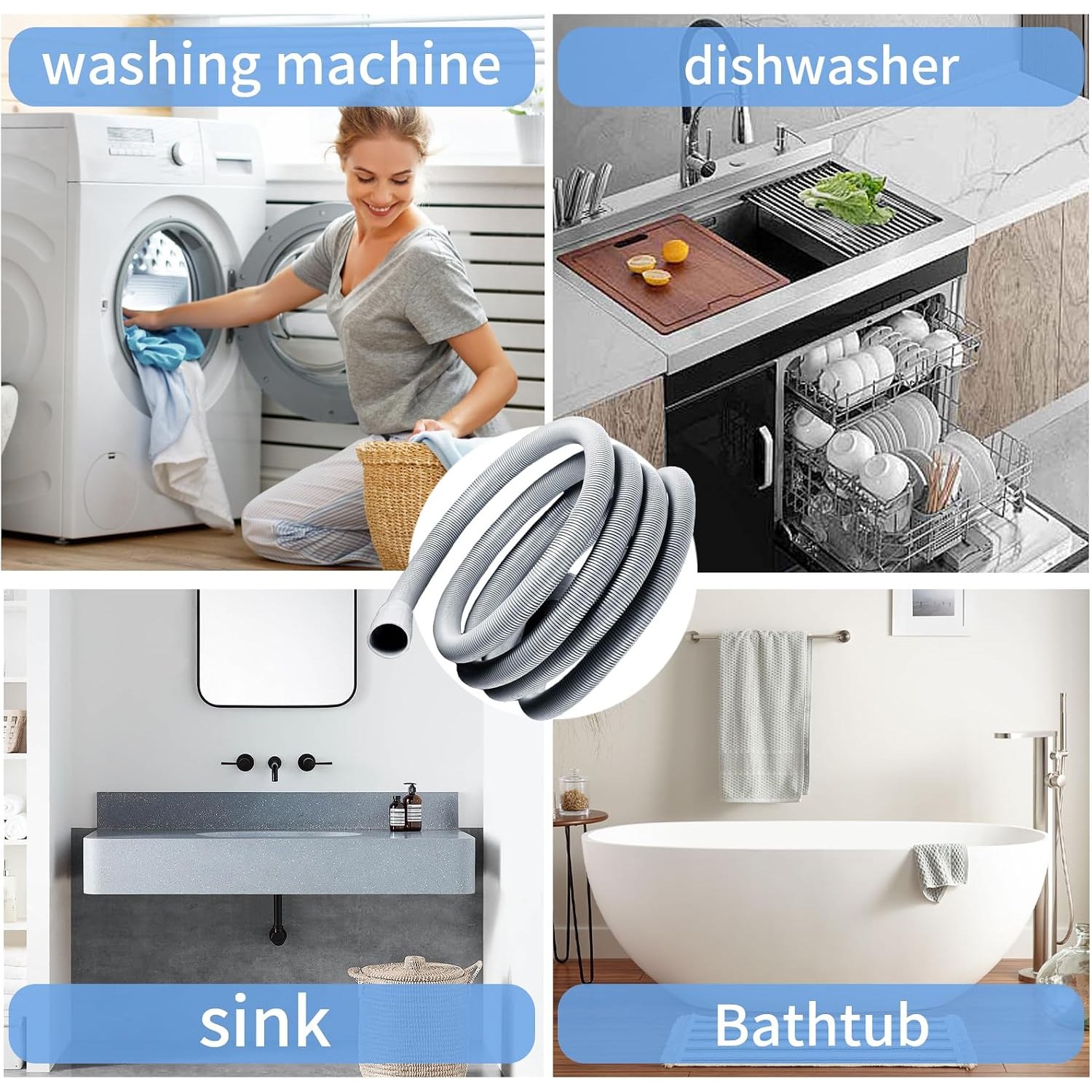
You have an appliance that does not quite reach the drain. This kit gives you 1.5 metres more hose, an adapter to join it on, two clamps that close by hand and a hook to hold the end at the right height. The hose is polypropylene with a 4mm nominal wall and a 25mm outside diameter, which fits the connection used on most washers, washer dryers, condenser dryers and dishwashers.
Measure your outlet before you order. Fit it with a gentle curve, not a fold. Check the joints with a dry tissue after the first drain. Then push the machine back and forget about it, which is exactly what a drain hose should let you do.