
The complete guide
How To Choose A 150mm Square Shower Drain
The problem a floor drain quietly creates
A shower drain is one of the least glamorous parts of a bathroom and one of the easiest to get wrong. When it works, nobody notices it. When it does not, you get a puddle that never quite goes, a grate that looks tired after two years, or a smell that drifts up on warm afternoons and makes the whole room feel unclean.
The frustrating part is that most of those problems trace back to decisions made in an afternoon, often by someone fitting whatever the merchant had on the shelf. Floor drains are buried under waterproofing and tile. Once the job is done, changing your mind means breaking up a floor. It is worth spending twenty minutes understanding the options before you commit.
What this drain actually does
Strip away the marketing and a floor trap has three jobs. It has to take water away fast enough that the shower floor never floods. It has to stop smells from the waste line coming back up. And it has to catch hair and grit before they reach the pipe and cause a blockage you cannot see.
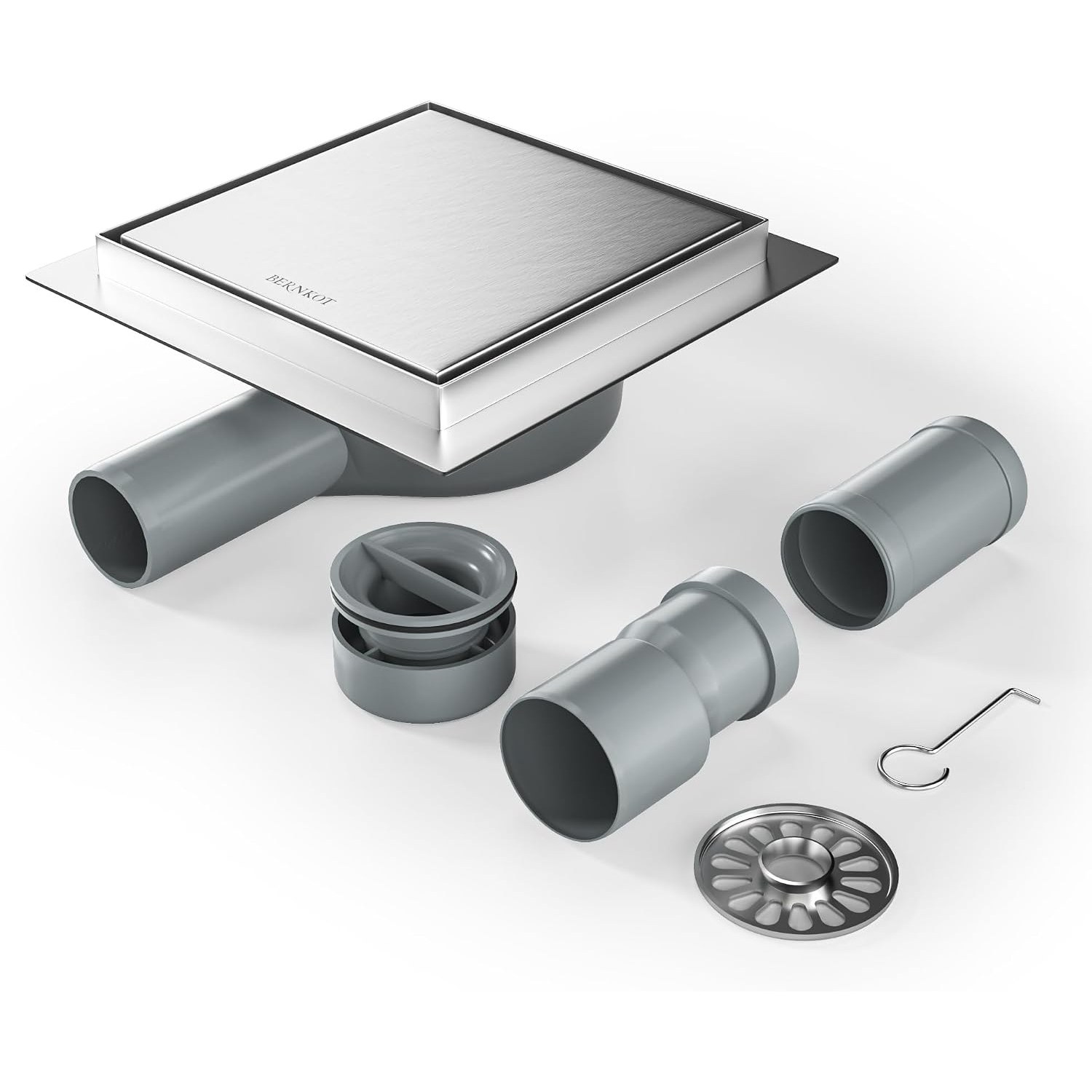
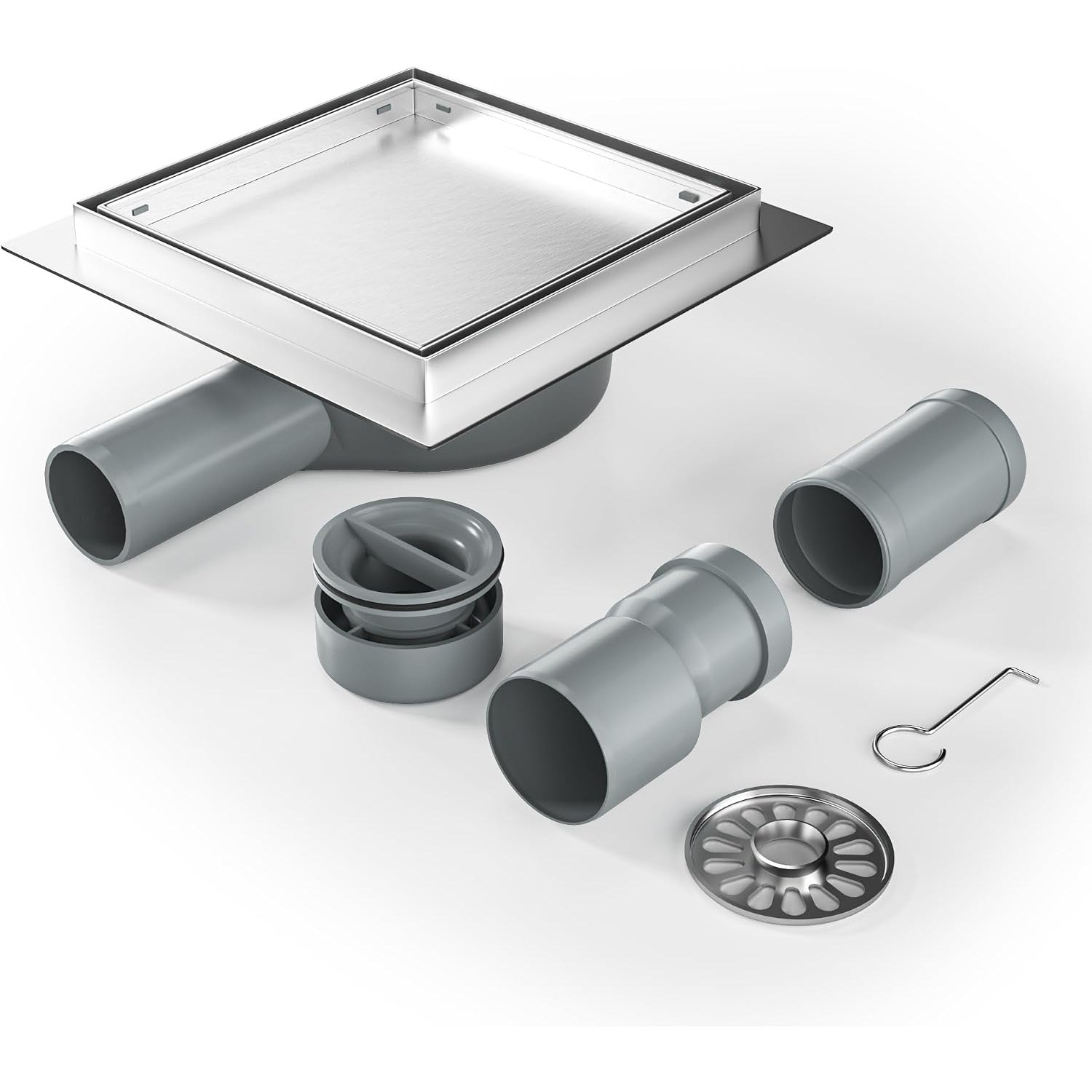
This 150mm square unit handles all three. Water enters through slots around the edge of the grate and drops into a wide throat. A removable hair strainer sits in that throat and traps the obvious debris. Below that, the siphon holds a small pool of water that acts as a plug against drain gases. The water seal is why your bathroom does not smell like the sewer, and it is also why an unused bathroom eventually starts to, because the water evaporates and the seal breaks. Pouring a bucket of water down the drain fixes that in seconds.
The grate is the part you live with
The grate is the only piece anyone sees, so it deserves some thought. This one is a 2-in-1 design, which means it has two usable faces.
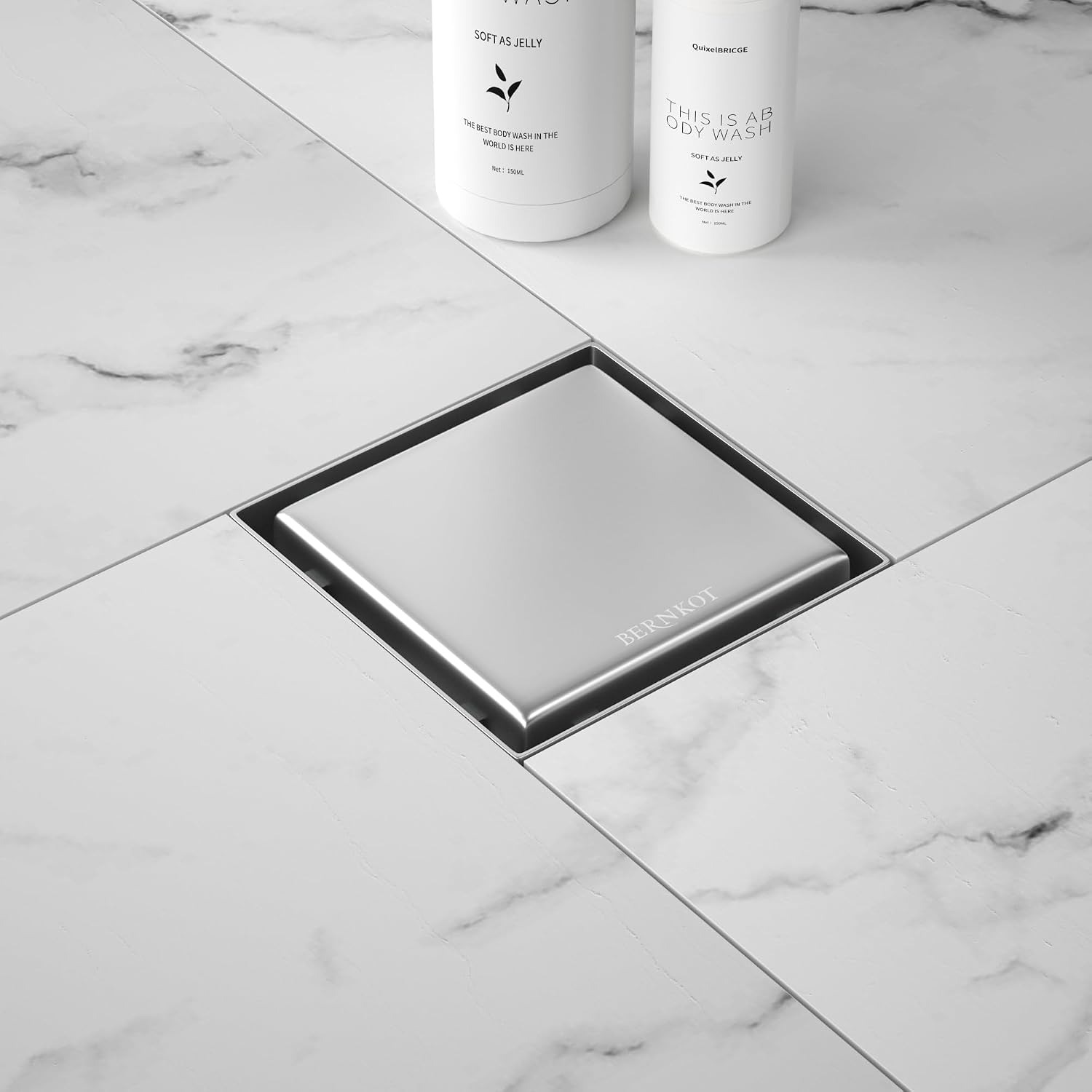
Flip it one way and you have a flat brushed stainless steel square. It reads as deliberate hardware, which suits bathrooms with exposed fittings, dark tile or a hotel feel. Brushed is a practical finish too. The fine grain hides water spots and light scratches far better than a mirror polish, which shows every fingerprint.
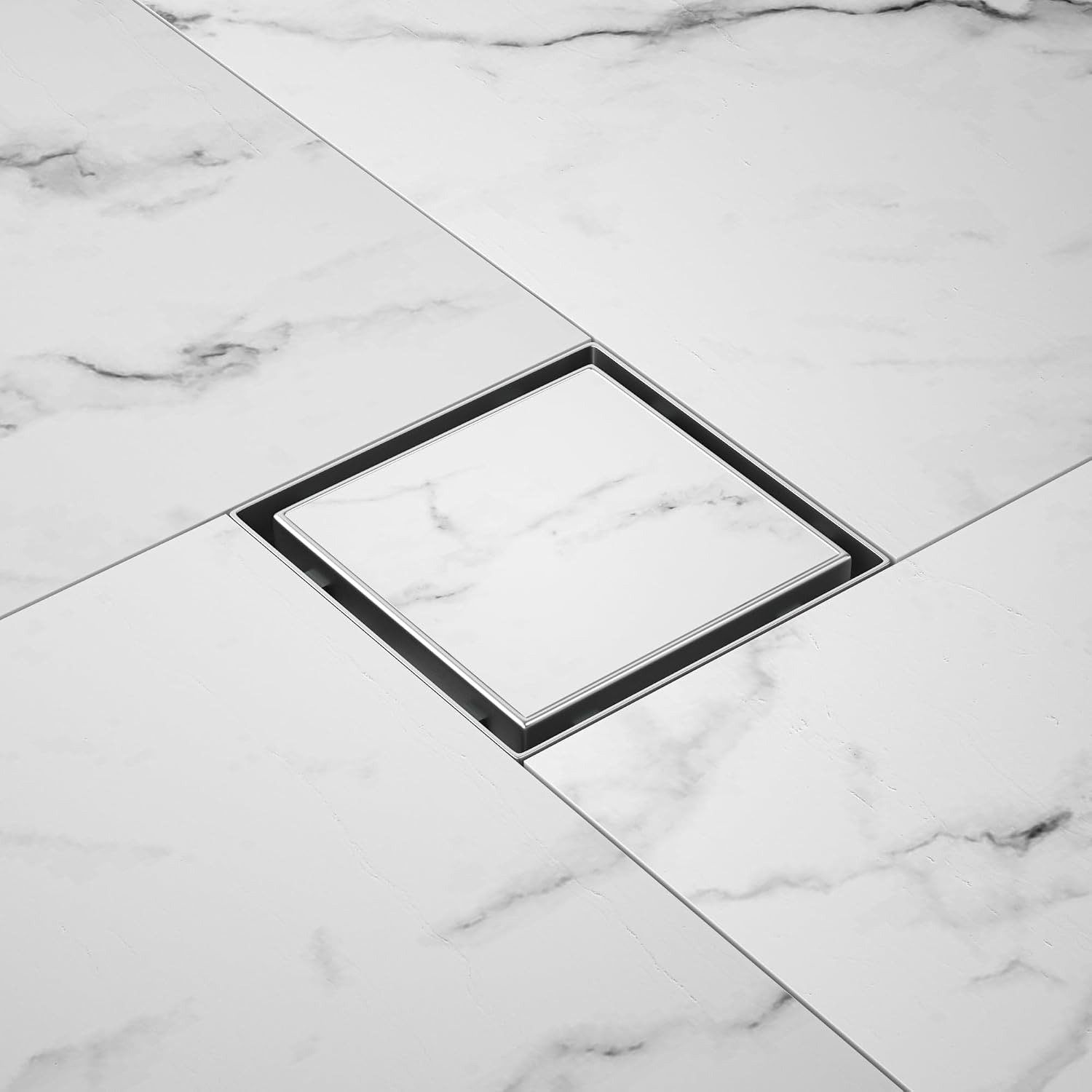
Flip it the other way and you have a shallow tray. You cut a piece of your own floor tile, bed it into the tray with wet-area tile adhesive, and the drain becomes almost invisible. All you see is a thin dark line around a square of the same tile as the rest of the floor. If you have spent money on a nice large-format tile, hiding the drain inside the pattern is often the better look.
The useful bit is that this is not a permanent decision. You can fit it with the steel face showing, live with it, and tile the grate two years later if you change the floor.
Why the rotating siphon matters in a renovation
New builds are easy. The plumber puts the pipe where the drawing says, and the drain sits on top of it. Renovations are not like that. You pull up old tile and find the waste pipe running in a direction nobody would choose today, in a spot that is awkward to move because a joist or a slab is in the way.
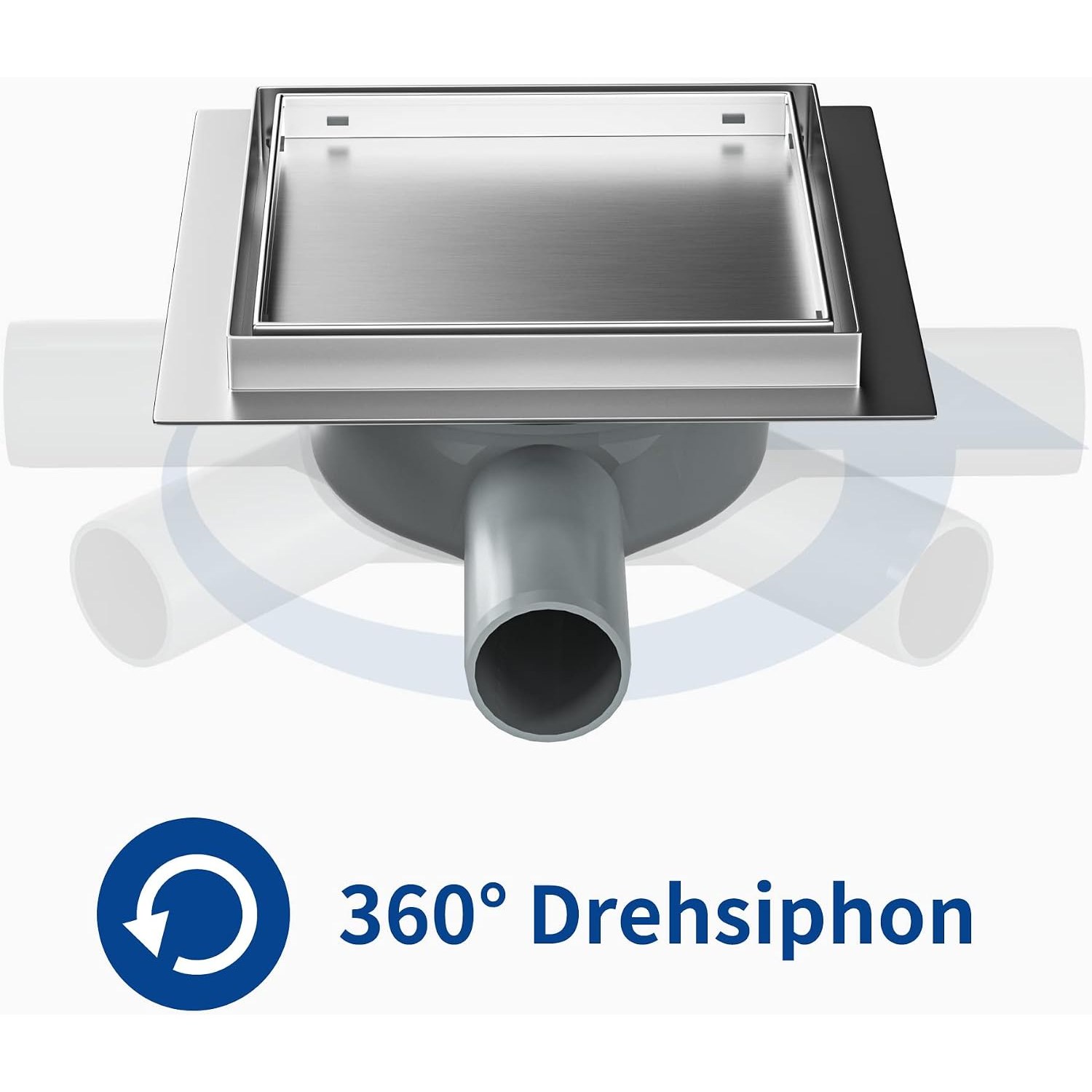
A fixed-outlet drain forces you to rework the pipe to suit the drain. A 360 degree rotating siphon flips that around. The outlet spigot turns a full circle, so you aim it at the pipe you already have. That can be the difference between a straightforward afternoon and a day of cutting concrete.
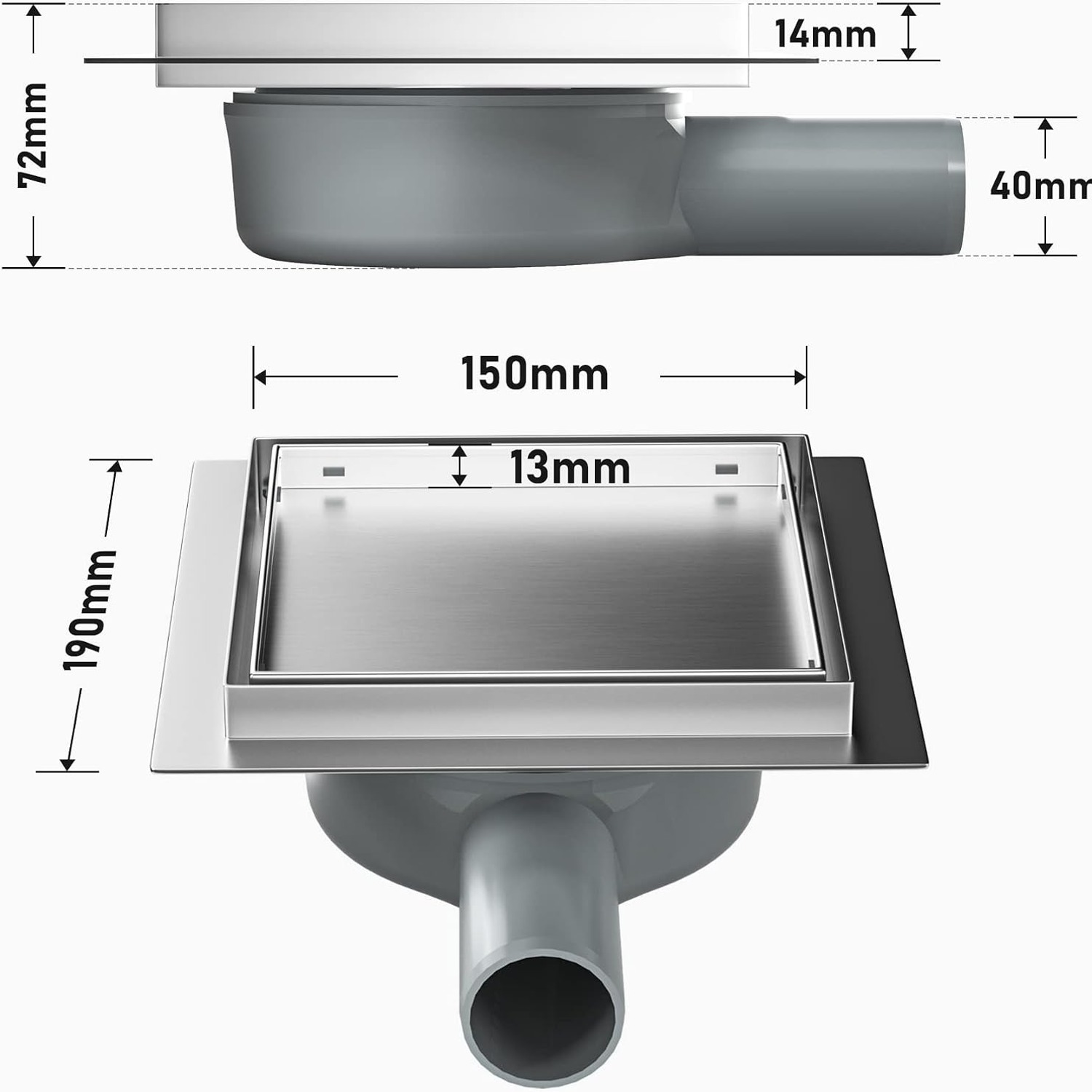
Both DN40 and DN50 connections come in the box, which covers the two pipe sizes you will meet in most homes. Measure the outside diameter of your existing pipe before ordering so you know which one you will be using, and whether you need an adaptor for anything unusual.
Square point drain or linear channel
The main alternative to this style is a long linear channel set against one wall. Both are good, but they suit different floors.
A square point drain wants the floor to fall toward one spot, usually near the centre or a corner of the shower bay. That means the tiler builds a gentle slope from four directions. It works well in compact shower areas and standard enclosures, and the tile cutting is simple.
A linear channel wants a single-direction fall across the whole floor, which suits wide open wet rooms, benches and curbless entries. It costs more and takes more planning.
For a normal domestic shower of around 900mm square, a 150mm square waste is usually the sensible pick. If you are comparing the best 150mm shower grate options, the real question is whether your tiler is building a four-way fall or a single slope.
Materials and why 304 is the number to look for
Stainless steel is not one material. The grade matters. This drain is made to the ASTM 304 standard at 1.2mm thickness, which is the normal specification for bathroom fittings. The 304 grade resists the constant damp, soap residue and cleaning products that a shower throws at it, and it holds up over years rather than months.
Thickness matters too. A thin pressed grate can flex underfoot and feel cheap. At 1.2mm there is some substance to it, which is what you want from something you stand on every morning.
Cheaper plastic floor traps do the same basic job at first, but they tend to yellow, go brittle at the edges and always look like a drain. If you are weighing up the best stainless steel floor trap against a bargain plastic one, the gap shows up in year three, not week one.
Fitting it without regrets
Three measurements decide whether a drain works in your bathroom.
The first is the opening in the floor. This unit presents a 15cm square face, so you need the surrounding tile cut to suit.
The second is your waste pipe size, which tells you whether to use the DN40 or DN50 connection.
The third, and the one people forget, is depth. A drain with a trap needs room underneath for the siphon body and the fall of the pipe running away from it. On a timber floor that usually means working between joists. On a concrete slab it can mean the drain depth dictates how high the finished floor sits. Check this before anything else, because it is the measurement most likely to stop a job.
Installation itself sits under waterproofing and tile, so it is not a forgiving place to learn. A licensed plumber or an experienced tiler is money well spent, and in Singapore the work must be done by a licensed plumber.
Keeping it clean
The maintenance routine takes about two minutes and almost nobody does it often enough.
Every week or two, lift the grate with the supplied hook, pull the hair strainer and rinse both under warm water. Hair plus soap turns into a grey paste that will eventually slow the drain, and clearing it at the strainer is far easier than clearing it from the pipe.
Wipe the brushed steel with mild soap and a soft cloth, then dry it to avoid mineral spotting from hard water. Skip steel wool, scouring pads, bleach gels and abrasive powders. They will scratch or dull the finish, and marks on brushed steel are permanent.
If a bathroom sits unused for a few weeks and starts to smell, that is almost always an evaporated water seal. Run the shower for thirty seconds or tip a few litres of water down the drain, and it goes away.
The short version
This is a 150mm square stainless steel shower drain for tiled bathrooms and wet rooms. The 2-in-1 grate lets you show brushed steel or hide the drain under your own tile, and you can swap between the two later. The 360 degree rotating siphon means you can aim the outlet at the pipe you already have, which is what makes it genuinely useful in a renovation rather than only a new build. A removable hair strainer, both DN40 and DN50 connections and a lifting hook come in the box.
Measure your opening, your pipe size and your available depth, confirm those three against the specs, and this is a part you should be able to fit once and forget about.