

The complete guide
Choosing a Pop Up Bath Stopper That Actually Seals
The problem with a bath that will not hold water
There are two small bathroom annoyances that most people put up with far longer than they should. The first is a bath that slowly loses its water. You run it hot, get in, and twenty minutes later your shoulders are in the air. The second is a bath that empties at a crawl, leaving a grey ring and a puddle that sits there for ten minutes after you pull the plug.
Both problems come from the same small part of your bathroom: the drain opening and whatever is sitting in it. A plug that has gone hard will not seal. A pipe that has collected years of hair will not flow. Fixing either one usually sounds like a job for a plumber, which is why so many people just live with it.
It rarely needs to be. A good pop up bath stopper and cover deals with both jobs, and it drops in by hand.
How a pop up stopper works
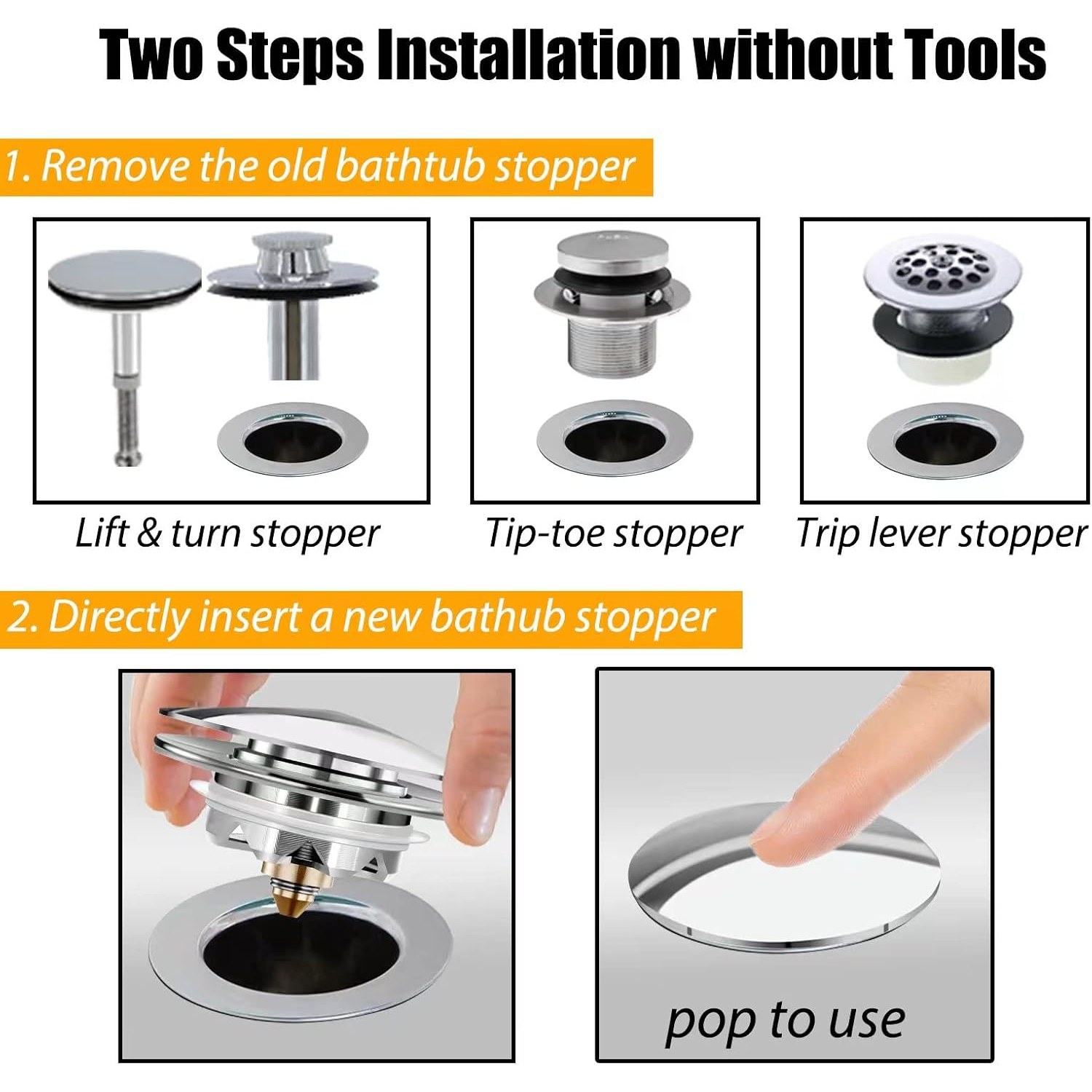
The old style of pop up plug was built into the bath itself. A trip lever on the overflow plate connected to a rod running behind the panel, which lifted and dropped the plug. When those linkages corroded or came loose, fixing them meant getting behind the bath, which on a built-in bath means pulling the panel off.
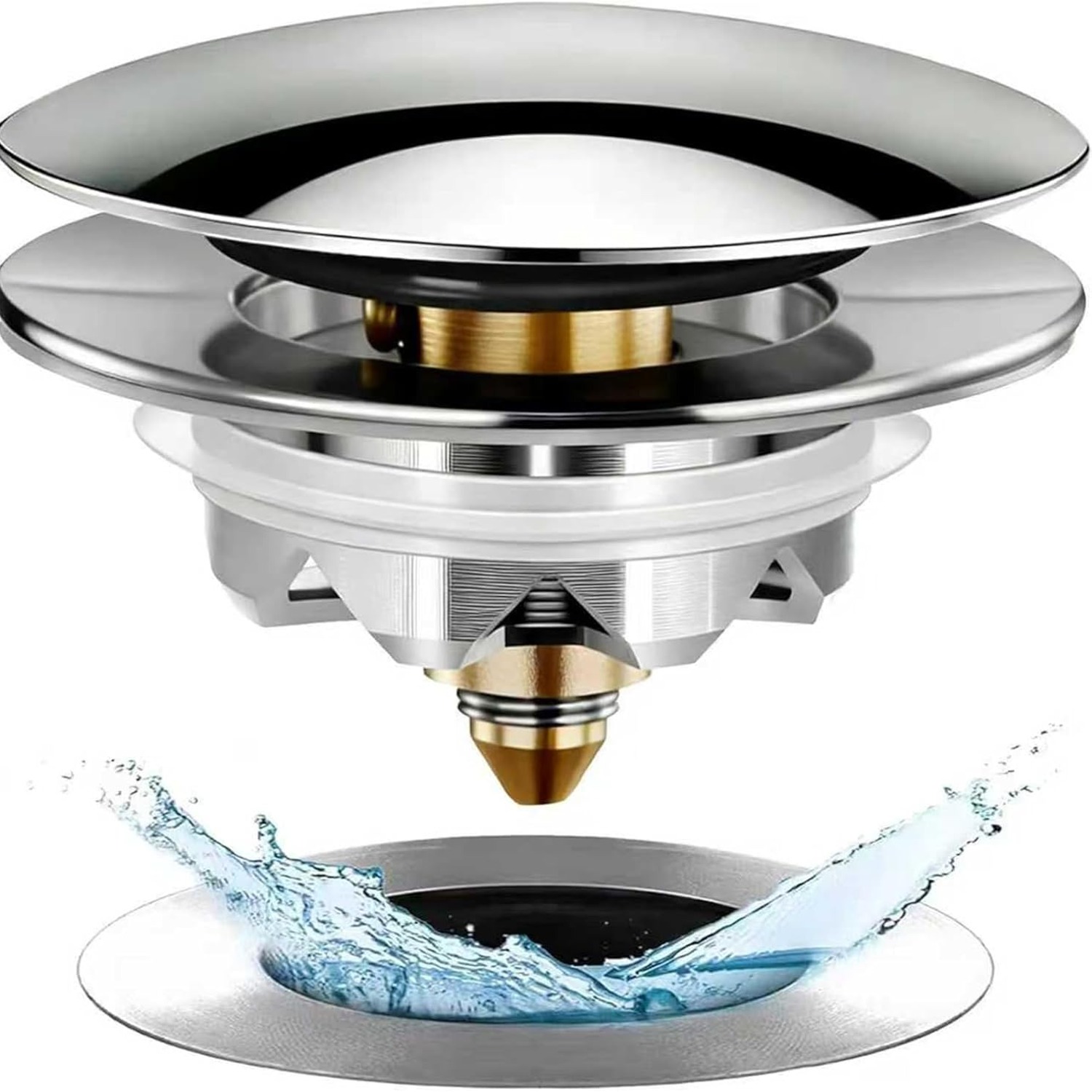
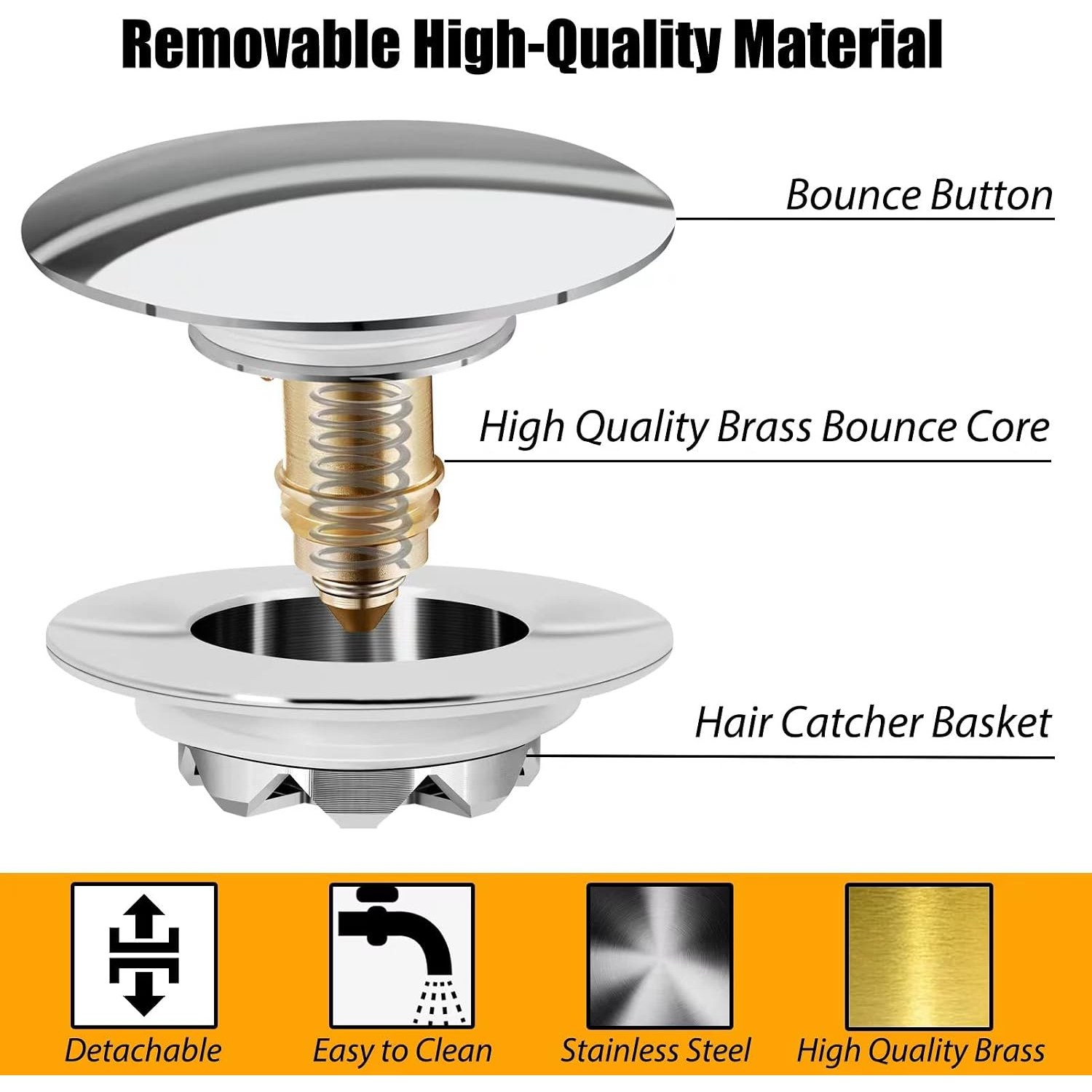
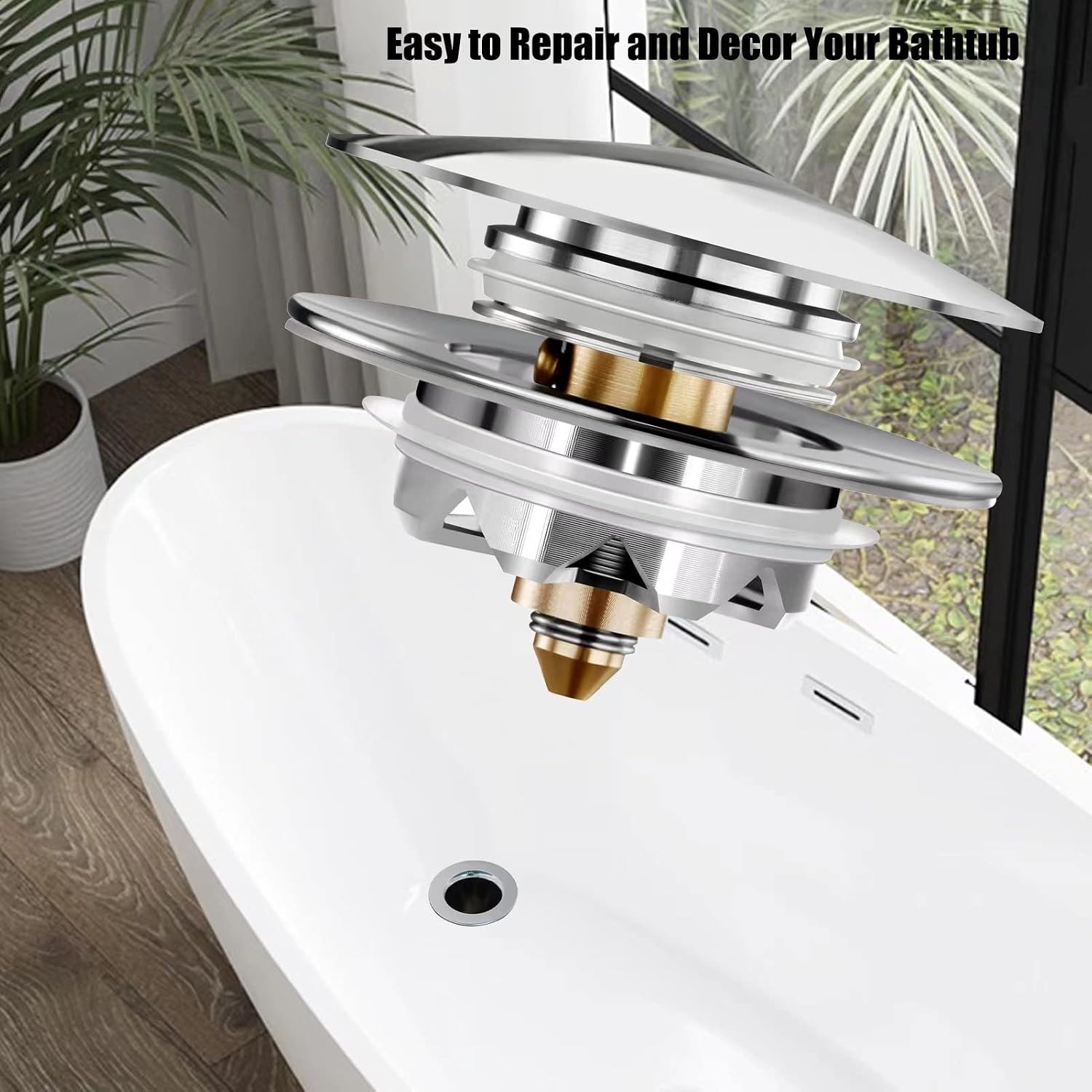
This kind of stopper takes a different route. The whole mechanism lives inside the plug body. Press the top down and an internal spring latch holds it in the closed position, pressing the seal against the drain opening. Press it again and the latch releases, the body rises, and the water runs out around it.
Nothing is attached to the bath. There is no rod, no lever and no screws. You put it in, and you can take it out again in a second.
Inside that same body is a filter basket. Water flows through it on the way down, and hair, soap fragments and the general grit that comes off a person in the bath get caught there instead of going into the pipe. That is the part that makes a difference over months rather than minutes.
Why hair is the real enemy
Most slow baths are not blocked by anything dramatic. They are blocked by hair. Strands collect at the top of the trap, soap and shampoo residue sticks to them, and the whole thing builds into a mat that water has to squeeze past. It happens gradually, so you barely notice until the bath takes five minutes to empty.
A bath drain stopper with hair catcher breaks that cycle at the top, where you can actually see what is happening. The hair collects in a basket you can lift out and rinse. Two minutes every fortnight, and the pipe underneath stays clear.
Compare that with the alternative. Caustic drain products are unpleasant to use, hard on older pipework, and they only treat the symptom. A bath drain hair catcher costs less than a couple of bottles of the stuff and keeps working.
What this one is made from
The body is brass with a chrome plated finish, listed in silver. That matters more than it sounds.
Brass is the traditional material for fittings that sit in water because it does not rust. Cheap plugs made from plated zinc or thin steel look identical on day one and start blistering within a year, usually around the edges where the plating is thinnest. A brass bath drain plug holds up to constant hot water and the damp air of a bathroom.
The chrome layer on top gives it the polished silver look that matches most taps, overflow plates and waste fittings. It also makes it easy to wipe clean.
At 0.12 kg, it has enough weight to sit properly in the opening rather than lifting when you run the tap hard. Light plastic plugs have a habit of floating free, and you end up holding them down with your foot.
Measure before you buy
This is the step people skip, and it is the one that decides whether you are happy with the purchase.
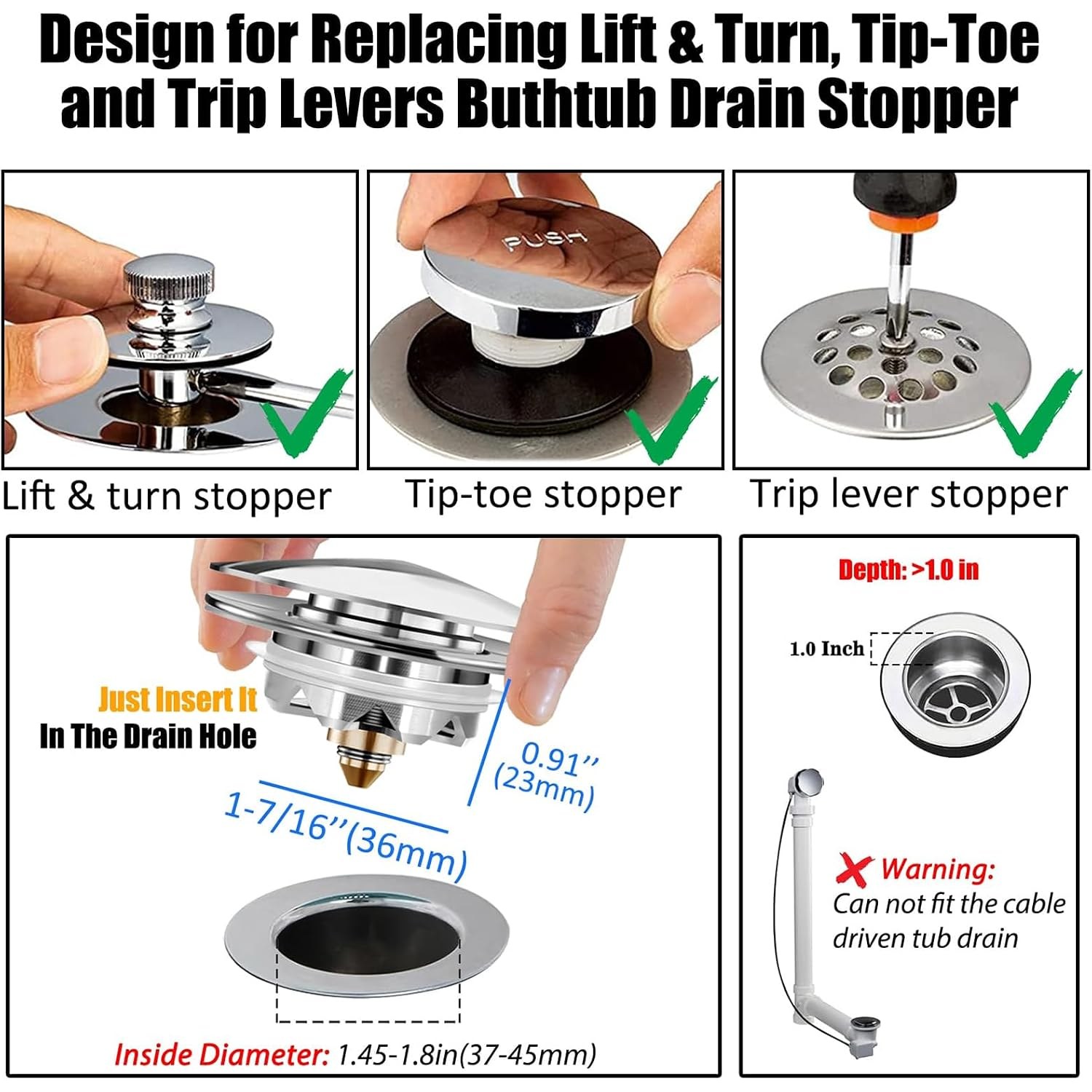
Bath drain openings are not all identical. You need two numbers. The first is the inside diameter of the opening, measured across the hole itself, not across the rim. The second is the depth, which is how far down the stopper body has room to sit before it meets the pipe below. A stopper that bottoms out before the seal makes contact will never hold water.
The listed dimensions for this unit are 36 mm wide by 27 mm high. Silicone gaskets are supplied to adjust the grip within a range of openings, so there is some tolerance, but the measurement is what tells you whether you are in the right territory.
Take a ruler to it before you order. It takes thirty seconds and saves a return.
Fitting it
There is not much to say here, which is the point.
Clean the drain opening first. Soap film and old sealant residue stop silicone gripping the way it should, so a wipe with a cloth and a bit of washing up liquid helps. Dry it.
Choose the gasket that matches your opening and make sure it is seated evenly around the body. Then push the stopper into the drain until it sits flush with the bottom of the bath. Press the top to close it, run a few inches of water, and watch the level for five minutes. If it holds, you are done. If it drops, pull it out, check the gasket and try the next size.
That is the entire job. No tools, no plumber, no panel removal.
Keeping it working
The maintenance routine is short but it is not optional. A no tools bath drain plug with a filter basket only prevents blockages if you actually empty the basket.
Every week or two, lift the stopper out. It comes apart into sections, so you can get at the basket properly. Rinse the hair away under a warm tap, use a drop of dish soap and an old toothbrush on any soap scum, and dry the chrome with a soft cloth before you put it back.
Avoid three things. Abrasive scouring pads will scratch through plating. Bleach and strong chemical cleaners can dull the finish and harden the silicone seal. And if you do need to treat the pipe with a drain product, take the stopper out first, then flush the line thoroughly before refitting it.
Do that, and a chrome plated brass fitting will keep looking and working the way it did when it arrived.
Who it suits
If your bath came with a chain plug that has perished, this is a straight upgrade. If the built-in pop up mechanism has seized and you do not want to get behind the panel, this gives you working pop up action without touching the original hardware. If someone in the house has long hair and you are tired of the slow drain, the filter alone justifies it.
If you are renting, the fact that it lifts out by hand is useful. Keep the original plug in a drawer and put it back when you leave.
The one case where it is not the answer is a pipe that is already seriously blocked. Clear that first, then fit the stopper to stop it happening again.
The short version
A bath that will not hold water is usually a dead seal, and a bath that will not drain is usually hair. This pop up bath stopper and cover handles both. Brass body, chrome finish, press to seal, press to drain, and a lift-out basket that catches what would otherwise end up in the pipe.
Measure your drain opening first, check the width and the depth, and pick the gasket that fits. After that it is a push-in job that takes less than a minute, and about two minutes of rinsing every couple of weeks to keep it doing its work.