

The complete guide
Linear Shower Drain Buying Guide, How to Choose a 500mm Channel for a Walk-In Shower
The problem with a round drain in a modern shower
Walk into most bathrooms built before the 2000s and you will find a small shower box with a round waste in the middle of the floor. The floor falls toward it from every direction, the tiles are small so they can follow that curve, and the whole thing works because the shower is only a metre square.
Now look at what people build today. Showers are bigger. Screens are frameless or missing entirely. Tiles are large-format, sometimes 600mm or more, and large tiles do not like being bent into a shallow dish. The water has further to travel, the floor is flatter, and the drain is still a small hole.
That combination is why so many new showers have a damp patch that never quite goes. Water pools in the corner furthest from the waste, soap scum collects there, and the grout starts to look tired within a couple of years.
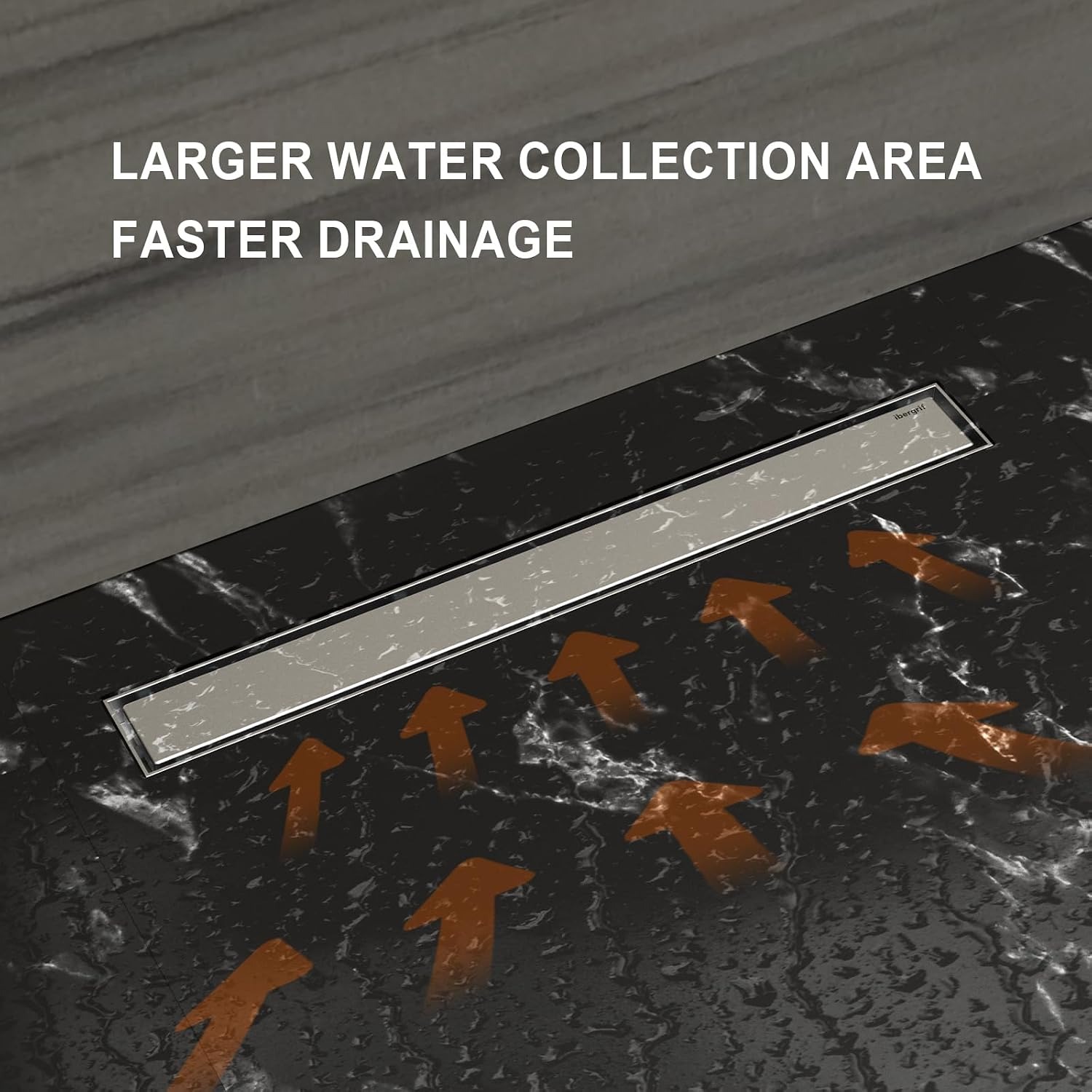
A linear shower drain 500mm long solves the geometry problem. Instead of a point, you get a line. Water only has to travel in one direction to reach it, so the floor falls on a single plane. Big tiles lie flat. The drain spans the width of the wet zone. Everything runs downhill to one edge.
How a channel drain actually works
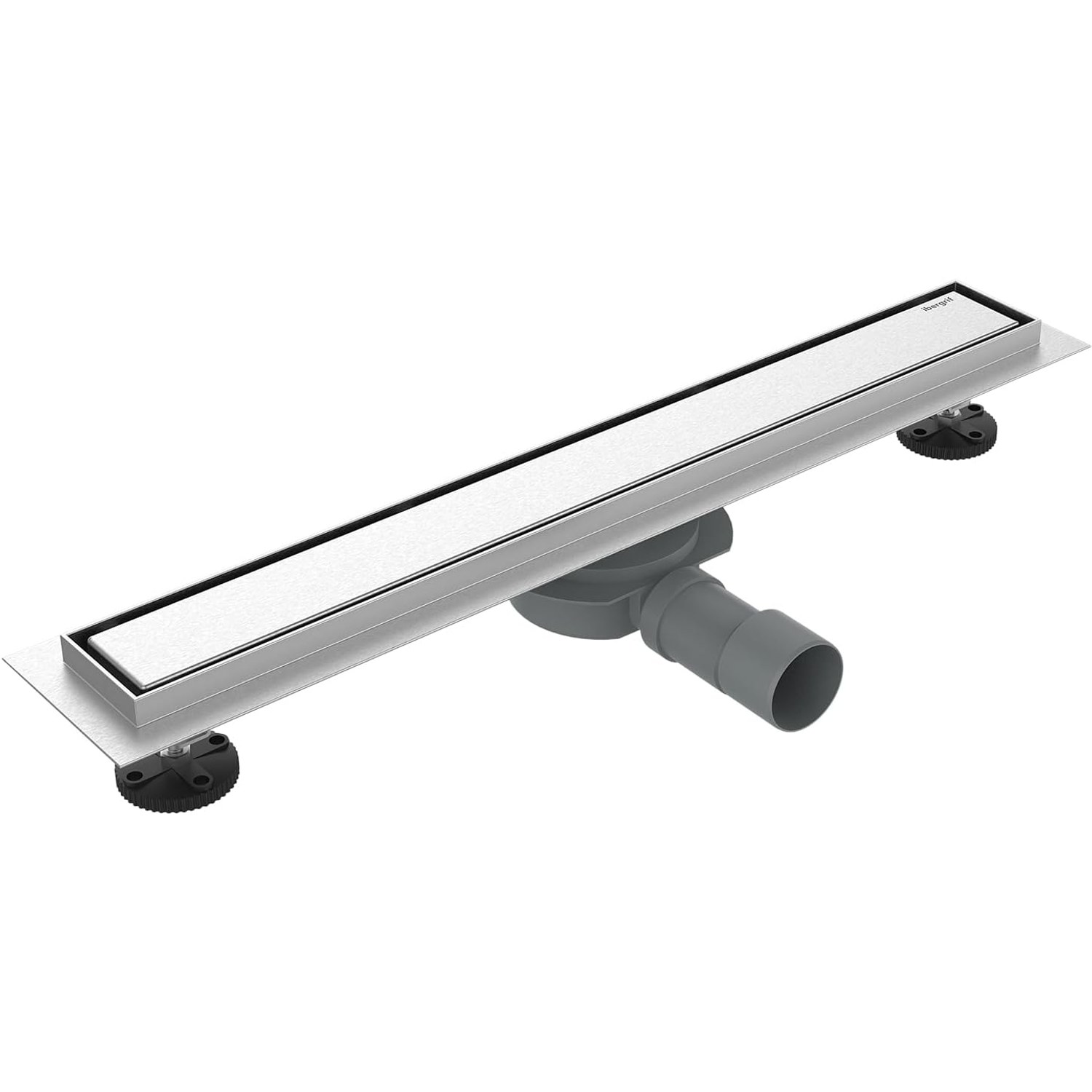
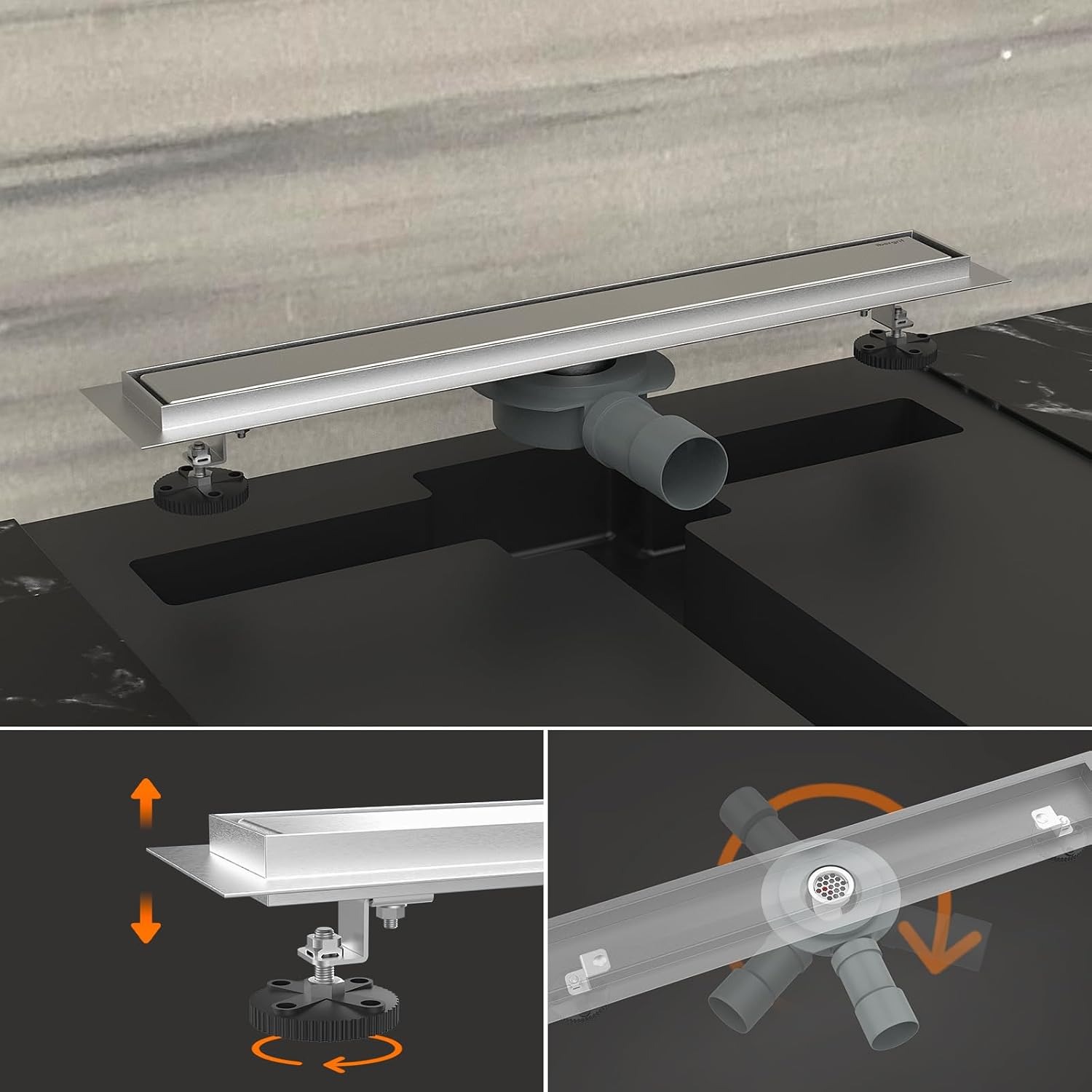
The visible part is a slot with a cover plate. Under the cover sits the channel body, a shallow trough that runs the full length of the unit. Water falls in anywhere along the slot, runs along the trough, and leaves through an outlet underneath that connects to your waste pipe.
Between the cover and the outlet sits a filter. On this unit, the filter catches hair, sand and the small bits that come off feet and shampoo bottles. That matters more than people expect, because hair is the cause of nearly every slow shower drain anyone has ever had. A filter you can lift out and rinse under the tap turns a plumber call-out into a two-minute chore.
The outlet and base chamber on this model are larger than a typical round waste. More capacity means water clears faster, which is what keeps the floor from puddling during a long shower or when two people shower back to back.
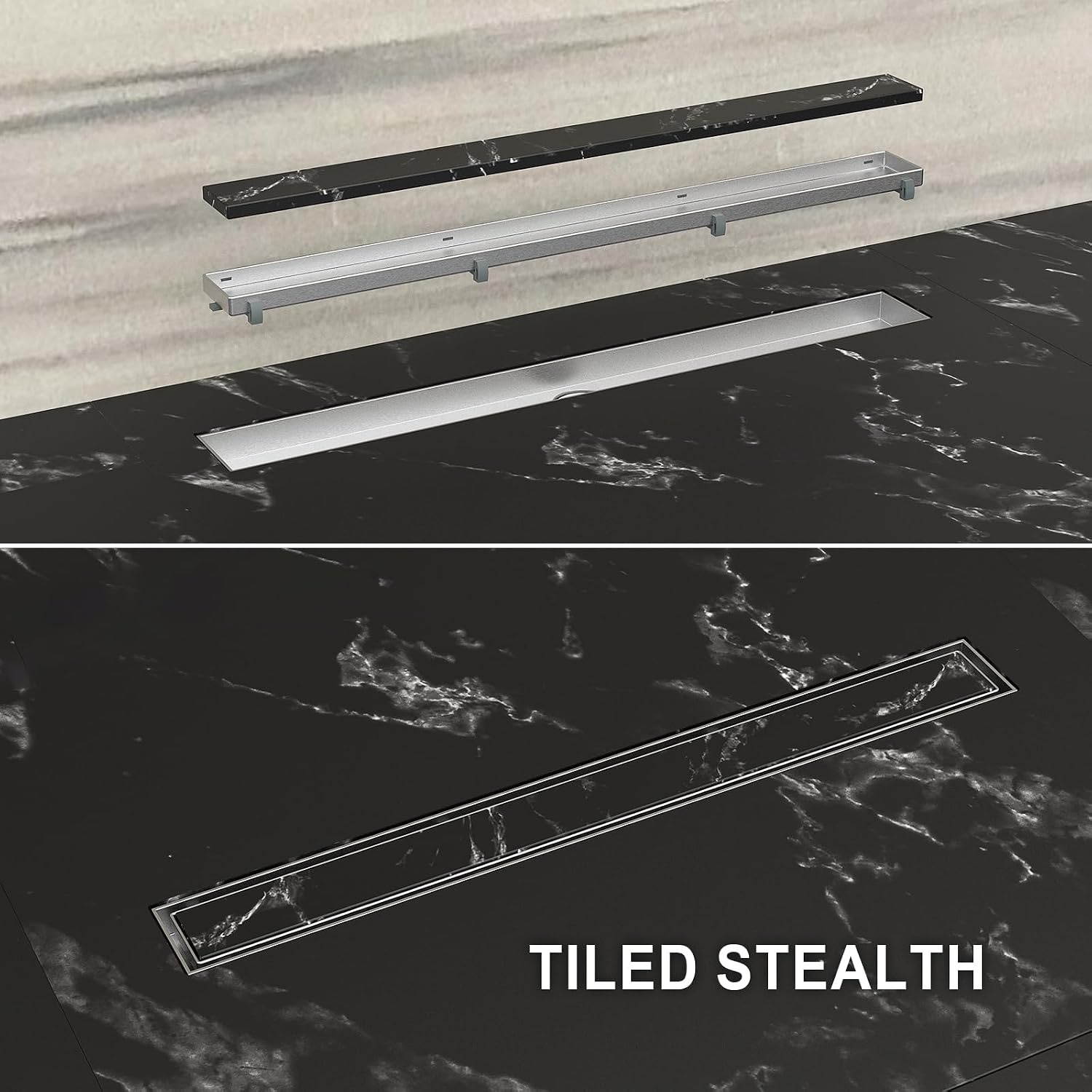
The cover itself is reversible. One side is a brushed stainless panel. Flip it and you get a shallow tray that holds a cut piece of your own floor tile. Same drain, two very different looks.
Steel face or tile insert
This choice comes up in every bathroom I have seen specified with a channel drain, and there is no universally right answer.
A steel face reads as a deliberate design feature. It draws a clean line across the floor and ties in with chrome or brushed nickel tapware, the screen hardware and any stainless accessories. If your bathroom already has visible metal detailing, the steel cover looks intentional rather than accidental.
A tile insert does the opposite. The drain nearly vanishes, because the same tile that covers the floor also covers the drain. In a large-format tiled wet room this looks genuinely good, with the pattern running almost unbroken to the wall. It is the choice most tilers suggest when the floor is the star of the room.
Two practical notes. The tile insert needs a spare tile and a tiler willing to cut it accurately, so mention it before the tiling starts. And a steel face is marginally easier to wipe down, because there is no grout line around the insert to collect residue.
Is 500mm the right length
For a standard alcove or corner walk-in shower, 500mm is usually right. It spans enough of the floor to collect water across the width of the wet zone without dominating the space.
Go longer if your shower opening is wide, if you are building an open wet room with no screen at all, or if you want the channel to run wall to wall as a design line. Longer channels collect water across a bigger front, which is useful when the floor is very flat.
Stick with 500mm if the shower is a normal alcove, if the floor build-up is tight, or if you want the drain set against one wall rather than running the full width.
When you are genuinely torn between two lengths, the longer one is the safer drainage choice. Nobody has ever complained that their shower drains too well.
Planning the install
This is not a weekend DIY job. A channel drain ties into both the waste pipework and the shower waterproofing membrane, and getting either wrong puts water into the floor structure. Have a licensed plumber do it.
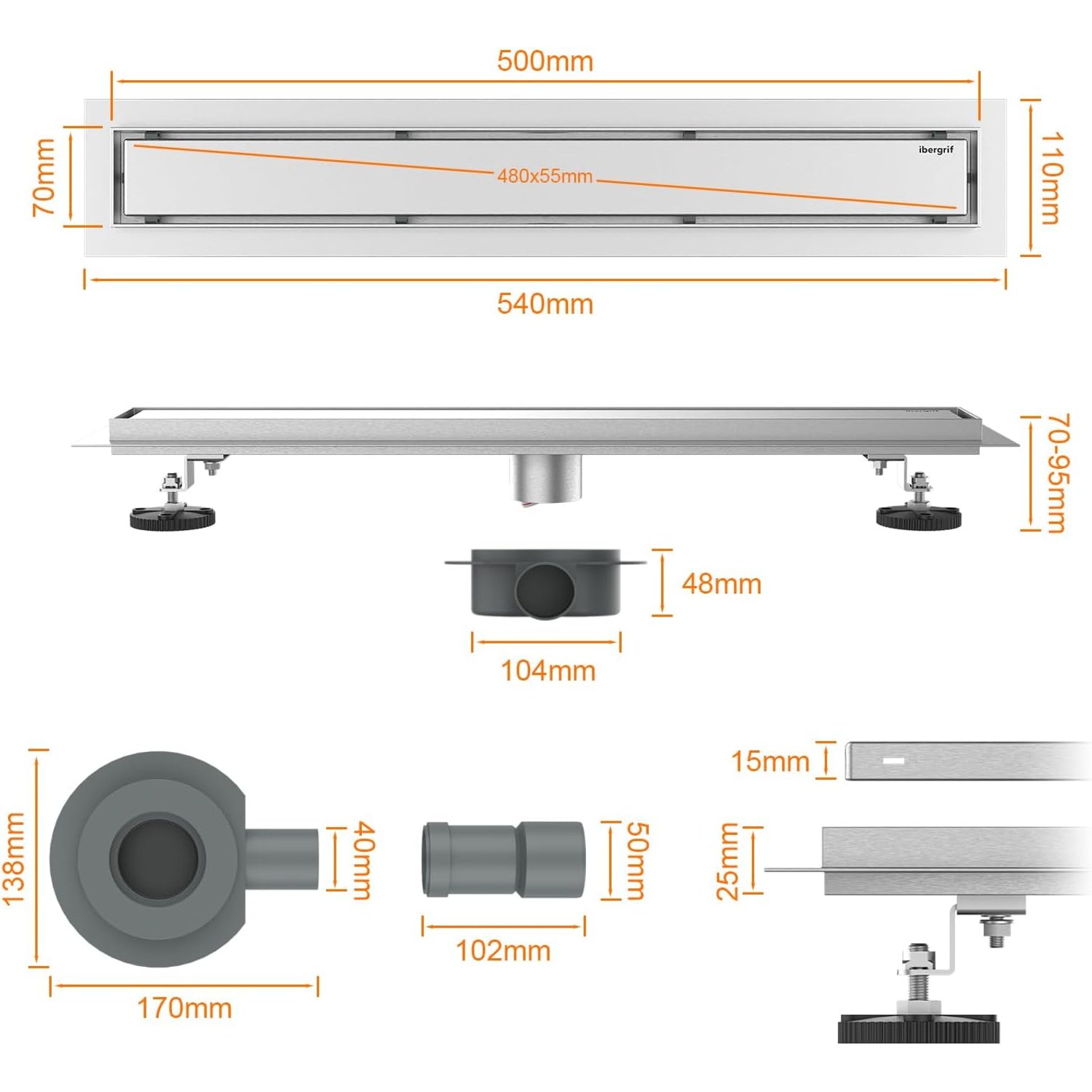
The listed item dimensions here are 11 cm wide and 7 cm high. The height matters, because your total floor build-up includes the drain body, the trap under it, the fall in the screed and the thickness of your tile and adhesive. On a concrete slab that may mean cutting a recess. On a timber floor the plumber usually works between the joists.
Adjustable mounting feet on this unit let the installer set the body at the correct height during the screed stage. That adjustment is how the finished cover ends up flush with the tile rather than sitting proud or sunk.
A few things worth confirming before anything is tiled. Check the outlet position against your existing waste. Check the trap depth against your available floor height. Check local plumbing requirements, which vary a lot between countries. And have the drain physically on site before the tiler starts, so there are no surprises mid-job.
The maker describes a 360 degree rotatable element, which gives the installer some freedom in orienting the assembly to line up with the pipe. Your plumber will sort that out on the day.
Looking after it
Stainless steel is low maintenance, not no maintenance. The routine is short.
Lift the cover every week or two and pull out the filter. Rinse it under the tap, clear any hair, drop it back in. That alone prevents most drainage problems.
Wipe the channel and the visible steel with warm water and a little mild detergent, then dry it off. Drying is what stops water spotting on the metal.
What to avoid matters as much as what to do. Keep bleach, scouring powder, steel wool and strong acid or chlorine cleaners away from stainless steel. They can mark the surface permanently. If the drain is running slowly, the answer is almost always the filter, not a bottle of chemicals.
Who this suits
A 500mm stainless channel makes sense if you are renovating a shower, building a wet room, or replacing a round waste that cannot keep up. It suits large-format tile floors, frameless screens, and anyone who has got tired of a puddle in the far corner.
It makes less sense in a small enclosed shower with a steep existing fall, where a point waste still works fine and the floor is already built. Retrofitting a channel into a finished floor means pulling up tiles and redoing waterproofing, which is a bigger job than most people expect.
The short version
A linear shower drain 500mm long fixes the drainage problem that modern, flatter, bigger showers create. This unit is stainless steel, has a removable filter for hair, a larger outlet for faster flow, adjustable feet for install, and a reversible cover that shows brushed steel or takes your own tile.
Measure your shower opening, decide whether you want the drain seen or hidden, and get a licensed plumber to confirm the height and outlet before anything is tiled. Do that groundwork and this is a fit-and-forget part of the bathroom, which is exactly what a drain should be.