
The complete guide
How to Choose a Sink Strainer That You Will Actually Empty
The real problem with sink strainers
Almost nobody buys a sink strainer because they are excited about sink strainers. You buy one after something goes wrong. The sink backs up during a wash-up. A plumber pulls a mat of rice and tea leaves out of the trap and quietly judges your kitchen. Or you simply get sick of fishing bits of food out of the plughole with a spoon.
So you buy a basket. And for a few weeks it works. Then you notice something. The basket is full, and emptying it is horrible. The scraps have pressed themselves against the walls of the cup and will not shake loose. You tap it against the bin. You run it under the tap, which just pushes the mess further in. Eventually you poke it out with a finger and feel slightly worse about your life.
That is the actual failure point of most sink strainers. Not the catching. The emptying. And because emptying is unpleasant, people leave the basket sitting full, which is where the smell comes from and why the sink stops draining properly anyway.
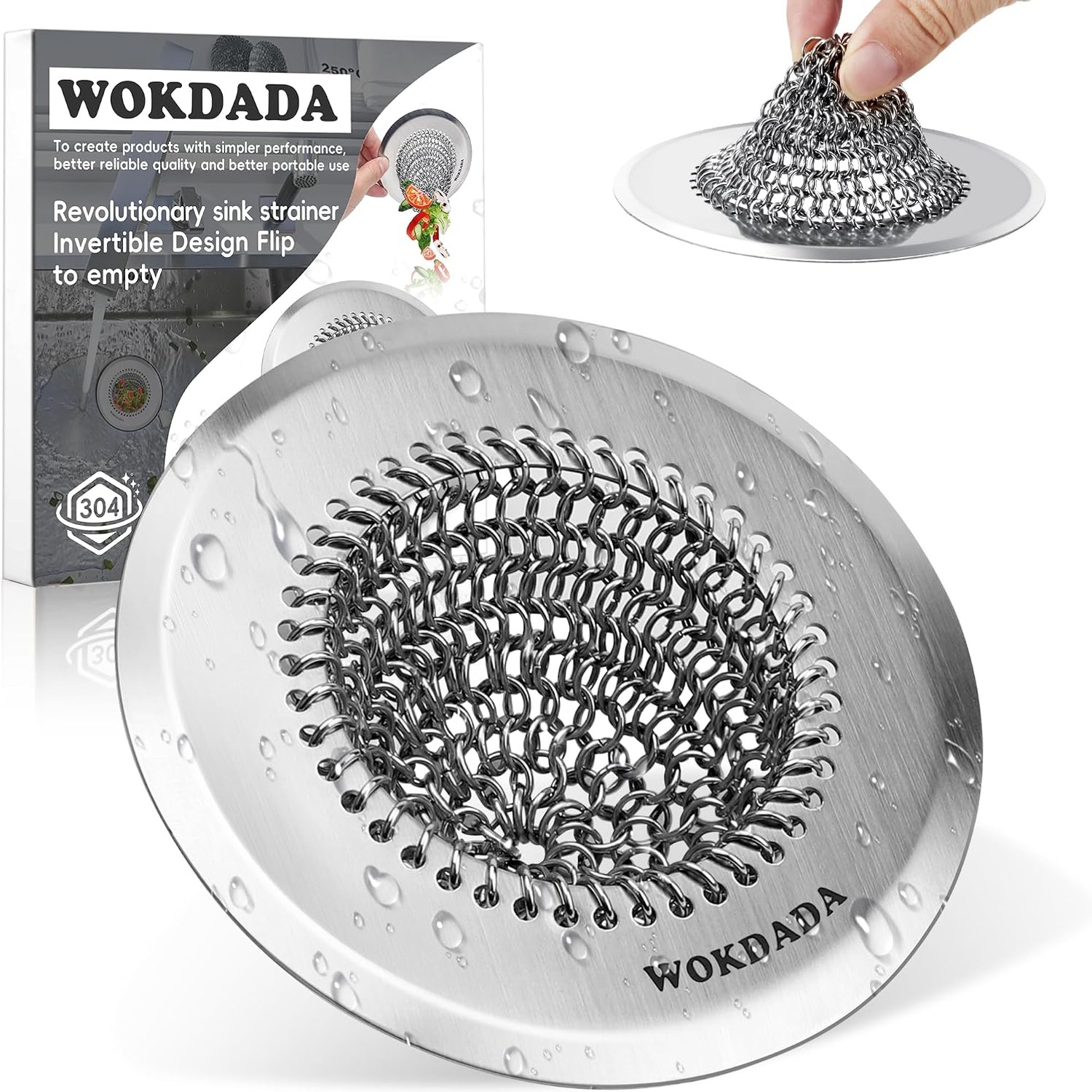
A reversible chain mesh sink strainer attacks that exact moment. The basket turns inside out. Whatever was clinging to the inside is now on the outside, with gravity on your side instead of against you. You hold it over the bin, flip, shake, rinse. Three seconds.
How the chain mesh design works
Think about the difference between a solid metal cup with small punched holes and a basket woven from linked mesh.
The punched cup has a fixed number of holes in fixed positions. Once a layer of coffee grounds, cooked starch or grease settles across them, those holes are sealed. Water has nowhere to go, so it pools in the sink. You are now washing dishes in a shallow grey pond while the strainer sits there technically doing its job and practically making things worse.
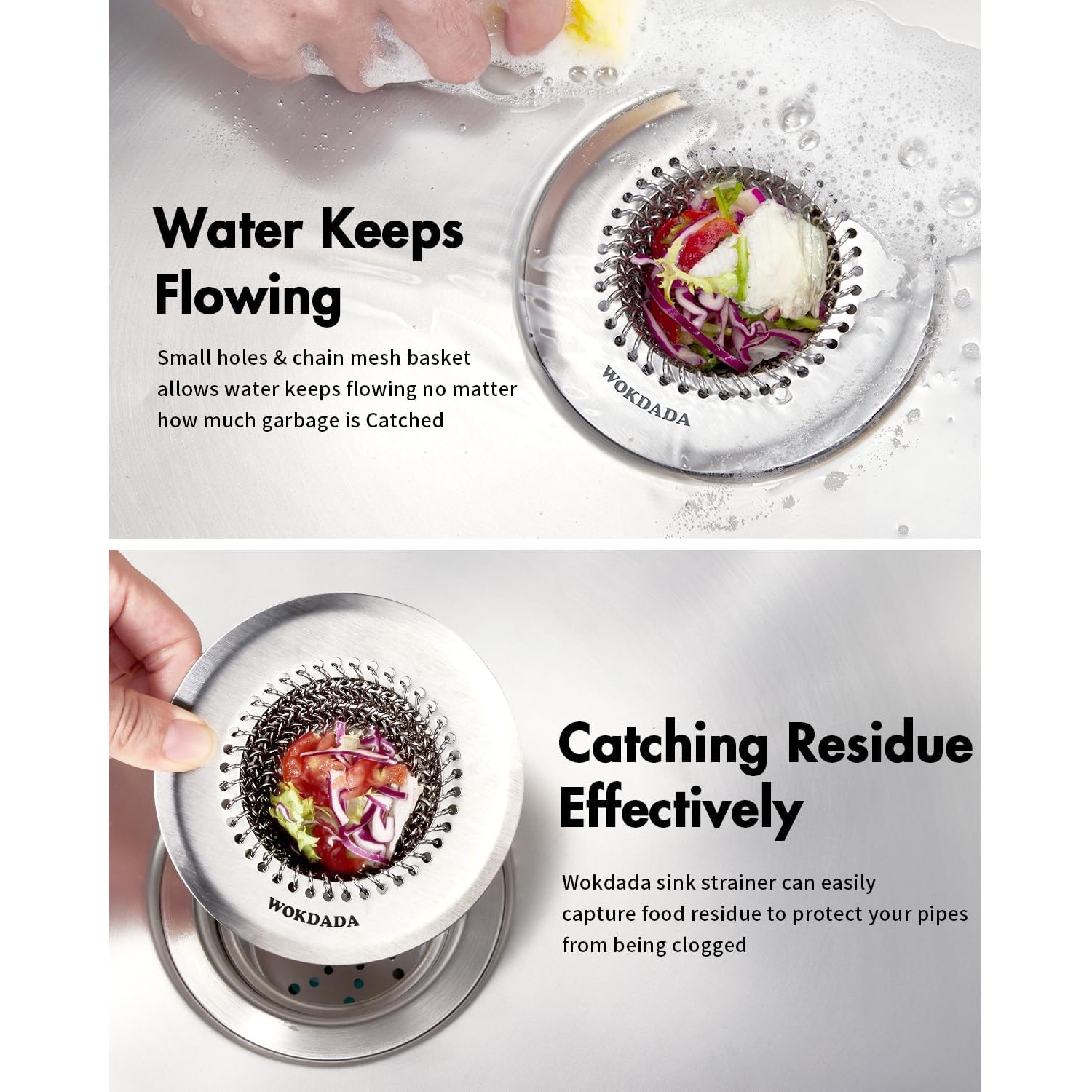
Chain mesh behaves differently. The structure is more open and more varied, so water tends to keep finding a path through even when the basket is holding a decent amount of waste. That is what the "water keeps flowing" claim is about. It will not defy physics with a sink full of fat, but in normal use it stays draining for longer.
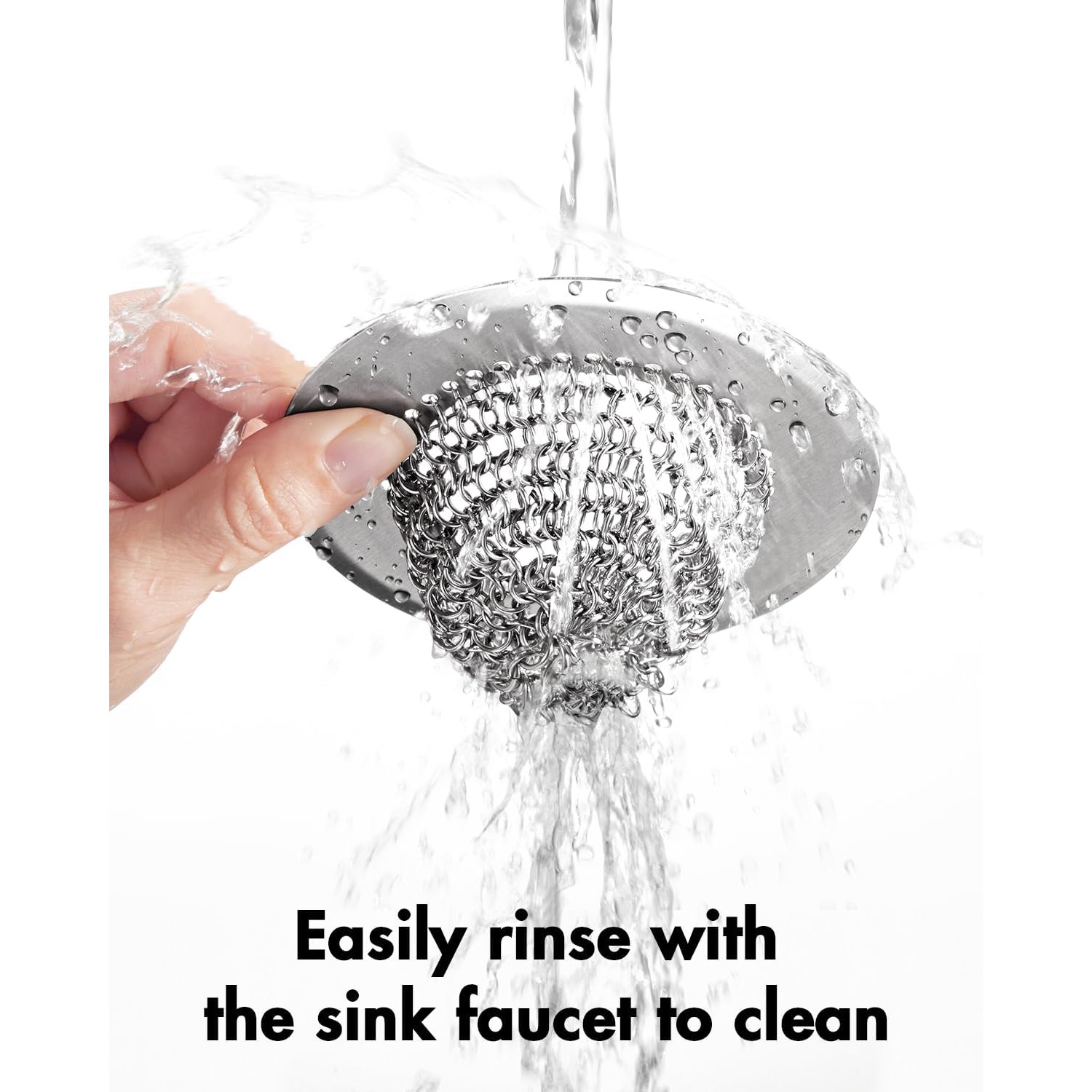
The second advantage is cleaning. A punched cup has a rim, a base and a seam, and all three collect residue you cannot easily reach. Mesh gives waste much less to grip. Run it under the tap and most of what is left simply goes.
The third thing is the flip itself, which is only possible because the mesh has enough give to be pushed through its own opening. A rigid stamped cup can never do that.
Materials and why 304 stainless matters
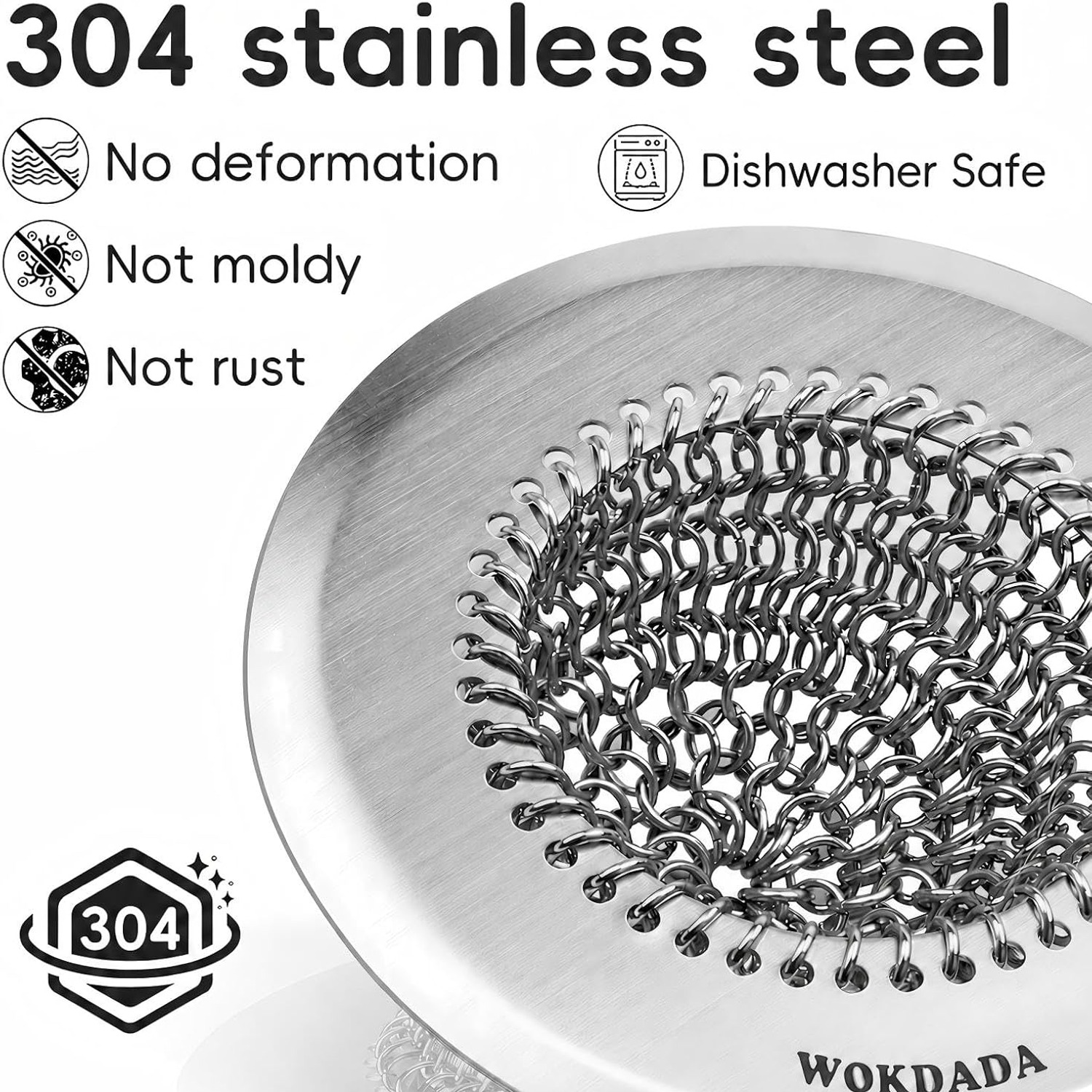
This strainer is made from 304 stainless steel with a polished finish, in silver.
That grade matters more than it sounds. A sink strainer spends its entire life wet. It sits in detergent, lemon juice, tomato residue, salt water from blanching vegetables. Cheap plated or low-grade metal starts showing orange specks within a season, and once rust gets a foothold on a food-contact item it is time to bin it.
304 stainless is the standard choice for kitchen hardware for exactly this reason. It handles constant moisture and the mix of mild acids and alkalis that get poured down a sink. The polished surface helps too, because a smooth finish gives residue less to cling to than a brushed or textured one.
There is a weight and feel difference as well. Steel sits in the drain instead of floating up when you run the tap hard, which is a small thing you notice daily with flimsy plastic alternatives.
Does it fit your sink?
This is the only question worth getting right before you order.
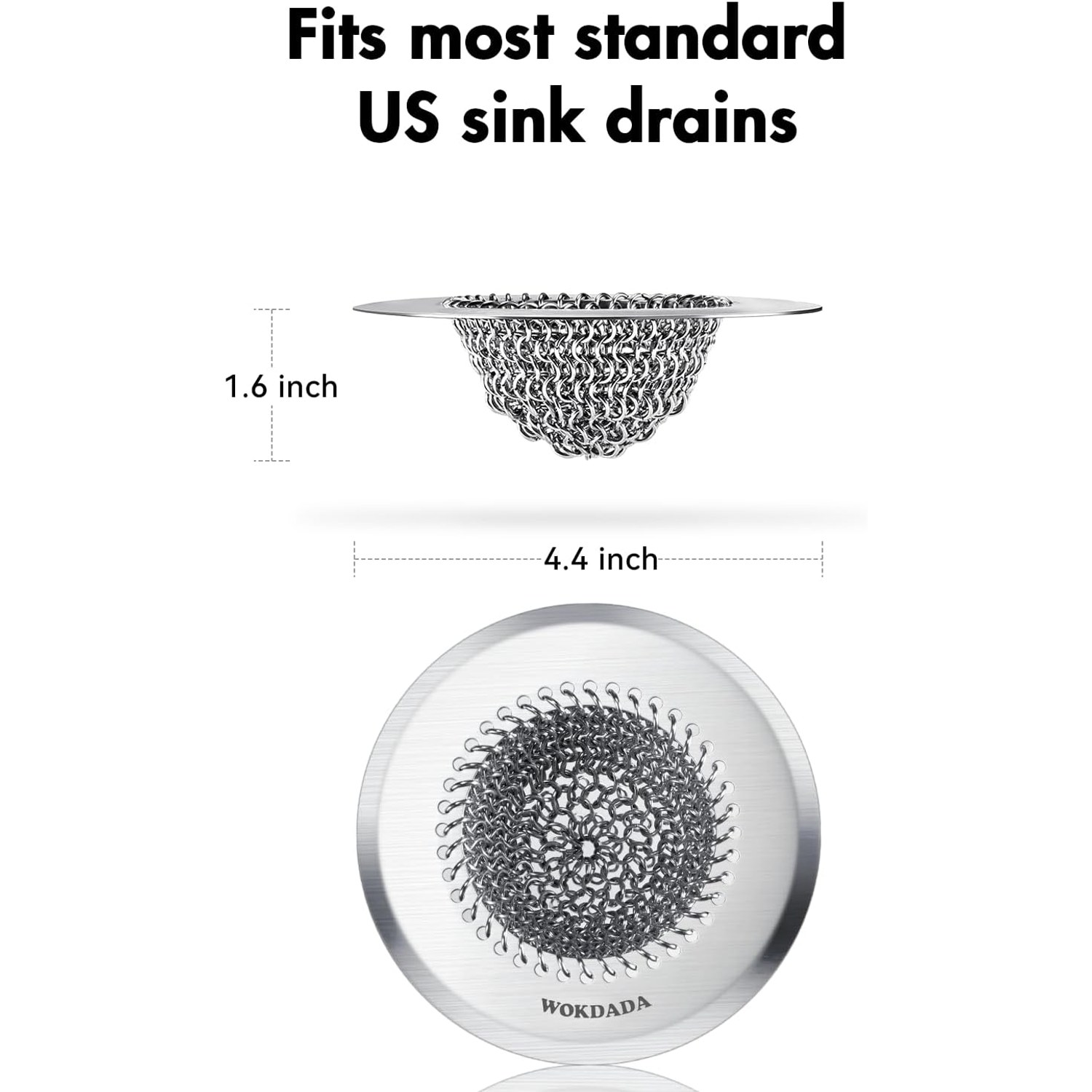
The strainer measures 11.2 cm wide and 4.1 cm tall, with an item depth of 1.6 inch (4.1 cm). That width is aimed at the standard round drain opening found in most kitchen sinks, which is why the maker describes it as a universal fit.
Before you buy, do this. Take a tape measure and measure straight across the drain hole in your sink, from one edge of the opening to the other. If you land near the 11 cm mark, you are in the right territory. If your opening is noticeably smaller, say a compact apartment sink or a bar sink, you want something narrower.
Two other situations deserve a check. Sinks with a sink waste disposal unit unit have a different fitting and usually need a strainer made for that specific unit. Bathroom basins are almost always smaller than a kitchen drain, so a kitchen sink drain basket will sit on top rather than in the opening.
Nothing is installed here. There are no screws, no tools and no sealant. The strainer drops in and lifts out, which also means you can take it with you if you move.
Who this suits
Households that cook properly. If you peel, chop, drain pasta and rinse rice, you generate exactly the kind of waste that finds its way into pipes and stays there.
People in rentals. You cannot change the plumbing, and you really do not want to be the tenant who caused the blocked drain. A drop-in stainless steel food catcher is a no-commitment fix that comes with you at the end of the lease.
Anyone who shares a kitchen. In a flat share or a family home, the strainer that gets emptied is the one that is easy to empty. Lower the effort and the job actually gets done.
People on older plumbing. Narrow or partly scaled pipes are less forgiving of food waste. Catching it at the sink is far cheaper than catching it at the trap.
It is less relevant if you have a disposal unit handling waste already, or if your sink uses a non-standard fitting that needs a matched basket.
Living with it, and keeping it clean
The routine is simple enough that it becomes automatic.
During the wash-up, scrape plates into the bin first. Everything you miss ends up in the strainer rather than the pipe. When you are done, lift the basket out, hold it over the bin, push it inside out, and give it a shake. The scraps drop. Rinse both sides under the tap and drop it back in the drain.
Once a week or so, give it a proper wash with warm soapy water and a soft brush. That takes care of the thin film of grease that builds up on anything living in a kitchen sink. Rinse well.
A few things to avoid. Steel wool and scouring powder will dull the polished finish over time, so a soft cloth or brush is the better tool. Bleach is unnecessary for routine cleaning and is harsh on stainless. And do not leave the strainer sitting full overnight, because that is where odour comes from, not from the strainer itself.
If you are going away, rinse, dry and leave it out of the drain rather than sitting in a damp plughole.
A quick note on expectations
No strainer catches everything. Very fine sediment, dissolved grease and tiny particles will pass through any mesh fine enough to let water drain at a usable rate. That is the trade-off every sink strainer makes.
What this one does well is handle the bulk material that actually causes blockages, and make the emptying step fast enough that you do it every time. Those two things together are what keep a drain clear.
It is also worth saying that pouring fat and oil down the sink will defeat any strainer. Let it cool, wipe it into the bin, and your pipes will thank you regardless of what basket you own.
The short version
A sink strainer is a cheap, boring product that quietly saves you from an expensive, unpleasant one. The thing that decides whether it helps is not how well it catches, it is whether you can face emptying it.
This reversible chain mesh sink strainer is built around that single idea. The mesh keeps water moving while it fills, the 304 stainless steel stands up to a lifetime of being wet, and the basket flips inside out so the scraps fall away without you touching them. It measures 11.2 cm wide and 4.1 cm tall and drops into most standard kitchen drain openings with no fitting required.
Measure your drain, order the right thing once, and get on with the washing up.