
The complete guide
How to Choose and Use a Bellows Plunger
The problem with a slow drain
Blocked drains rarely arrive as an emergency. They start as a sink that takes a bit too long to empty, or a shower that leaves an inch of water around your feet by the end. You notice, shrug, and carry on. Then one evening the water does not go down at all, and suddenly it is a problem you have to solve right now, usually with guests due or dinner half cooked.
That gap between "slightly slow" and "completely stopped" is where a decent plunger earns its place. Catching a drain early takes about a minute. Leaving it until nothing moves can mean pulling the trap apart on a wet floor, or paying someone to come out.
Why the bellows shape matters
The classic plunger is a rubber dome on a wooden handle. It works, but there is a flaw in the physics. When you push a dome down, a lot of what you compress is air, and air squashes. Much of your effort goes into squeezing that air rather than moving anything in the pipe.
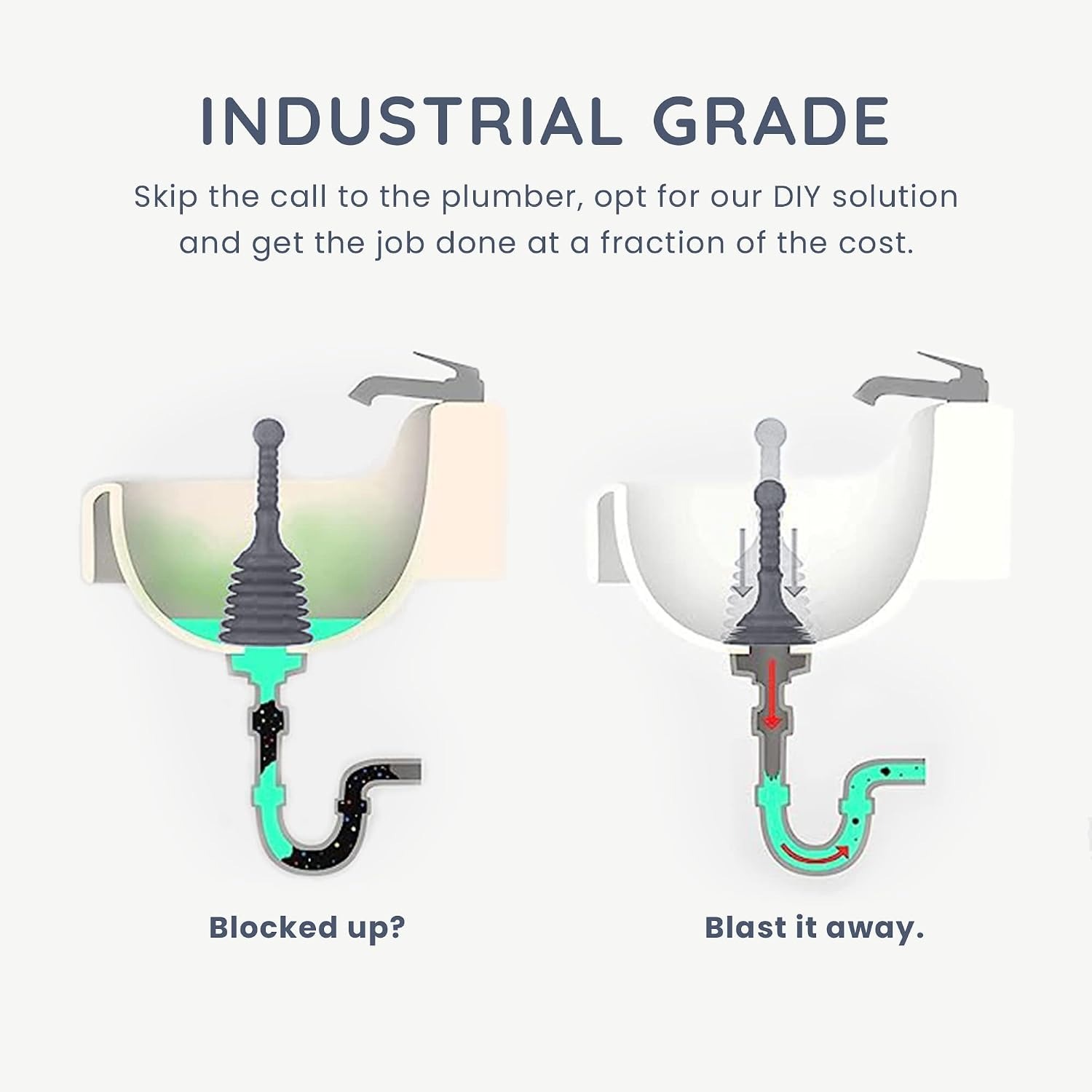
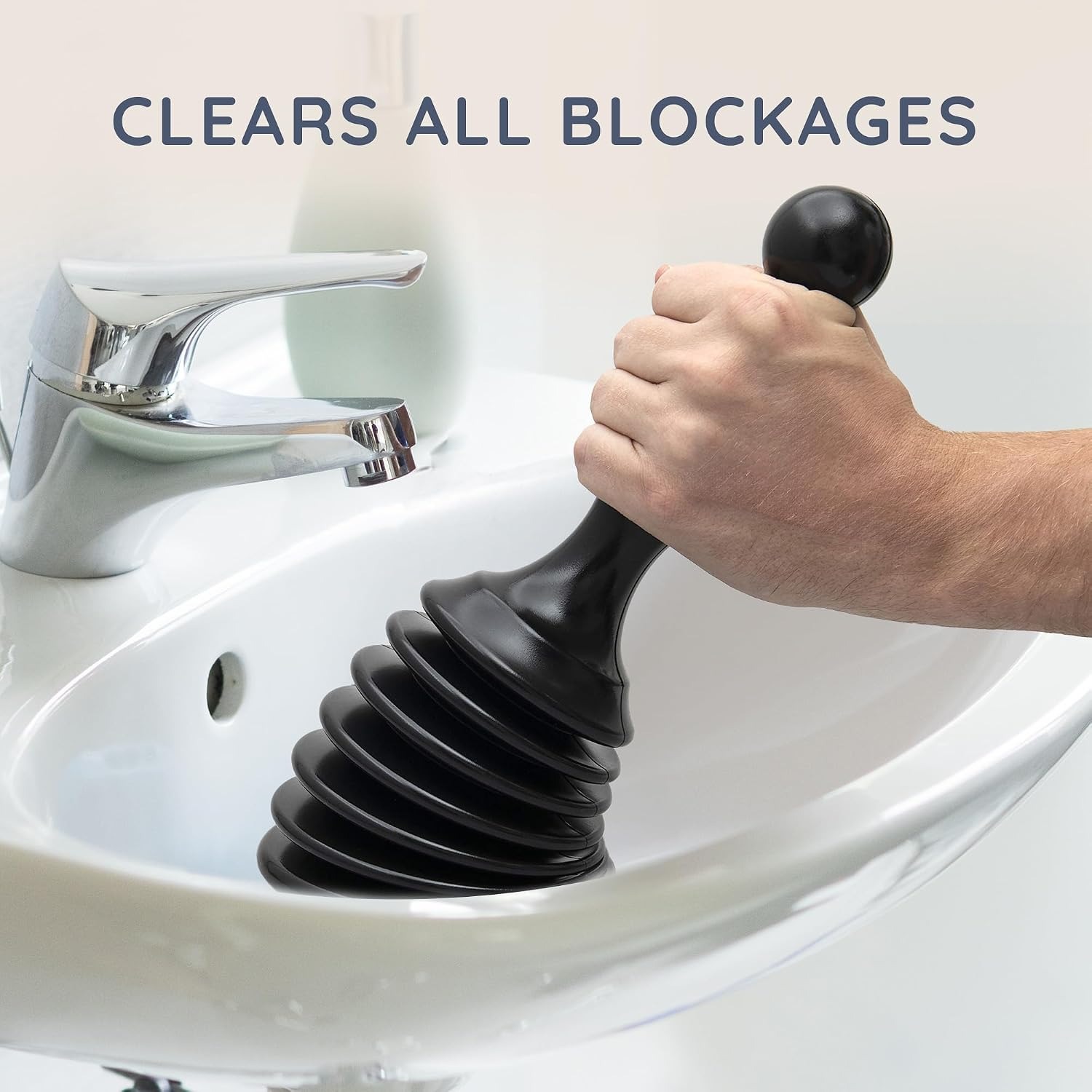
A bellows plunger does it differently. The body is a folded concertina, like an accordion. You set it over the drain with water in the sink or bowl, and that chamber fills. When you press down, the folds collapse fast and the water inside has nowhere to go but into the pipe. Water does not compress, so the force arrives at the clog more or less intact.
In practice, that means fewer pumps and less arm ache. Most ordinary blockages, hair in a shower trap, soap and toothpaste in a basin, food scraps in a kitchen sink, give up in two or three firm pushes.
What this one handles
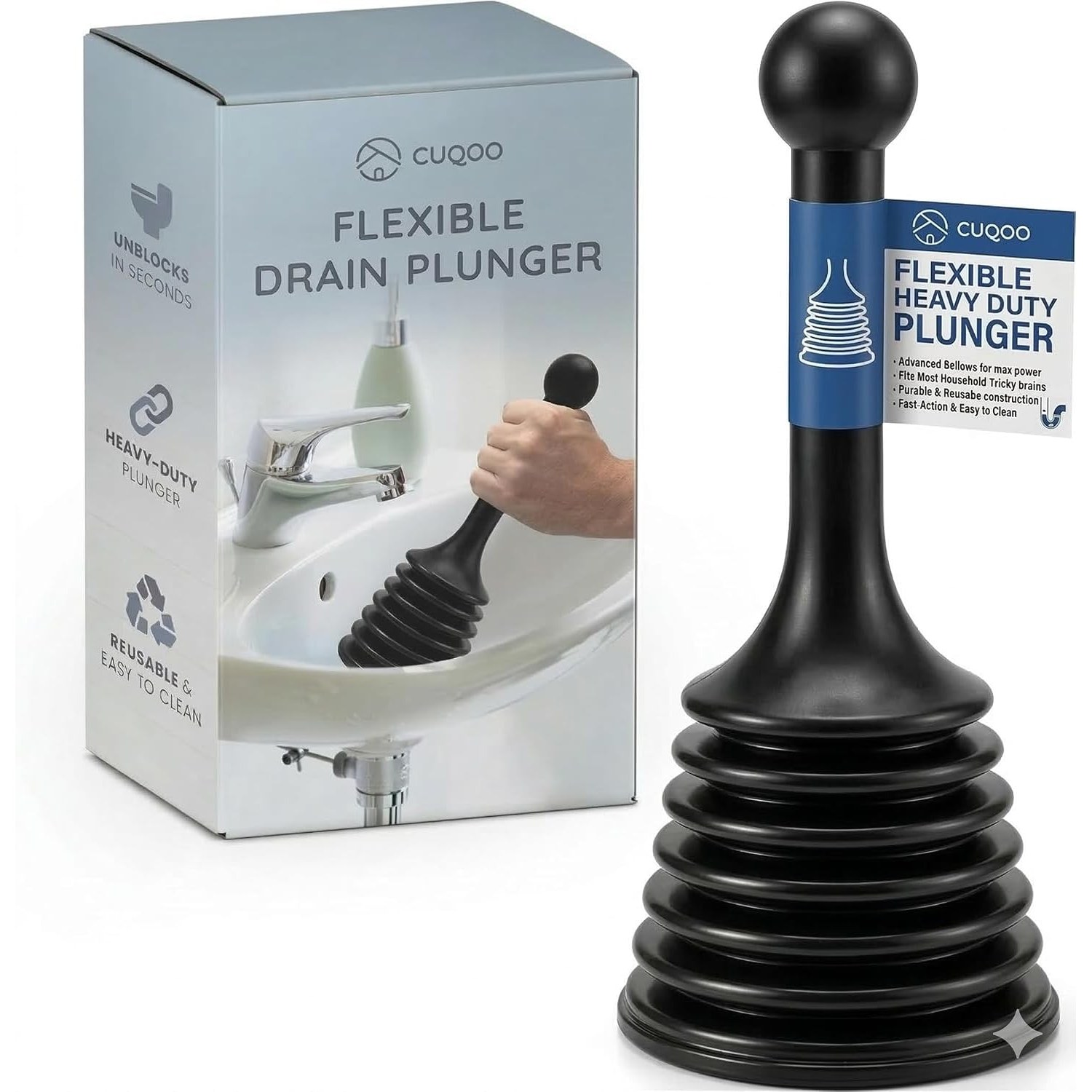
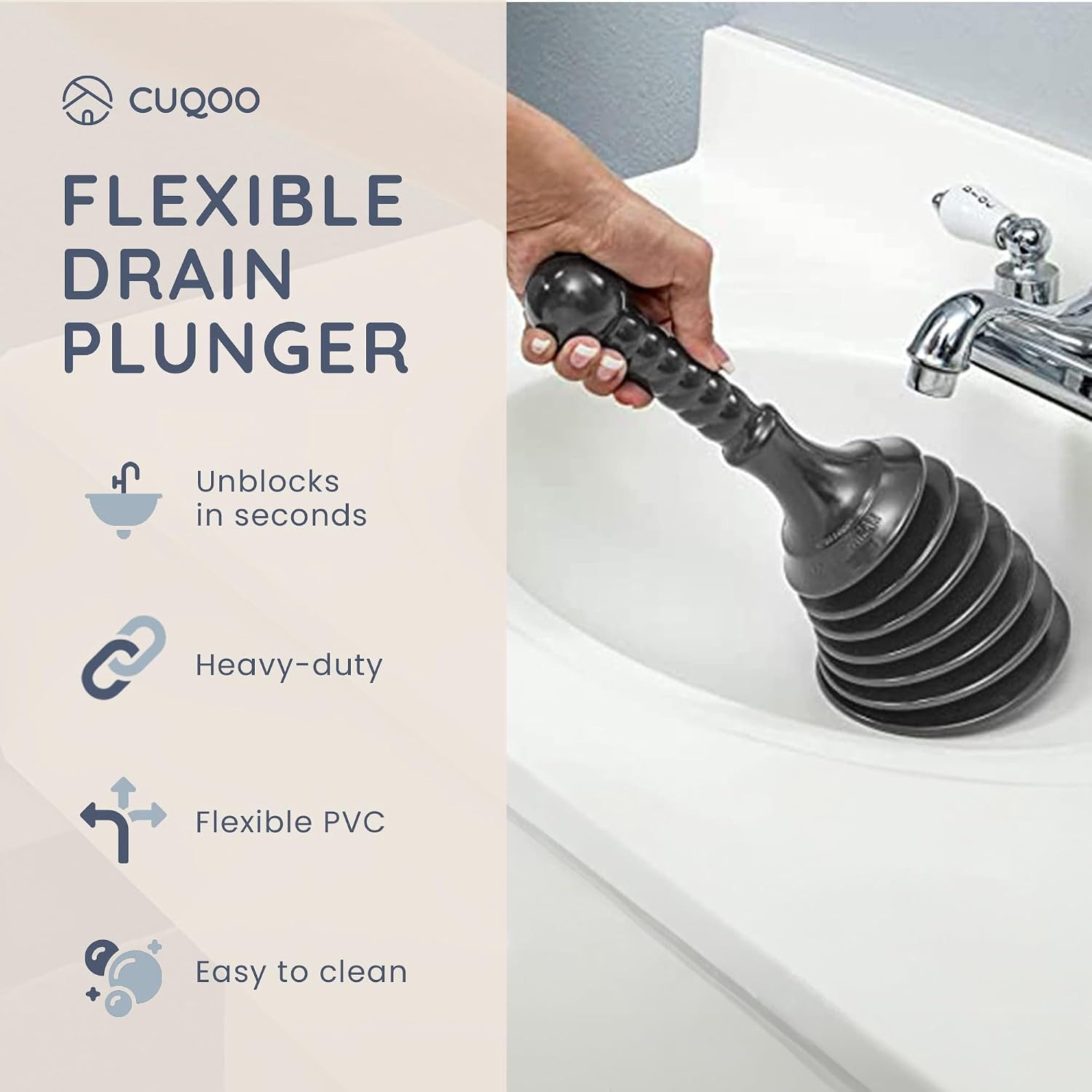
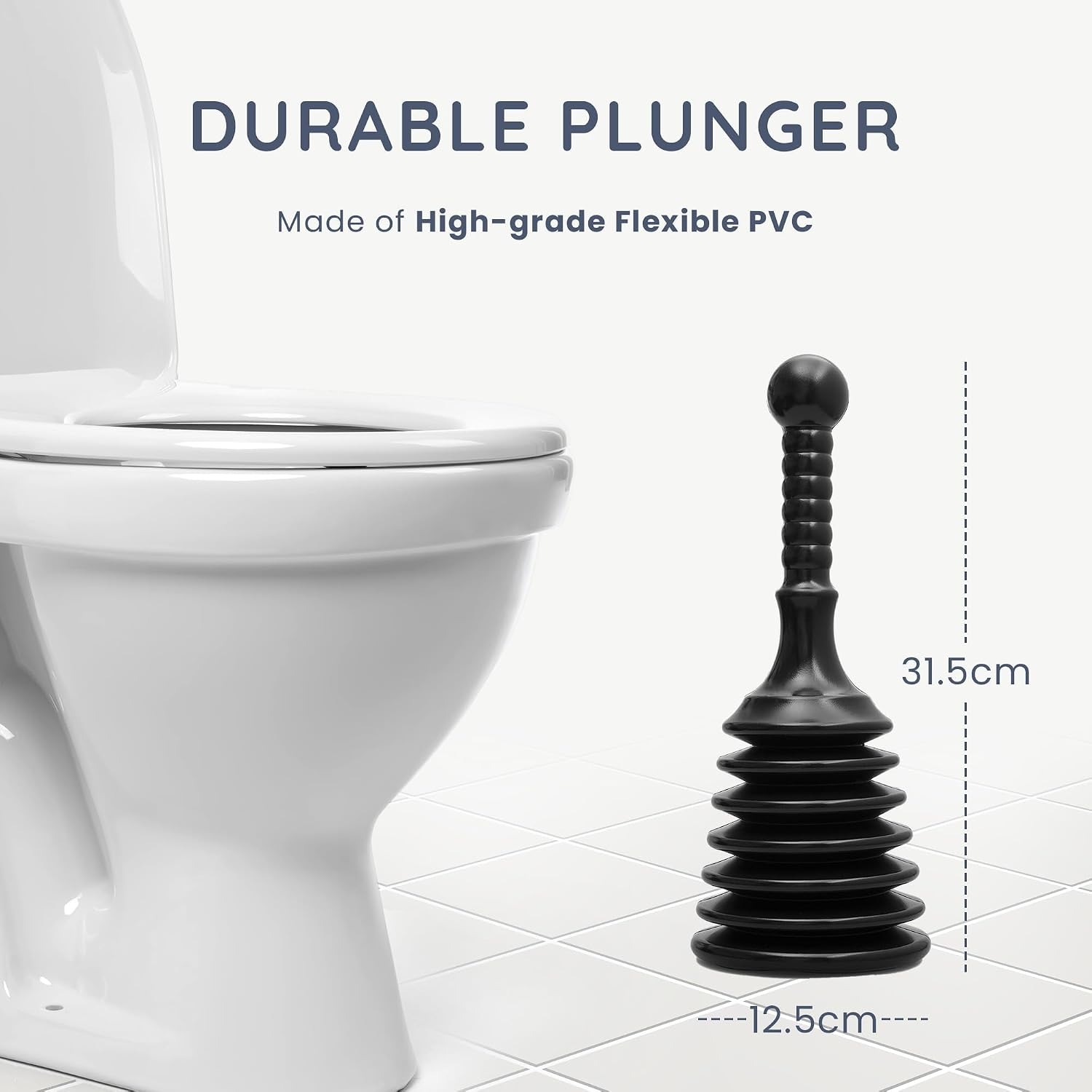
At 31 cm, this plunger has enough length that you are not crouching with your face over a toilet bowl, and the mouth is wide enough to sit over most common outlets. That covers kitchen sinks, bathroom basins, bath wastes, shower gullies and standard toilet pans.
The appeal of a single tool for all of those is simple. Households that keep one plunger in the bathroom and another somewhere for the kitchen usually end up with both in the wrong place. One good drain unblocker stored where you can reach it beats two that are buried in the storeroom.
Getting the technique right
Most plunging failures are sealing failures, not strength failures. A few things make a large difference.
First, have water present. The chamber needs water to push. If the sink is nearly dry, run the tap for a few seconds before you start. Plunging a dry drain mostly just moves air around.
Second, block the overflow. Sinks and baths have that little slot near the rim, and it connects straight back into the same waste pipe. If it is open, your pressure escapes through it instead of going toward the blockage. Press a damp cloth firmly into the slot and hold it there, or get someone else to. This single step turns a lot of "my plunger does not work" situations around.
Third, on a double-bowl kitchen sink, cover the other bowl. Otherwise you will see water surge up into it, which tells you exactly where your pressure went.
Fourth, seat the plunger square and keep it square. Tilt it and the seal breaks on one side. Press down in a controlled way, let it come back, and repeat. You are looking for firm and rhythmic, not violent. Lift it off after a few pumps and watch the water. A sudden gurgle and a drop in level means you have broken through.
If you get partial drainage, run hot water for a minute afterwards to flush the loosened debris further along. Partial clearing that is left alone tends to re-block within days.
Who it suits
Anyone who owns or rents a home with plumbing, really, but a few groups get more out of it than most.
Families with long hair in the house will reach for it regularly, because shower and basin traps collect hair faster than anything else. People who cook a lot find the kitchen sink is the repeat offender, especially where rice, pasta water or cooking fat are involved. Landlords and holiday-let owners often keep one on site so a guest or tenant can sort a slow basin themselves.
It also suits anyone who would rather not keep caustic drain cleaner in the cupboard. If there are kids or pets around, a plunger sitting under the sink is a lot less worrying than a bottle of something that burns skin.
Choosing between plungers
If you are weighing up options, there are really only a few things that matter.
Look at the mouth size against your actual outlets. A plunger that cannot seal on your shower gully is useless no matter how strong it is. Measure the opening if you are unsure, or send us a photo and we will tell you.
Look at whether it has moving parts. Handles that screw on, sponges inside, or rubber flaps all give you something to fail. A moulded one-piece body has nothing to come loose in the middle of a job.
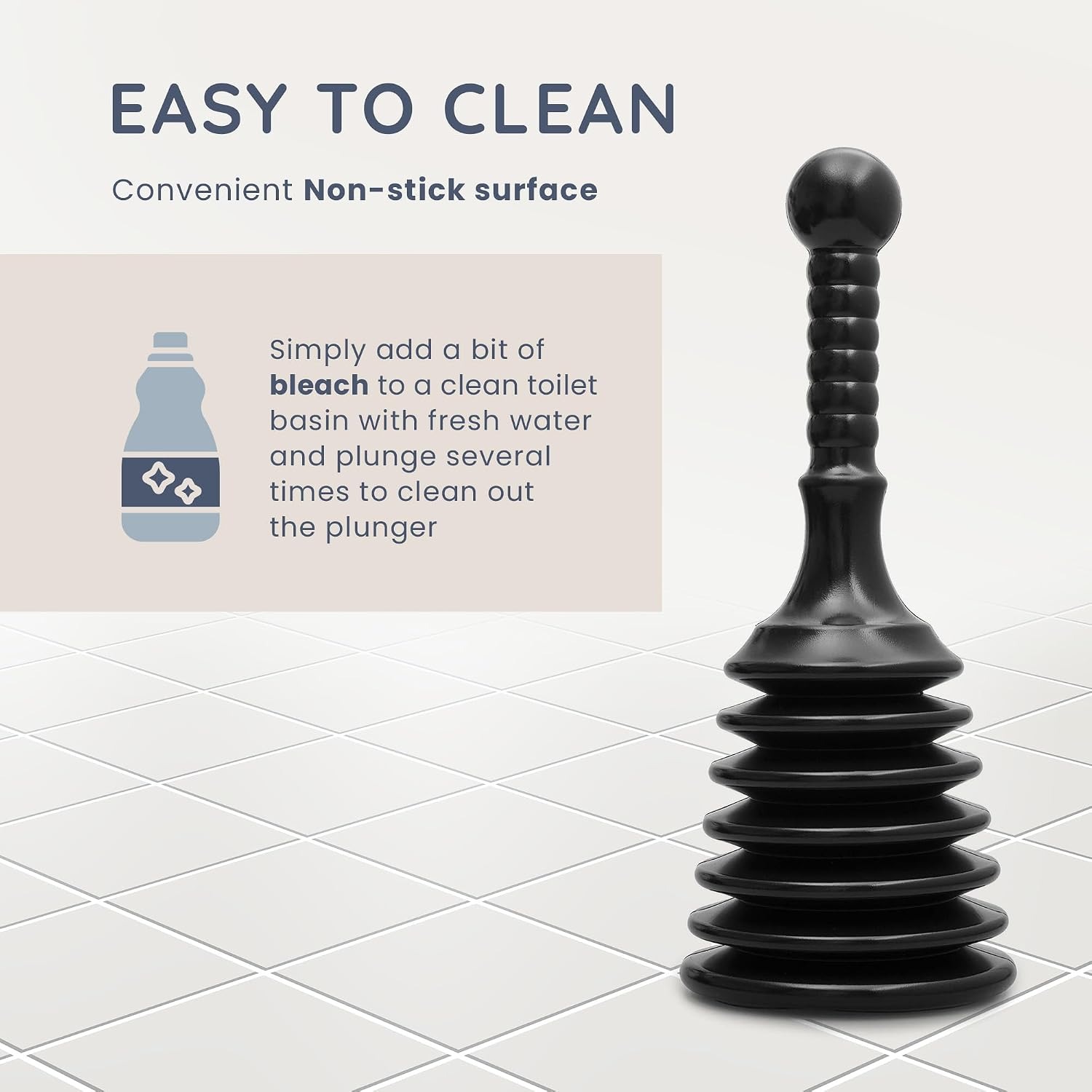
Look at how you will clean it. A plunger you dread handling is a plunger that ends up still dirty in a cupboard. This one flushes through under the tap and takes a spray of ordinary cleaner, so you never have to touch the end that went into the drain.
And look at where you will keep it. The best drain unblocker in the house is the one within arm's reach of the sink that keeps blocking.
Care and storage
After each use, run water through the chamber at the tap. Spray the inside with whatever bathroom or kitchen cleaner you normally use, leave it a moment, then rinse again. Stand it mouth down so the water drains out instead of pooling inside.
Keep it somewhere dry and away from heat. Direct sun and hot surfaces are hard on any moulded plastic over time. Beyond that, there is no maintenance. No batteries, no charging, no parts to replace.
Knowing when to stop
A plunger reaches the trap and a short run of pipe beyond it. That is where the vast majority of household blockages sit, which is why plunging works so often. But it is not a solution for everything.
If two or more fixtures back up at the same time, if waste appears in a different drain when you use one, or if the toilet and the bath are both affected, the trouble is further down the main line. Plunging harder will not reach it and may just make a mess. Same if you have plunged properly, with the overflow blocked, for a couple of minutes with no change at all. That is the point to put the plunger down and call someone with a drain machine or a camera.
Preventing the next one
Strainers over the sink and shower outlets catch most of what causes trouble, and they cost very little. Scrape plates into the bin rather than rinsing scraps down the sink. Pour cooking fat into an old jar and bin it once it sets, because fat that goes down warm sets hard somewhere in the pipe. After washing up, let hot water run for a minute to carry grease further along. A quick plunge once a month on a drain you know is temperamental keeps it honest.
The short version
A bellows plunger 31cm uses water rather than air, which is why it clears clogs in fewer pumps than the old rubber dome. It seals over sinks, basins, baths, showers and toilets, so one tool covers the house. Block the overflow, keep water in the bowl, press square and firm, and most blockages move quickly. Rinse it, spray it, stand it mouth down, and it is ready for next time. Keep it where you can grab it, and the slow drain never gets a chance to become a stopped one.