
The complete guide
How to Choose a Linear Shower Drain, A Practical Buyer's Guide
The problem with the drain in the middle of the floor
Most older showers have a small square grate sitting roughly in the middle of the floor. It works, more or less. But it creates two problems that you notice every single day.
The first is the tiling. For water to reach a central point, the floor has to slope towards it from all four directions. That means four separate planes of tile meeting at odd angles, lots of cuts, and a surface that never looks properly flat. Tilers charge more for it because it takes longer and it is easy to get wrong.
The second is the step. To contain water around a centre drain, most showers get a raised lip or a hob at the entry. That lip is a trip hazard, it collects grime along the silicone line, and it makes the shower feel like a separate box dropped into the bathroom rather than part of the room.
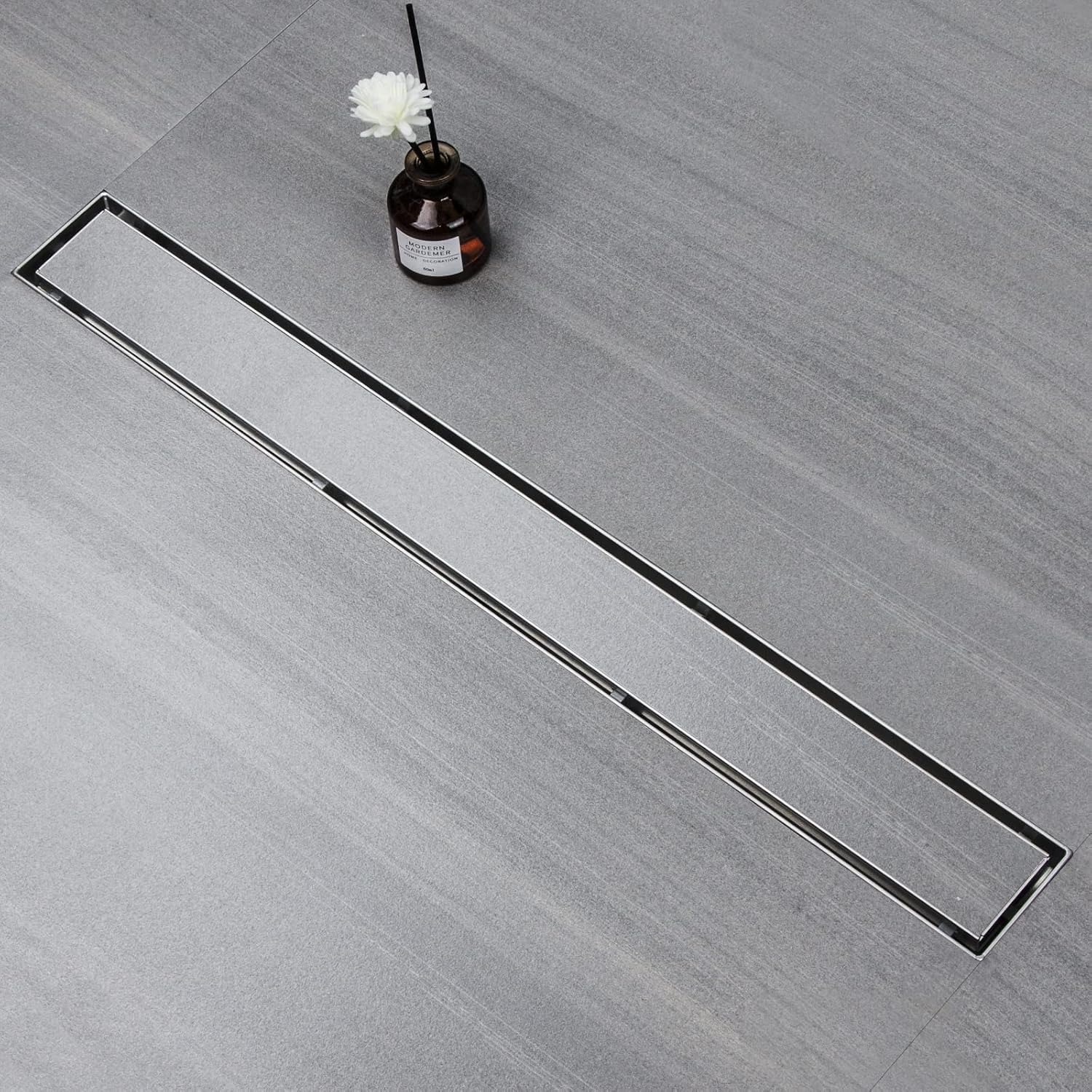
A linear shower drain solves both. By moving the drain to a long channel along one edge, the floor only needs to fall in one direction. Tiles run in clean straight lines. And with no need for a containing lip, you can walk straight in.
How a linear channel drain actually works
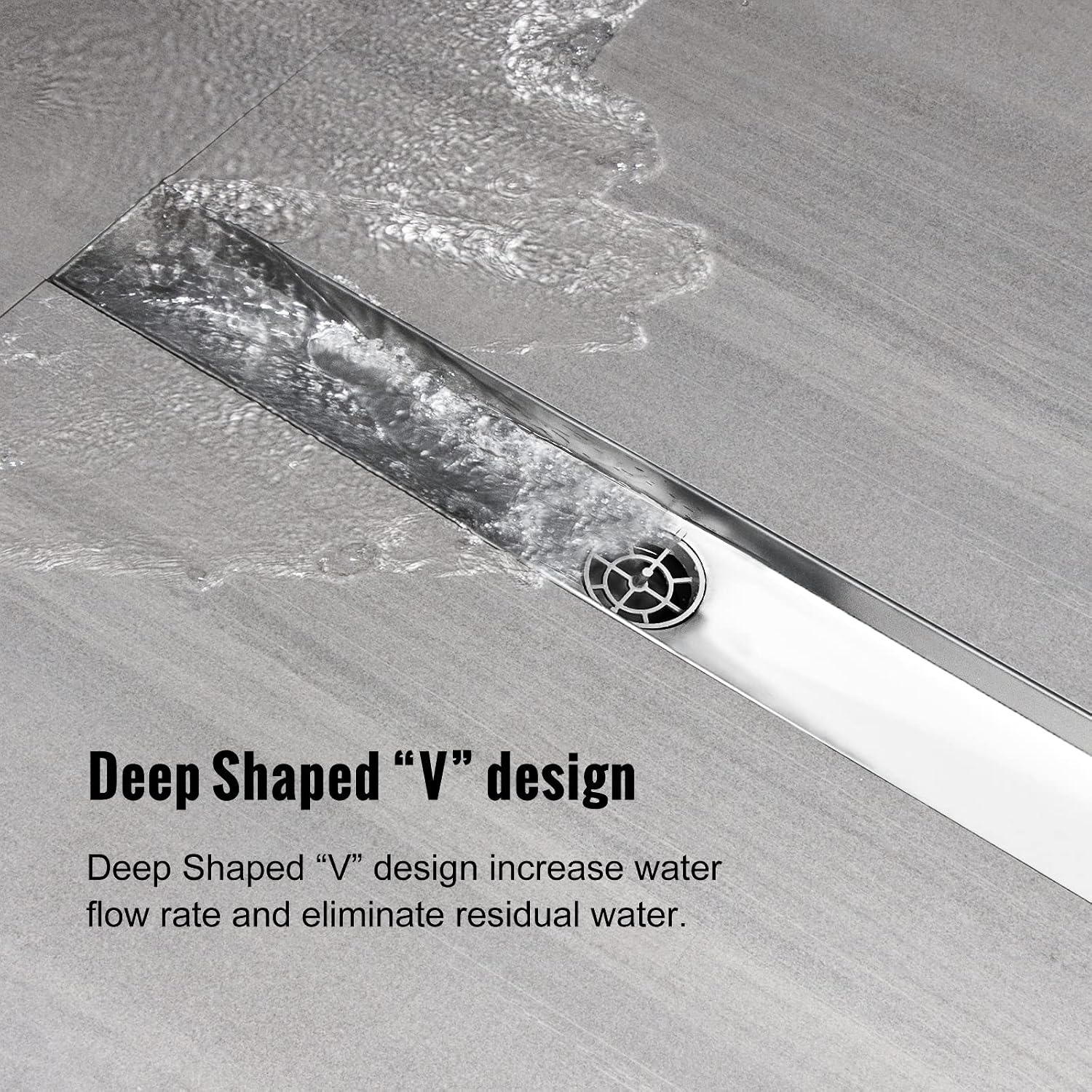
The principle is simple. Water hits the shower floor, the floor pitches gently towards one side, and the water runs into a slim channel that spans most of the shower width. Underneath that channel sits the drain body, which collects the water and sends it into the waste pipe.
Three parts do the real work inside.
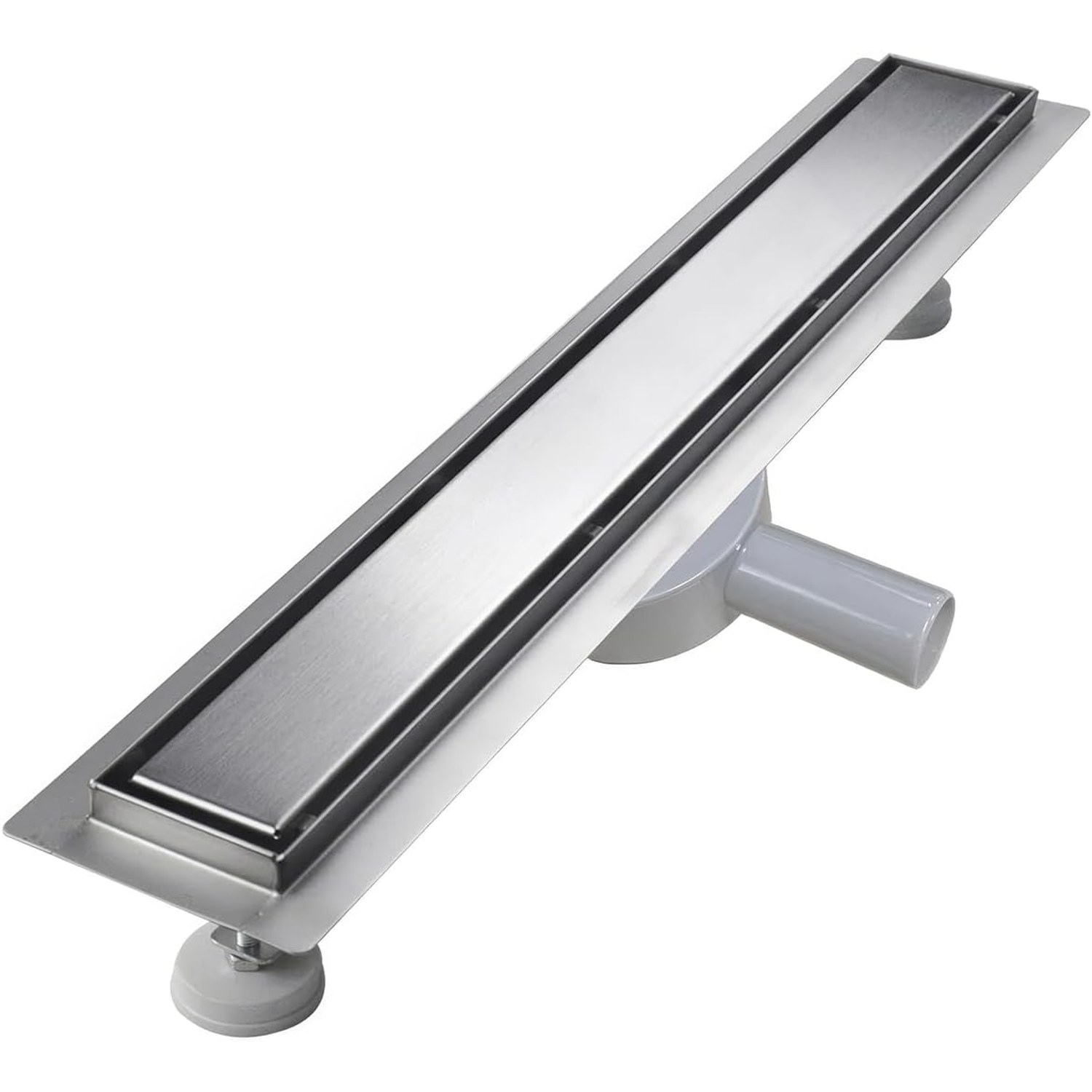
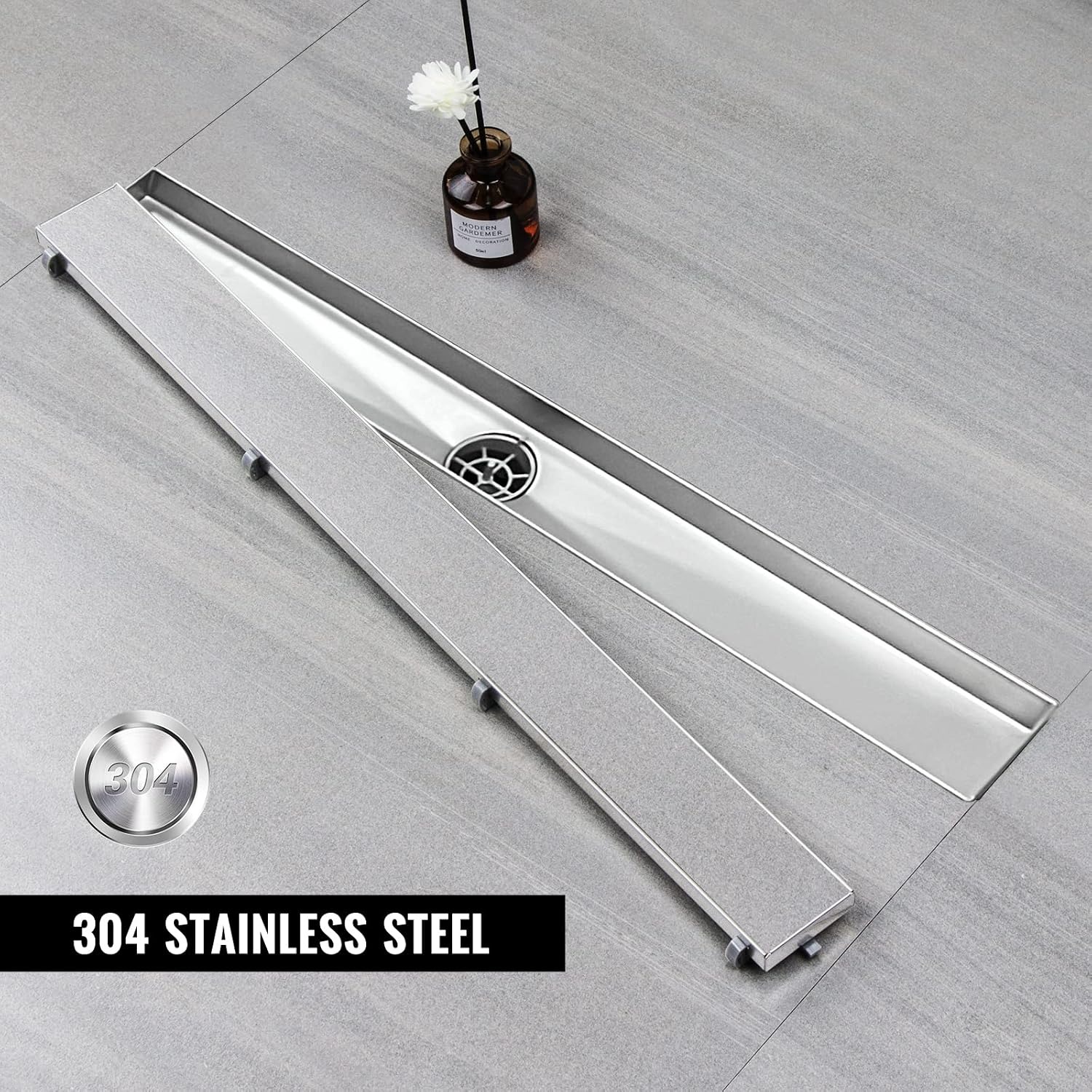
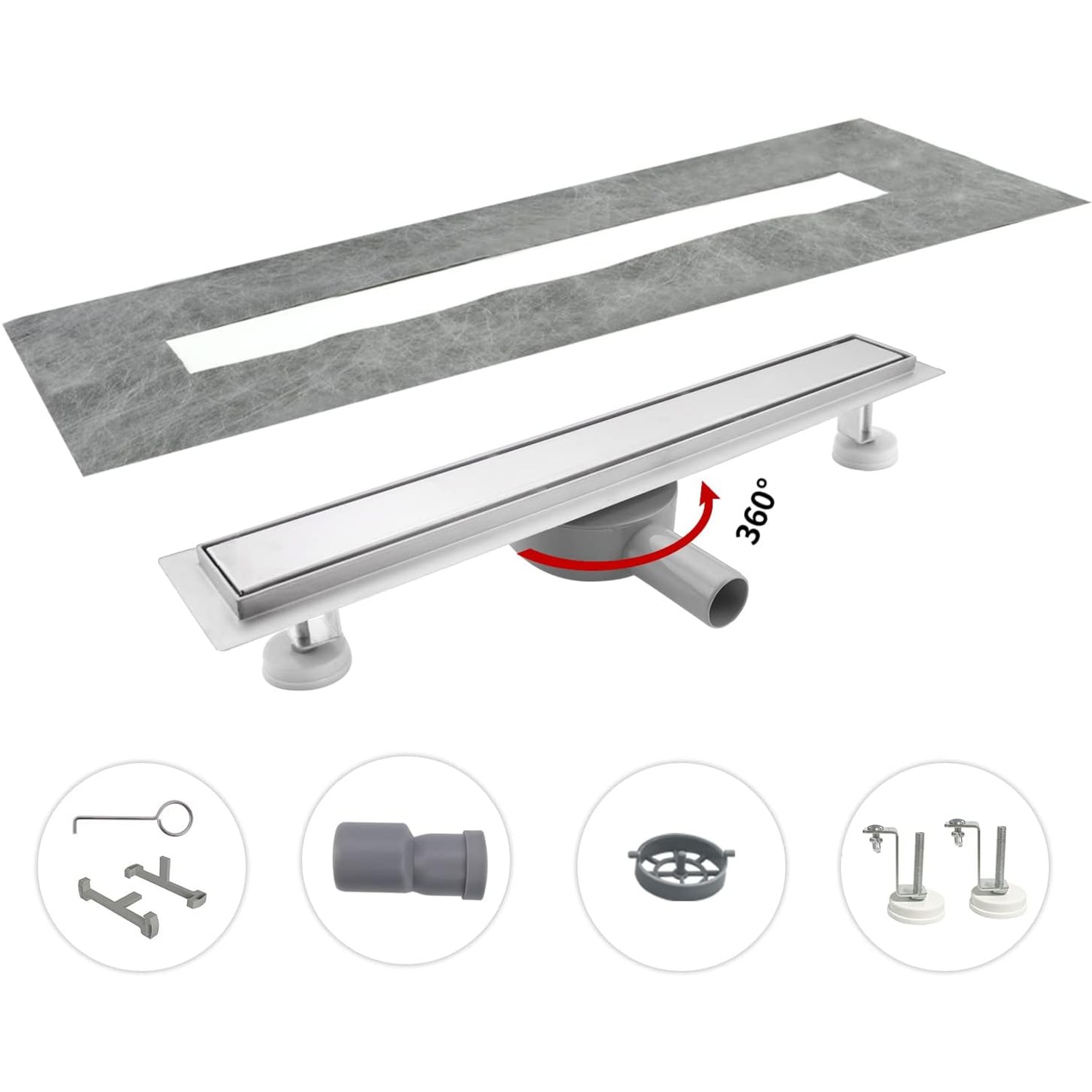
The grate or cover is the visible top. On this unit it is stainless steel with a glossy finish, and it lifts out so you can reach everything underneath.
The hair strainer sits below the cover. This is the part that catches hair, soap scum and the general mess that comes off a human being in a shower. It is the reason the pipe below stays clear. It is also the part people forget to clean, which is why showers slow down over a year or two.
The siphon core is underneath that. It holds a small reservoir of water that acts as a seal between the bathroom and the waste pipe. Without it, you would smell the drain every warm afternoon. On this model the siphon is removable, so cleaning it does not require dismantling anything.
This particular drain also uses an X-shaped flow path inside the body. The point of that geometry is simply to move water out faster, so it does not pool around your feet while you are standing in it.
Why the 360-degree siphon matters more than it sounds
Here is where a lot of renovations go sideways. The waste pipe is already in the floor. It was put there years ago, by someone who was not thinking about your new shower layout. Moving it means lifting the slab or rerouting through a ceiling below, and both of those are expensive.
An outlet that rotates through a full 360 degrees horizontally means you can turn the connection to meet the pipe where it already is. That one feature can be the difference between a straightforward swap and a major job.
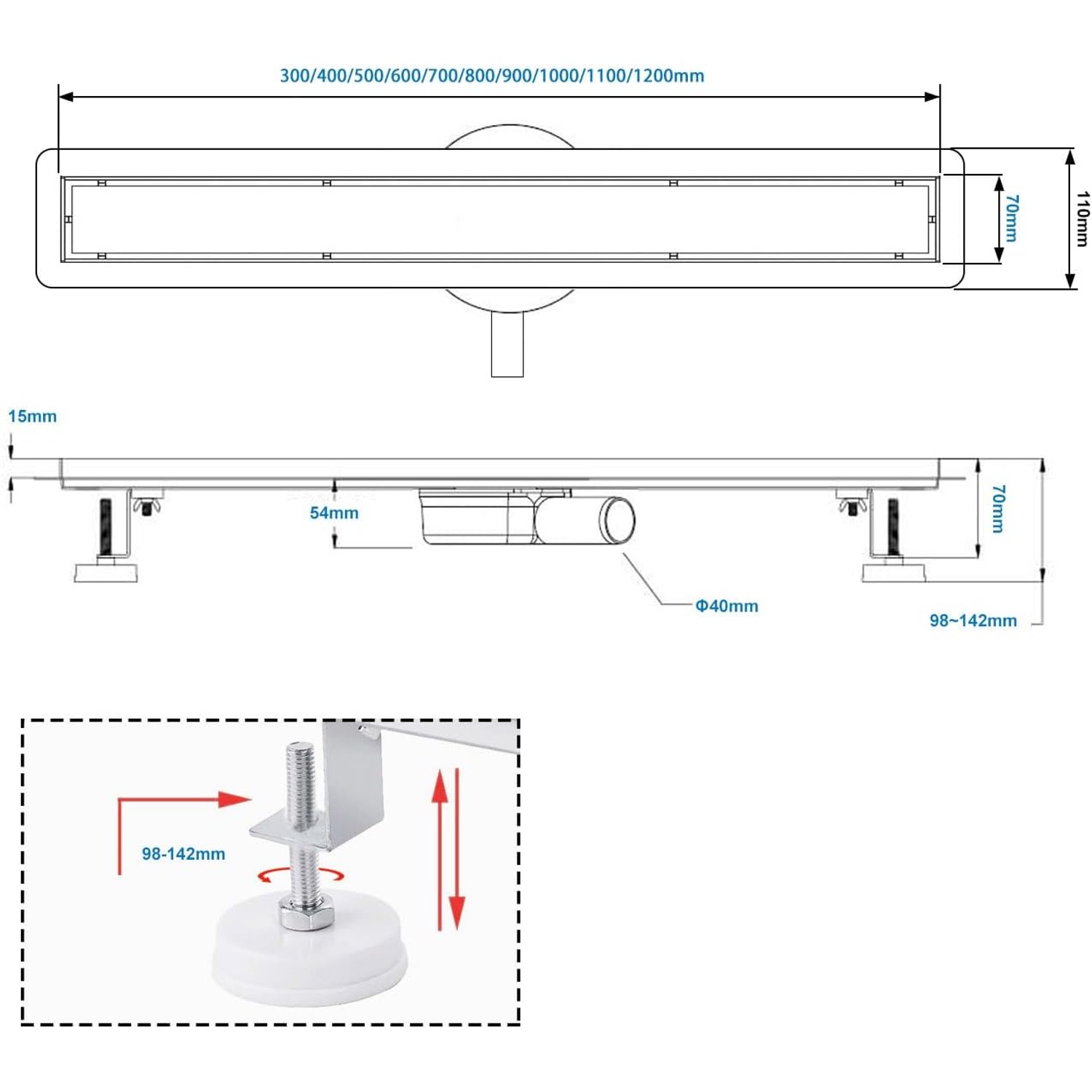
The adjustable feet work in a similar way. Floor build-ups are never exactly what the plans said. Screed thickness varies, tile thickness varies, adhesive beds vary. Being able to raise or lower the body before you tile means the top of the grate finishes dead flush with the floor instead of sitting slightly proud or slightly sunk. Flush is what makes the install look professional.
Who this suits
Anyone renovating a bathroom from scratch. This is the easiest time to fit a channel drain, because the floor is open and the waterproofing has not been done yet.
Households planning for the future. A step-free shower is far easier to use as you get older. It is also much safer when someone is recovering from surgery or an injury. Building it in now is cheaper than retrofitting it in ten years.
Accessible bathroom projects. Level access showers depend on a drain that does not require a containing step. A linear channel is the standard approach for this. Door widths, floor structure and turning circles still need checking separately with your builder.
People who hate cleaning grout. Fewer tile cuts and fewer angles means fewer grout lines collecting soap scum.
It suits you less well if you are only replacing a grate in an existing floor and have no intention of touching the tiles. Fitting a channel means opening the shower floor, and there is no way around that.
How to choose the right one
Start with length. A 60 cm channel suits a typical single shower enclosure. It does not need to span wall to wall, but it should be long enough to take the full flow from your showerhead without water backing up. If your shower is unusually wide, or you run a large rain head, consider whether a longer channel would serve you better.
Next, material and finish. Stainless steel is the standard for a reason. It handles constant water, it does not hold odours, and it cleans with a cloth. The glossy finish here sits well with modern tile work. Matte and brushed finishes hide water spots slightly better but show scratches differently, so it comes down to taste.
Then, the siphon and strainer. Both should be removable. If you cannot lift them out easily, you will not clean them, and if you do not clean them, the drain slows down. Removability is not a luxury feature on a shower drain, it is the thing that determines whether the product still works properly in three years.
Finally, installation flexibility. Adjustable height and a rotating outlet are what let a drain fit a real bathroom rather than a drawing of one.
Installation, in plain terms
Assembly is required, and an English installation manual is included. The broad sequence is this. The drain body is positioned and levelled, the feet are adjusted so the grate will finish flush with the tiles, the outlet is rotated and connected to the waste pipe, and then the waterproofing membrane is dressed into the drain flange. Tiling comes after.
That waterproofing step is the one that matters most. A floor drain is a hole in your waterproof layer, and the seal around it is the only thing stopping water getting into the structure below. If you are not completely confident with membranes, this is the job to hand to a licensed plumber or waterproofer.
One practical note during the build. Keep cement, grout dust and metal filings off the stainless surface, and wipe away any splashes straight away. Most marks that appear on stainless shower drains come from contamination during construction, not from the steel failing.
Keeping it working
The maintenance routine takes two minutes.
Lift the cover. Pull out the hair strainer. Clear it into the bin, rinse it, put it back. Wipe the cover and the channel with warm soapy water and a soft cloth, then dry it so you do not get water marks.
Once a week is a sensible rhythm for a bathroom in daily use. If there is long hair in the household, check it more often. Skip the steel wool and the heavy bleach products, since both can dull or scratch stainless over time.
If the bathroom goes unused for a long stretch, run the shower for a minute when you come back. That refills the siphon seal and stops any drain odour drifting in.
The short version
A linear shower drain gives you a flatter floor, a cleaner tiled finish and a shower you can walk straight into without stepping over a lip. This 60 cm stainless steel channel from includes a removable siphon to block odours, a hair strainer to catch the mess before it reaches the pipe, a 360-degree adjustable outlet so it can meet existing pipework, and height-adjustable feet so the grate sits flush with your tiles.
It needs assembly and a proper waterproofed installation, so plan it into a renovation rather than treating it as a quick swap. Do that, and you end up with a shower that looks better, drains faster and is safer to use for years.