
The complete guide
How To Choose And Use An Extra Long Drain Snake
The problem nobody deals with until it is bad
A drain rarely blocks overnight. It slows. Water in the shower starts sitting around your ankles for a few seconds, then ten, then the whole time you are standing there. The bathroom sink takes a minute to empty after you brush your teeth. Most people live with it for weeks, pour something down it that smells harsh, get a few days of improvement, then watch it slow again.
What is happening down there is simple. Hair sheds, soap leaves a film, and the two combine into a soft, fibrous mat that catches everything that follows. In kitchens, grease plays the role soap plays in the bathroom. The mat usually parks itself in the trap, the U-shaped or P-shaped bend just below the drain, because that is where the flow changes direction and anything heavy gets a chance to settle.
Here is why chemicals often disappoint. They attack what they touch. A drain cleaner poured into standing water gets diluted, drifts down, and eats at the outside of the clog. The core, the tightly woven part, often survives. So you get drainage back for a while and then the same slowdown returns. Removing the mass is a different job, and it needs a different tool.
How a drain snake actually works
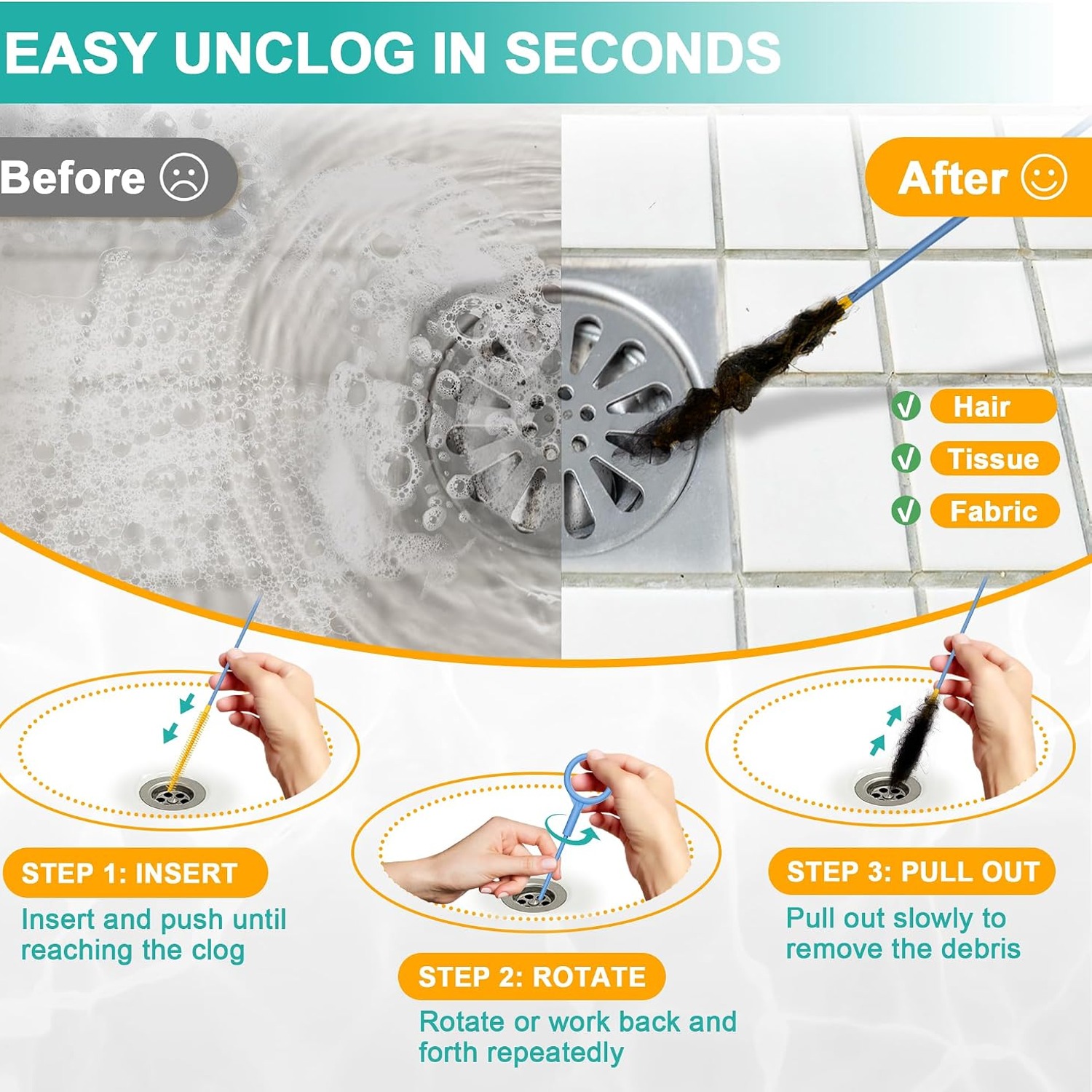
The idea is old and it is good. You feed a long, flexible cable into the drain until it reaches the blockage. Then you rotate it so the tip bites into the mass. Then you pull it back slowly, and the clog comes with it.
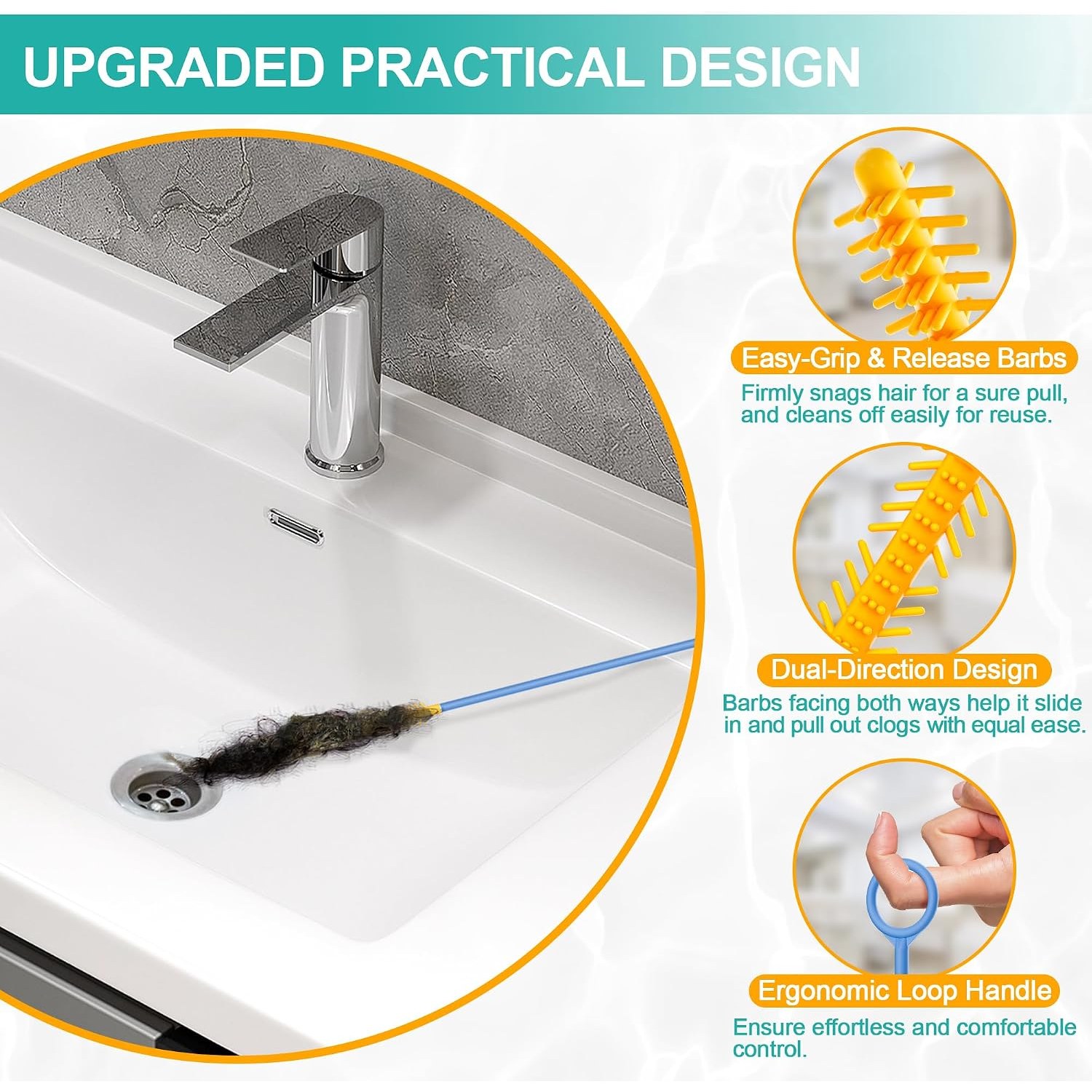
The tip is what does the work. On this tool it is a hook studded with small barbs. Hair has a structure barbs love. Each turn of the handle winds strands around the tip in the same way a fork winds spaghetti. The hook adds grip for larger lumps of softened soap and gunk that barbs on their own would slide over.
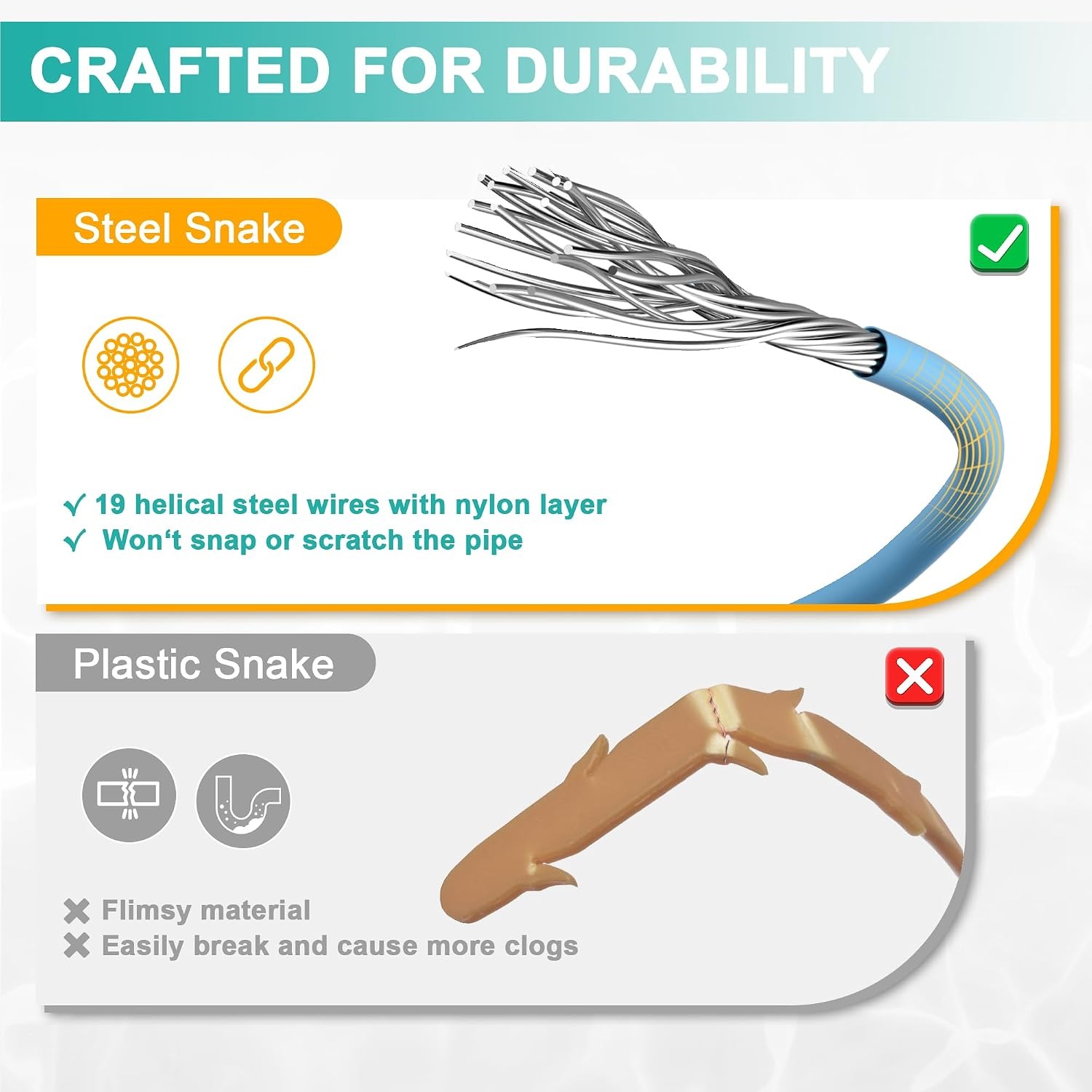
The cable behind the tip matters just as much. A plastic strip with notches on it, the kind sold cheaply at hardware checkouts, bends in all the wrong ways. It folds when it meets resistance and it often snaps at the handle. This one is built around a steel wire core with a nylon layer over the top. The steel gives it the stiffness to keep advancing when it meets the mat. The nylon keeps the outside smooth so it slides around bends instead of catching, and it is easier on the pipe wall.
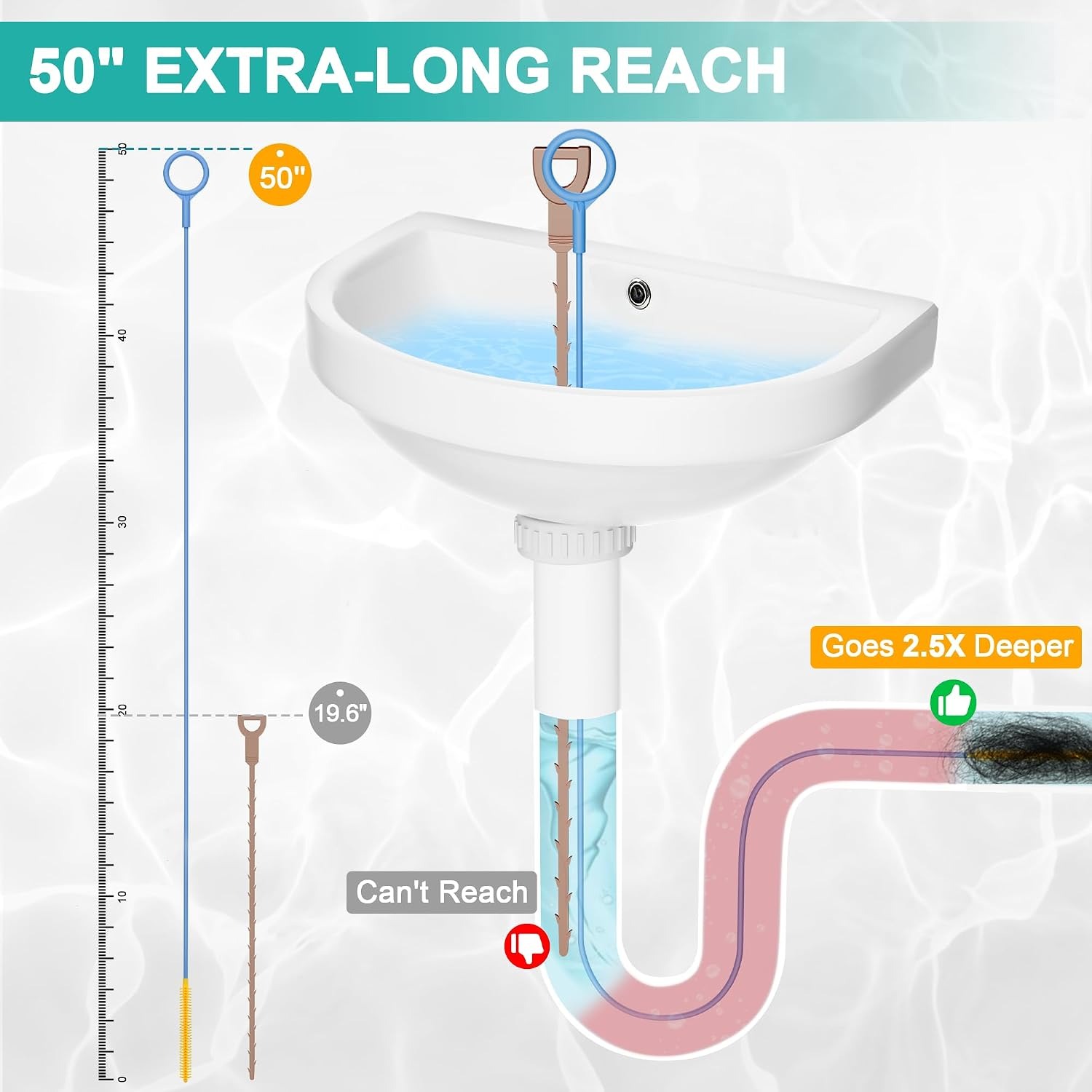
Length is the other half of the equation. At 127cm, this snake goes past the point where short tools give up. In a shower, the clog is often sitting in or just past the trap, further than most people assume. A flexible drain snake for sinks needs the same reach, because the trap under a vanity cabinet sits lower than the drain opening.
Who this suits
If anyone in your household has long hair, you are the target buyer. Hair is responsible for the overwhelming majority of bathroom blockages, and this is the category of tool built for it.
It also suits people who would rather not keep caustic liquid under the sink.
Renters do well with it. Nothing is modified, nothing is installed, and it goes in a drawer. Landlords and property managers get the same benefit across multiple units, which is where a drain snake 3 pack earns its keep.
And it suits anyone who has paid for a callout once and did not enjoy the invoice. Plenty of the jobs a plumber attends in a residential bathroom are a hair mat in the trap. That is a five minute fix with the right tool in your hand.
How to choose between drain tools
There are three broad options for a household clog and they are not interchangeable.
A plunger moves water. It is good at shifting a loose obstruction that is sitting free in the pipe, and it is almost useless against a hair mat that is clinging to the pipe wall. The pressure pushes against the clog and the water finds the gaps.
A chemical cleaner dissolves. It handles light grease and fine build-up reasonably well. Against matted hair it is slow and partial, and repeated use is not kind to older pipework or to the drains downstream.
A snake extracts. It is the only one of the three that brings the problem out of the pipe and puts it in your bin. That is why it works when the others stop working, and why it keeps working on the same drain month after month.
When you are comparing snakes, look at four things. Length, because reach decides whether you touch the clog at all. Core construction, because plastic fails and steel does not. Tip design, because a barbed hook grabs and a smooth tip just pokes. And whether it is reusable, since a hair clog remover tool you rinse and keep beats one you throw away.
Using it without making a mess
Set up first. Put a bucket or an old towel under the area if you are working in a vanity cabinet. Wear gloves. What comes out is unpleasant and you will want to drop it straight into a bag.
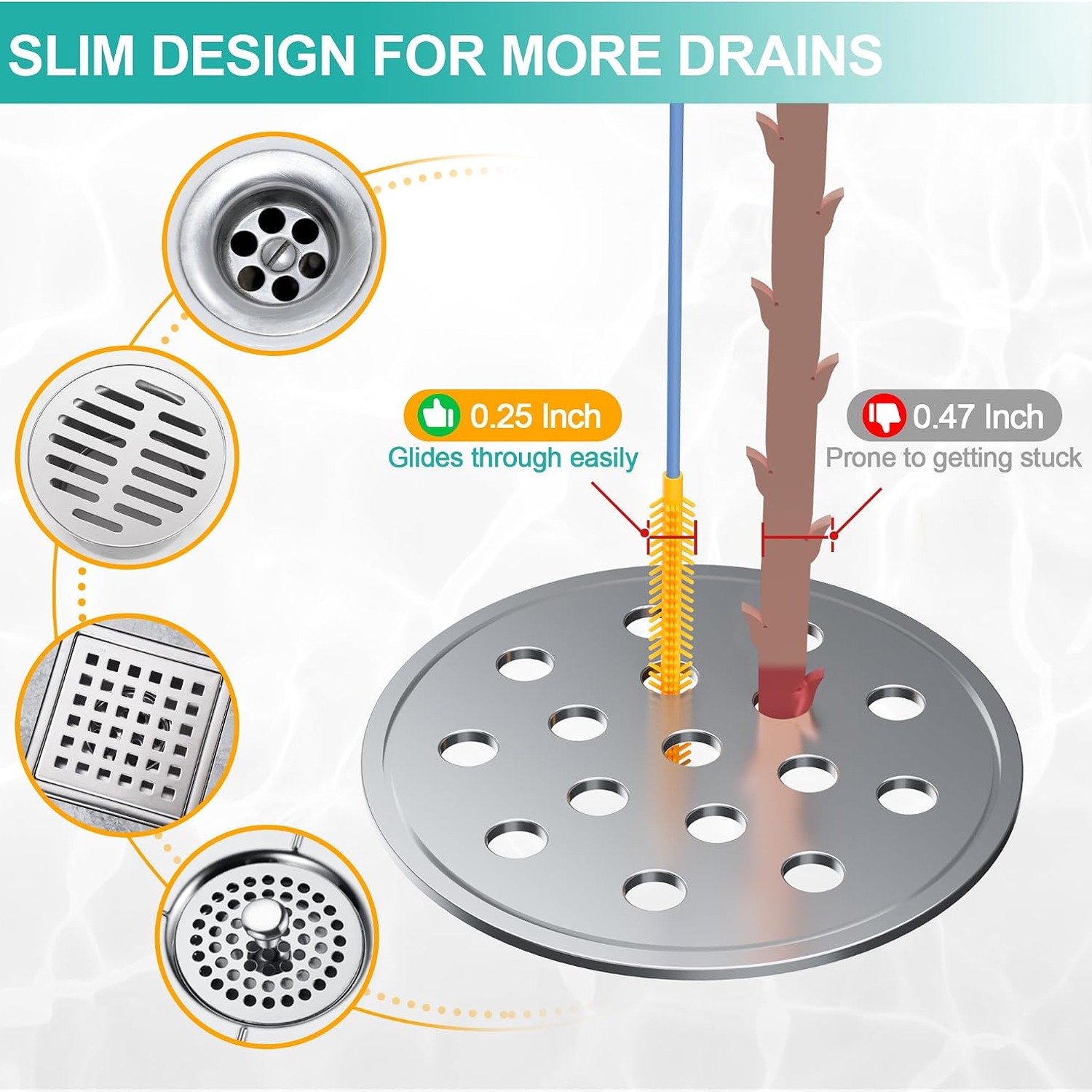
Lift the strainer or cover if you can. Many shower strainers have gaps wide enough for a slim drain auger for narrow pipes to pass through, but you get a better angle with the cover off.
Feed the snake in steadily. When it slows or stops, you have probably met a bend rather than the clog, so back off a little, turn it, and try again at a slightly different angle. Never force it hard. Patience beats pressure every time with a cable tool.
When you feel soft, springy resistance, that is usually the clog. Rotate several full turns to let the barbs bite, then withdraw slowly. Pulling fast tends to strip the mass off the tip and leave it in the pipe.
Pull the debris off into your bag, then run hot water down the drain for a minute to flush the fine stuff that broke loose. If the drain is still slow, go back in once more. Second passes often bring out a surprising amount.
Caring for the tool
This part takes thirty seconds and doubles the life of the snake. Strip the tip clean. Rinse the whole length under running water, with a little dish soap if it has been in a kitchen drain. Wipe it down and let it dry before it goes away.
Store it coiled loosely rather than folded. Any cable tool fails at the point where it gets bent sharply over and over, so avoid creating a permanent kink. A hook on the inside of a cupboard door works well, or a dry drawer in the laundry.
Keep the three snakes separated rather than bundled. The whole point of a three pack is that one lives where you need it. Under the main bathroom sink, in the shower cupboard, and in the kitchen is a sensible split for most homes.
A simple maintenance habit
Do not wait for standing water. Run the snake through your busiest shower drain every month or two. It takes a minute, it pulls out a small amount instead of a large amount, and the drain never actually blocks. Households that do this stop thinking about drains altogether, which is the real result you are buying.
If you have a bathroom sink that is slower than the others, that one gets the same treatment on the same schedule. Small, regular attention beats one big unpleasant job.
The short version
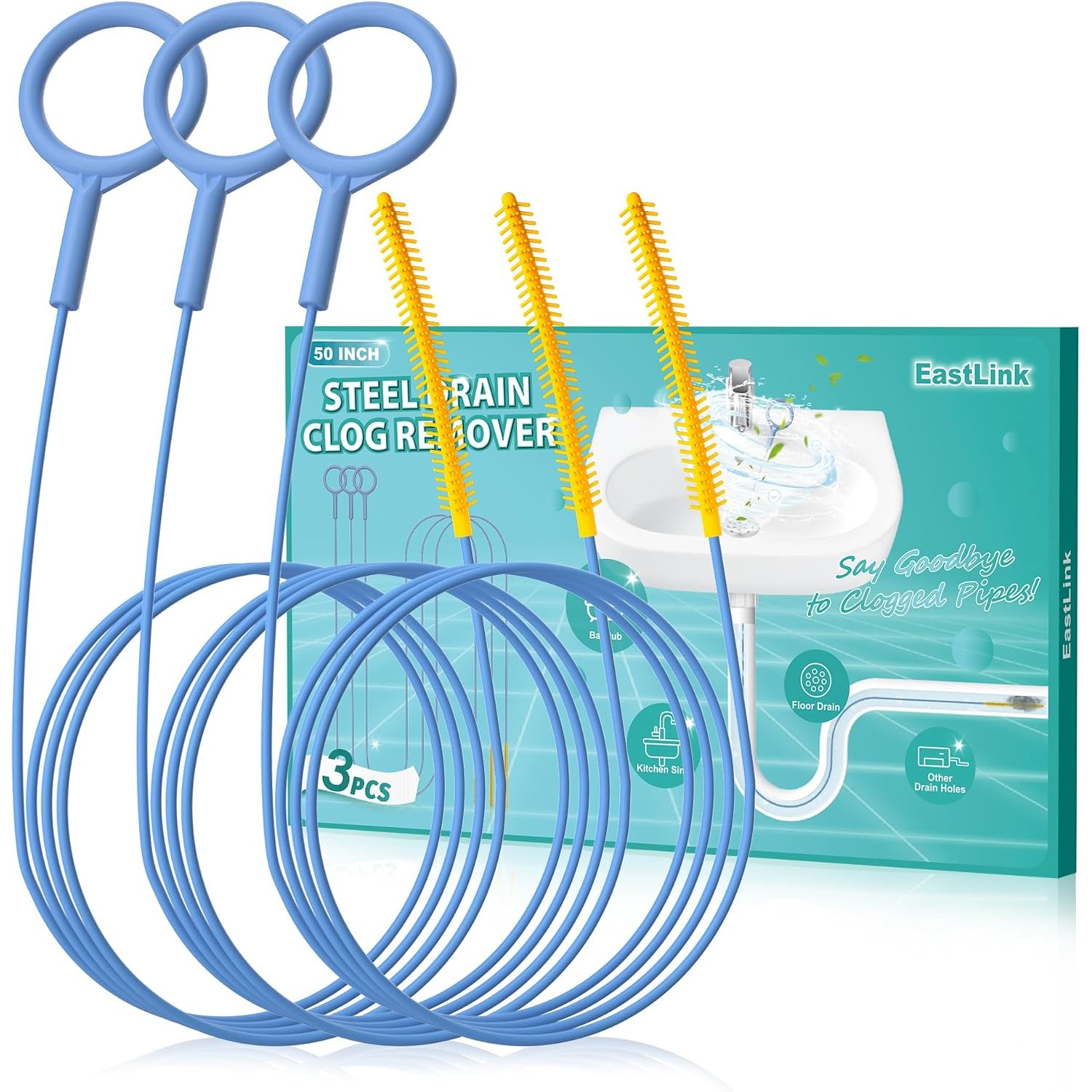
A slow drain is almost always hair and soap sitting in the trap, and the only reliable fix is to pull it out. This pack gives you three 127cm snakes with a steel core, a smooth nylon outer layer, and a barbed hook tip that grips hair on the way back. There are no batteries, no chemicals and nothing to install. Push, turn, pull, bin the mess, rinse the tool and put it away.
Keep one in each wet area, use them before the problem gets bad, and you will deal with blocked drains the way you deal with a full bin. Quickly, and without thinking much about it.