
The complete guide
How to Choose a Linear Shower Drain That Actually Works
The puddle that never dries
Most people only think about a shower drain once something goes wrong. The water sits in one corner for an hour after the shower. The grate stains. There is a faint smell in the bathroom that you can never quite place. By then the floor is tiled and the easy fix has passed.
The root of it is usually geometry. A traditional round floor trap sits in the middle of the shower, and the tiler has to build four separate slopes that all meet at that one point. On small mosaic tiles that is manageable. On the large format tiles most people want now, it is close to impossible without cutting the tile into wedges or accepting flat spots where water pools. So you end up with a damp patch, and damp patches grow things.
A linear drain solves the problem by changing the shape. Instead of a point, you get a line. The floor only needs to fall in one direction, which means full tiles can run straight across the shower with a single consistent slope. Water heads one way, reaches the channel, and leaves.
How this drain works
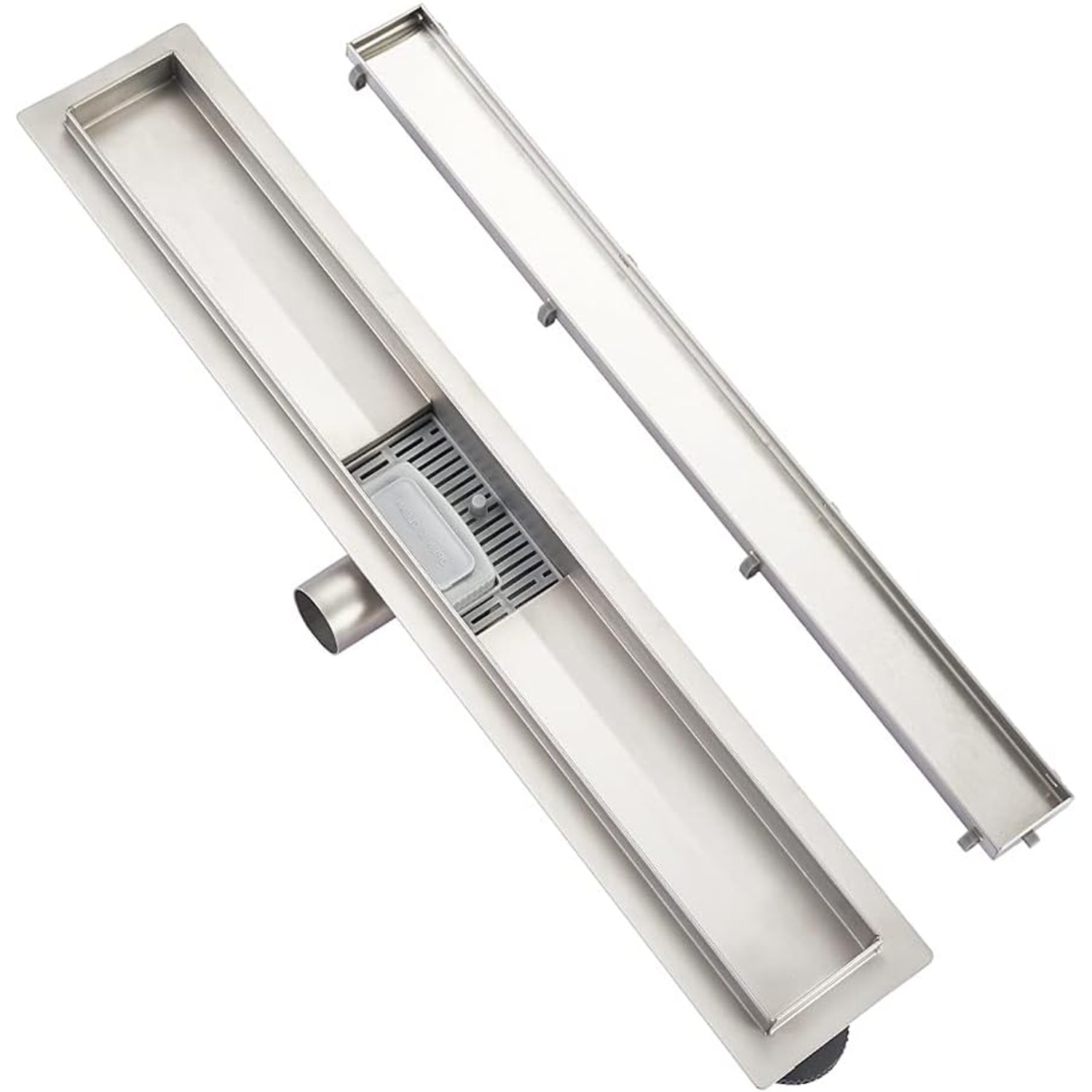
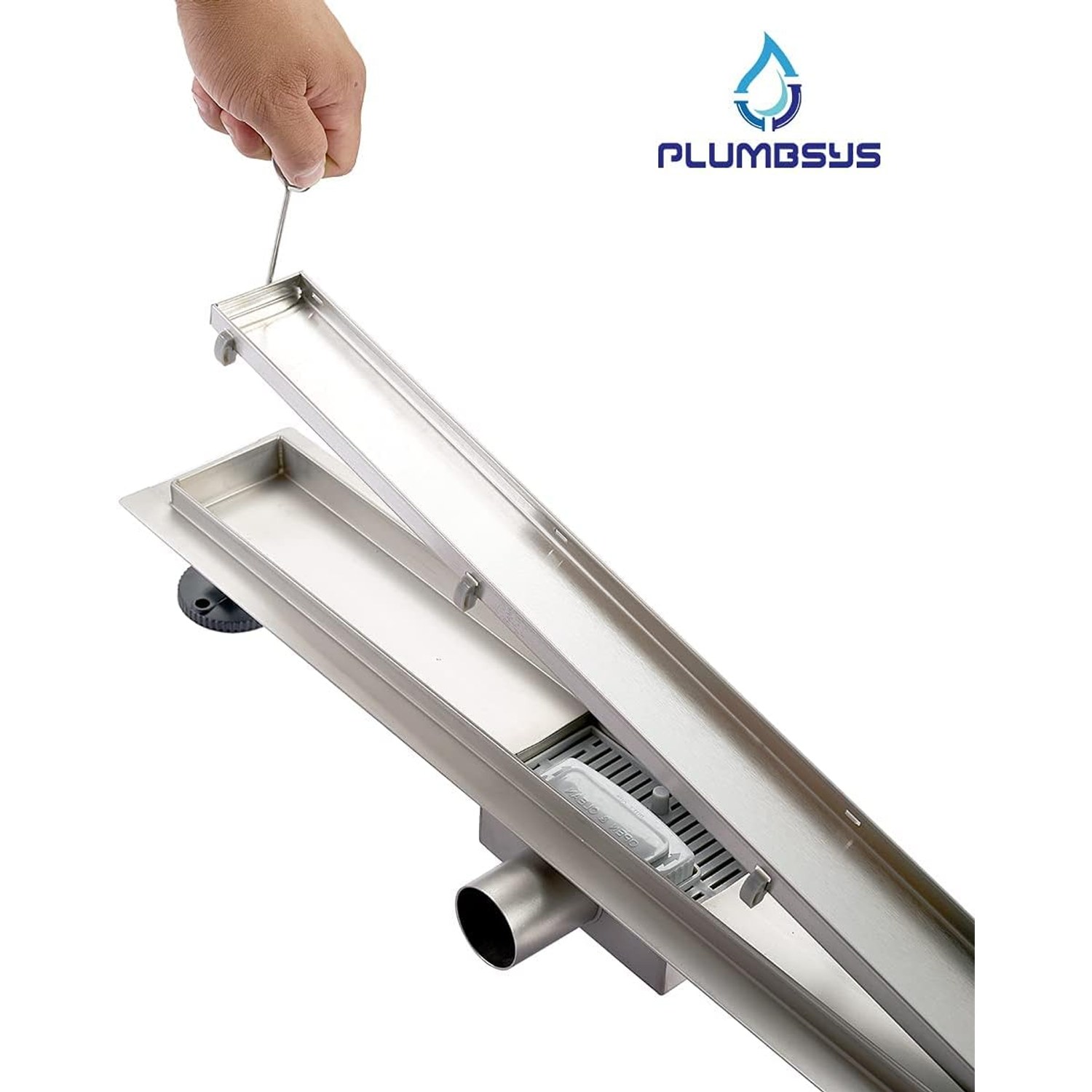
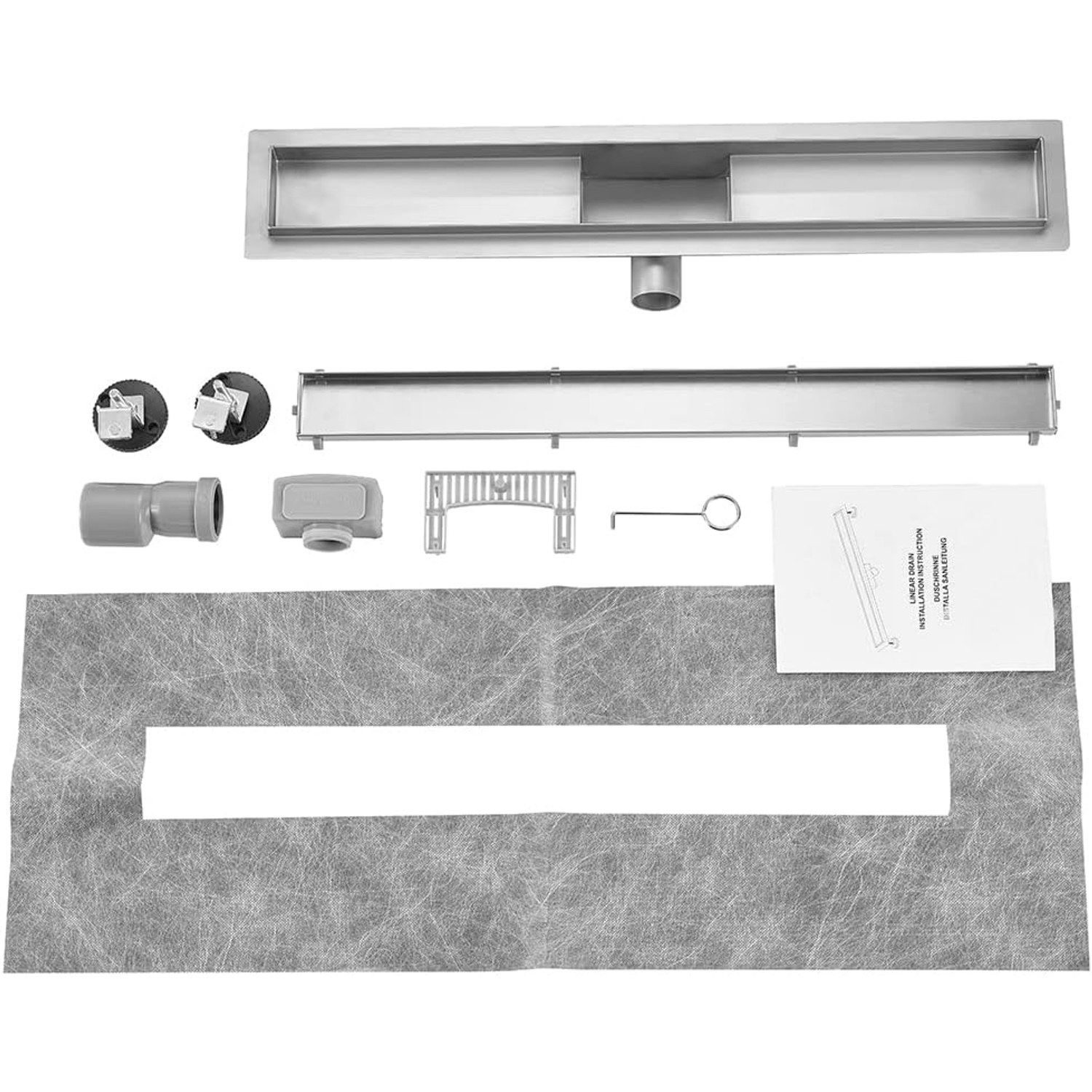
The unit is a 50cm channel built from 304 stainless steel. Three parts stack inside the body. At the bottom is the siphon, which holds a seal of water that blocks odour from the waste pipe. Above that sits the hair catcher, a small basket that traps the hair and soap residue that would otherwise head into the pipe and build a blockage. On top is the plate you actually see.
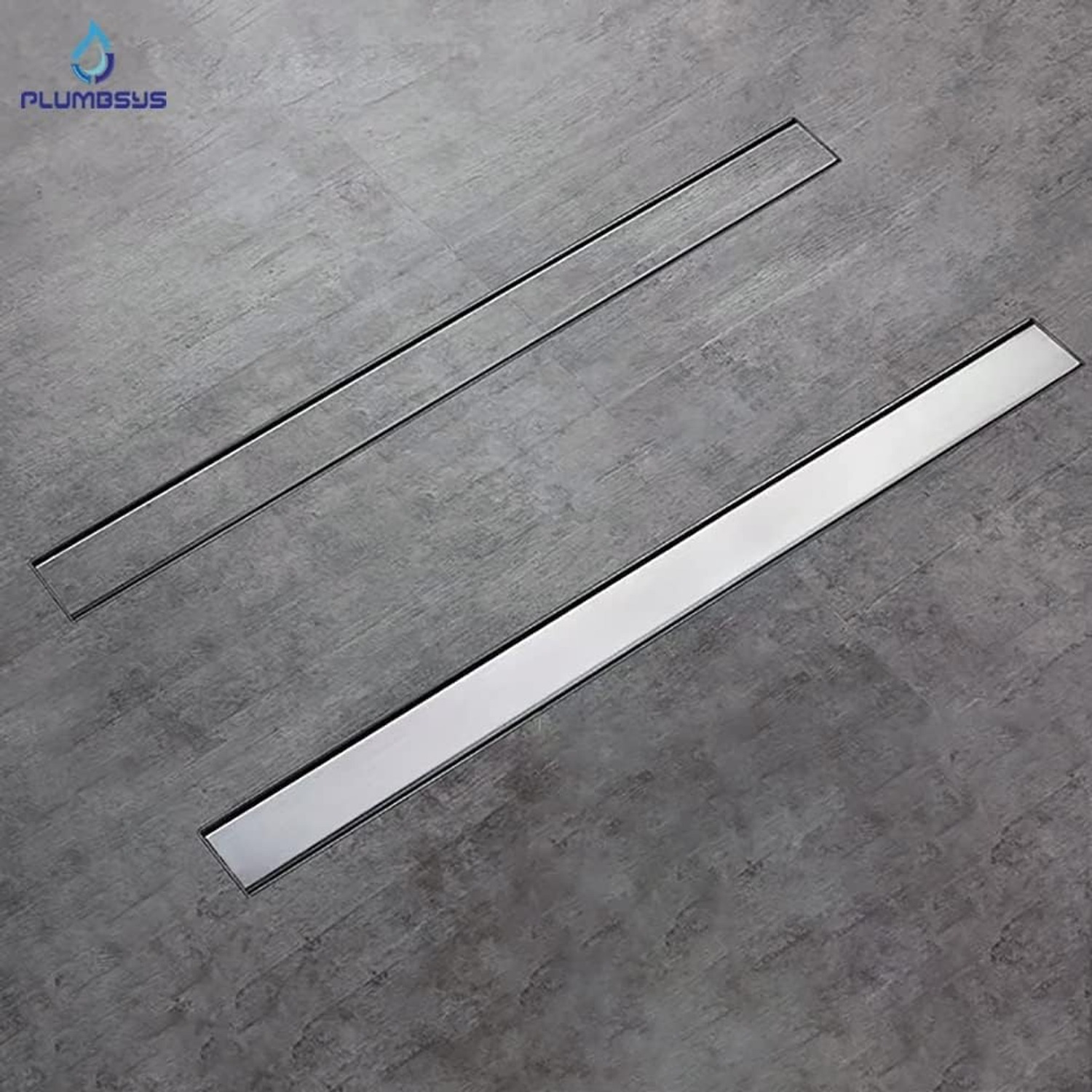
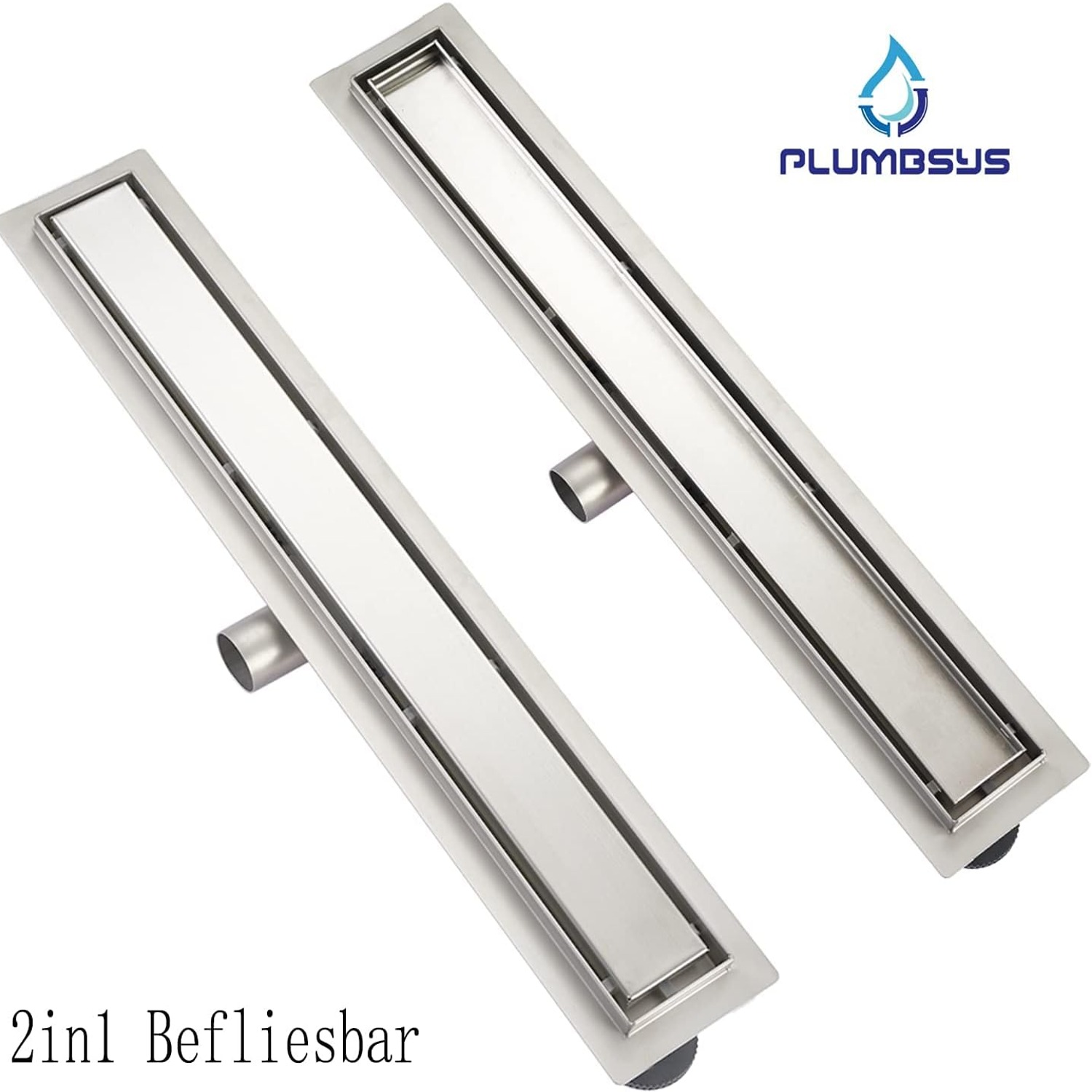
That plate is the "two sided" part. Flip it one way and you get an open stainless grate, a clean silver line across the floor. Flip it the other way and you get a shallow tray that takes a cut piece of your own floor tile, so the drain nearly vanishes into the tiling. Water enters through the slots around the edge of the tray. You can decide which look you prefer on the day, once the tiles are down and you can see how the room reads.
The listed drainage rate is up to 36 litres per minute. For context, an ordinary domestic shower head is well under that, so the channel is not the bottleneck in a normal bathroom. If you are running a large rain head alongside body jets, do the arithmetic on your total flow and check it against your waste pipe size as well.
Build quality and why it matters
A floor drain gets stood on, wet, cleaned, and then ignored for a decade. Thin material and clipped joints do not age well in that job. This unit uses 304 stainless steel with solid welded joints and a stated load rating of 300kg, which is why it feels different underfoot to a budget plastic channel. Stainless also keeps its colour. Plastic grates tend to yellow where soap and hot water hit them day after day.
The second practical detail is the pair of adjustable support feet, which run from 77mm to 121mm. On paper that sounds minor. On site it is the difference between a drain that finishes dead level with the tile and one that sits a couple of millimetres proud, catching toes and collecting grime at the edge. The plumber sets the legs, locks them, and the channel stays put while the screed goes in.
Who it suits
This is a renovation part. It belongs in a bathroom that is being rebuilt from the slab or the subfloor up, because the body has to be set before the waterproof membrane and the tiles go on. If your bathroom is already finished and you are just unhappy with the grate, a linear channel is a bigger job than you probably want.
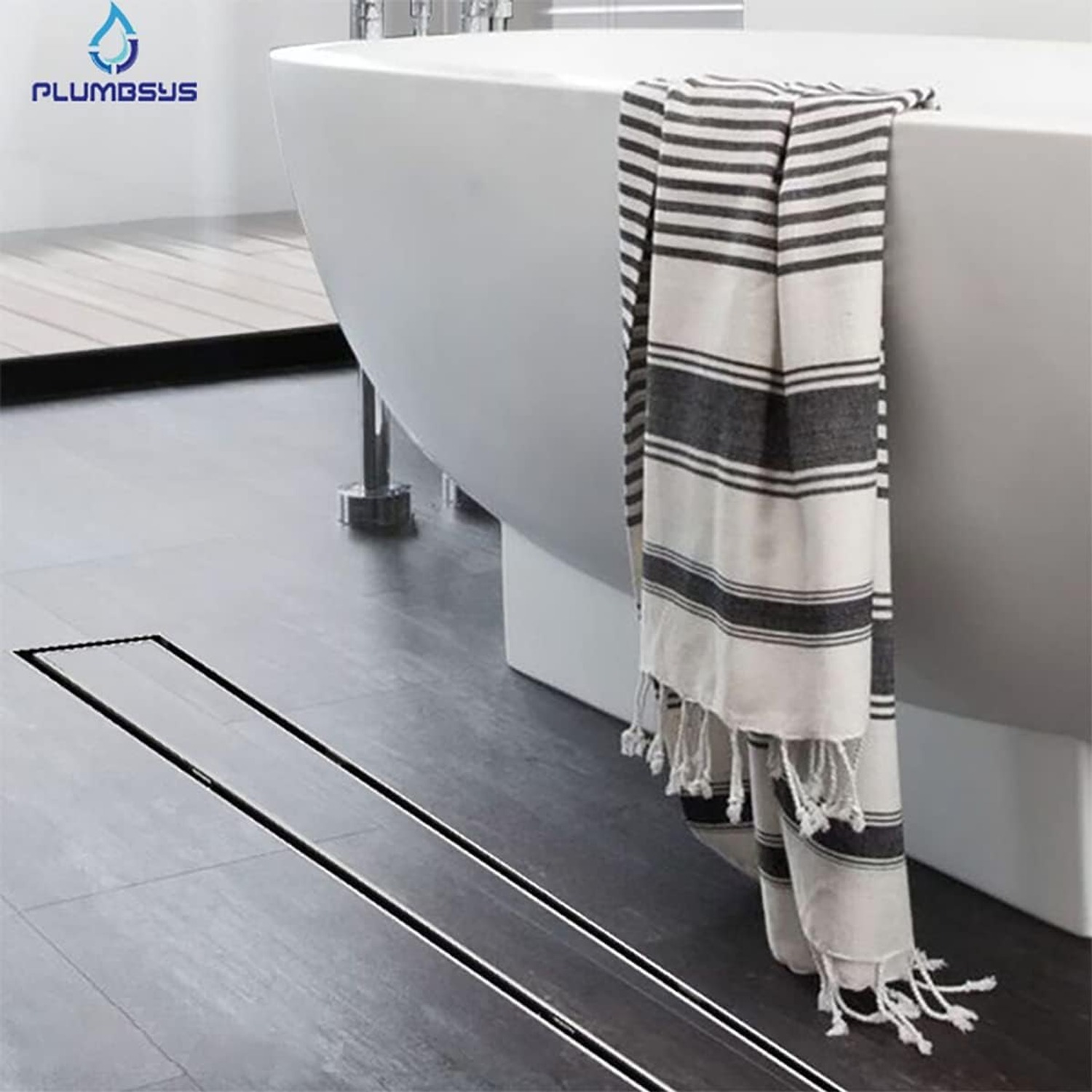
Where it shines is a wet room or an open walk-in shower, especially one using large format tiles. It is also a sensible choice in a laundry, where a floor trap takes the overflow from a machine, or on a tiled balcony that needs to shed rain. Plenty of people searching for the best linear shower drain end up buying a second one for the laundry once they see how much easier the fall is to set.
It suits households with long hair particularly well, because the hair catcher pulls out in one movement. Fishing hair out of a round waste with a bent coat hanger is a job nobody misses.
How to choose, practically
Start with two numbers. The first is your shower width. A 50cm channel does not have to span the whole opening, but it should sit where the water naturally runs. Against the back wall is the most common position because it lets the entire floor fall away from the door. Along the entry threshold is the other popular option, especially in a wet room where you want to stop water creeping out.
The second number is your available depth, measured from the top of the finished tile down to where the waste pipe sits. Compare that with the 77mm to 121mm adjustment range. If you are tight on depth, as you often are on a timber floor or a first floor slab, check this before anything else. It is the single most common reason a drain has to be sent back.
After that, think about the finish. The open stainless grate reads as a deliberate design feature, a neat silver line. The tile insert side reads as almost nothing, which is what some people want in a minimal bathroom. Because this plate reverses, you are not locked in at the point of ordering.
Last, check your waste pipe size and the position of the outlet against your plumbing. Your plumber will want to see this before the floor is opened up, not after.
Living with it
Maintenance is genuinely simple. Lift the top plate off, pull out the hair catcher, tip it into the bin, rinse both under warm water, and put them back. Once a week is usually plenty, more often if someone in the house sheds a lot of hair. While you are there, wipe the inside of the channel with a soft cloth and a little mild detergent.
What to avoid is also short. Steel wool and abrasive powders will scratch the finish. Heavy bleach and strong drain chemicals are harsh on stainless over time, and with a removable hair catcher you rarely need them. Because the siphon comes out too, a serious clear-out is still possible years later without touching a single tile.
If the bathroom sits unused for a long period and you notice a faint smell on your return, the trap has simply dried out. Run the water for twenty seconds to refill it. Every water-sealed waste behaves the same way.
The short version
A linear drain is the easier way to get a shower floor that actually drains. One slope instead of four, straight tiles instead of wedges, and a line that either stands out as stainless or disappears into your own tile, depending on which way you fit the plate.
This 50cm unit covers the parts that matter. Welded 304 stainless, a 300kg load rating, an odour trap, a hair catcher that lifts straight out, and adjustable feet so the height can be set properly rather than guessed. The record here does not list a weight, country of origin or carton size, so ask us if those details affect your order.
Measure your depth, pick your position, and get the fall right. The drain will then do its job quietly for a very long time.