

The complete guide
How to Choose a Kitchen Sink Strainer Stopper That Actually Fits
The drain problem nobody plans for
Kitchen drains fail slowly. The first sign is water sitting a little longer than it used to. Then there is a smell on warm evenings. Then one day the sink backs up while you are cooking, and you are on your knees with a bucket under the trap.
Almost always, the cause is the same. Small things went down the hole. Rice, tea leaves, pasta scraps, coffee grounds, bits of onion skin. None of them seem like much on their own. Together, over months, they build up in the bend of the pipe and grab the grease that follows them.
The fix is boring and it works. Put something in the hole that catches solids before they get in. That is all a sink strainer does. The reason people skip it is that basic strainers are annoying. They sit loose, they rattle, they have to come out every time you want to fill the sink, and then you are back to looking for the rubber plug.
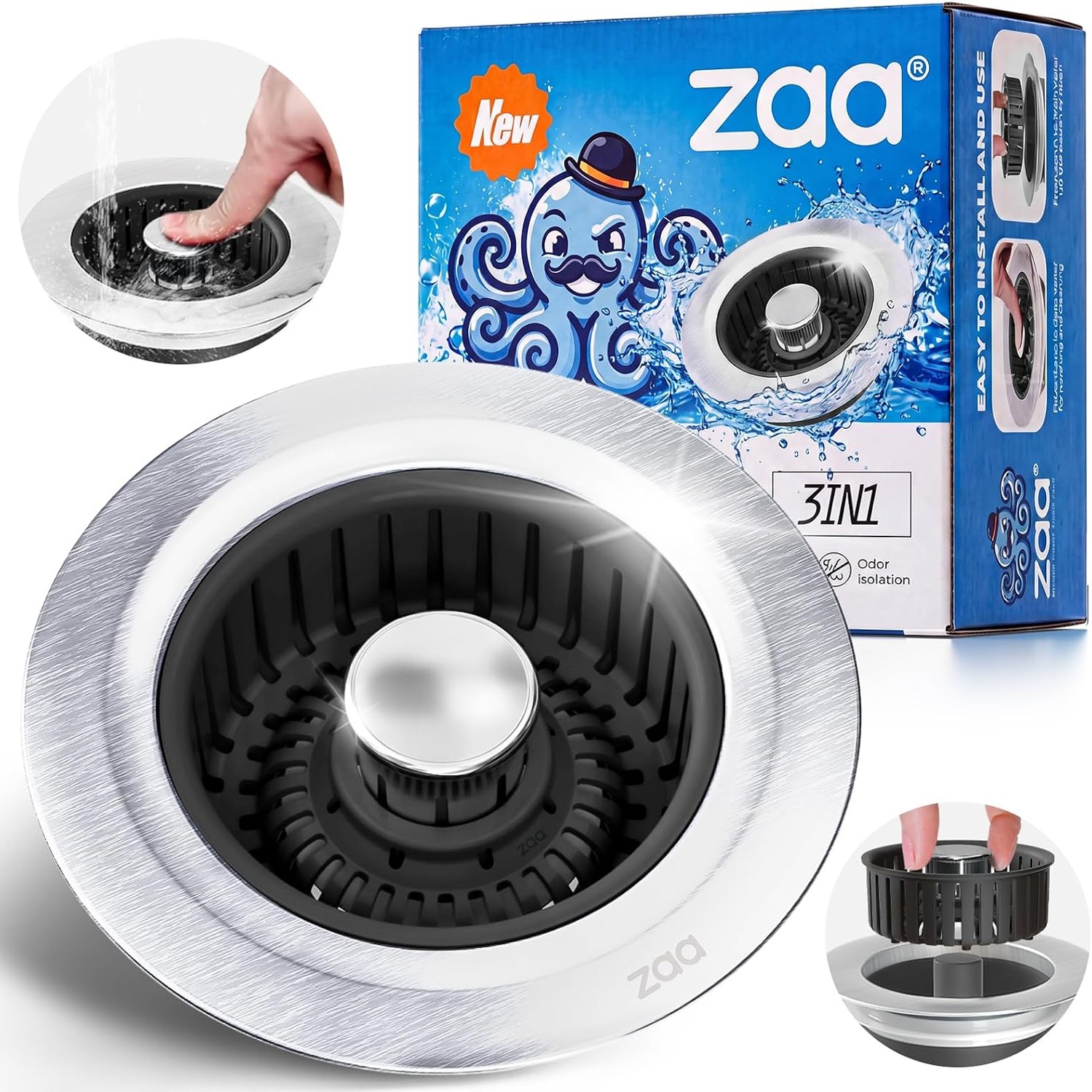
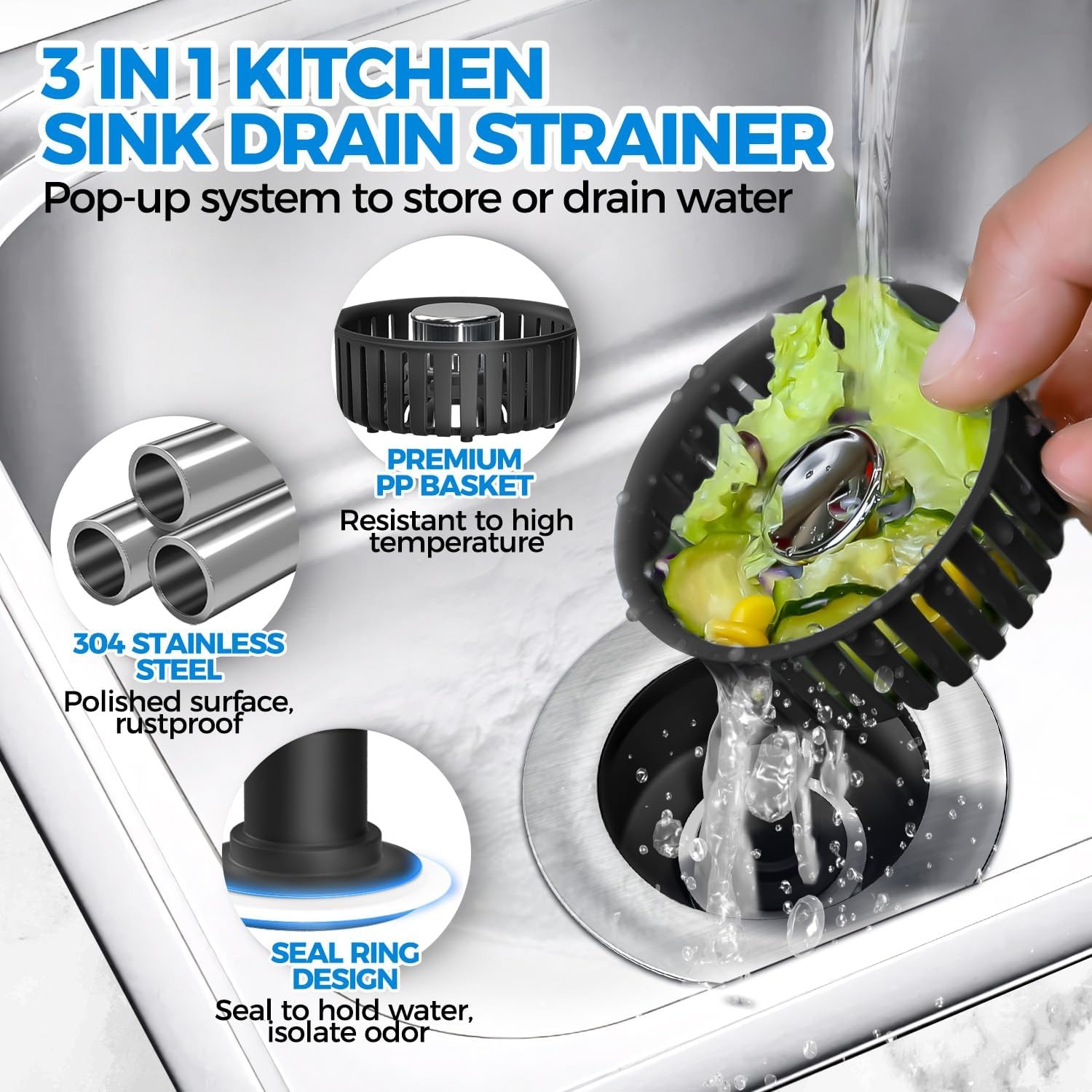
A three in one kitchen sink strainer stopper solves that by combining the parts. It stays in the drain permanently, catches waste by default, and switches to a sealed stopper with a press.
How the press-down action works
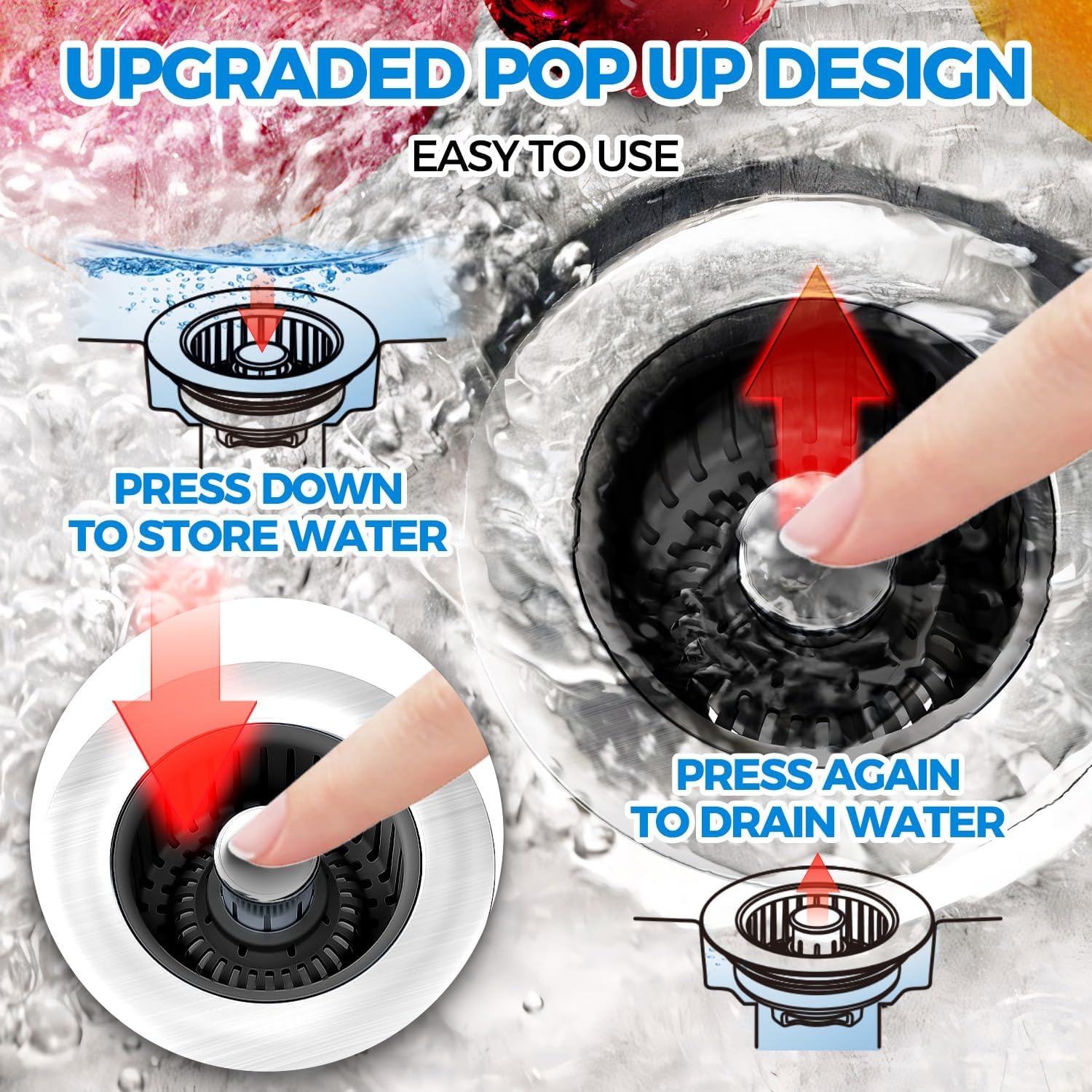
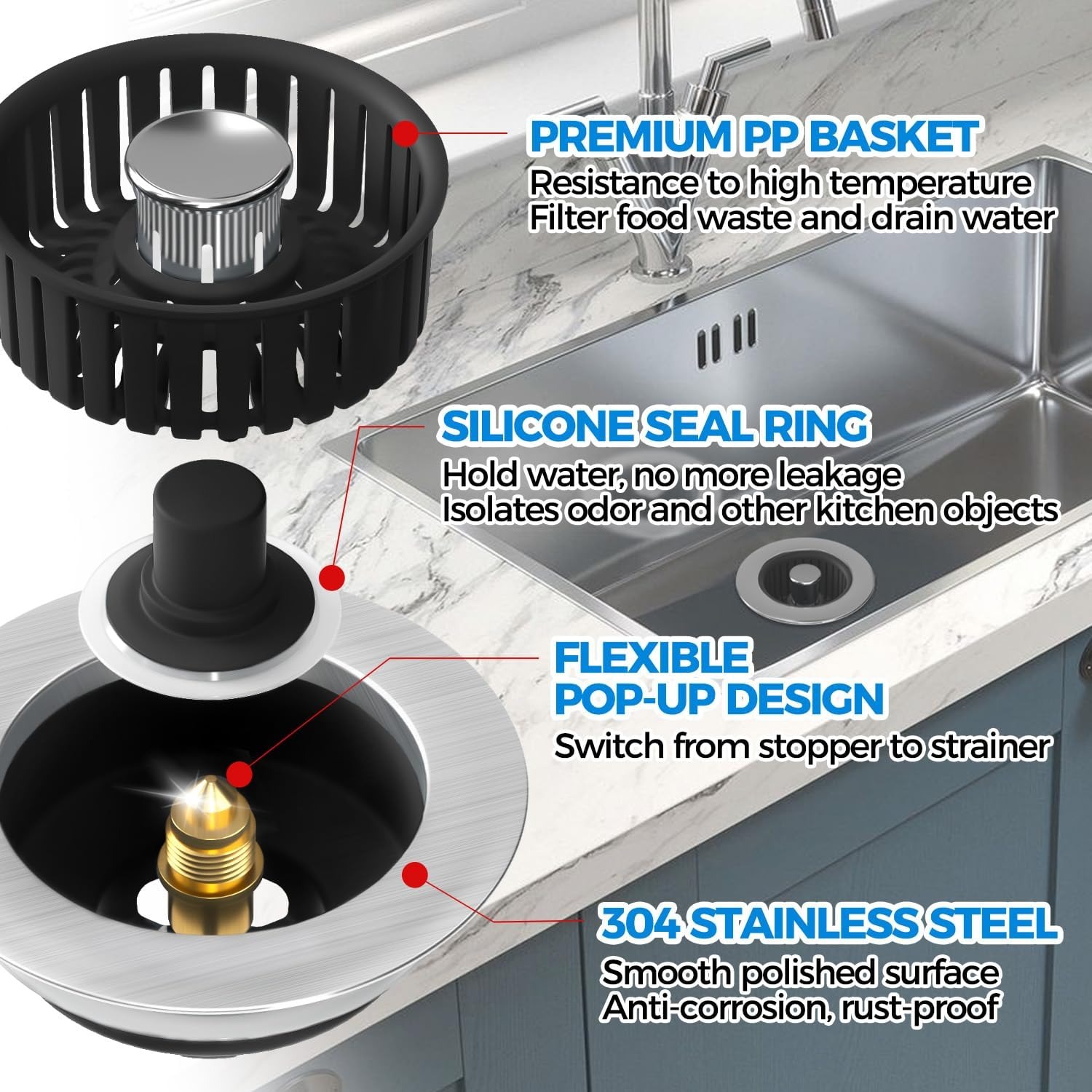
Inside the unit is a bounce core, which is a small spring mechanism under the steel cover. Press the cover and it drops and locks, sitting flush and sealing the drain opening. Press again and it releases, rising a few millimetres so water can run out through the gap around the rim.
If you have used a bathroom pop-up waste, the feel is familiar. The difference here is what sits underneath. Below the cover is a filter basket that stays put in both positions. When the cover is up and water is draining, every drop passes through that basket, and anything solid stops there.
This is why the design is better than a strainer you drop on top of the drain. A loose strainer gets knocked aside when you put a pan down. It floats when the sink fills. It has to be lifted out to let the water go. The pop-up version does the job without you managing it.
When the basket fills, you pull the core up and the basket lifts out with it. Tip it into the bin, give it a rinse and drop it back. Fingers stay dry. The whole thing takes about ten seconds.
Sizing: the part that matters most
Here is the honest warning. A beautifully made drain fitting that does not match your sink is useless, and sizing is where most people go wrong with sink hardware.
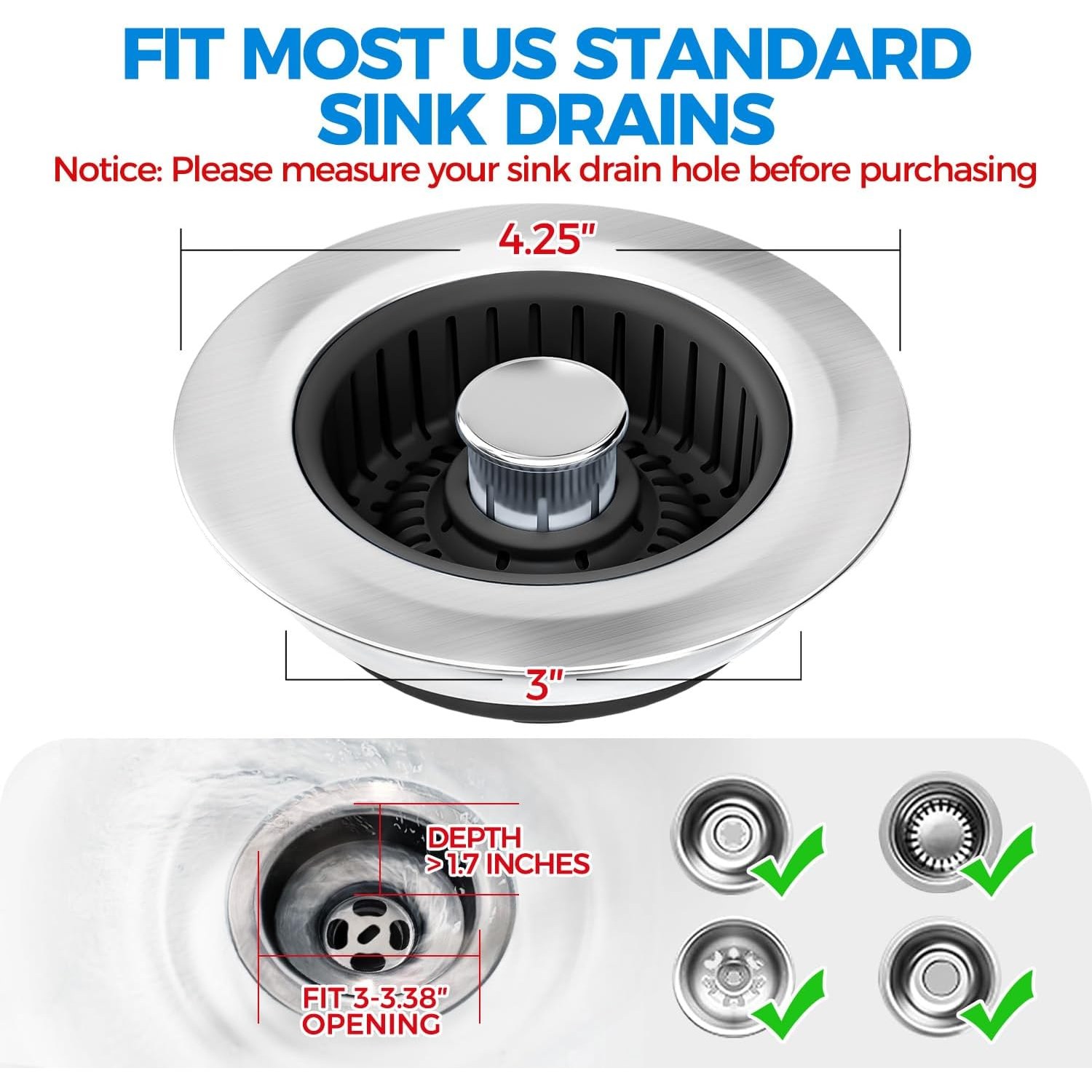
This unit has a compatible groove diameter of 3.38 inches (8.6 cm) and is designed for standard 3.5 inch (8.9 cm) kitchen drain holes. That size is extremely common in kitchen sinks, but common is not the same as universal.
Before you order, do this. Take the existing plug or strainer out of your sink. Measure straight across the drain opening at its widest point, from one inner edge to the other. Use the metal rim as your reference, not the basin curve around it. Write the number down.
If you land at roughly 3.5 inches (8.9 cm), you are in the right territory. If you measure noticeably smaller, like a 3 inch (7.6 cm) opening, this will not seat. Bar sinks, prep sinks and some older imported basins can run small. Sinks fitted with a waste disposal unit use a different flange entirely and are not suited to this type of fitting.
It takes one minute and saves a return.
Why stainless steel for the visible part
The cover is stainless steel with a black finish. That matters because of where it lives. This piece sits in standing water, hot water, soapy water and greasy water every single day, for years.
Plain steel rusts in that environment. Cheap plated finishes flake. Stainless steel is the standard for sink hardware because it holds up without needing any care beyond a rinse.
The black finish is a practical choice as well as a visual one. A polished chrome cover shows every water spot. Black hides the marks that build up between cleans, and it pairs neatly with the black taps and matte hardware that have become common in kitchens.
Who this suits
Households that cook from scratch get the most from it. If you rinse vegetables, drain pasta, scrape plates and wash pans by hand, a lot of solid material passes through your sink every week. A food catcher basket intercepts it.
It also suits renters. You are not replacing plumbing or drilling anything. The unit sits in the existing drain and comes out when you move.
Shared houses benefit in a different way. In a kitchen used by several people, nobody takes responsibility for the drain until it blocks. A strainer that is always in place does the work regardless of who is washing up.
And if you have ever gone looking for the plug while a pan burns on the hob, a permanent stopper is worth it for that reason alone.
Living with it day to day
The habit to build is simple. Empty the basket when you finish washing up, the same way you wipe the counter. A basket emptied daily never gets unpleasant. A basket left for a week is a different story.
For cleaning, warm water and a drop of dish soap does most of it. A soft brush helps clear grease out of the holes, and doing that while the grease is still warm is far easier than chipping at it cold.
Skip the harsh stuff. Steel wool, scouring powder and long bleach soaks are the things that mark finishes on sink hardware. None of them are needed here.
Once a month, lift the whole unit out and have a look underneath. Wipe the seating area where the seal meets the drain. If anything has built up there, clearing it keeps the stopper sealing properly and keeps the odour block working.
What it will and will not do
Being straight about this helps. A strainer stops solids. It does not stop grease, which goes down as a liquid and sets as a solid once it cools in the pipe. Pour cooking fat into a jar or an old tin rather than the sink, and the strainer will handle the rest.
It also will not fix a blockage that already exists. If your drain is slow today, clear it first, then fit the strainer to keep it clear. Think of it as prevention rather than repair.
What it does do, reliably, is stop the daily drip-feed of scraps that creates blockages in the first place. Combined with keeping grease out, that covers most of what goes wrong under a kitchen sink.
The short version
This is a small piece of kitchen hardware that quietly does three jobs. It catches food waste in a removable basket, it holds a sink full of water when you press it down, and it seals off drain smells when closed.
The cover is stainless steel in black, it fits standard 3.5 inch (8.9 cm) kitchen drain holes with a 3.38 inch (8.6 cm) compatible groove diameter, and it comes with the bounce core and filter basket.
Measure your drain opening first. If you are at 3.5 inches (8.9 cm), this will drop in and take over a job you have probably been doing badly with a loose strainer and a lost rubber plug. Empty the basket regularly, keep grease out of the sink, and the pipe underneath stays clear.