
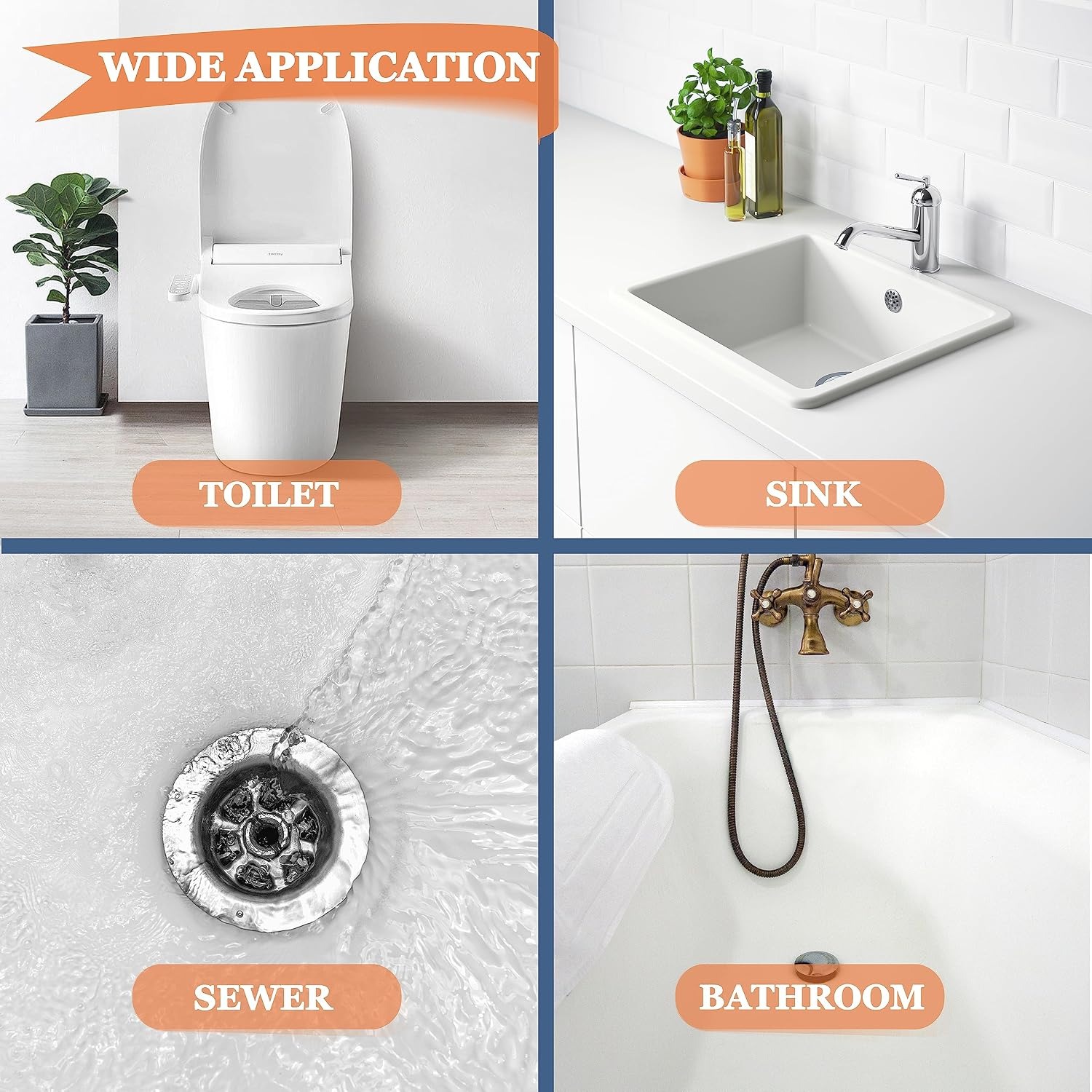
The complete guide
How to Clear a Hair Clog Properly, and Stop It Coming Back
The slow drain nobody notices until it is bad
Hardly anyone wakes up to a completely blocked shower. What actually happens is slower and sneakier. One week the water sits around your feet for a second longer than usual. A month later it takes most of the shower to drain away. A month after that you are standing in it.
The cause is almost always the same. Hair goes down, catches on the crossbar under the grate or on the shoulder of the trap, and stays there. Then conditioner, body wash and shaving foam coat it. Soap scum is sticky, and it binds loose hair into a solid mat that narrows the pipe from the inside. Water still squeezes past, which is exactly why you do not notice until it has been building for months.
Kitchen sinks do the same thing with different ingredients. Fat cools on the inside of the pipe, food fibre sticks to it, and the opening gets smaller. Laundry baths do it with lint. Different mess, same physics.
Why pulling beats dissolving
There are three normal ways to attack a clog, and they are not equally good at this particular job.
A plunger pushes. That helps when the blockage is a soft plug of something loose, but hair wrapped around a crossbar is anchored. Push it and it mostly stays anchored. Sometimes you compact it.
Chemical cleaners dissolve. They are decent on grease and soap film, and genuinely poor on matted hair, which is tough protein that resists most household products. The liquid often just flows through the gaps in the mat without touching the mat itself.
A barbed strip pulls. That is the whole difference. You put something past the clog, grip it physically, and lift it out of the pipe entirely. Nothing is left behind to re-form. For a hair clog, this is the approach that actually solves the problem rather than postponing it.
How the barbs do the work
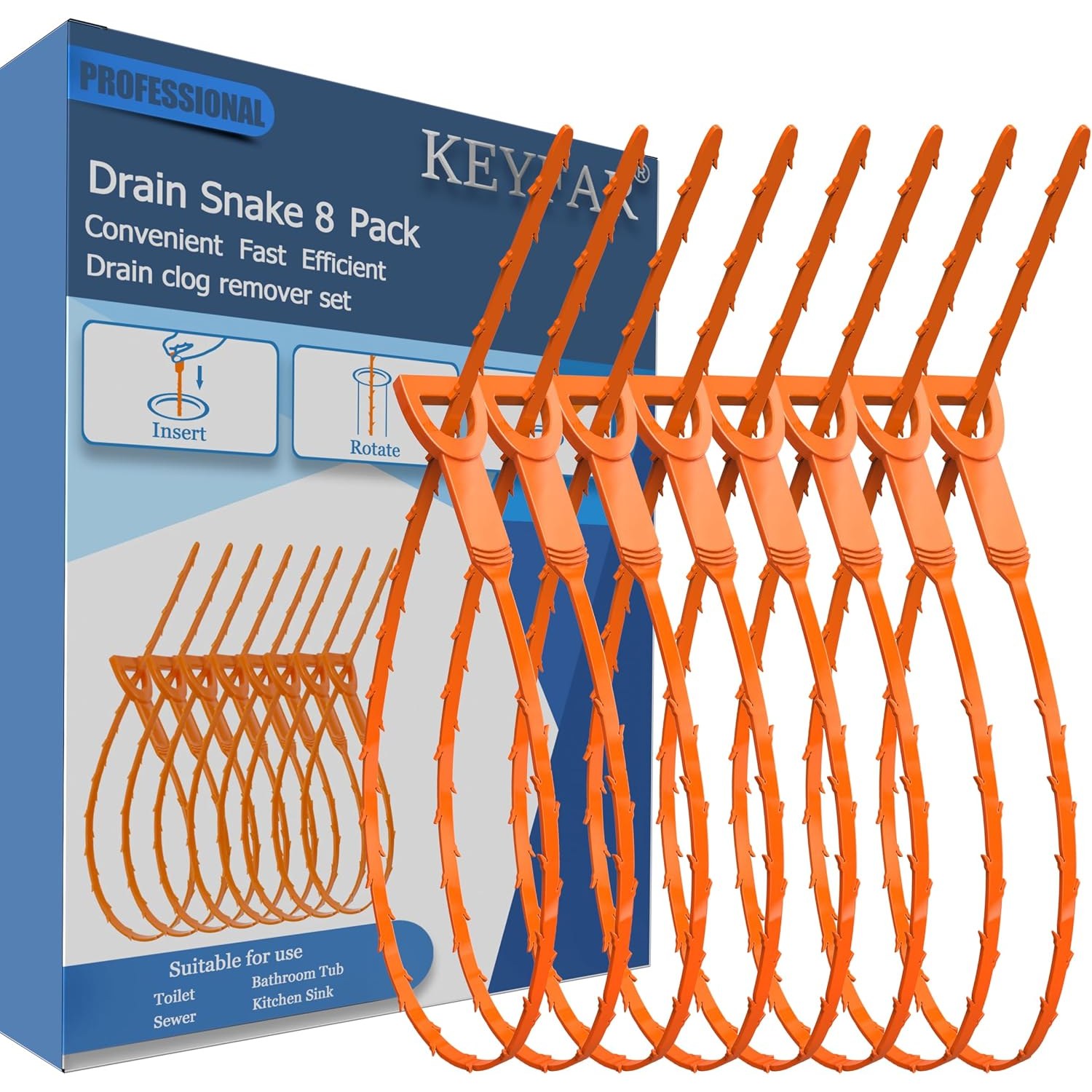
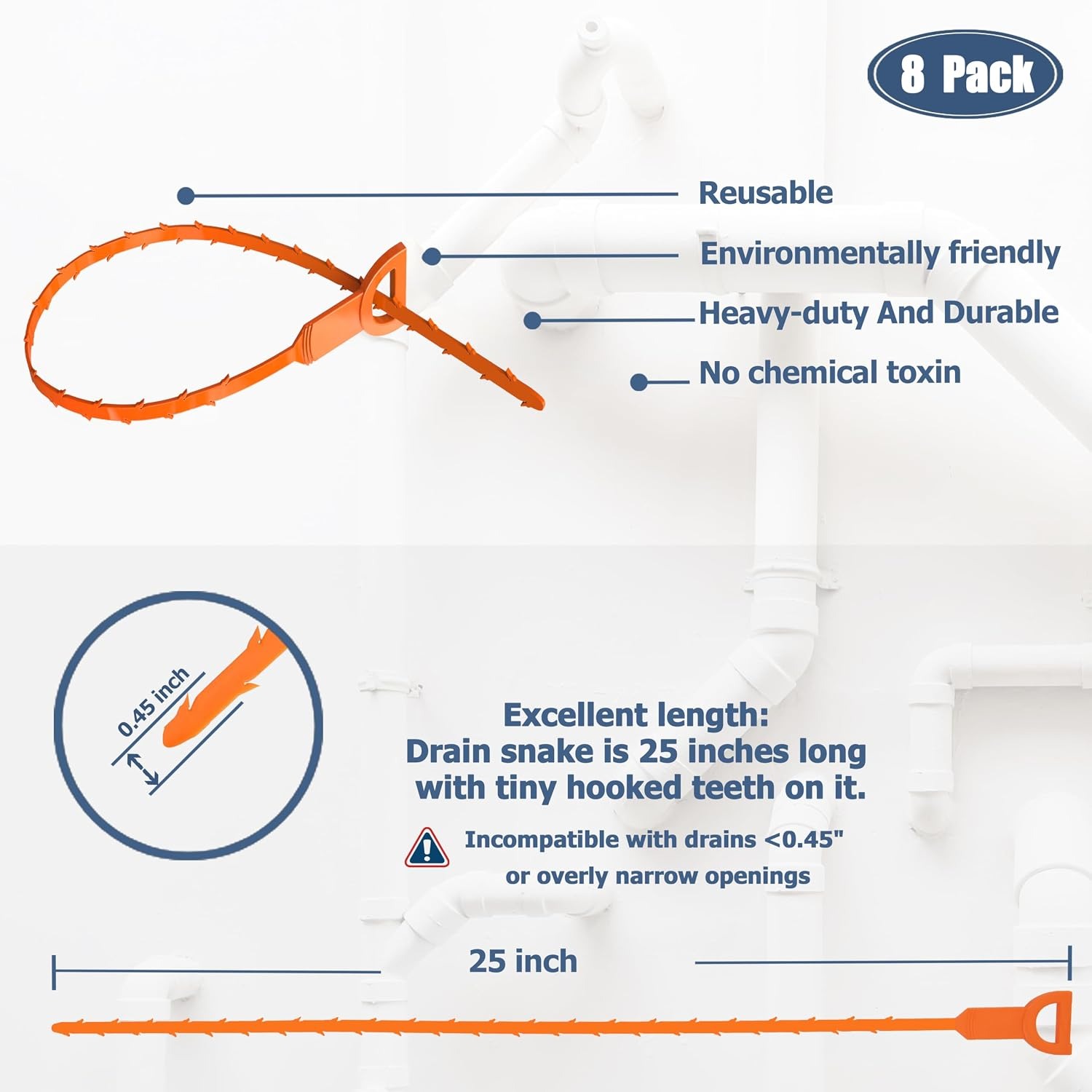
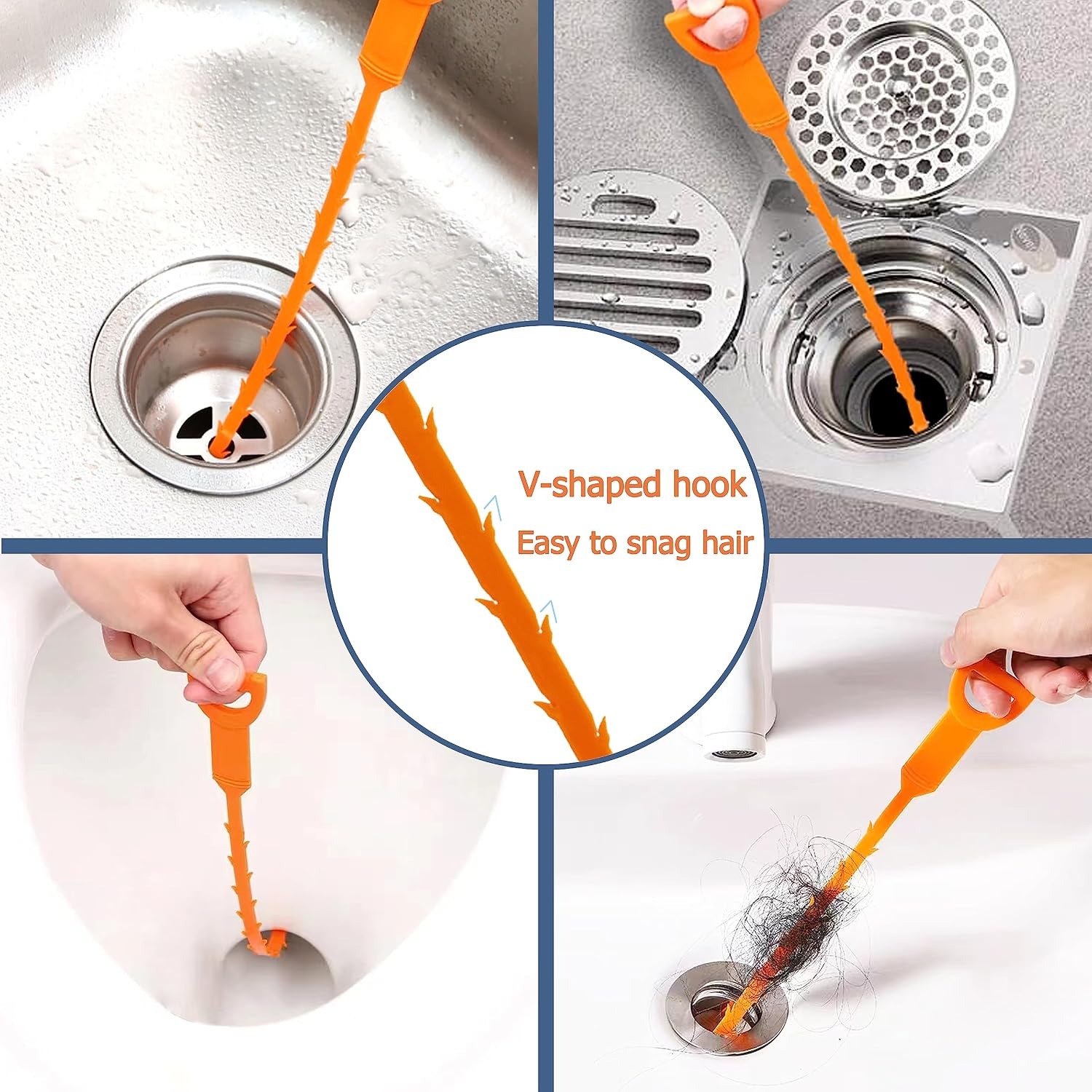
Each strip in this 8 pack is 63cm long with rows of small hooked teeth running down both edges. The teeth angle backwards towards the handle, and that angle is doing all the clever work.
On the way down, the teeth fold flat against the body. The strip slides past the grate, past the trap, past the clog itself, without snagging. On the way up, the teeth stand out from the body and catch everything in their path. A quick twist before you pull helps wrap loose hair around the strip so it comes up as one lump instead of in pieces.
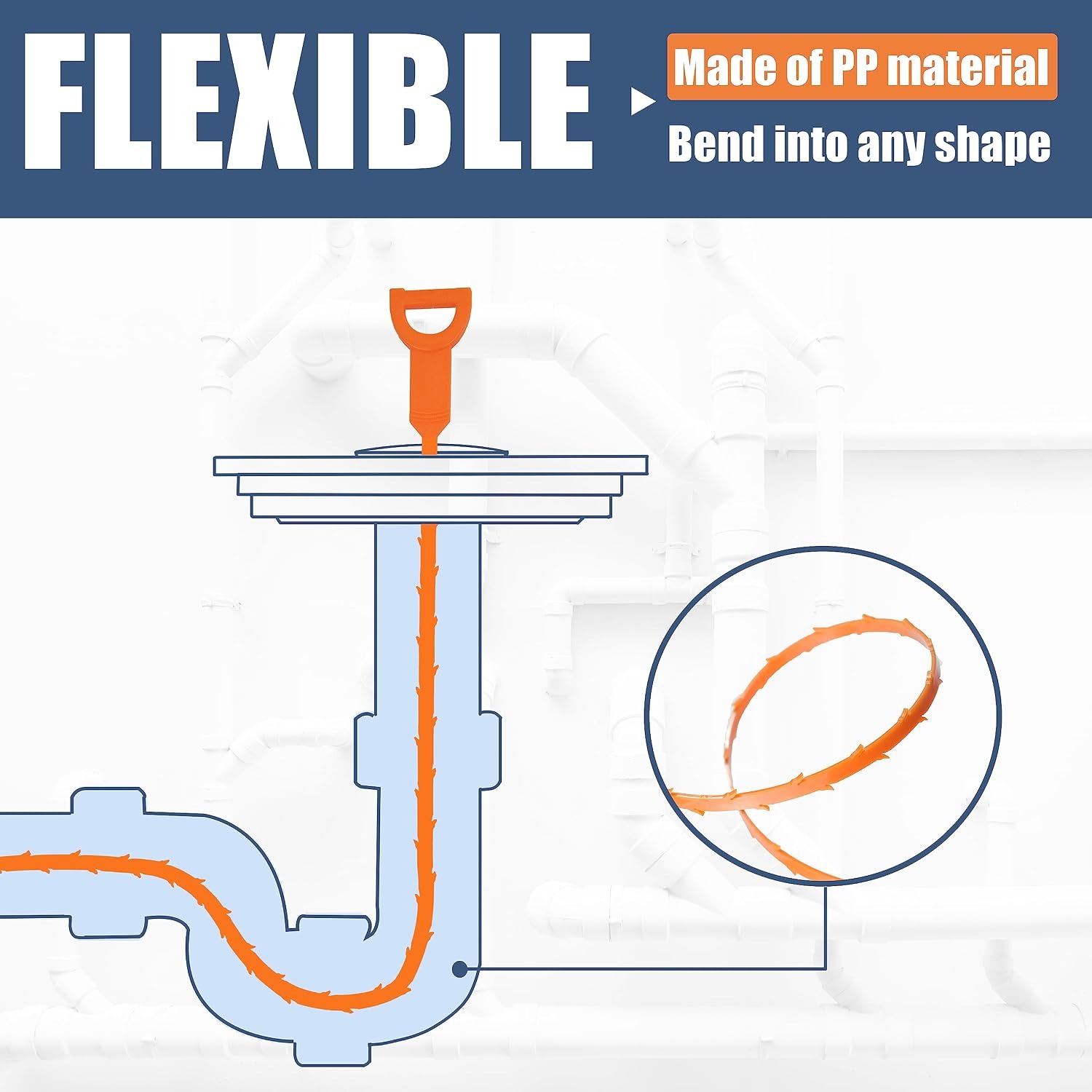
The body is flexible rather than rigid, and that matters more than people expect. Pipes under a basin or shower turn almost immediately. A stiff tool stops dead at that first bend, which is usually within a few centimetres of the grate. A flexible strip keeps feeding around the curve and reaches build-up further along, which is often where the real narrowing has happened.
Who this suits
If you have long hair in the house, or two or three people sharing one shower, this is close to essential kit. The same goes for anyone renting, where calling a plumber for a slow sink is either awkward or expensive or both.
It also suits people who would rather not keep caustic products in the cupboard, especially with small children or pets around. The strips are unscented, they release nothing into the air, and there is no waiting period or rinse-out step.
Households with older plumbing benefit too. If you are unsure how your pipes will handle repeated chemical treatment, a mechanical tool sidesteps the question completely.
The one thing it is not for is a toilet. Toilet traps are a different shape and the blockages are a different kind of problem. Use a plunger or a proper closet auger there.
Using one without making a mess
Set yourself up first. Have a plastic bag or a bin within arm's reach, and a glove if you want one. What comes out is not pretty.
Lift or unscrew the grate if it comes off easily. Plenty of shower grates lift straight out, and a basin pop-up usually unclips with a twist. If yours is fixed, the strip is thin enough to feed through the slots on most grates anyway.
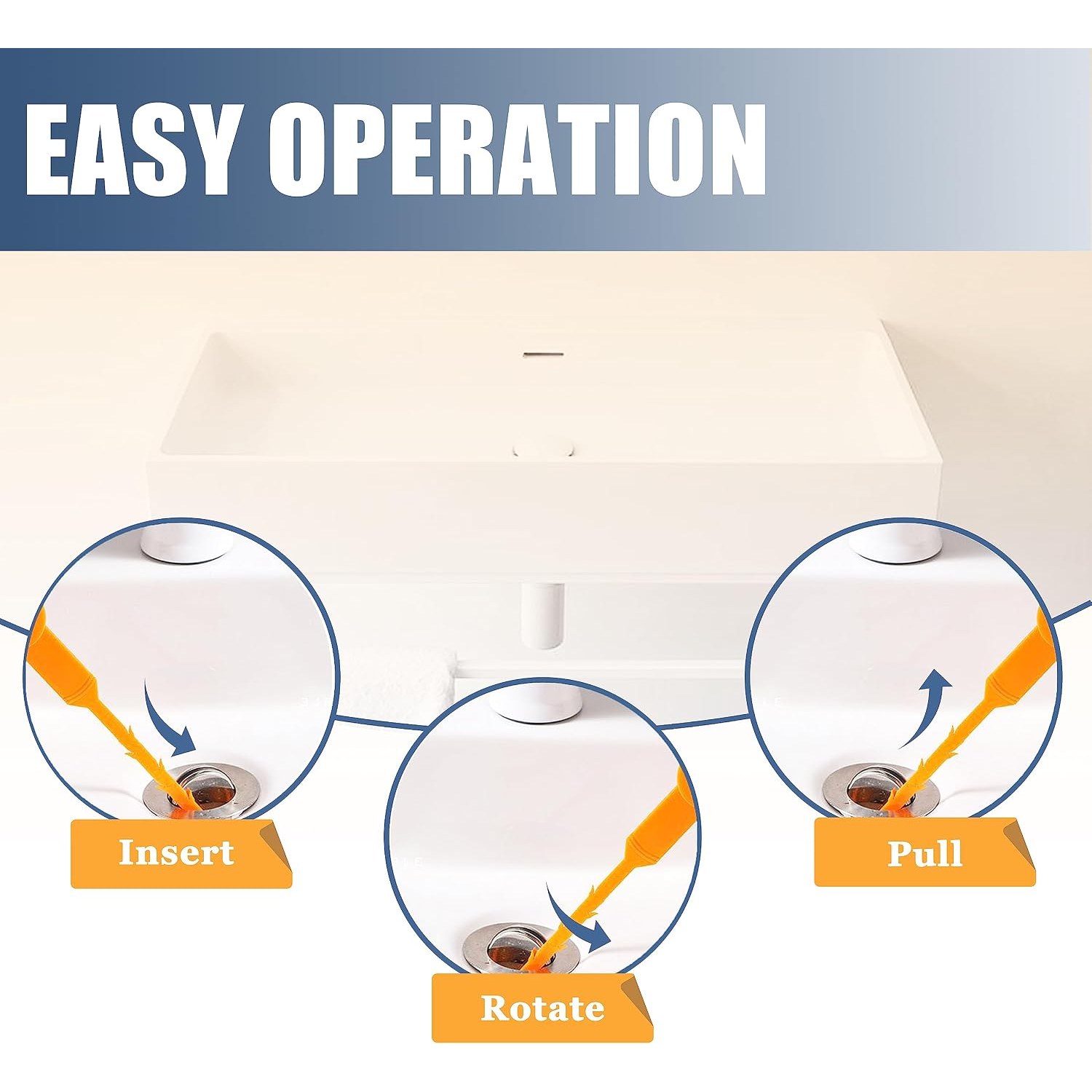
Feed the toothed end in slowly until you feel resistance or run out of strip. Do not force it. If it stops, back off a centimetre and try a slightly different angle, because you are usually just catching the lip of the bend.
Now twist the handle. Three or four slow rotations is plenty. This wraps loose hair around the barbs so it comes up together.
Pull back in one steady motion rather than a series of jerks. Clean the strip off into your bag, then go again. Three passes is typical. When the strip comes back clean, run the hot tap for a minute to flush the loosened soap film through.
Making eight strips useful
The reason eight is a good number is not that you will wear through them. It is that convenience changes behaviour.
Put one under each bathroom sink and one in the kitchen. When a tool is within reach, you use it before there is a problem rather than after. A sixty second pass every few weeks keeps a drain running properly indefinitely, and it is a far smaller job than clearing a mature clog.
Spares also mean you can hand one to a housemate or a family member without losing your own. For anyone hunting the best drain snake for hair on a shared-bathroom budget, splitting a pack across a household works out very well.
Looking after them
Rinse under hot running water straight after use, and wipe the strip down before it dries. Soap scum sets hard if you leave it, and then the teeth do not grip as well next time.
Store them dry, flat or in a loose coil. Leaving a strip tightly bent in a drawer for months can set a permanent curve in the plastic, which makes it harder to feed in cleanly.
Check the teeth now and then. If they have been bent flat from heavy use, or the plastic has cracked anywhere along the body, retire that strip and start on a fresh one. That is what the other seven are for.
When it is not the answer
Be realistic about what a 63cm tool can reach. If you have made several passes, brought up nothing at all, and the water still will not move, the blockage is probably beyond the strip's reach or it is not hair at all. Collapsed pipe, tree roots, a foreign object dropped down a floor drain and a blocked main line are all plumber territory.
Another sign is multiple fixtures going slow at once. One slow shower is a local hair clog. A slow shower, a slow basin and a gurgling toilet together point at the main line, and no hand tool will fix that.
The short version
Hair clogs are a mechanical problem, so a mechanical tool handles them best. A 63cm barbed strip gets past the grate, bends around the trap, grabs the mat and brings it out of the pipe for good.
It is cheap, it is reusable, it takes about two minutes, and there is nothing harsh going down your drain. With eight in the pack you can keep one wherever water goes down, use them as routine maintenance rather than emergency repair, and stop thinking about slow drains altogether.