
The complete guide
How to Choose and Use a 5m Spring Drain Snake
The problem with a slow drain
It starts small. The basin takes a few seconds longer to empty. A week later there is a ring of water sitting around the plughole while you brush your teeth. A month after that the shower tray is an ankle deep puddle by the time you have washed your hair.
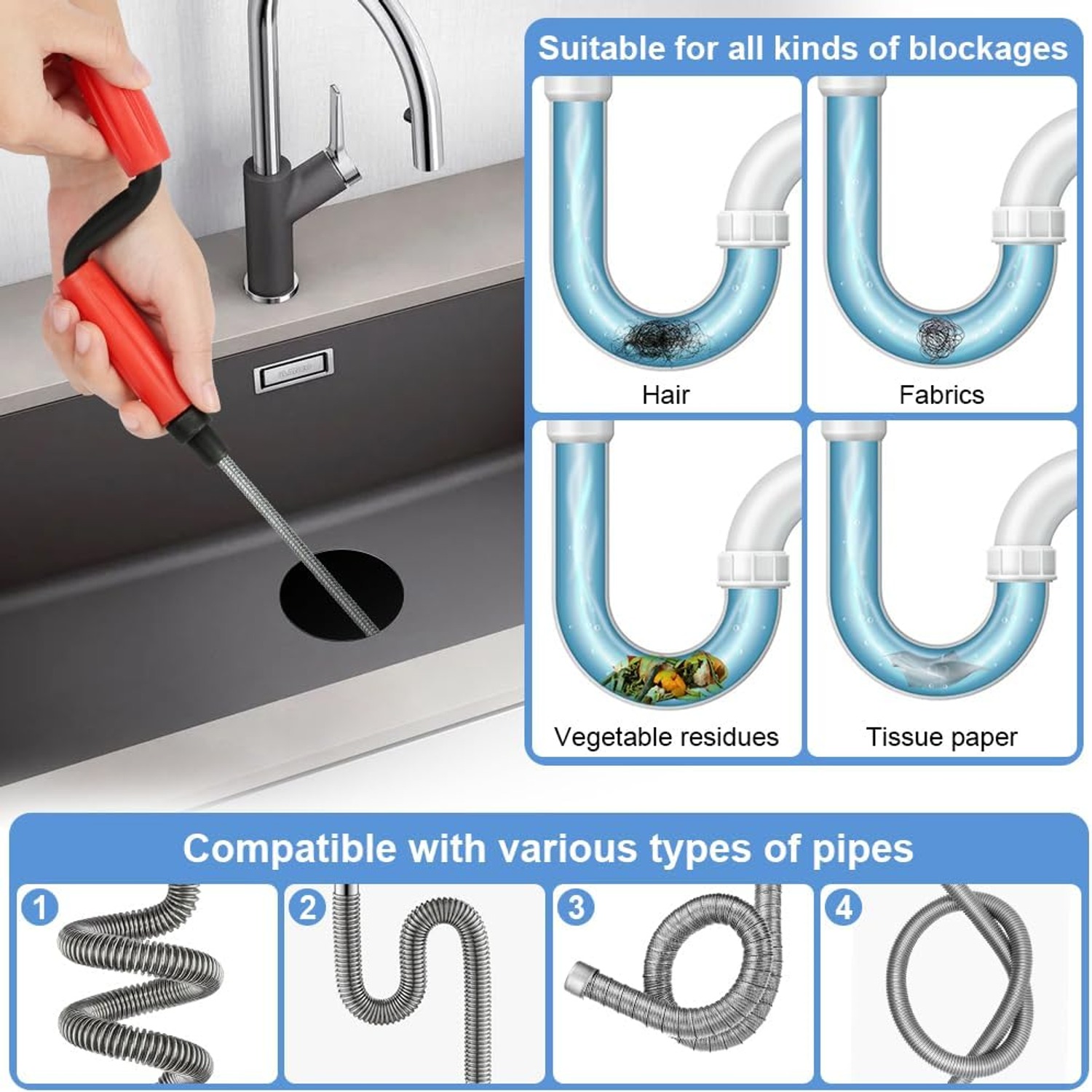
Almost every household drain blocks the same way. Hair, soap residue, toothpaste, shaving foam and cooking fat all stick to the inside of the pipe. The build up narrows the bore until water can barely pass. The point where it collects is usually the trap, that U-shaped bend under the fitting, or the first bend after it.
That location matters, because it explains why the usual fixes disappoint. Boiling water melts a bit of grease and does nothing to hair. A plunger pushes water at the blockage, which can shift a loose clog but tends to compact a matted one. Chemical drain cleaner needs to sit in contact with the clog to work, and when the pipe is already full of standing water the product dilutes before it ever gets there.
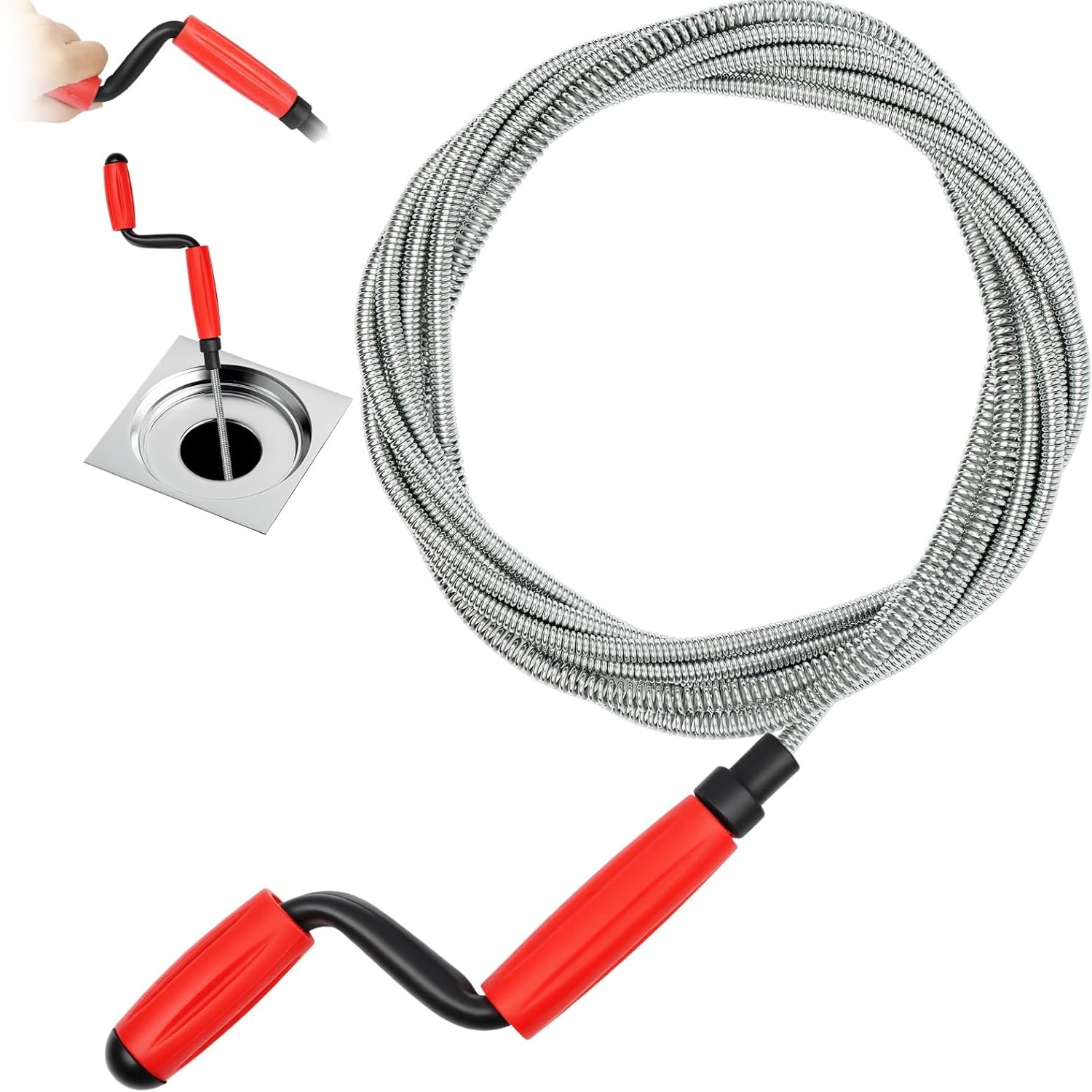
A spring drain snake 5m solves the problem differently. Instead of pushing or dissolving, it reaches in, grips and pulls out.
How a hand crank drain snake works
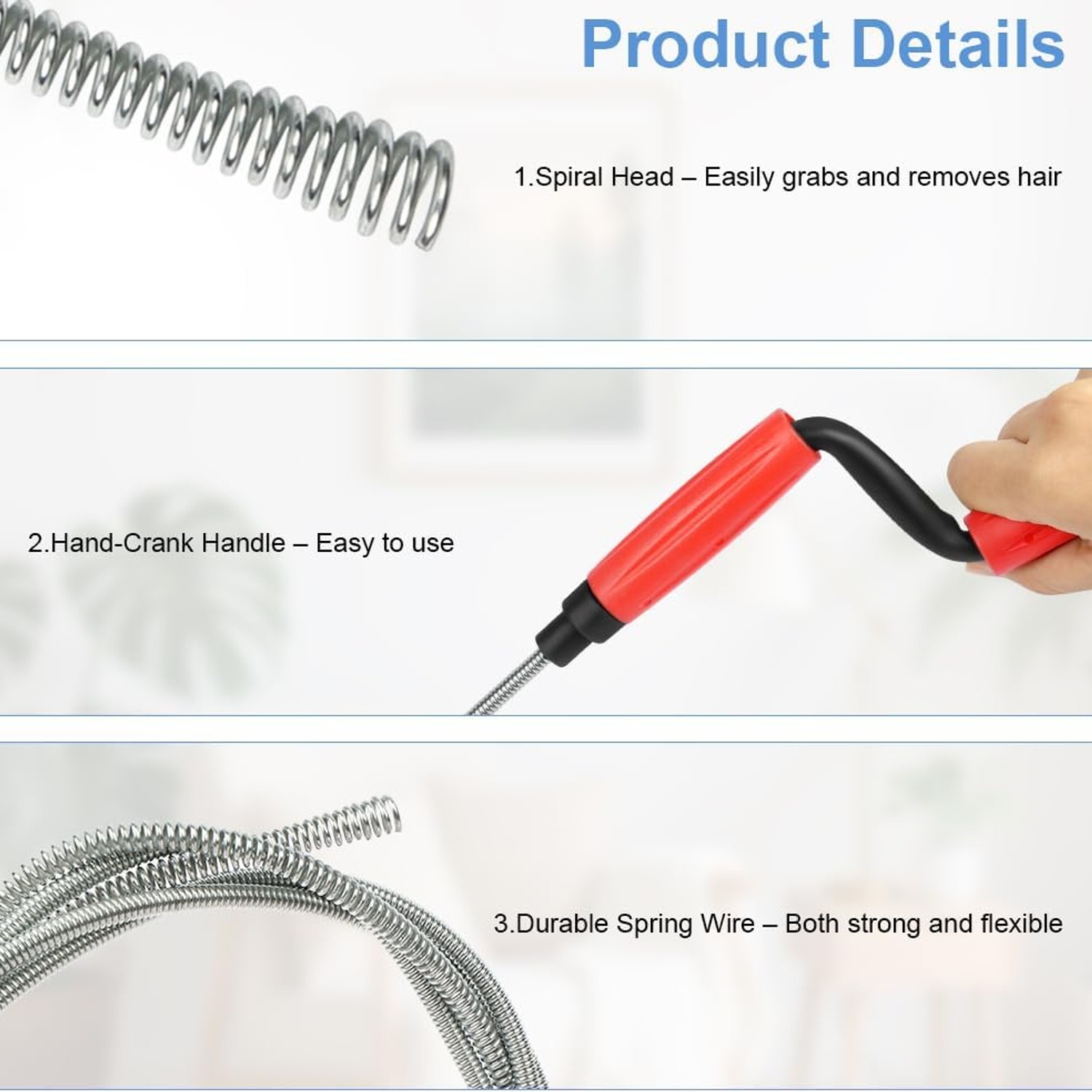
The tool is a long steel coil wound onto a reel inside a plastic case, with a crank handle on the side. Turning the handle pays the wire out through a guide hole at the front. Turning it the other way winds it back.
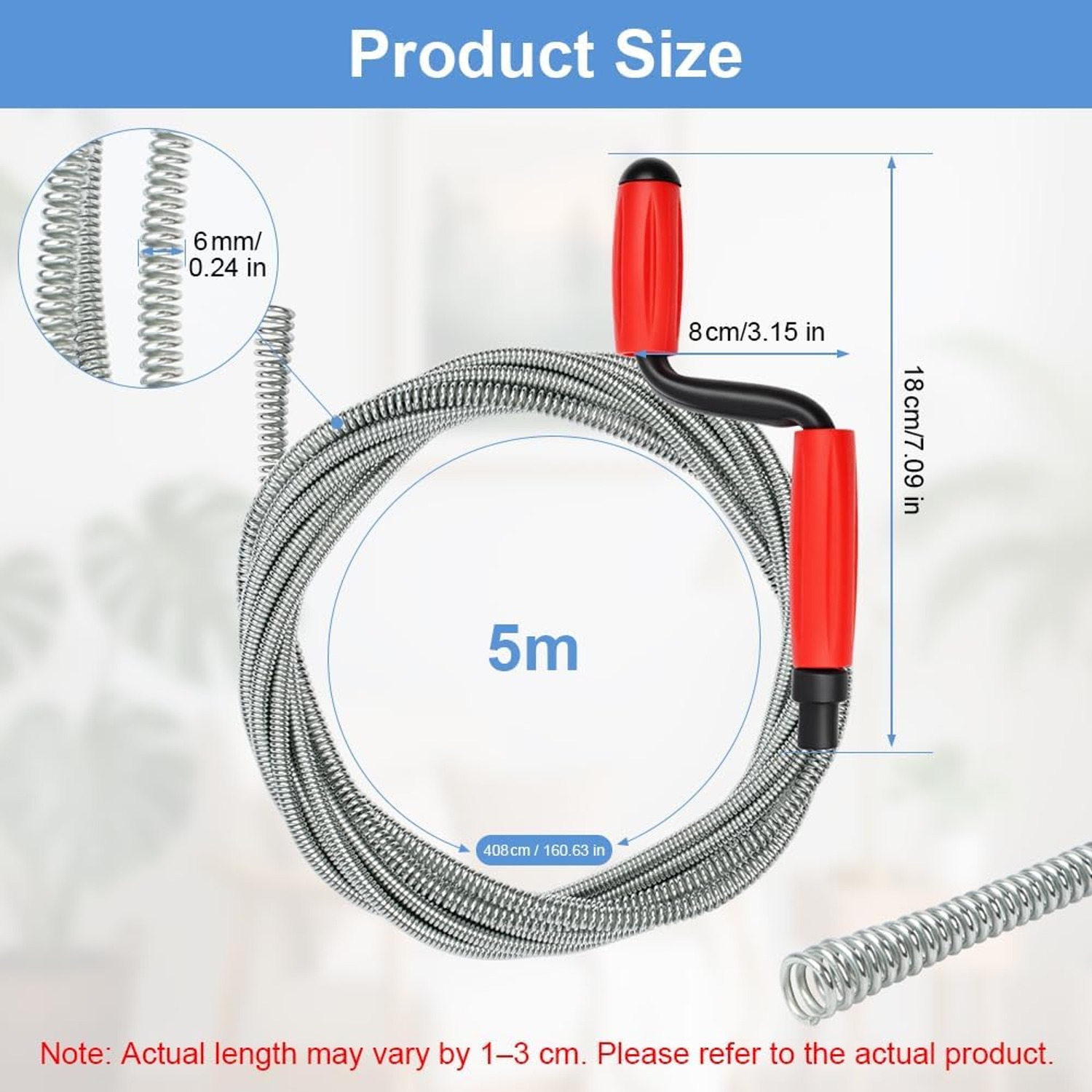
The coil on this model is 6 mm in diameter and five metres long. That slim diameter is deliberate. It lets the wire bend around the tight curves of a domestic waste pipe without binding. A thicker auger cable has more muscle but will fight you at the first sharp bend under a basin.
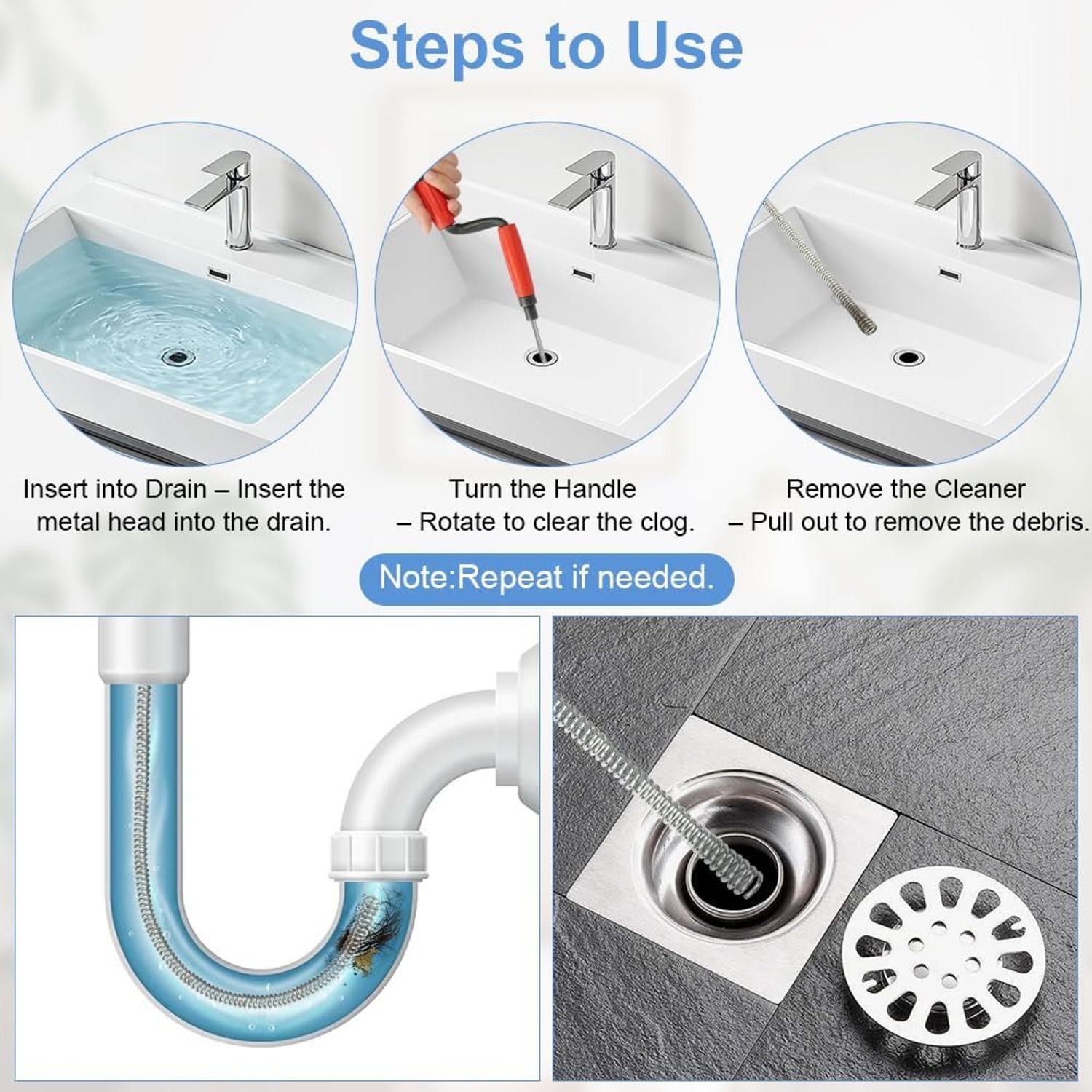
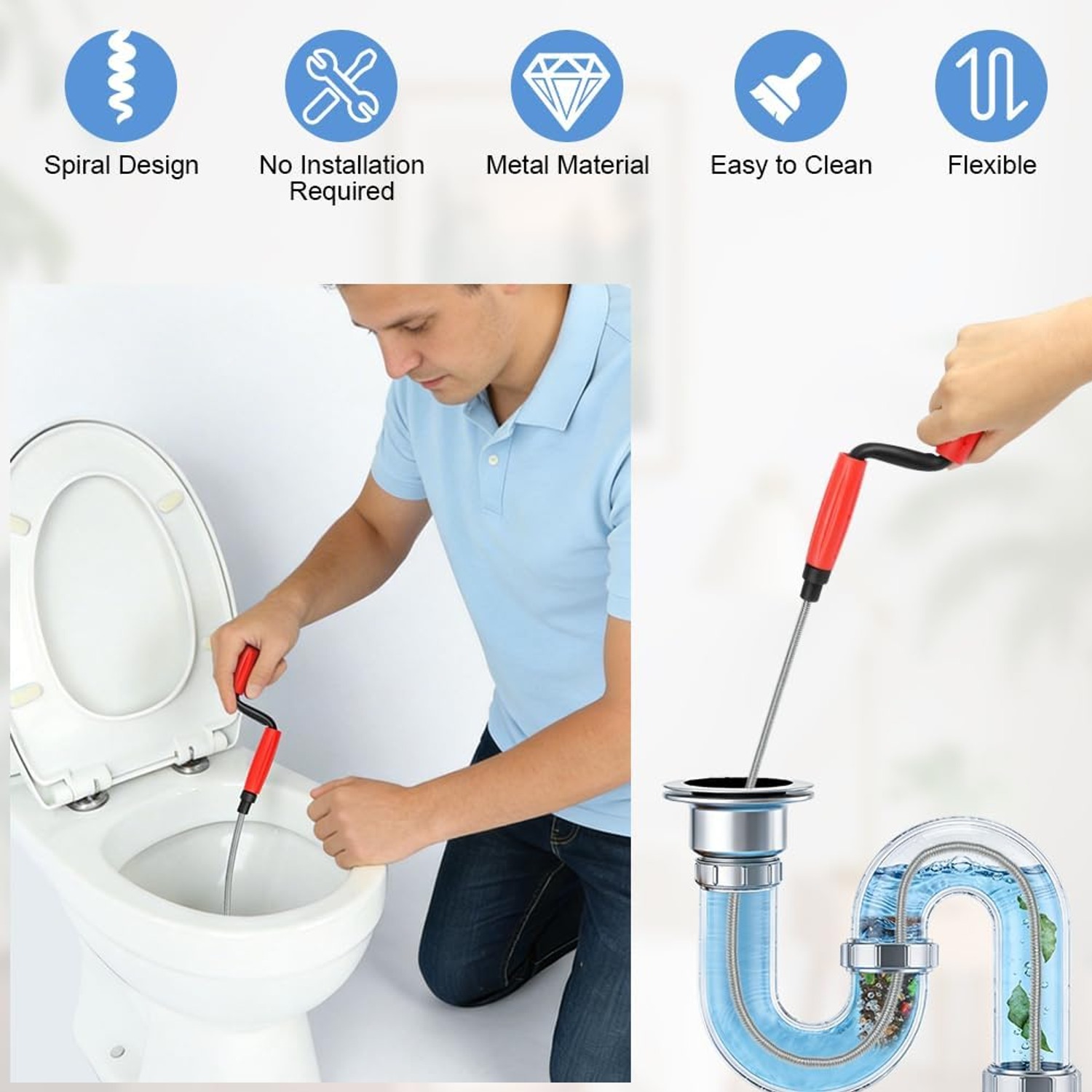
In use, the sequence is simple. You feed the tip into the open drain, crank to pay out wire, and keep going until you feel resistance. That resistance might be a bend, in which case a little forward pressure combined with turning walks the tip around it. Or it might be the blockage, which feels spongier and more stubborn.
Once you are into the clog, you keep cranking. The spring tip screws itself into the mass the way a corkscrew goes into a cork. Hair tangles around it. Soap and grease break apart. Then you wind the wire back out, still turning in the same direction, and most of the time the blockage comes with it.
Finally you run the tap hard for a minute or two to flush whatever is left down the line.
Who this suits
This is a household tool, not a contractor machine. It suits anyone who owns or rents a home with normal waste pipes and would rather spend twenty minutes on a Saturday than wait three days for a plumber.
It is particularly useful if your house has long hair in it. Hair clogs are the single most common bathroom blockage, and they are exactly what a coil tip is good at. If you have been fishing at the plughole with a bent wire hanger, this does the same job properly and reaches about fifteen times further.
Kitchen sinks are the other big use. Grease clogs do not pull out in one lump the way hair does, but breaking the plug apart lets hot water flush the rest. Repeat it every few months and you avoid the slow creep back toward a full blockage.
It is less suited to main sewer lines, large diameter outdoor drainage or heavily root-invaded pipework. Those need a heavier cable and usually a powered machine. If your whole house backs up at once rather than a single fixture, that is a sign the problem is downstream and bigger than any 6 mm coil.
Choosing the right length
Drain snakes come in various lengths, and longer is not automatically better.
A three metre coil handles basins, most showers and short kitchen runs. Five metres covers all of that plus the longer branch pipes you find in kitchens, laundries and anywhere the fixture sits some distance from the stack.
The reason to go with five metres is simple. You cannot add length later. If the clog turns out to be three and a half metres in, a three metre tool leaves you stuck. You never have to use all five metres, and the extra wire costs you nothing but a slightly larger reel.
Diameter matters just as much as length. Six millimetres is the standard choice for domestic waste pipes because it threads through tight traps. Something thicker is for sewer work and will not get past the first bend under your basin.
Getting the best results
A few habits make the difference between a quick fix and a frustrating hour.
Clear the way first. Take out the plug, the pop-up fitting or the shower grate so the wire goes straight into the pipe rather than catching on hardware. On a basin this often means loosening a nut under the sink, which takes two minutes.
Feed slowly and in short bursts. Pushing a metre of slack wire into the pipe at once is how coils kink. Pay out maybe thirty centimetres at a time, turning as you go, and let the tip find its own way.
Keep turning on the way out. This is the step people skip. If you stop cranking and just pull, whatever you hooked slides off and stays in the pipe. Maintain the same rotation direction as you wind back.
Protect the area. Lay old towels under the work. The wire comes out carrying everything that was blocking the drain, and it is not pretty. Have a bin bag open and ready.
Wear gloves. The tip can be sharp and the debris is unpleasant. Rubber gloves cost almost nothing and make the whole job tolerable.
Looking after the tool
Steel and water are not long term friends, so the care routine is short and worth doing.
Rinse the coil under a running tap as you wind it back in. Most of the muck comes off in seconds. Then run an old cloth along the wire to dry it before the last of it goes into the case. Wire stored wet inside a closed reel will rust, and rusty wire loses flexibility.
Wind it back evenly. If the coil piles up on one side of the reel it will bind the next time you try to pay it out. A steady crank solves this.
Store it somewhere dry. A cupboard, a shelf or a toolbox indoors is ideal. A damp concrete storeroom floor is the worst option.
Before each job, run your hand along the first metre and look for sharp kinks or flattened sections. A coil with a hard bend in it will catch inside the pipe. If the wire is badly deformed, it has done its work and should be retired.
What is and is not specified
The coil is five metres long and 6 mm in diameter, and the tool is operated entirely by hand.
The maker does not specify the coil material, the colour or the country of origin, so we have not claimed any of those. If a particular detail is a deciding factor for you, ask us before you order and we will check with the maker rather than guess.
The short version
A blocked basin or shower is almost always hair and soap sitting in the first bend, and the quickest way to deal with it is to reach in and pull it out. That is all this tool does. A five metre, 6 mm coil on a crank reel goes further than anything you can improvise, follows the curves of a domestic waste pipe, and works without power or chemicals.
Feed it slowly, keep turning on the way back, rinse and dry it afterwards, and it will keep your drains running for years. For most homes it pays for itself the first time it saves a call-out.