
The complete guide
How To Choose And Use A Small Drain Plunger
The problem with a slow drain
Nobody notices a drain until it stops working properly. It happens gradually. The basin takes a few seconds longer to empty, then half a minute, then you find yourself standing over a pool of grey water waiting for it to crawl away. By the time it is obvious, the blockage has usually been building for weeks.
In a bathroom basin, the culprit is almost always hair bound together with soap residue and toothpaste. In a kitchen sink it is fat, which goes down warm and liquid then cools into a greasy ring inside the pipe, catching bits of food as it goes. In a shower tray it is hair again, often sitting right under the grate where you cannot see it.
None of that needs a plumber. Most of it needs about five minutes and the right tool, and the right tool for small fixtures is a small plunger.
Why a small plunger beats a big one here
The instinct is to grab the big plunger from behind the toilet. It rarely works well on a basin, and the reason is seal.
A plunger only generates pressure if the rim of the cup is in contact with a flat surface the whole way around the drain. A large toilet plunger has a wide cup with a flange designed to tuck into a curved toilet outlet. Press that same cup into a shallow bathroom basin and the rim rides up the curve of the bowl. Air leaks out on every stroke, and all you achieve is splashing dirty water on the mirror.
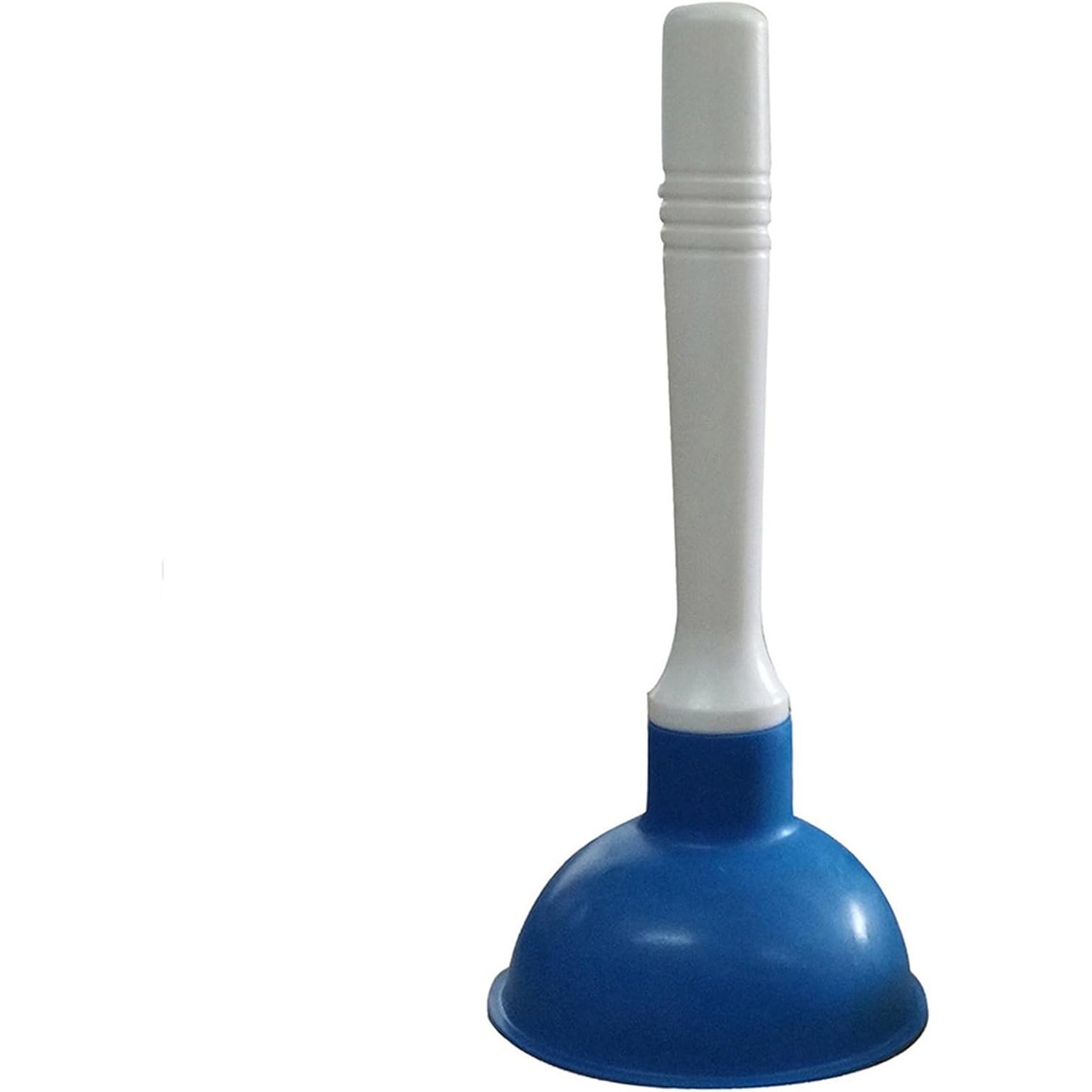
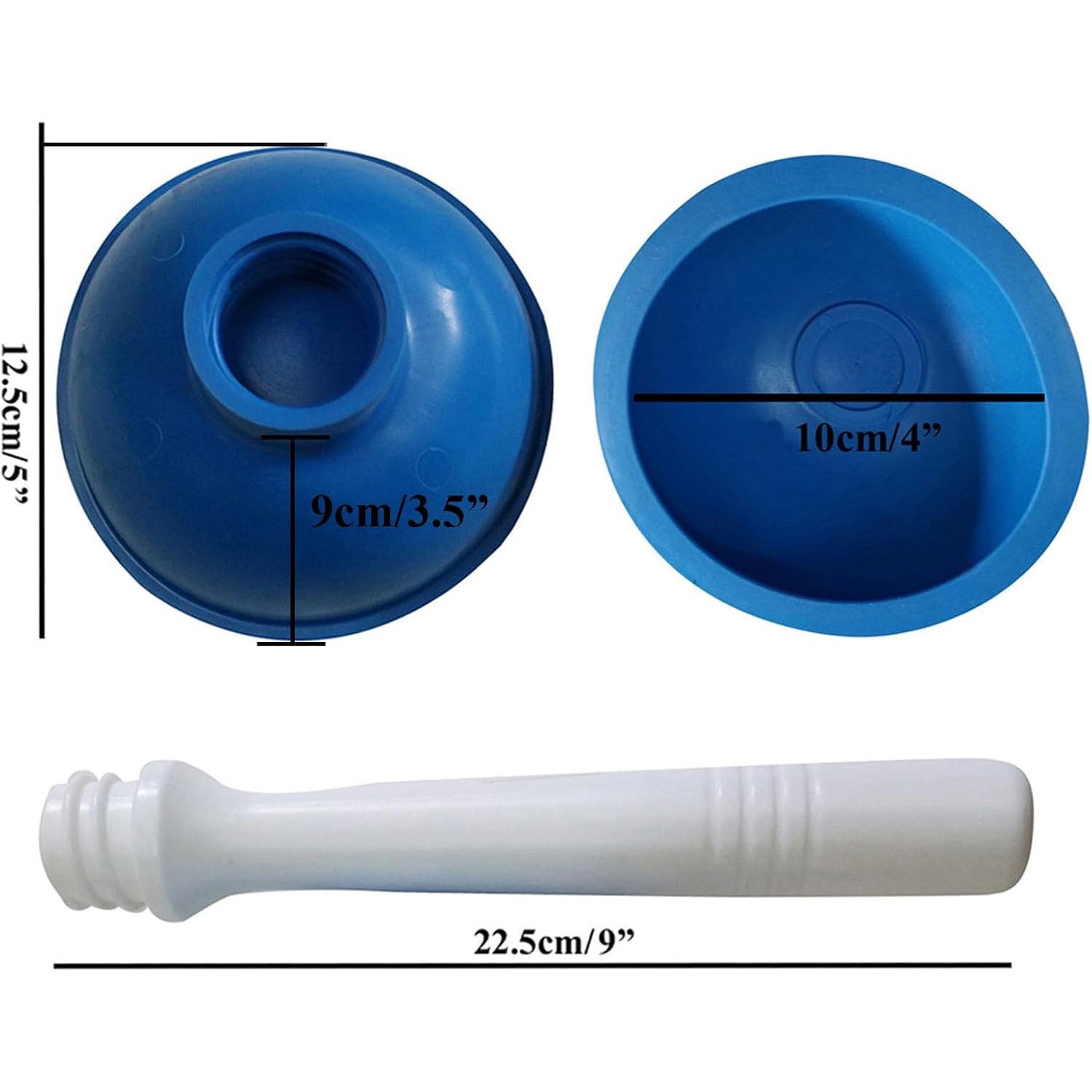
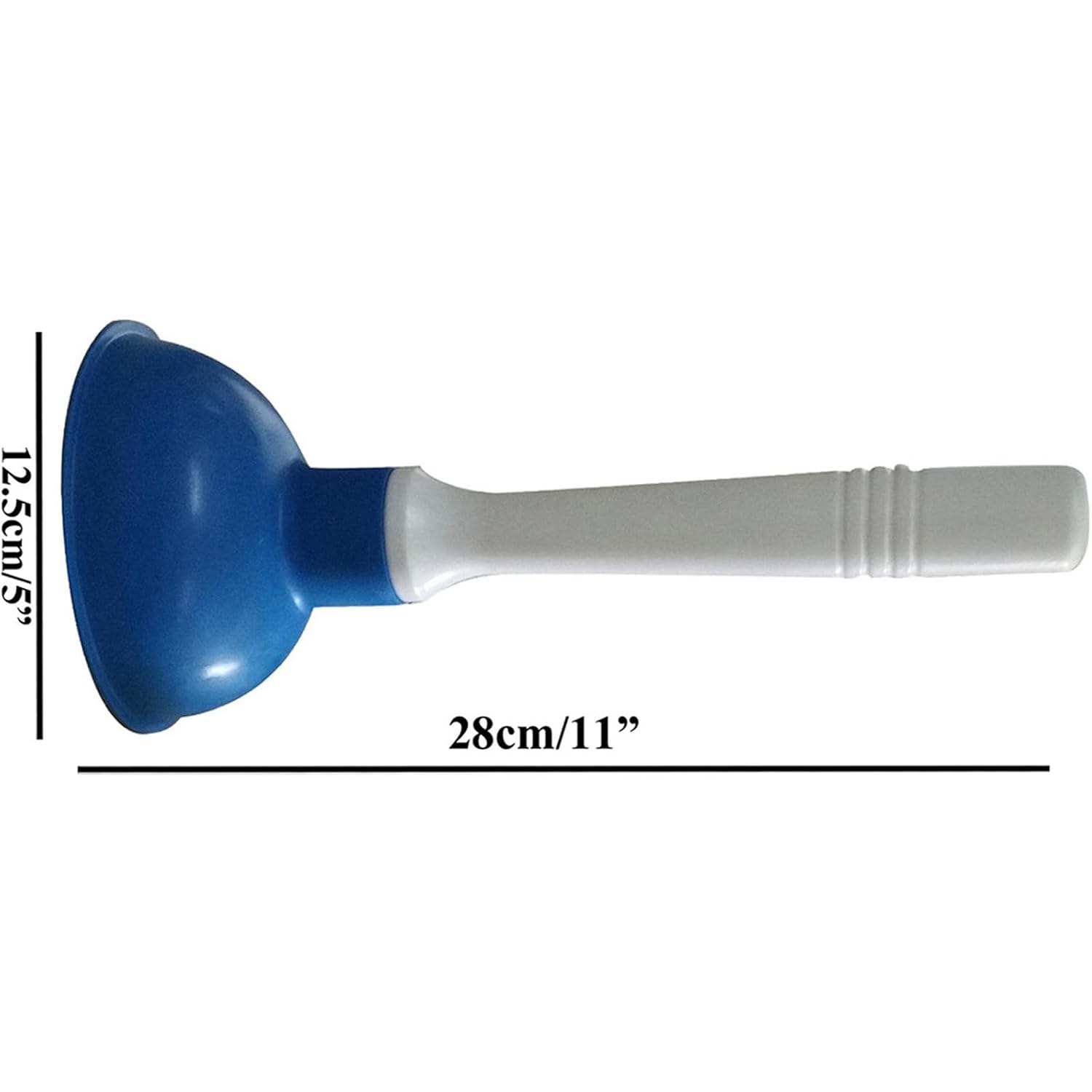
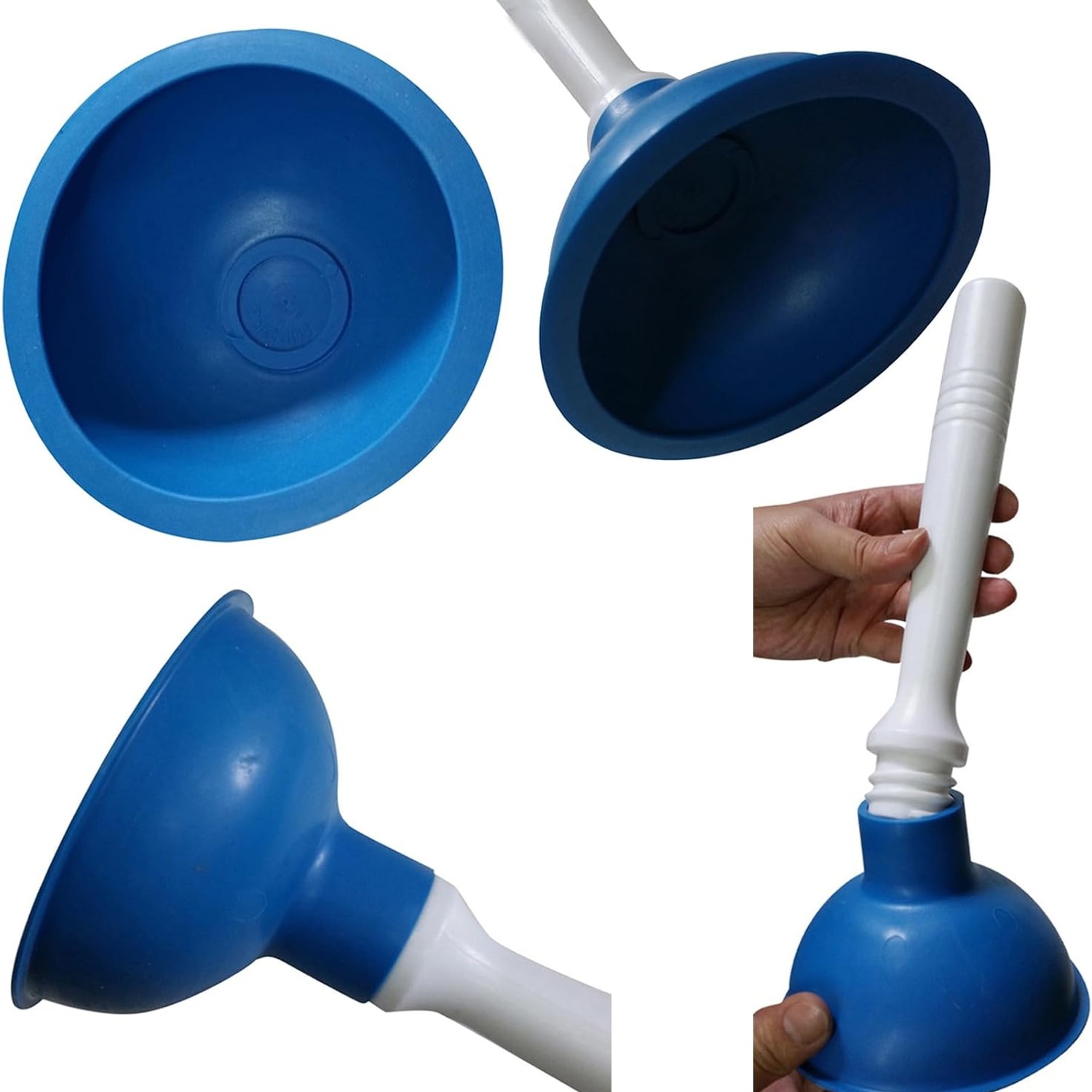
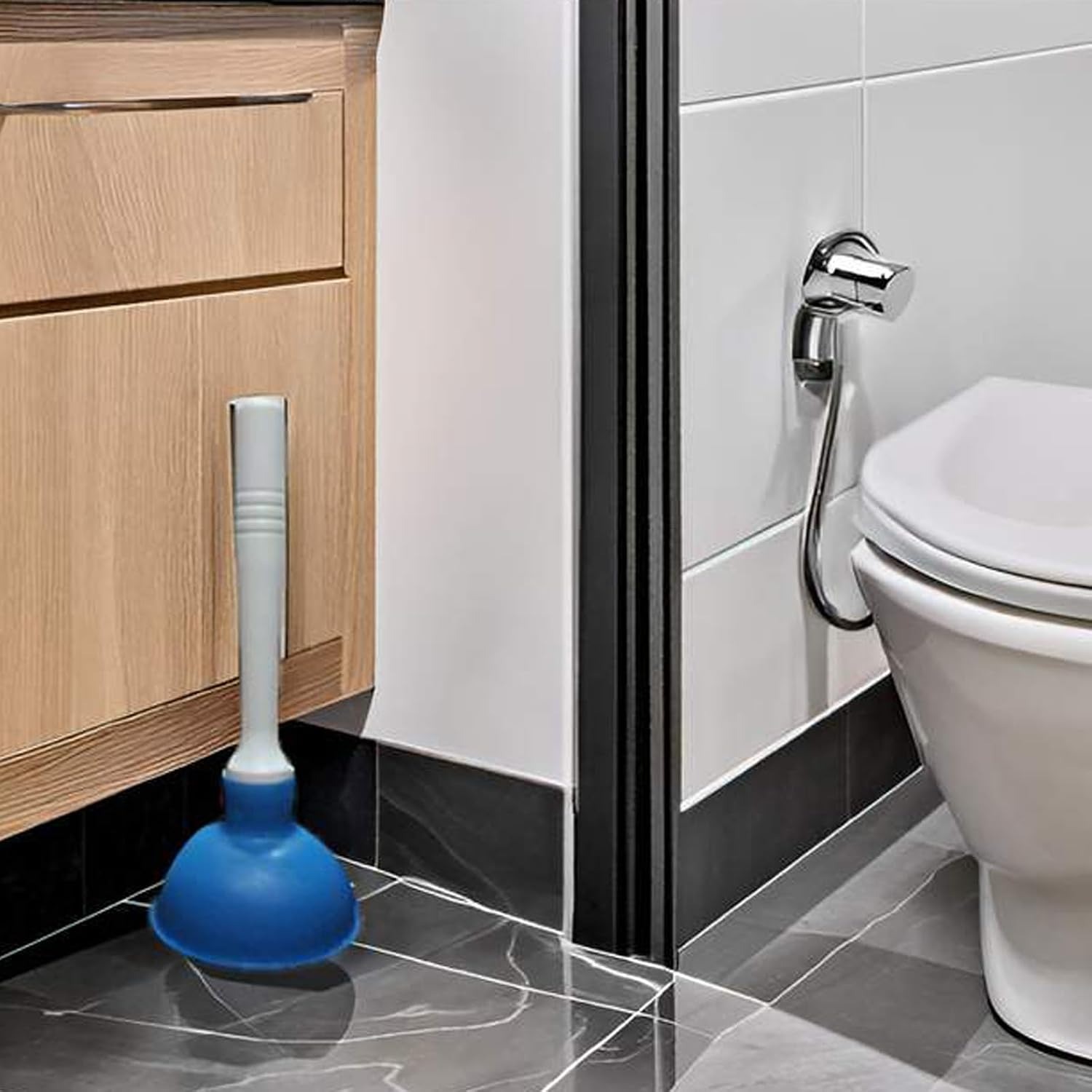
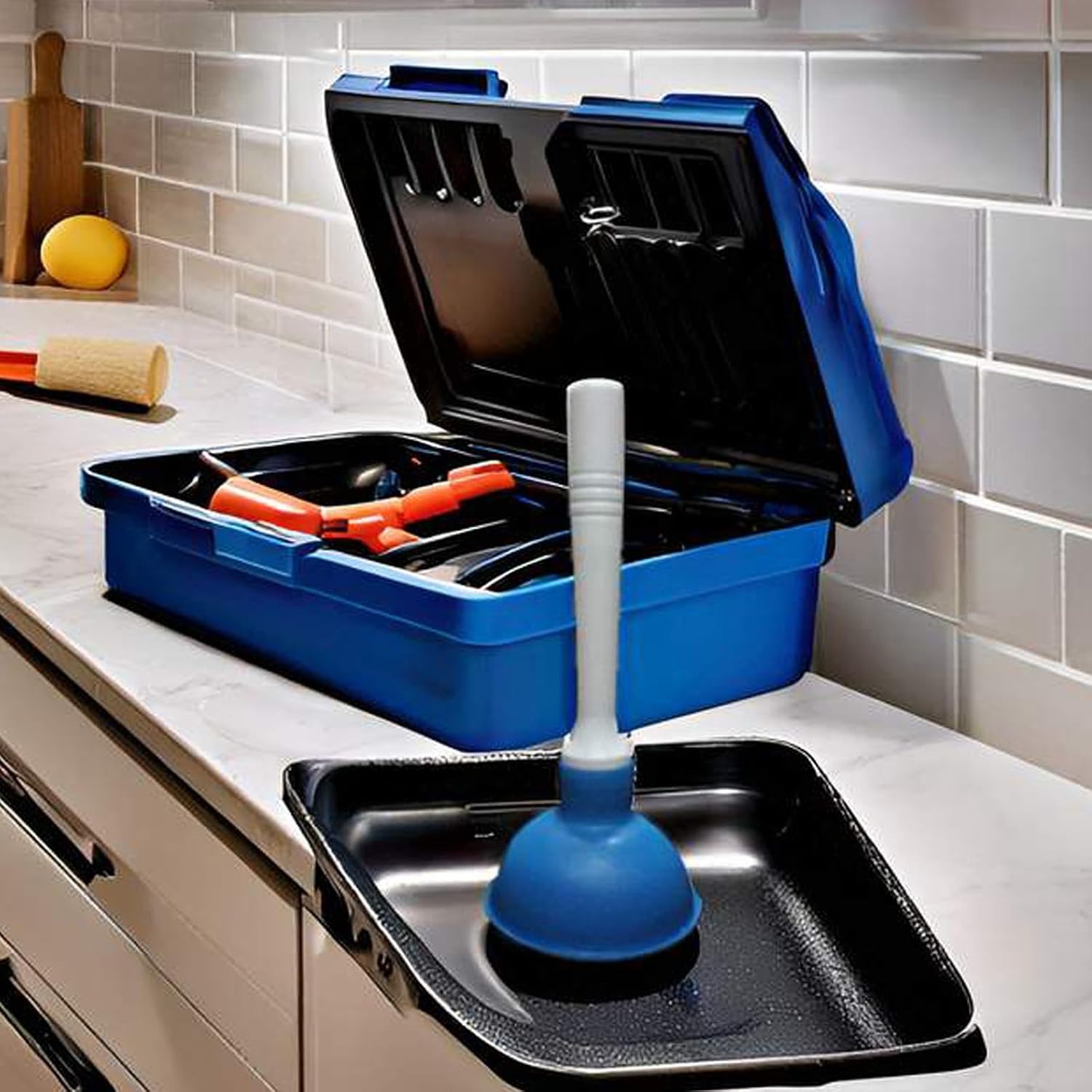
This hand force pump drain plunger has a cup about 12.5 cm across, which sits neatly in the flat zone around a typical basin or sink waste. The whole unit stands about 28 cm tall. That matters more than you would think. In a shower cubicle or under a vanity you cannot get a long handle vertical, and a plunger pushed at an angle loses most of its force sideways.
Weight helps too. At 118 g you can hold it one handed and keep your other hand pressed over the overflow, which is a trick most people never learn.
How it actually works
The physics is worth understanding, because knowing it makes you better at it.
Water does not compress. Air does. When you push the handle down on a cup full of water, that water has to go somewhere, and the only route is down the pipe. It slams into the blockage. When you pull back up, you create suction that drags the blockage back toward you. The back and forth is what breaks a soft plug apart. One heroic shove does much less than fifteen rhythmic strokes.
So the sequence is simple. Run enough water into the fixture to cover the cup completely. Block the overflow with a wet cloth if there is one. Place the cup flat over the drain and press down gently first to push the air out and set the seal. Then work the handle up and down firmly for ten to fifteen strokes without breaking the seal. Lift off and see whether the water starts to move.
If the cup folds in on itself and stays collapsed, just pull it back open with your fingers and reposition. That happens with flexible cups and is not a fault.
Where it suits, and where it does not
This style of plunger is at its best on bathroom basins, kitchen sinks, utility sinks, shower trays and small baths. People looking for the best compact drain plunger usually land on something close to this shape for exactly that reason.
It is less suited to a main toilet. A toilet outlet is curved and deep, and a flanged plunger seals it far better. You can use a small cup plunger on a compact toilet in a pinch, but if toilets are your main concern, buy the tool built for that job.
It also will not solve a blockage that sits well down the branch pipe or out in the main run. If your whole bathroom backs up at once, or water appears in a different fixture when you plunge, that is a bigger problem than any plunger addresses.
A few things that make plunging work better
Block the overflow. This is the single most skipped step. Every basin and most baths have an overflow hole connected to the same waste pipe, and if you leave it open your pressure vents straight out of it. A damp flannel pressed firmly into the hole fixes that.
Use hot water, not boiling. Warm water softens grease, which gives you a head start on a kitchen sink. Boiling water can be hard on some plastic waste fittings and on older seals, so hot tap water is the safer choice.
Clear the strainer and the trap first. If the blockage is actually sitting in the plughole basket or the U-bend, no amount of plunging will help. Unscrew the trap into a bucket and pull out the gunk. Many "blocked" sinks are solved right there.
Give it time between sets. Plunge for fifteen strokes, stop, and let gravity try. If the water level drops even a little, you are winning. Repeat.
Wear gloves. Not essential, but the water you are moving around is not clean.
Looking after it
A plunger is low maintenance but not zero maintenance. Rinse the cup and the handle under running water after every use, with a squirt of dish soap if the job was unpleasant. Shake out the water trapped in the cup, because standing water is what makes a plunger smell.
Let it dry before it goes back in the cupboard. Store it upright or hanging rather than face down under something heavy, so the cup keeps its shape. Keep it out of direct sun and away from heat, since heat and UV are what make flexible cups go stiff and crack over time.
That is genuinely all of it. Looked after, a plunger like this lasts years, which is a decent return on a tool that spends most of its life doing nothing.
What to check before you buy
Measure the flat area around your plughole. You want roughly 13 cm of reasonably level surface for the cup to seal against. Most standard basins and sinks have it. Very small cloakroom basins with a tight curve may not, and no cup plunger of this size will seal well on those.
Think about where it will live. The 28 cm height is what lets it stand in a vanity cupboard or sit discreetly beside a pedestal. If you have more space and mainly worry about toilets, a different tool fits better.
Consider having two. Many households keep one plunger for the toilet and a smaller one for sinks and showers, purely on hygiene grounds. It is not an expensive bit of kit and nobody enjoys the alternative arrangement.
The short version
A slow basin, a sluggish kitchen sink or a shower tray that puddles around your feet are all jobs for a small cup plunger, not for a bottle of caustic cleaner and not usually for a plumber.
This one is 12.5 x 12.5 x 28 cm, weighs 118 g, has a PP handle and a flexible cup, and needs no power or batteries. Fill the fixture with water, block the overflow, seal the cup over the drain and work the handle in a steady rhythm. Most ordinary clogs give way in a minute or two.
Rinse it, dry it, put it back. Then forget about it until the next time, which is exactly what you want from a tool like this.