
The complete guide
How To Choose A Kitchen Sink Strainer That Actually Fits
The problem nobody thinks about until the water stops going down
Kitchen drains fail slowly. It is never one dramatic moment. It is a few grains of rice this week, some tea leaves next week, a bit of fat from a roasting tin, and all of it settling into the bend of the trap where the water slows down. Months later you notice the sink empties a little lazily, then one evening it does not empty at all.
A sink strainer is the simplest fix in the kitchen. It costs very little, takes no installation, and it sits between every scrap on your plates and the pipework behind the wall. If you have ever paid for a plumber to clear a kitchen waste, you already know the maths works out.
This guide covers what to look for, why fit matters more than anything else, and how to keep a strainer working rather than letting it become the problem.
What a drain basket actually does
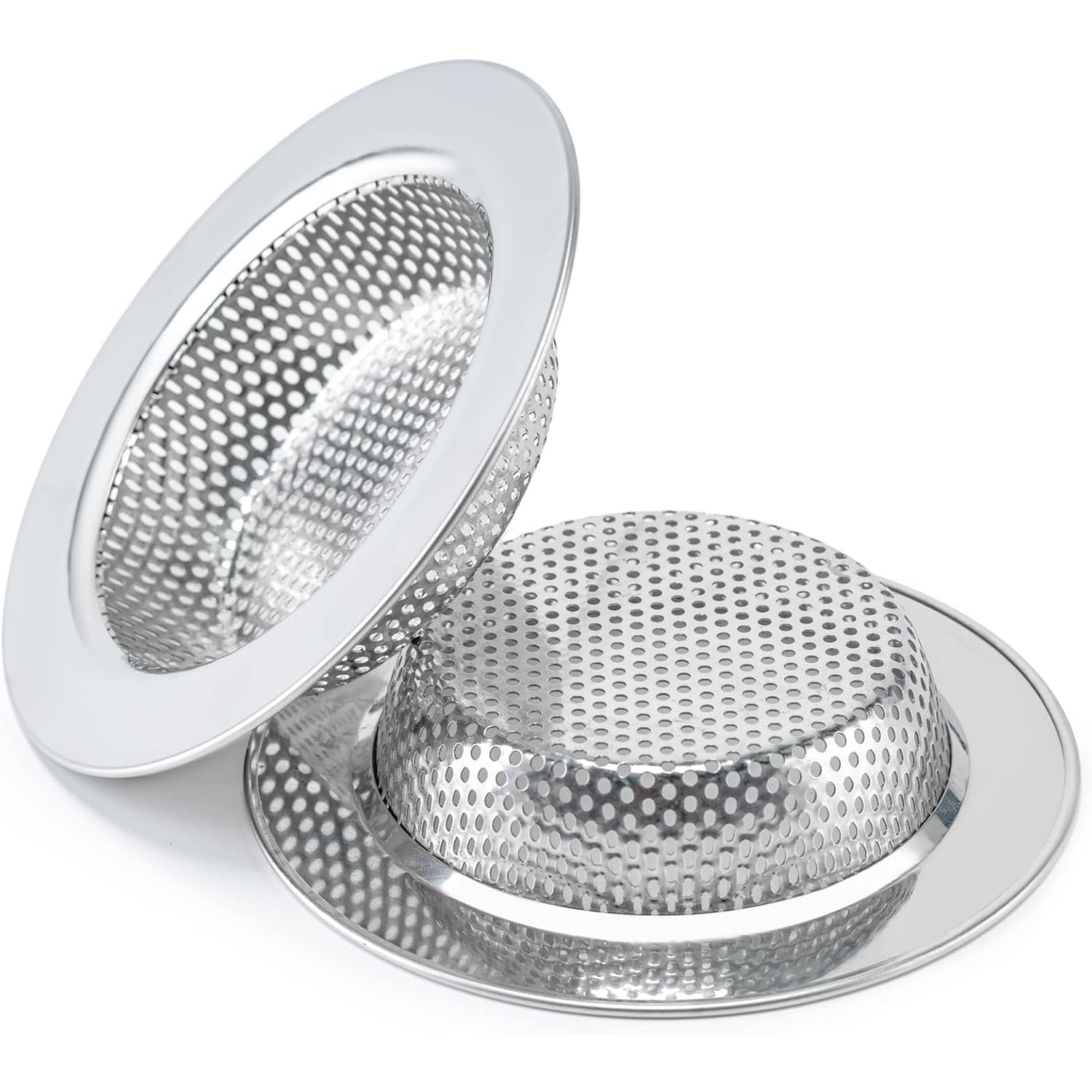
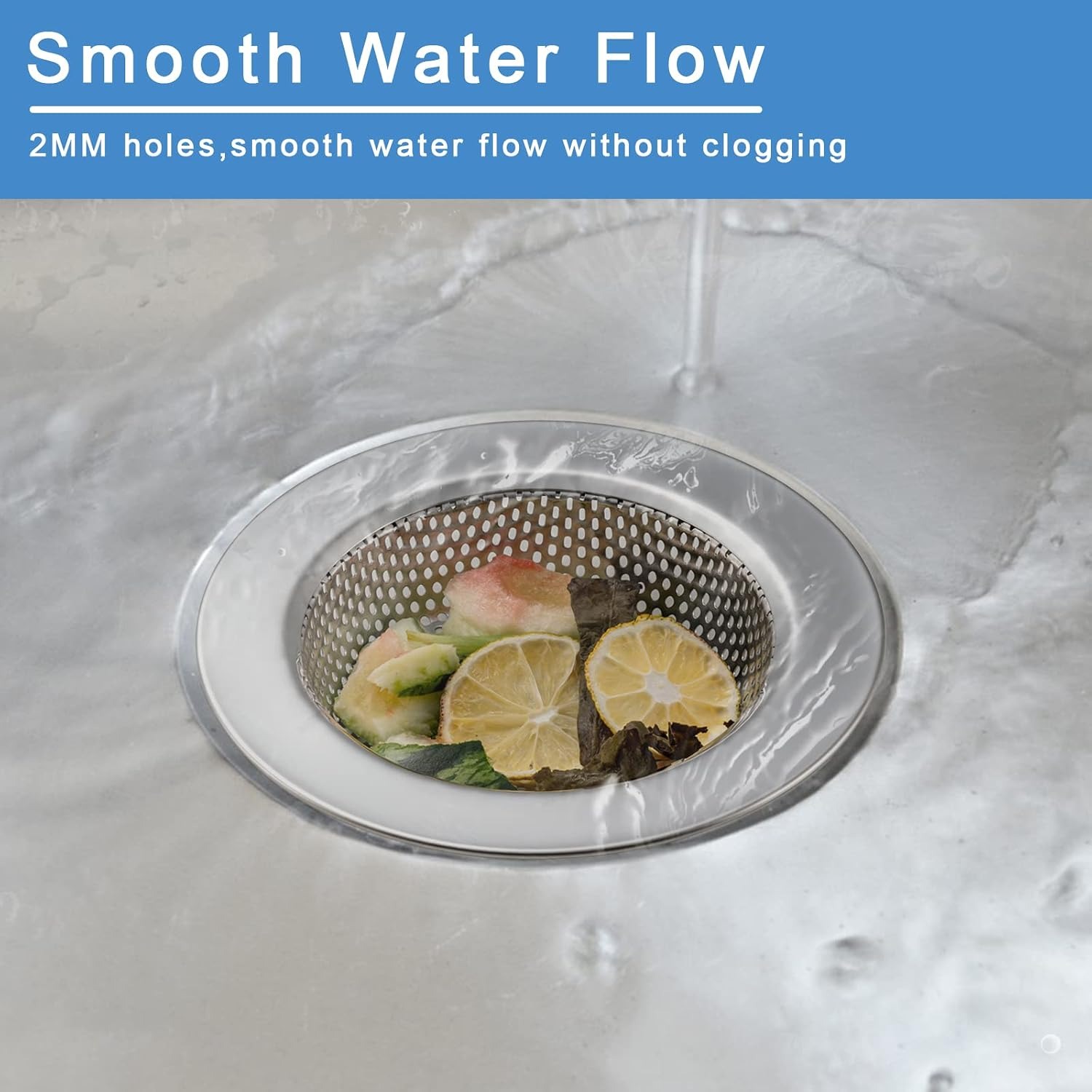
A strainer is a shallow perforated bowl that sits in the circular groove at the top of your sink waste. Water passes through the holes and continues down the pipe. Solids stay in the bowl, where you can see them and tip them into the bin.
That sounds obvious, but the design details decide whether you use it or quietly take it out after a week.
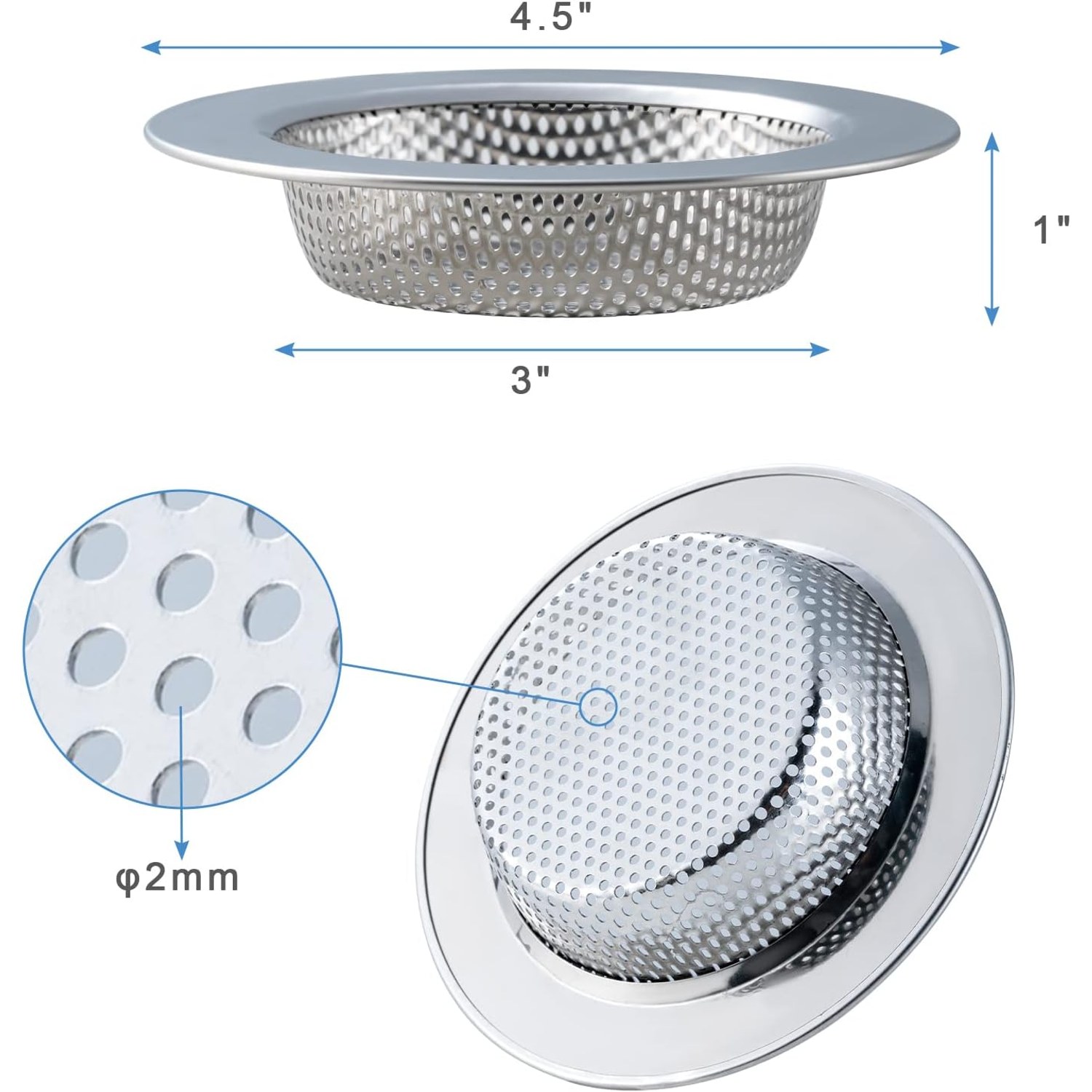
Hole size is the first one. Holes that are too big let through exactly the small debris that causes trouble, so the basket catches the large pieces you would have picked off the plate anyway. Holes that are too small clog with grease and slow the sink to a crawl. The perforations on this strainer are 0.08 inch (0.2 cm) across, which sits in the useful middle. Rice, tea leaves, coffee grounds and peel shavings stay put, and a bowl of washing-up water still clears.
Depth is the second. A very shallow basket fills after one plate and overflows into the drain, which defeats the purpose. At 2.5 cm deep, this one holds enough for a normal round of washing-up before you need to empty it.
Why the rim is the part people underestimate
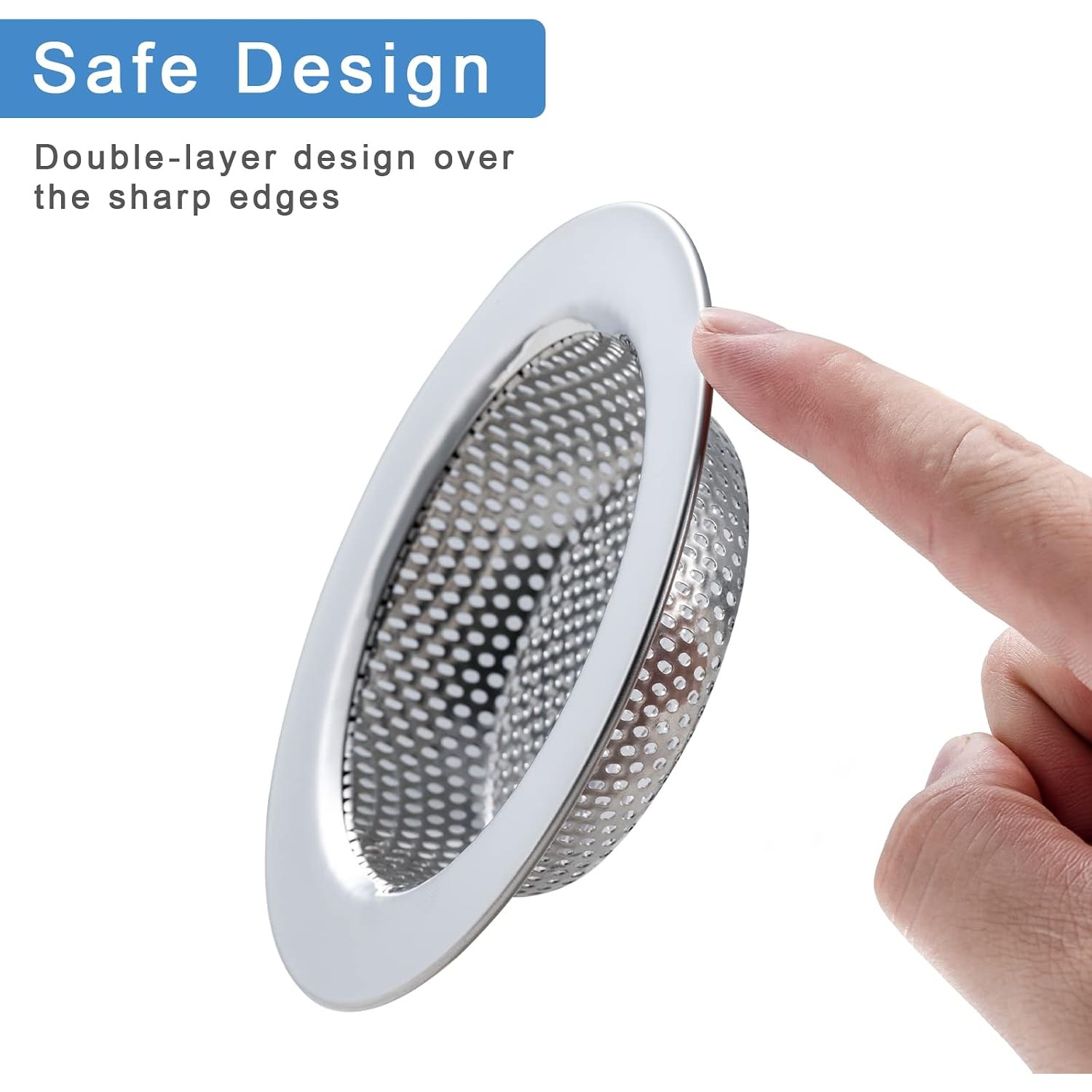
Most cheap sink strainers are pressed out of a sheet of steel, and the edge where the press cut through is left exactly as it came off the tool. Dry, in a shop, that feels fine. Wet, with your hand reaching into a bowl of grey water you cannot see through, it is a different story. Plenty of people have come away from a sink with a thin cut across a finger from a basket rim.
The double-layer construction here folds the metal back over itself at the top edge. What your hand meets is a rounded lip rather than a cut line. The second benefit is strength. A folded rim is far more rigid than a single thickness, so the basket keeps its round shape when you push it into the groove or tap it against the side of the bin.
If you have been looking for the best double layer sink strainer and wondering whether the feature is just marketing, that is what it means in practice. It is a manufacturing step, not a sticker.
Steel versus plastic
Plastic strainers are everywhere because they are cheap to mould and cheap to ship. They also live a short life. Hot water and washing-up liquid go to work on them, the surface goes cloudy, grease sticks in the texture, and after a while the rim goes brittle and cracks.
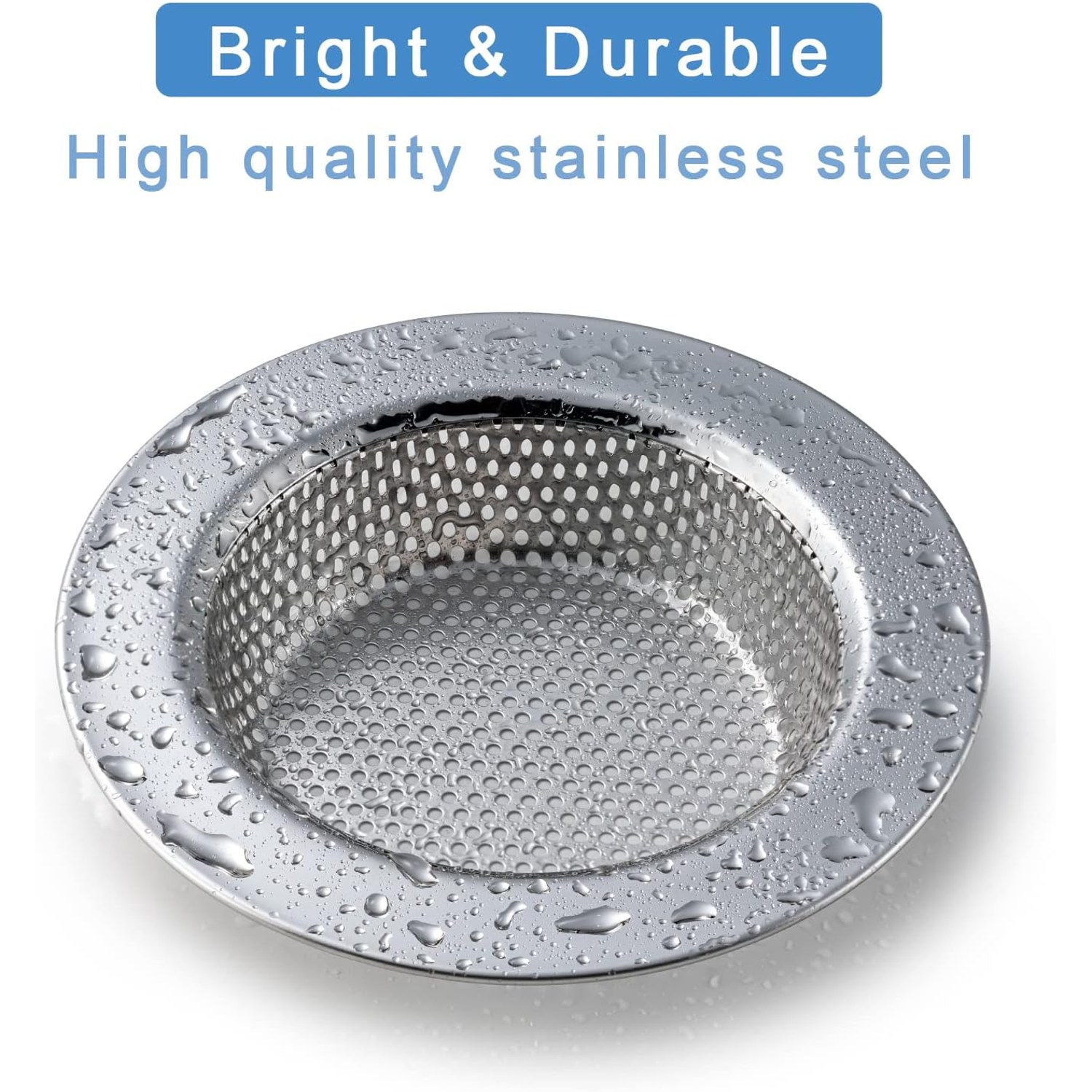
Stainless steel is the material kitchens use for sinks for a reason. It copes with constant damp, hot water and detergent without changing. The polished finish on these baskets means grease wipes off a smooth surface instead of settling into a grain, and you can see when the thing genuinely needs cleaning.
Weight is worth a mention too. The set comes in at 109 grams, so these are not heavy. Light enough to lift out one-handed, solid enough not to feel flimsy.
Fit is the whole ballgame
Here is where most sink strainer purchases go wrong. People buy on looks and price, the parcel arrives, and the basket either rattles around in the opening or sits proud of the groove and rocks.
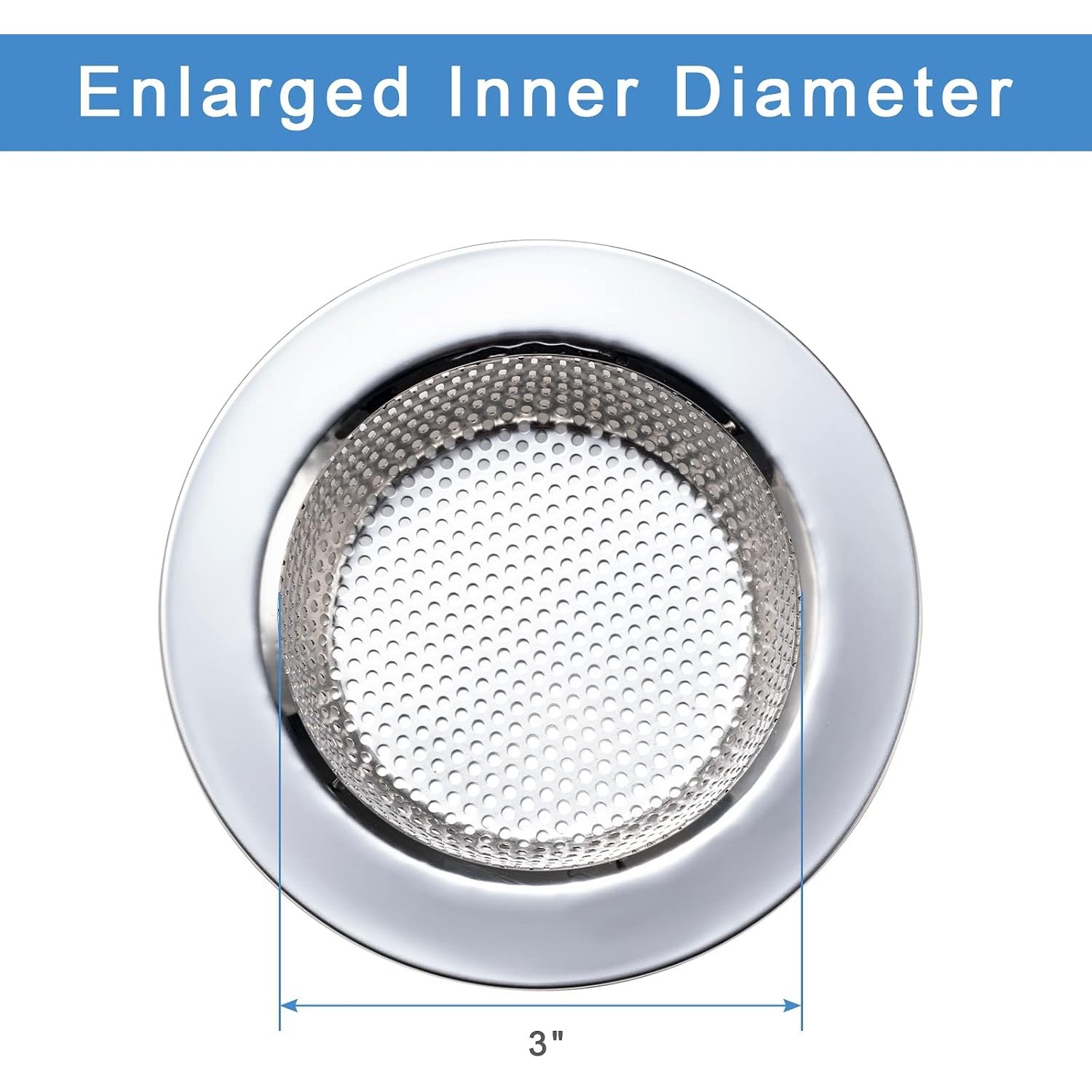
These strainers are 11.4 cm across the top and are made for a groove diameter of 11.38 cm. That is a specific number, and it is the one thing you should check before ordering.
Measuring takes thirty seconds. Put a tape measure across the circular recess in your sink where a plug or strainer would sit. Measure from the inside of one edge to the inside of the opposite edge, straight across the widest point. You want the groove itself, not the smaller hole you can see below it. If your figure lands at or near 11.4 cm, you are in business.
If your sink has a waste disposal unit fitted, the opening is usually a different shape and takes a dedicated flange, so a drop-in basket like this will not be the right answer.
Who gets the most out of a two pack
Double-bowl sinks are the obvious case. One basket per bowl and the job is done, with no swapping back and forth while you rinse in one side and drain in the other.
If you have a single bowl, treat the second as a spare. One stays in the sink, the other lives in a drawer for the days when the first is soaking off something stubborn or sitting on the drying rack.
Renters do well out of these. There is nothing to fit, nothing to drill, nothing that leaves a mark, and you take them with you when you move. Anyone shopping for the best kitchen sink strainer in a rented flat usually ends up here for exactly that reason. Households that cook from scratch also benefit more than most, because that is where peel, rice, pasta starch and vegetable trimmings actually come from.
Keeping it working
A strainer only does its job if you empty it. The routine is short. When the washing-up is finished, lift the basket, tip it into the bin or the compost caddy, and rinse it under the tap. That is the whole thing, and it takes less time than drying a plate.
Every week or so, give it a proper wash. Warm water, washing-up liquid, and a soft sponge or a small brush worked over the holes from both sides. That clears the thin film of grease that builds up and slowly narrows the perforations. If you ever notice water pooling in the bowl, that film is almost always the cause.
Skip the steel wool and skip the bleach. Both can mark a polished stainless surface, and neither is necessary. Dry the basket after washing if you want to avoid water spots, especially in a hard-water area.
One more habit worth building. Scrape plates into the bin before they reach the sink. A strainer is a safety net, not a bin substitute, and the less that hits it the longer it stays clear.
Small things that make a difference
Keep a second strainer somewhere accessible rather than buried in a drawer. People stop using a strainer when it is inconvenient, and having a dry one to hand removes the excuse.
If you have a compost caddy, keep it near the sink. Emptying a basket of vegetable scraps straight into it becomes automatic.
Watch what you pour down the drain as well as what you drop. Hot fat runs like water and solidifies in the pipe where it is cool, and no basket catches a liquid. Let it set in the pan and bin it.
The short version
A good sink strainer is cheap insurance against an expensive plumbing bill. The things that matter are fit, hole size and edge finish, roughly in that order.
This two pack is polished stainless steel, 11.4 cm across, 2.5 cm deep, with 0.08 inch (0.2 cm) holes and a double-folded rim that takes the sharp edge off the top. It drops in without tools, washes by hand in warm soapy water, and gives you a spare for the second bowl or the drawer.
Measure your groove before you order. If it comes out around 11.38 cm, this will sit flat and do its job quietly for years.