
The complete guide
How to Choose and Fit a 69mm Bath Pop Up Plug
The bath that empties itself
You know the feeling. You run a deep bath, get in, and twenty minutes later the water is sitting somewhere around your waist instead of your shoulders. Nothing dramatic has happened. The plug is just letting water sneak past, a few drops at a time, and the only fix most people try is pressing it down harder.
That rarely works, because the problem is almost never the pressing. It is the rubber. Seal rings spend their life in hot water, soap, shampoo and bath oil, and over a few years they harden. A hard seal cannot squash itself into the tiny gaps on the waste seat, so water finds a path. The chrome on top can still look brand new while the part doing the actual work has quietly given up.
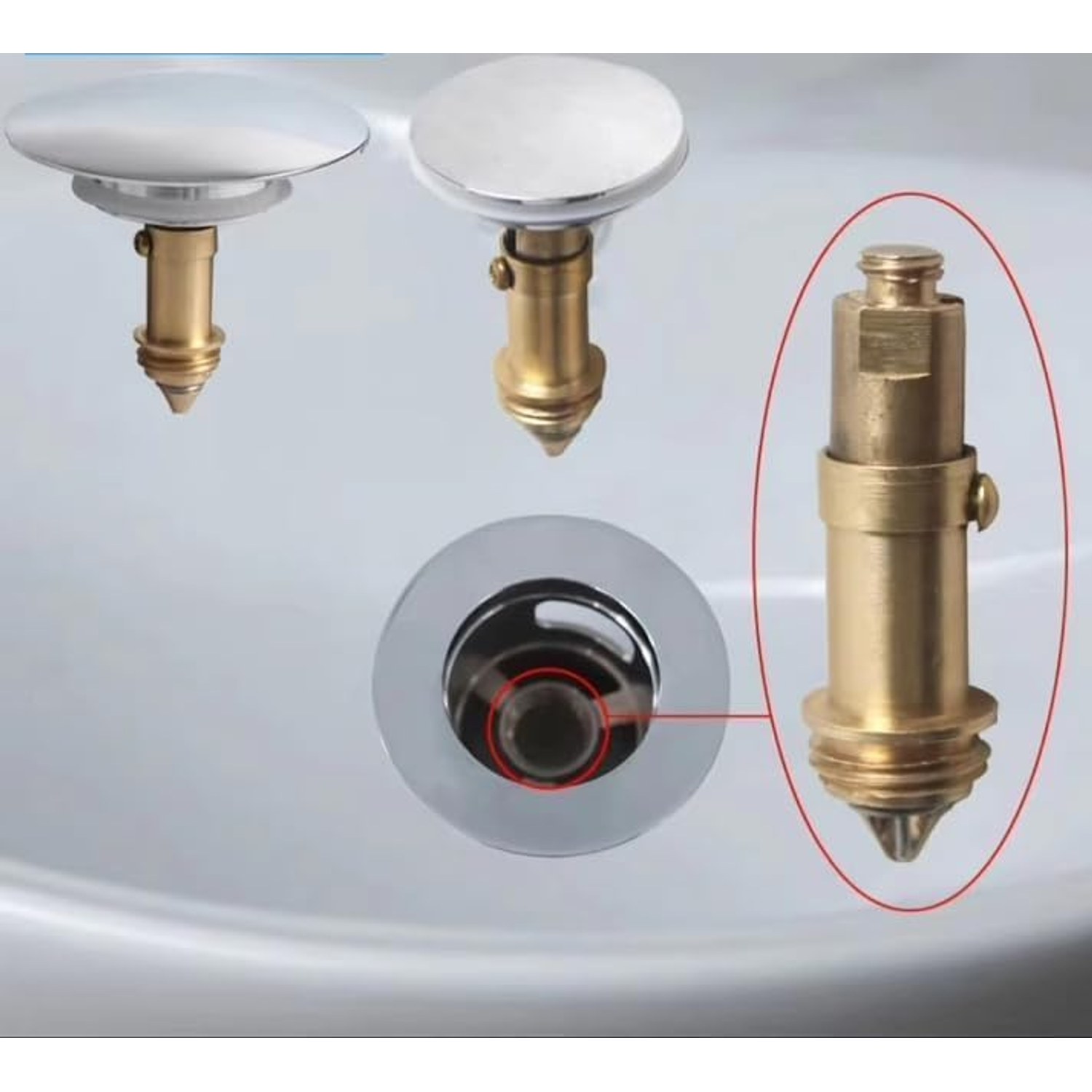
Replacing the plug is one of the few bathroom jobs that genuinely is as simple as it sounds. A 69mm bath pop up plug like this one threads into the waste you already have, so there is no need to go under the bath, disturb pipework or reach for sealant.
How a click clack plug actually works
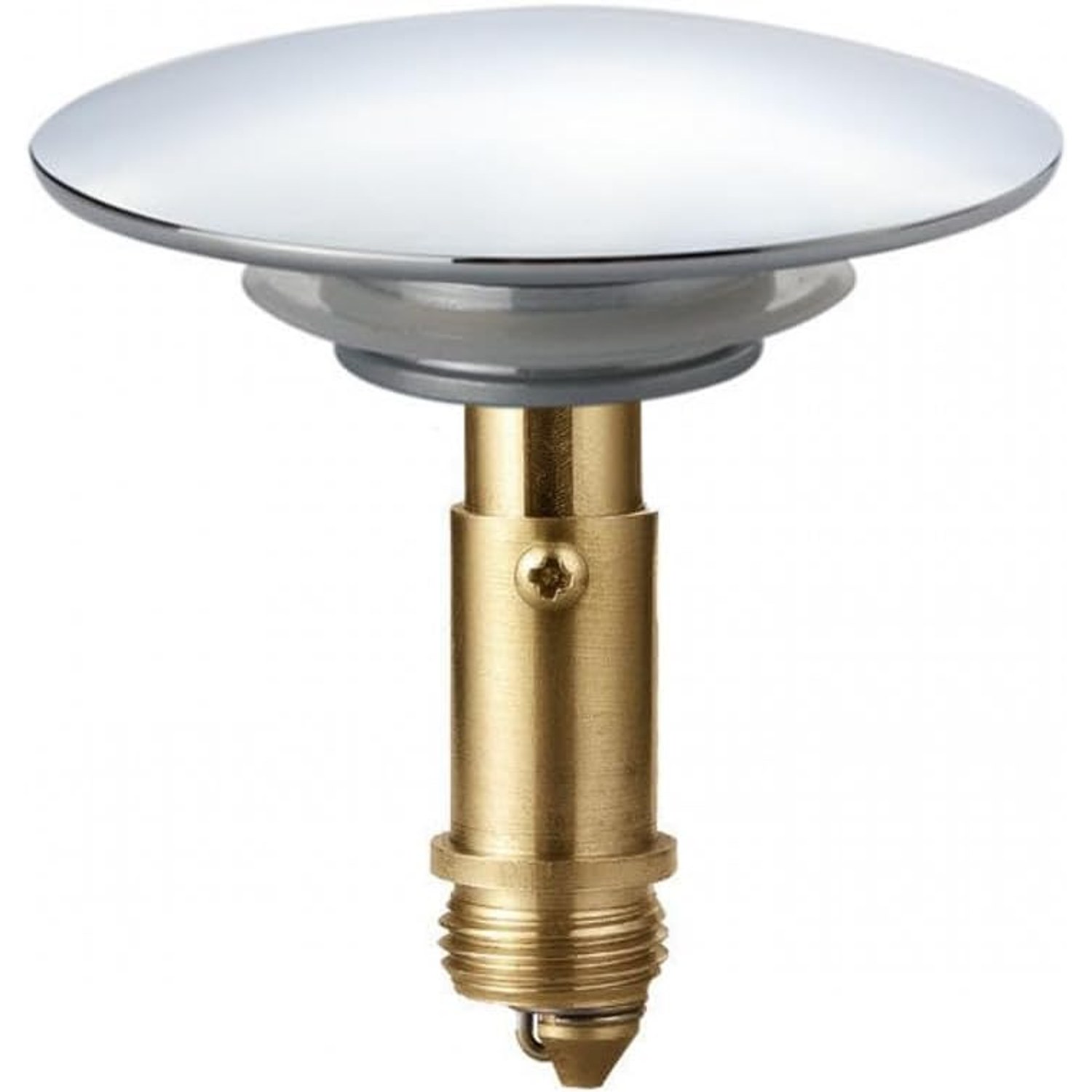
The mechanism is mechanical and old fashioned in a good way. Inside the chrome cover sits a brass bolt with a spring. Press the cover and the spring compresses until it catches on an internal latch, which pulls the cover down and squeezes the rubber seal against the metal seat. The water has nowhere to go. Press again and the latch releases, the spring pushes the cover up a few millimetres, and the bath empties.
That is the whole system. No cable running to a lever on the overflow plate, no linkage hidden behind the bath panel, nothing to adjust as it wears. This is exactly why so many people switch to this style when an older pop up waste starts misbehaving. The failure points on those systems are usually the hidden ones, and you cannot reach them without taking the panel off.
Material choice matters more than it looks. The bolt here is solid brass, which is the right call for a part that compresses and releases hundreds of times a year in a wet, warm place. Brass does not rust and keeps its spring. The cover is chrome plated alloy, chosen for appearance rather than strength, since the cover only has to sit flat and look like the rest of your taps.
Getting the size right
This is where most orders go wrong, so it is worth two minutes of your time.
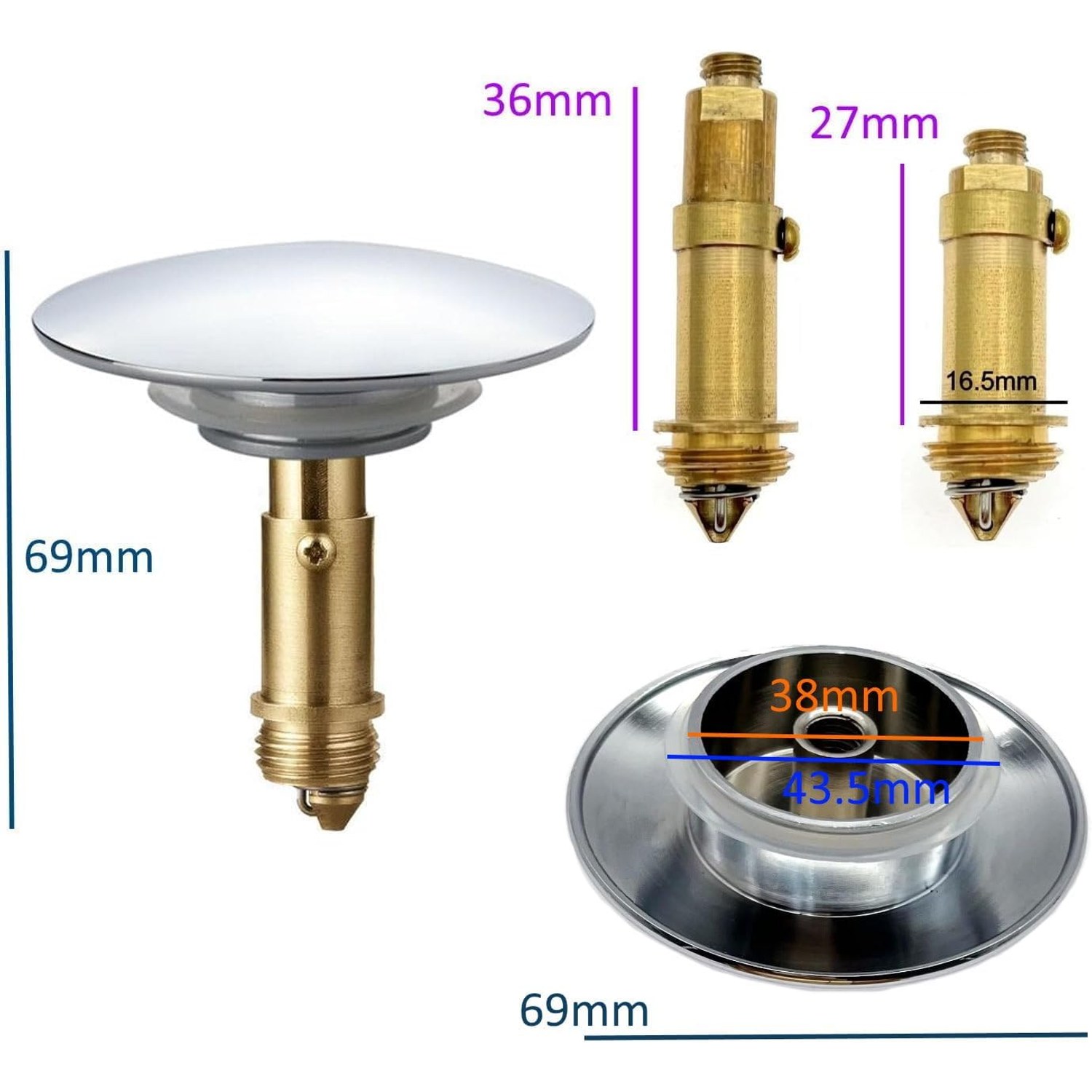
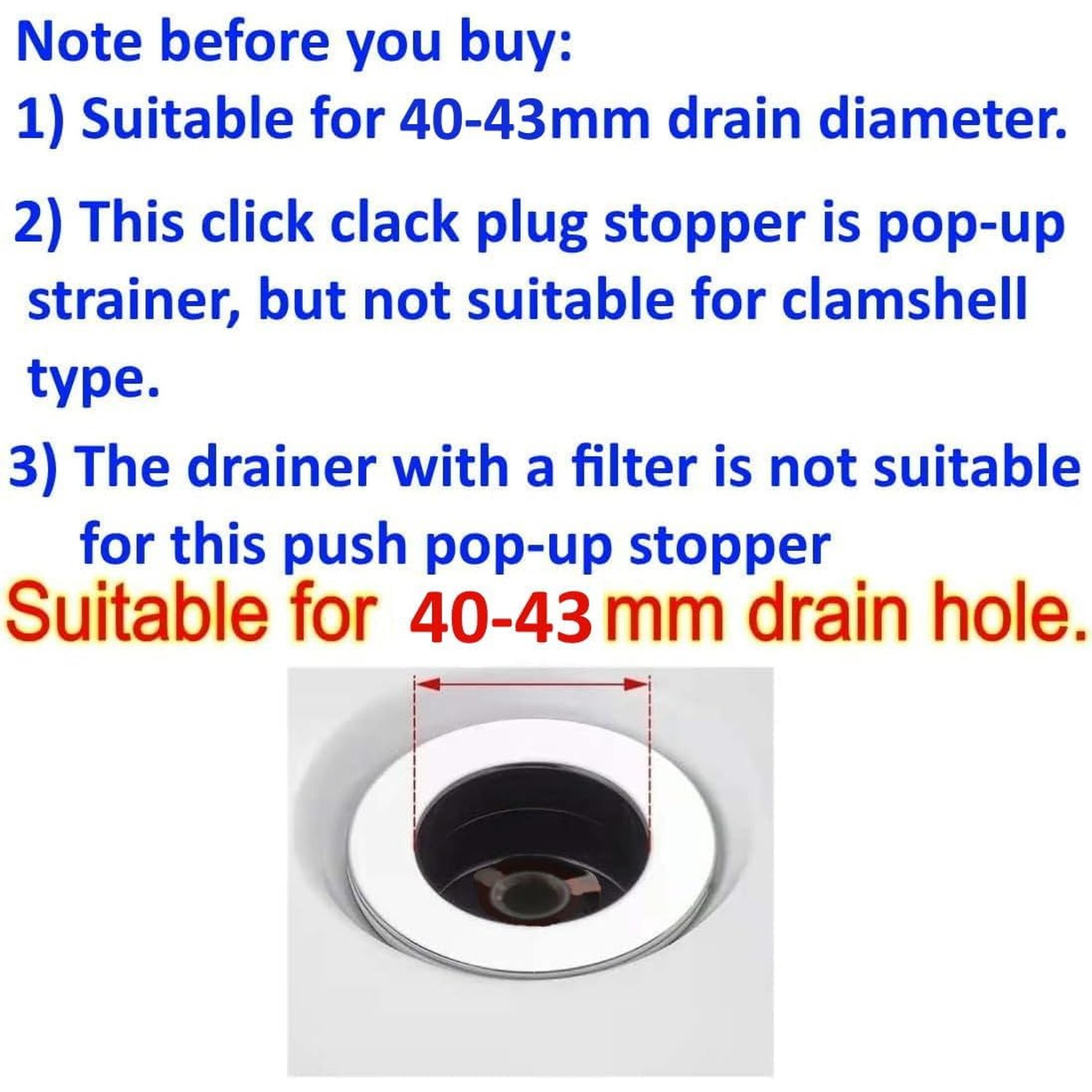
There are two numbers on this product and they describe different things. The cover is 69mm across. That is the part you see, the disc sitting on top of your bath. The drain hole it is made for is a standard 43mm. The cover is deliberately wider so that it rests on the seat and flange rather than dropping through, and that overlap is what lets the seal do its job.
To check yours, lift out the existing plug and measure straight across the opening in the bath at its widest point. Measure the hole itself, not the chrome ring around it. If you land close to 43mm, you are in the right territory. If the number is noticeably different, this plug will either rattle around or refuse to seat, and no amount of pushing will fix it.
Also glance at the area around the hole. You want a reasonably flat, clean seat for the seal to press against. Old sealant, a chipped enamel edge or a ridge of limescale will all stop a good plug from sealing and will make you think the new part is faulty.
Fitting it
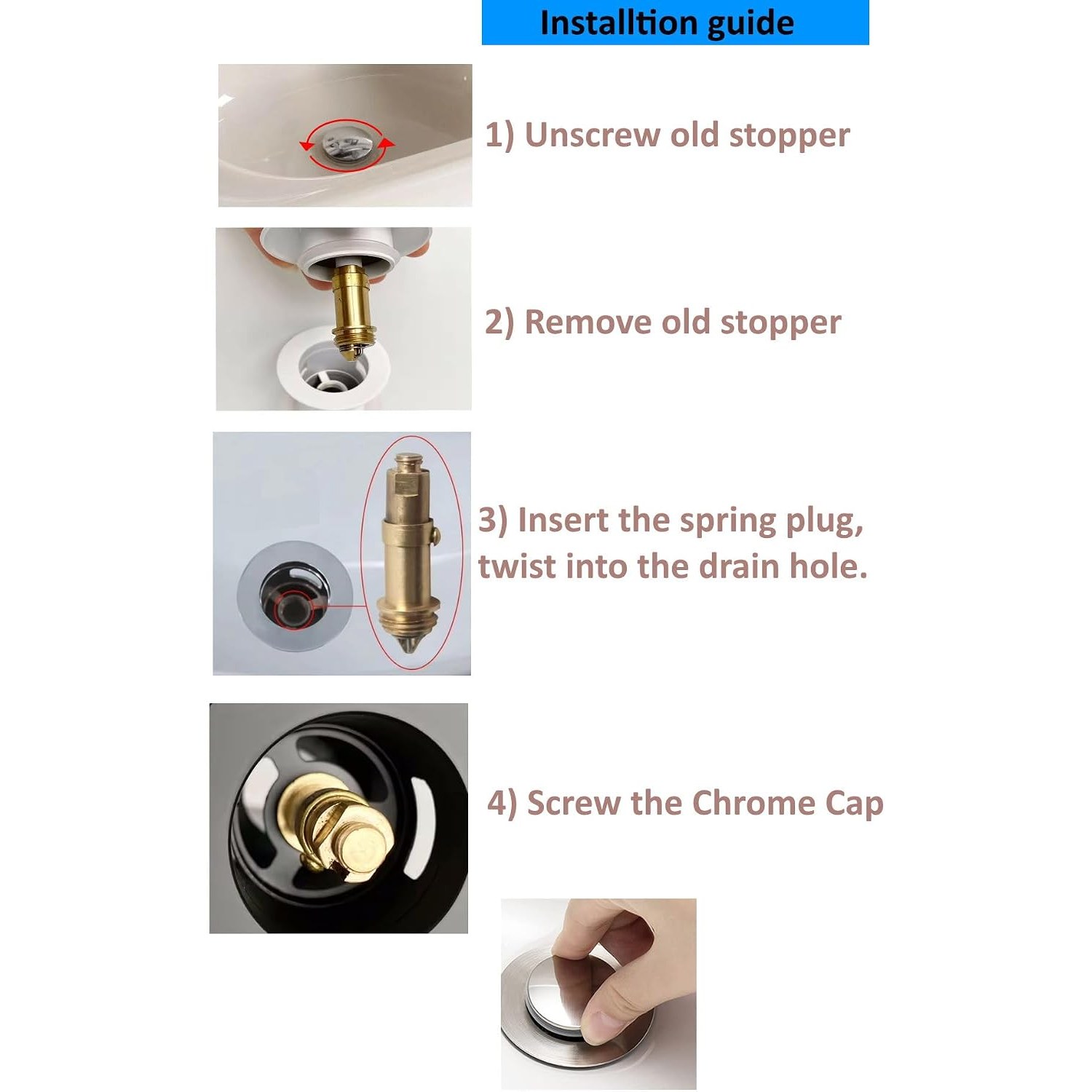
Clear the waste first. Wipe the seat with a cloth so there is no hair, grit or old soap sitting where the rubber needs to make contact. People skip this step and then wonder why the water line still drops.
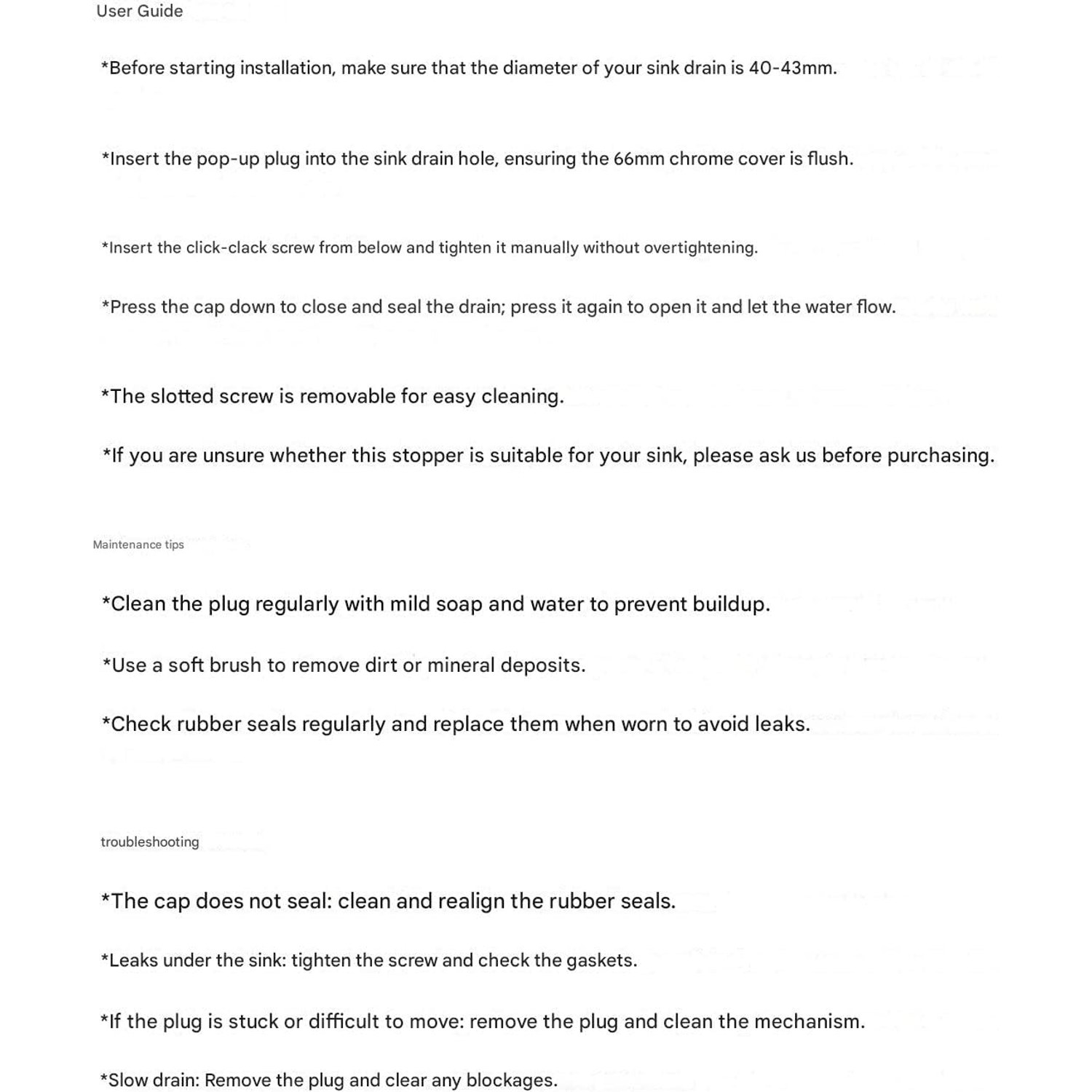
Thread the new plug into the hole and turn until it feels snug. Hand tight is the goal, not muscle. Over tightening is the one way to damage a plug like this, since you can distort the seal and actually make the fit worse.
Then test it. Run a few centimetres of water, press the cover down, and watch the line for five minutes. If it holds, fill properly. If it creeps down, take the plug out, check the seat again, and reseat it. Nine times out of ten the culprit is something stuck under the seal rather than the plug itself.
Who this suits
If your bath has a standard 43mm waste and your current stopper is worn, lost or leaking, this is a straight swap. It also suits people who inherited a bath with a fiddly lever operated pop up system that no longer closes properly, because switching to a press operated plug sidesteps the hidden linkage altogether.
It is a sensible pick for rentals and holiday places too. There is nothing to explain to guests. You press it, it closes, you press it again, it drains. The chrome finish keeps the look consistent with standard taps, so it rarely stands out as a replacement part.
It is less suitable if your waste is not around 43mm, if the seat is damaged, or if your leak is happening under the bath rather than through the plug. Those are different problems and a new stopper will not touch them.
Keeping it working
Cleaning is where this style earns its keep. The bolt set unscrews from the cover, so when the bath starts draining slowly you can take the parts apart, pull the hair and soap residue out of the slots, rinse everything and screw it back together. Do that over a towel so nothing small vanishes down the waste.
For the chrome, warm water and a soft cloth are enough. Dry it afterwards if you live somewhere with hard water, because limescale marks are far easier to prevent than remove. Keep abrasive pads and bleach away from it. Those are what turn a bright plated finish dull, and no amount of polishing brings it back.
The seals will eventually harden again, as every rubber seal does. How long that takes depends on water temperature, how often the bath is used and what cleaning products end up sitting on it. Rinsing after each bath genuinely extends the life.
Small part, big difference
There is something slightly ridiculous about how much a failed plug ruins a bath. Everything else can be right, good taps, plenty of hot water, and the whole thing is spoiled by a seal that costs less than a takeaway.
The fix is proportionate. Measure the hole, order the right size, clean the seat and screw the new plug in. The press action is satisfying, the seal holds, and you stop thinking about it.
The short version
This is a 69mm chrome click clack bath plug with a solid brass sprung bolt and rubber seal rings, made for a standard 43mm bath drain hole. It screws in by hand, closes and opens with a press, and comes apart for cleaning. One plug per pack, weighing 0.09kg.
Measure your drain hole before ordering. That single check is the difference between a two minute job and a return.